Extract from The Guardian
This generation has probably never felt truly confident that a
political leader cared more about the electorate than their own survival
• Nation in mourning for Bob Hawke – politics live
• The typical Australian who enjoyed extraordinary popularity
• Barrie Cassidy: popular forever, the intellectual larrikin
• Nation in mourning for Bob Hawke – politics live
• The typical Australian who enjoyed extraordinary popularity
• Barrie Cassidy: popular forever, the intellectual larrikin
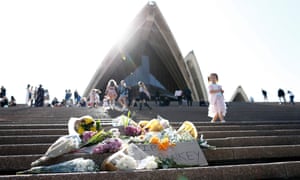
Everyone has their memories of Bob Hawke – some formed up close through long working collaborations, some from a distance through the impressions of a child.
He was prime minister as I came to adulthood. At uni I trusted him when I watched the TV at the pub that day Australia won the America’s Cup, and, true to Hawke’s word, the boss at my part-time job did not give me the sack. Later I interviewed him for the student newspaper about the reintroduction of university fees. Predictably, in hindsight, I didn’t get very far.
He was still prime minister when I joined the press gallery some years later.
I watched him in the dusty town of Wentworth in far western New South
Wales delivering what was dubbed the “world’s greatest environment
statement”, pioneering because it recognised that something was terribly
wrong with the nation’s most important river system, and visionary
because it understood that farmers and environmentalists were not
antagonists but necessary partners in the efforts to fix it. Finding
consensus was always his strength.He was prime minister as I came to adulthood. At uni I trusted him when I watched the TV at the pub that day Australia won the America’s Cup, and, true to Hawke’s word, the boss at my part-time job did not give me the sack. Later I interviewed him for the student newspaper about the reintroduction of university fees. Predictably, in hindsight, I didn’t get very far.
He was still prime minister when I joined the press gallery some years later.
I watched him weep as he spoke after the massacre in Tiananmen Square, when he said to “crush the spirit and body of youth is to crush the very future of China itself” and offered visa extensions to thousands of Chinese students studying in Australia, a decision we discovered he made without consulting his cabinet when the papers were released some decades on. Last night I learned that our young colleague Naaman Zhou, who liveblogged reaction to Hawke’s death, is the son of two students who benefited from that decision. Compassion has a way of compounding like that.
"We’re mourning the kind of considered, determined, purposeful political change that Bob Hawke and Paul Keating drove"
I watched him at his campaign launch at the Sydney Opera House in 1987, when he promised that by 1990 no Australian child would be living in poverty, an admirable aspiration that he would never fulfil and that remains shockingly unmet.
Everyone has memories like these snippets but I don’t think it is just the recollections of Hawke’s achievements or his “knockabout character” or his specific successes and failures that is driving this wave of nostalgia and grief.
We’re mourning the kind of considered, determined, purposeful political change that Bob Hawke and Paul Keating drove – a time when politicians advanced big political ideas and argued their merits, over months, or years, and were given the space to make the argument, even if opinion polls dipped for a while. Even Labor’s political opponents pay tribute to that.
We’re mourning a time when politicians made their case in words and sentences they constructed themselves, and continued to make them when vested interests cranked up their campaigns, a time when a politician could reveal flaws and weaknesses without being immediately disqualified from public life.
Of course we should not look back through rose-tinted glasses – leadership rivalries and factional infighting were obviously real and bitter in the 80s and 90s too. Expediency was still rife.
But we can see that Australians have become more disappointed with politics in recent years. This generation has probably never felt truly confident that a political leader cared more about the electorate than their own ratings or survival. They may have never felt confidence in a political leader at all.
Bill Shorten aspires to be a consensus leader in the style of Hawke. He hasn’t inspired the country the way Hawke did, but he has stuck to his guns on big tax and environment policies despite concerted Coalition and business and media attacks.
If Labor wins on Saturday, it will be up to Shorten and his team to rise to the challenge of trying to give back to Australians some of what they miss so much about Bob Hawke.
No comments:
Post a Comment