Exclusive: federal agents pressed David McBride on whether
journalists knew they might be breaking the law, fuelling belief police
tried to build case against ABC and Fairfax

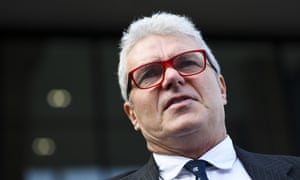
Police repeatedly questioned whistleblower David McBride about
whether the journalists he leaked secret documents to knew they might be
breaking the law.
The revelation will fuel the belief that police attempted to build a case against journalists after the highly damaging leak, despite the federal government’s previous assurances to the contrary.
Guardian Australia has learned that police, at least initially, were
highly interested in whether journalists had acknowledged they might be
committing crimes while accepting documents from McBride, a former
military lawyer now facing years in prison.The revelation will fuel the belief that police attempted to build a case against journalists after the highly damaging leak, despite the federal government’s previous assurances to the contrary.
Police interviewed McBride about his 2014 interactions with Chris Masters, a highly-decorated investigative journalist, and Andrew Clark, a senior journalist with Fairfax, now Nine. McBride was also asked to give a detailed description of an unidentified ABC employee who accompanied the reporter Daniel Oakes to a 2016 meeting.
During a January interview, two federal agents asked the whistleblower whether the first journalist he met, Masters, knew the documents he was receiving were secret, or whether Masters had balked at accepting highly classified material.
“Did he mention anything in relation to the fact that it may have been an offence for him to have them?” one detective asked McBride. McBride said Masters had not said that.
Police were also interested in Clark, a senior figure at Fairfax. The agents wanted to know whether Clark expressed “a desire not to have the documents”, whether he tried to give them back, or expressed surprise they contained secret material. McBride said Clarke had not said such things.
McBride was asked whether the third reporter he met, Oakes, was aware that the documents were classified as secret.
McBride said Oakes had “mentioned the prospect of prison”, prompting the detective to ask: “He mentioned the prospect of prison in relation to you or in relation to himself?”
McBride said the mention of prison related to himself, not Oakes.
Detectives also asked if Oakes had expressed a desire not to keep the documents.
“Did he try to give them back to you on the day, saying, ‘I don’t need these, don’t want them, they’re secret, I shouldn’t have them’?”
McBride told the police Oakes had said no such thing.
Police were also interested in the identity of an ABC employee who accompanied Oakes during one of their meetings. They asked for a detailed description of the man, including whether he wore glasses, what he was wearing, what colour his polar fleece was, whether he had an accent, and his relative seniority to Oakes.
The documents were eventually used by Oakes and the ABC as the basis for the “Afghan files”, an investigation of the conduct of Australian special forces in Afghanistan. The stories, published in 2017, focused on alleged unlawful killings, including of civilians.
The ABC on Monday reported that police requested the fingerprints of two of its journalists two months before the AFP’s raid on the Ultimo headquarters.
Last week, the Nine newspapers revealed that police had requested the travel records of journalists during their investigation of the McBride leak. The newspapers cited a statement headlined “R v Daniel Michael Oakes”, suggesting police were building a case against the reporter.
The attorney general, Christian Porter, has previously said that no journalist was the subject of “the present investigations” and he would be seriously disinclined to authorise the prosecution of journalists. Porter has since distances himself from those comments.
In June, the AFP’s acting commissioner, Neil Gaughan, declined to rule out charging journalists or media companies for publishing secret documents.
The home affairs minister, Peter Dutton, said on Friday no one was above the law. He had earlier in the week been pressed by media chiefs to drop any police action against ABC journalists.
“If you’ve got top secret documents and they’ve been leaked, it is an offence under the law,” Dutton said on Channel Nine.
“Nobody is above the law and the police have a job to do under the law.”
“I think it is up to the police to investigate, to do it independently, and make a decision whether or not they prosecute.”
No comments:
Post a Comment