The government wants JobSeeker to revert back in September but it is
highly unlikely the private sector will be ready to take over
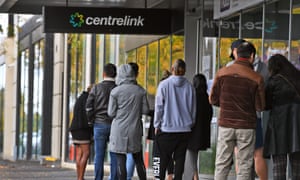
While it is not possible to exactly line this up to the unemployment rate, especially as there has also been a 40% increase in those accessing youth allowance, a rough estimate is that this means the rate could go from 5.2% in March to 9.0% in May. That 3.8 percentage point increase would rather dwarf the previous biggest two-month increase of 1.3 percentage points that occurred during the 1982 recession.
And yes (not that it really matters at this point) that means we are now in a recession.
The problem is not just that these are huge numbers of unemployed people, it is that the government’s current policy is to in effect assume that within five months they will be back at work.
And with that comes a big issue because not only is it abundantly obvious that the old rate was not enough to survive on, removing that doubling before the level of unemployment has begun to fall will only serve to exacerbate the lack of economic activity.
There were two reasons the government doubled the jobseeker allowance. The first was pretty cynical to be honest.
Due to the crisis, people who had not been unemployed for years, if ever, were now being expected to survive on a jobseeker allowance. The old rate was fine politically, but having a large mass of voters suddenly experiencing what life is like on $40 a day was not something that was conducive to winning their vote come election time.
This led to the line from the government early on that these unemployed people did not deserve their fate and thus it was only right that the amount was doubled to help them during this tough time.
The second reason was this was an effective way of providing stimulus to the economy. Something that was needed even before the virus hit.
In October last year – well before the full impact of the bushfires let alone the coronavirus – the IMF downgraded our expected GDP growth this year from 2.8% to 2.3%, the private sector was going backwards, as was new construction. So bad were things that we were already hearing talk of the RBA needing negative interest rates or quantitative easing.
Unemployment was about the only good news the government could point to – and even that was only good so long as you didn’t look too deeply.
Now even a shallow look reveals the horror.
And does anyone truly expect a return to anything close to the March 5.2% unemployment rate by the end of September?
It takes a long time to return “to normal”. In the 1980s it took nearly seven years for the unemployment rate to return to the pre-recession levels, and nearly 11 years after the 1990s recession.
Our hospitality and higher education sectors may be irrevocably changed – does anyone see a time soon when international travel is what it was six months ago?
Entertainment, sporting events and all the businesses and jobs that exist around them seem much, much further off than October.
Doubling of the jobseeker allowance provided a stimulus to the economy; removing it will have the opposite effect. It will be a massive brake on the economy at a time when it is highly unlikely the private sector will be ready to take over.
Austerity is not about balancing the budget, it is about cutting growth. That might be fine if the private sector is surging, but if not it merely threatens to keep Australia in a recession longer than it should purely to adhere to discredited views of economic management.
• Greg Jericho writes on economics for Guardian Australia
No comments:
Post a Comment