Saturday, 5 May 2018

Pension age hike will force thousands of elderly Australians on to Newstart

Extract from The Guardian


The government estimates raising age pension age to 70 would drive more than 25,000 people to other welfare payments
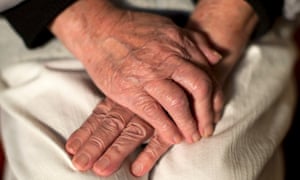
Half of the 51,300 older Australians affected by an increase in the age pension age would move on to Newstart or the disability support pension in the first year alone, new figures suggest.
The Coalition has long proposed increasing the age pension age from 67 to 70, kicking in from 2025-26. The change is likely to make Australia’s pension age the highest in the developed world.
Government estimates show the move would affect 51,300 people in the first year alone, according to a response to questions asked in Senate estimates.
The government also predicts 12,934 people would move from the age pension to the disability support pension and 12,825 to the Newstart Allowance unemployment payment.
The changes have not yet been legislated, but the pension changes remain Coalition policy after being first proposed in 2014.
They would follow Labor’s increase of the pension age from 65 to 67 when it was last in government – a change that is being gradually implemented from July 2017 until July 2023.
The opposition has pledged to fight any further increase to the pension age.
The shadow social services minister, Jenny Macklin, said the data showed increasing the pension age would not necessarily keep older Australians in work, as the government intends.
“Many Australians won’t be able to work for longer like Mr Turnbull wants them to. Instead they’ll just be forced to live on Newstart or the DSP,” Macklin said.
“Labor understands how hard it is for older Australians to find work, particularly when their job has taken a toll on their body and where there is age-based discrimination in the workforce.”
But the government has hit back, saying Labor’s policy would have created an extra 61,761 DSP recipients and 63,187 Newstart recipients by the time it was fully implemented in 2024-25.
“Jenny Macklin had no concern about this when she increased the pension age. Now she is crying crocodile tears – what a hypocrite,” a spokeswoman for the social services minister, Dan Tehan, said.
The new data comes amid a concerted push to raise the Newstart rate by $50 per week, led by the Australian council of social service.
The maximum Newstart payment is currently $272.90 a week for a single unemployed person, or just $38.98 a day.
Respected economist Chris Richardson this week called on Malcolm Turnbull’s government to boost Newstart. He described it as “embarrassingly inadequate”.
Labor is also facing an internal push to commit to raising Newstart at its national conference in July. 

Banking royal commission: Does this prove banks are not an ethical investment?


Analysis

Updated about 10 hours ago
The banking royal commission and this week's APRA report into the Commonwealth are a litany of banks, and AMP, behaving badly.
And for investors concerned about more than just profit, it has raised the question: should they buy shares in them?
"Banking done right is ethical — the challenging question is, is it being done right in particular cases, organisations? That's the challenge," said Stuart Palmer, the head of ethics research at super fund, Australian Ethical.
In the world of "ethical" investing, corporate social responsibility looms large.
"Ethical" funds don't just look at profits, but also whether a company is making a positive contribution to people, animals, and the environment.
At the banking royal commission, it's been anything but.


Fees for no service, lying to the regulators, doctoring so-called independent reports and so it goes on, adding to the negative sentiment around banks from the "ethical" investing sector.
"Banks have been on watchlists or been excluded from ethical funds for a while, for a whole range of other issues, whether they be financing the fossil fuel industry, or issues along remuneration or board performance, for example," said James Thier, a director at FutureSuper, which also calls itself an "ethical" investor.
And while the royal commission has highlighted serious misconduct in the banks, including fraud and bribery, for "ethical" investors, the fossil fuel issue is at least as important.
"We need massive shifts of capital to renewables energy storage if we are going to limit warming to below two degrees, so we need to get the big banks on board," Mr Palmer said.
"We've assessed that Westpac and NAB have been doing a better job around that than ANZ."

Ethical super funds treat banks with caution

Australian Ethical has never held shares in CBA or ANZ but does hold NAB and Westpac.
FutureSuper has no bank shares and the royal commission is highlighting why.
"Banks have always had issues and for more than a decade people have lost trust in banks to different degrees," said Mr Thier.
"I think this is the high-water mark of the issue making itself aware to people."
Probably the biggest surprise at the royal commission has been that the bad behaviour at AMP went all the way to the boardroom.
Which is why Australian Ethical says AMP will now have to clear some high hurdles to persuade it not to sell its stake.
"We'd need to be satisfied that the board and the senior executive team has, one, the commitment, and two, the capacity to manage these incidents, to stop them occurring with the regularity they have been occurring," said Mr Palmer.

Even those who don't describe themselves as "ethical" investors, say the banking royal commission is affecting their decision to hold bank shares.
"If they're behaving unethically then that negatively reflects on that brand and diminishes the attractiveness of that as an investment because it diminishes the actual outlook for the business," explained Stuart Jackson, portfolio manager at Montgomery Investment Management.
Repairing brand damage should be a front and centre for the banks, with AMP possibly facing criminal charges.
From a customer point of view though, there are those in the advertising industry who say the banks' brands aren't as damaged as we may think.
"The public makes more of a deal about Chloe Kardashian giving birth to a baby while the partner is out having an extra marital affair than they care about the banking system in Australia," said Glenda Wynyard, principal of the Media Precinct.
Ms Wynyard argues the public already knows banks do bad things, but at the same time, banks know those same people won't desert them.
"Nobody moves, or rarely do they move. It's quite difficult."
"The banks have actually got quite loyal customers for all of their flaws."
What the royal commission will lead to is banks taking a tougher approach to people's ability to repay home loans.

Which is why Mr Jackson warns anyone heading to an auction with a loan pre-approved should check their bank will stand by that commitment.
"The last thing you would want is a situation where you have won on an auction, you have paid your deposit and you are on the hook with no cooling off period for the settlement of that, to only find once you go through the application process the bank can no longer lend you as much as they had pre-approved before."

For investors, the next showdown will be next Thursday's AMP Annual General Meeting, where some big shareholders are threatening to vote against all directors standing for election, and executive pay packets.

Wednesday, 2 May 2018

Budget repair less urgent than raising dole payments, leading economist Chris Richardson says

 
Updated    
Fixing "unnecessarily cruel" dole payments is a more urgent priority than budget repair, a leading economist says.
"It is our standout failure as a nation," Deloitte Access Economics senior partner Chris Richardson said.
"I'm a longstanding campaigner for budget repair, but I would rank it behind the need to lift unemployment benefits in Australia."
Newstart and Youth Allowance have both slipped well behind other government payments over the past 25 years.
Unemployment benefits have also failed to keep pace with rises in the minimum wage.
"That combination says we here in Australia don't have a dole-bludger problem — what we have is a society that is unnecessarily cruel," Mr Richardson said.
About 1 million people receive either Newstart or the Youth Allowance.
Newstart recipients get about $40 per day to live on — just more than half what the average renter in Sydney pays their landlord per day.
Even when rental assistance and help with energy bills are added in, they have less than $50 a day to live on.
A third have been on Newstart for between two and five years.
"We make trouble for ourselves if we let the poorest of the poor get poorer," Mr Richardson said.
His annual Budget Monitor, out this week, called for a $50-per-week raise in unemployment benefits, at a cost of $3 billion per year to the budget.
"That's a lot of money, but it's a lot of money because we have to catch up to the wrongs of the past," he said.
South Australian independent senator Tim Storer has made increasing Newstart a priority in his political career and has some ideas about how to raise the $3 billion.
"For example, extending the GST to financial services would more than make up for the cost of that $50 per week," he said.
"I certainly would hope that it would be addressed in the budget next week."

Work for the Dole CDP scheme a costly failure that's harming people: report

Extract from ABC News  
 
Updated
   
The Federal Government has been urged to stop slugging people with fines under its controversial remote Work for the Dole program with claims it is "blatant discrimination" and has caused serious harm.

Key points:

  • Since 2015, more than 340,000 fines have been issued to people enrolled in the Community Development Program
  • About 80 per cent of participants are Indigenous people living in remote regions
  • Report finds scheme has helped fewer than one in five people into an ongoing job

More than 340,000 fines have been issued since 2015 to people enrolled in the Community Development Program (CDP), according to data released by the Federal Government.
Roughly 33,000 people are registered with the program. They must complete jobs and activities to receive their Newstart allowance in remote New South Wales, Queensland, South Australia, Western Australia and the Northern Territory.
Fines are issued for non-attendance or refusing suitable work.
About 80 per cent of participants are Indigenous people living in regions where unemployment can be as high as 51 per cent. They're required to work 25 hours per week, for about $11.20 an hour.
To compare, there were 47,729 fines issued in the three months to September 2017 under the Jobstart program — which includes 760,000 people in major cities and regional areas.
In the same quarter, 54,758 fines were issued under CDP.
In a letter obtained by the ABC, the Australian Council of Social Services (ACOSS) and a coalition of key Aboriginal and Torres Strait Islander organisations requested the Government suspend eight-week penalties applied to people who don't comply with CDP rules.
"People [including reports of pregnant women] are going without food for days at a time, and some are disengaging from the social security system entirely," the letter said.
"The loss of income is harming people's health, causing deep distress and leading to a loss of social cohesion."
But Indigenous Affairs Minister Nigel Scullion accused ACOSS and the Aboriginal organisations of fabricating the claims and said they were a "blatant misrepresentation".
"These allegations are alarming, however I strongly question their validity," he replied.
"I am very concerned that if there is evidence that if this is occurring within communities, that you have not brought this to my attention sooner and in person."
The minister said fines were applied to all jobseekers around Australia, and most serious CDP fines were waived.
"There are strong protections in place to make sure that penalties are only applied when warranted," he said.
Cheryl Axelby from the National Aboriginal and Torres Strait Islander Legal Services said "these concerns had been raised by Aboriginal-led organisations for a long time now", and accused the minister of adopting "delay and diversion tactics".

'The CDP is not doing a very good job'

The Government's stoush with Aboriginal organisations over CDP comes as a new report from the Australia Institute criticised the $1.3 billion scheme as a costly policy that had failed.
Analysis by the Australia Institute said the scheme had helped fewer than one in five people into an ongoing job, and fewer than one in 10 remained in that job for six months or more.
The report's author, Rod Campbell, said the program "punished people for not having a job".
"The CDP is not doing a very good job. It's costing taxpayers more and it's providing disadvantaged jobseekers with less than the programs that came before it," he said.
Senator Scullion denied a request for an interview, but the Minister's spokesman told the ABC: "The CDP has been a resounding success that has exceeded our expectations.
"The criticisms of CDP from Labor and its special interest mates would see a reduction in services for remote communities and more taxpayer funds spent on administering sit-down money, and passive welfare which we already know is so harmful and destructive to remote communities."

Union says program 'racist' and should be scrapped

The Federal Government is in the process of reviewing the CDP model, after a Senate inquiry last year recommended the Government replace the current CDP compliance and penalty regime.
But the Australian Council of Trade Unions' Indigenous officer, Kara Keys, said the CDP should be scrapped altogether.


"It's a failed program, it's not meeting any positive outcomes for workers who are employed under the program," she said.
"It shows that it is racist, that it applies more heavily to Aboriginal and Torres Strait Islander people, and it shows economically that it just doesn't stack up.
"The program is extraordinarily expensive for achieving no positive outcomes for these workers. What the evidence shows us is that the program, to manage and administer, is costing us $360 million [per year]."
The CDP had "really been a disaster for communities", added Lisa Fowkes from the Centre for Aboriginal Economic Policy Research at ANU.
"There continue to be more penalties applied to this group than to any other Australian," Ms Fowkes said.
"There's not enough work to keep people busy and interested, and there's no prospect of a job at the end so people are getting very disillusioned with it. The other side of it is that when people don't turn up they get penalised."

People 'are being driven further into poverty'

On the Ngaanyatjarra Lands in far-eastern Western Australia, the local CDP contractor said the program had driven people into further poverty, because people had been fined for non-attendance or had dropped out.
Ngaanyatjarra Council chief executive Gerard Coffey said he had heard some families were relying on one relative receiving an age pension or disability pension to support several people.
"I've had a number of people tell me it's just too hard, and they'll just live off their family, because they've been on the phone and nothing's happened," Mr Coffey said.
"People don't have the same amount of money because that's not coming into their family.
"The community stores are telling us that people aren't buying the necessities in life that they normally have.
"You'd just take for granted that if you need soap, shampoo or toilet paper, those things would just be an absolute given that those would be purchased, but people are just forgoing those things, because money is not available."
He said people had waited "hours and hours" calling a 1800 number to speak to someone about their payments being suspended.
"English not being a first language for virtually anyone out there, it can make it extremely difficult and frustrating," Mr Coffey said.

Lessons today's world can learn from Mahatma Gandhi

 Extract from ABC News
 

Posted


Ela Gandhi was just seven years old when she travelled from her birthplace of South Africa to visit her grandfather, peace activist Mahatma Gandhi, in India.
It was 1947 and the height of India's independence movement, whose leader Gandhi advocated non-violent resistance.
"The three months that I spent with him were absolutely wonderful," she said.
"I have that memory which I cherish deeply of a very, very warm grandfather, someone who gave us individual attention."
When Ms Gandhi returned to South Africa, like her father and grandfather before her, started working as a peace activist.
She was instrumental in the struggle against apartheid and was one of the members of the United Democratic Front who met with Nelson Mandela shortly before his release from prison.


On a visit to Melbourne this week Ms Gandhi shared with ABC Radio Melbourne's Jon Faine some valuable advice for people navigating the modern world.
She said the meaning of life was being able to transform your thoughts and actions in the same way her grandfather did over the course of his life.
Holding on to the same ideals without opening your mind to other possibilities was a sign of stubbornness, she said.
"He was an ordinary human being who changed, consciously changed," Ms Gandhi said.
"All of us can change. We have to see what is wrong with us and be able to change it."
She also spoke about the importance of preserving the natural world.
"I think a lot of people are disappointed not only with the India of today but with the world of today.
"I think there are lots of issues, particularly the rising inequalities that we see in every country, the poverty, the exploitation of people, of the environment, of resources.
"People are not heeding the warnings that my grandfather gave us so many years ago.
"If we don't control our desire to possess as much as we can, future generations are not going to have the resources of the world and we don't know how they will survive."
Ms Gandhi said another element of the modern world that would likely disappoint her grandfather was the rise of populism.
"Populism of its own is something that just arouses emotion in people and there's no reasoning.
"For my grandfather, reasoning was a very important thing. He would think carefully before he does anything."


Diversity should be encouraged, not feared, she said.
"Diversity is important. Diversity can teach us a lot of things and we can learn from each other.
"Diversity should not be regarded as being a threat. We need to understand each other and learn from each other."
Ms Gandhi said non-violent methods of activism were as important and effective today as they were when her grandfather led a non-violent revolution to secure India's independence from Britain.
"We should make every attempt to stick to non-violent methods, because at the end of the day if you look at non-violent methods they produce much better results.
"With non-violence you are trying to transform, you don't try to conquer somebody, whereas with violent methods you are now saying, 'I've got the power and I am going to conquer you'.
"Once you do that there is always an opponent, bitterness, a victim who has lost the battle and a conqueror who has won the battle.
"There will always be that antagonism between the two, whereas non-violent methods, the result is very good because both parties would always remain friendly."


Ms Gandhi spoke at an exhibition at Melbourne's Immigration Museum entitled Mahatma Gandhi: An Immigrant.
The exhibition looks at Gandhi's time in South Africa and how it influenced his approach to social activism.
Through more than 1,000 photographs, archival footage, voice recordings of speeches and other objects on loan from the Mahatma Gandhi Digital Museum in Hyderabad, the exhibition looks at Gandhi's migrant story and the methods of non-violent resistance he developed.
Museums Victoria chief executive Lynley Marshall said visitors had the chance to interact with "a significant collection of objects and digital material from the period of Gandhi's life in which he migrated from India to England and then South Africa".
The exhibition is showing at the Immigration Museum until July 15.

Livestock exporter raised concerns with Federal Government before thousands of sheep died at sea

 Extract from ABC News


A live exporter warned the Federal Government that sheep were at risk of being involved in "catastrophic accidents" and enduring poor animal welfare conditions unless it banned old ships.
In a document obtained by the ABC, Western Australian exporter Wellard called on the government to remove a clause that allowed "substandard ships" to continue to carry livestock.
The report warned exporters used old ships because they were cheaper and that created a "clear financial disincentive to build new ships with higher animal welfare standards".
The exporter produced the document before almost 2,500 sheep dying in an Emanuel Export shipment to the Middle East in August last year.
Footage of that incident emerged last month, prompting the newly appointed Agriculture Minister David Littleproud to demand immediate reviews into the incident and trade.
After obtaining the report, the ABC contacted Wellard and senior executive Fred Troncone confirmed its authenticity.
"The reputation of our industry rests on how well our industry is regulated," he said.
When the Wellard report was produced, Victorian National MP Darren Chester was the minister for infrastructure, which has oversight of maritime regulations.
Mr Chester lost his seat in Cabinet last year and is now responsible for the veterans affairs portfolio.
The ABC yesterday contacted Mr Chester's office for an interview but he was unavailable.

Long-held welfare concerns become a reality

More than a decade ago, the federal government changed shipping standards to ensure export vessels had sufficient ventilation systems.
Ensuring there is airflow in livestock pens is one way to prevent heat stress among animals.
"When that regulation was implemented they said 'look all new vessels built from 2004 must meet this new standard'," Mr Troncone said.
"However, all the vessels that were already in operation prior to that date didn't really have to meet that new standard."
The changes did not come with a so-called sunset clause that would have scrapped those exemptions and forced all operators to meet the new standards.
"In reality that has never happened, the grandfathering clause remains in that piece of regulation," Mr Troncone said.
The Wellard report proposed three major reforms for the live export industry.
They include a sunset clause on the grandfathered provisions, a ban on double-tiered vessels and a 25 to 30-year age limit on livestock vessels.
The company last year wanted the sunset clause to take effect by the end of 2018 but now want it to happen immediately.

Overhaul of standards needed for industry to survive

Western Australia's Agriculture Minister Alannah MacTiernan said she backed Wellard's calls for a sunset clause but wanted it to be phased in "over a number of years".
She also wants federal authorities to bring in stricter animal welfare conditions, including fewer sheep in pens onboard and independent observers on every shipment.
"There has been no incentive for many of these operators to invest in vessels that meet the minimum standards introduced more than 10 years ago," Ms MacTiernan said.
Wellard has spent hundreds of millions of dollars building purpose-built ships for live exports.
Unlike Emanuel Exports, the company linked to more than 5,000 sheep deaths at sea in the last year, Wellard owns the ship it uses for export.
Its recommendations would force out of operation the ships linked to the recent mass deaths — the Awassi Express is 28 years old and the Al Messilah is 38 years old.
Emanuel Exports used the Al Messilah to send 68,000 sheep to the Middle East this week.
The report also argued there were enough younger ships with permission to carry Australian livestock that could cater for all of the nation's sheep and cattle exports.
"I think it's really important that we win the confidence of the public back, demonstrate that we are doing a great job, be open to scrutiny and demonstrate we have a right to be here and provide a very valuable service for both producers and consumers overseas."
The ABC did not source the document from Wellard or Ms MacTiernan.
Wellard's publicly expressed concerns about old live export ships date back as early as 2005.
Former Nationals leader Warren Truss twice held the infrastructure portfolio in the years since, as have Labor's Anthony Albanese and now Nationals backbencher Barnaby Joyce.
In a statement, the Australian Maritime Safety Authority (AMSA) confirmed it self-initiated a review into shipping standards last May.
A spokesperson said AMSA had expected to hold public consultations in the coming weeks.
But those consultations are now on hold until it receives the findings of a snap review the Agriculture Minister David Littleproud initiated last month.
That review is expected to be released later this month.

Emmanuel Macron calls on Malcolm Turnbull to show 'power of conviction' in fighting climate change

 
Posted


French President Emmanuel Macron has issued a challenge to Australia to lift its game when it comes to tackling climate change.

Key points:

  • Mr Macron spoke of his concern about the effect of climate change on Pacific nations
  • France has deep interests in the Pacific, forged through decades of colonialism
  • New Caledonia will hold a referendum later this year on whether to break away from France

Mr Macron, who arrived in Sydney last night, is only the second sitting French President to make an official trip to Australia.
The first stop on his whistle-stop tour was a dinner at the Sydney Opera House joined by politicians, business leaders and French expats.
During his speech, the President called on Prime Minister Malcolm Turnbull to show the "power of conviction" and display courage in confronting climate change, despite the ideological hurdles he may face in both the Parliament and his party room.
"I am fully aware of the political and economic debate surrounding this issue in your country, and I respect this," Mr Macron said.
"But I think that actual leaders are those that can respect those existing interests, but at the same time decide to participate to something broader, to something more strategic."


In launching the plea, Mr Macron suggested some of Australia's closest neighbours feel the effect of climate change more acutely than others.
"When I speak about vulnerability, I want to speak obviously about climate, which is an absolute priority," Mr Macron said.
"Numerous states in the Pacific are at direct risk of disappearing completely in only a few years if we do not take action.
"How could this life be better if we decide to sacrifice the life of our children? It is not an option."
France has deep interests in the Pacific, forged through decades of colonialism.
Mr Macron will travel to New Caledonia after his trip to Australia.
The country will hold a referendum later this year on whether to break away from France.

'You are a man who is for, not against'

Mr Turnbull and Mr Macron are also expected unveil new agreements to boost military co-operation and deepen collaboration on cyber security.
They will also discuss China's growing strategic presence in the Pacific and the possible collapse of the Iran nuclear deal.
US President Donald Trump has vowed to tear up the deal, which lifts sanctions on Iran in return for Tehran curtailing its nuclear weapons program.
Mr Macron has been urging Mr Trump to change his mind, warning that junking the agreement would be deeply destabilising.
Australia has also been pressing the US not to abandon the deal — but it has been much less forceful in its advocacy than France.
Mr Turnbull also heaped praise on Mr Macron at last night's dinner, paying tribute to his vitality and ambition.
"You are a man who is for, not against," Mr Turnbull said.
"We might say 'always on the front foot, always a glass half full, not half empty'."