Contemporary politics,local and international current affairs, science, music and extracts from the Queensland Newspaper "THE WORKER" documenting the proud history of the Labour Movement.
MAHATMA GANDHI ~ Truth never damages a cause that is just.
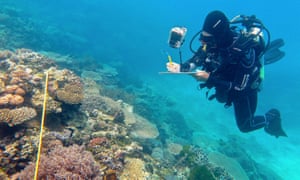
Exclusive: ‘Confidential’ draft acknowledges coral bleaching but does not make any attempt to address climate change
A draft of the Australian government’s response plan to the coral
bleaching on the Great Barrier reef includes no additional funding or
action to combat climate change.
Photograph: Reuters
The Australian government’s official “response plan” to the worst ever bleaching event on the Great Barrier Reef
commits it to no new action, pledges no new money and does not make any
attempt to address climate change, according to a draft seen by the
Guardian.
The Northern Great Barrier Reef
Response Plan, marked “draft” and “confidential”, begins by describing
the bleaching event as “the worst ever coral bleaching” and attributes
its cause to climate change.
Great Barrier Reef: diving in the stench of millions of rotting animalsIt says: “In the aftermath of the bleaching event it is more
important than ever to building [sic] the resilience of the reef.” But
the recommendations appear to contain no new money for action to help
build resilience.
It says the plan will be “nested under the Reef 2050 plan”, which is a
document the federal and Queensland governments created to convince
Unesco not to include the Great Barrier Reef on its “world heritage in
danger” list.
On Thursday the government needs to report to the Unesco world
heritage committee on the implementation of the Reef 2050 plan, as well
as how it has been funded.
But, in June, the Guardian revealed Australia would also need to report on how it is responding to this year’s bleaching event.
At the time, Tim Badman, the director of the IUCN’s world heritage
program, which advises the committee on the state of its natural world
heritage properties, told the Guardian:
“We would expect that that report from Australia is going to cover all
the significant things that have happened since June 2015 and whether
there are changes in the picture of the management or the response that
is needed … The bleaching event is a new issue to be considered.”
It is not known whether this plan is what the government intends to present to Unesco in response to that requirement.
It was revealed this week
the bleaching appeared to kill about 67% of coral in the northern third
of the reef. Across the entire reef, early estimates suggested about
22% of coral had died but scientists now say that figure is likely to be
higher.
But the government’s plan for dealing with the bleaching, at least in
its draft from October, appeared unable to point to any significant new
action. Coral bleaching ‘has changed the Great Barrier Reef forever’It divides actions into four groups. One group is “new initiatives to
boost recovery” and the others are activities that have either been in
place for a long time, were enacted as part of the Reef 2050 plan, or
were introduced since the Reef 2050 plan.
The document indicates the list of activities under “new initiatives
to boost recovery” are not complete but it does indicate they require
“no new money” and mostly deal with reducing sediment runoff through
gully remediation.
Under the actions labelled as “additional” since 2015, it lists a
grab-bag of activities initiated by other groups, including WWF. That
includes the two shark licenses WWF bought,
which they will retire, and research they are conducting into turtle
health – neither of which were primarily a response to bleaching.
The draft document was presented to the Reef 2050 advisory committee, which mentioned it in its communique on 11 October. The communique said the committee “welcomed the draft and provided comments”.
“The committee noted that the aim was to finalise the Northern GBR Response Plan by the end of 2016,” the communique said.
It remains unclear whether this document was still set to be
completed by the end of 2016 or whether it would form the basis of the
government’s reporting to Unesco in relation to the bleaching.
The government is also preparing a Reef 2050 plan investment
framework, which is expected to form a key component of its reporting to
Unesco on Thursday.
A Queensland government study found $8.2bn needed to be spent over 10
years to reach water targets set in the Reef 2050 plan. The government currently says it is spending just $2bn and much of that is not being spent on water quality but also other activities such as maritime safety.
A spokeswoman for the federal Department of Environment and Energy
said: “The department does not comment on draft confidential reports.
Australia will provide its status update on the Reef 2050 plan to Unesco
on 1 December 2016.”
Queensland scientists have confirmed this year's mass
coral bleaching event has resulted in the largest die-off of corals
ever recorded on the Great Barrier Reef, while some tourist areas showed
remarkable improvement.
James Cook University researchers
estimate two-thirds of coral coverage has died along a 700-kilometre
stretch of reef off far north Queensland, north of Port Douglas.
While
the northern reef struggled, there was good news for southern parts of
the reef, which includes major tourist areas around Cairns and the
Whitsundays.
JCU professor Terry Hughes said scientists had
finished their underwater surveys, which they have been conducting since
the severe coral bleaching event six months ago.
"When bleaching
occurs, in the 6–12-month period afterwards, the corals either survive
and regain their colour, or if they don't regain their colour, they
slowly die," Professor Hughes said.
"So that's why we've had to wait seven or eight months before resurveying these reefs."
Professor
Hughes described the area as severely damaged, and estimated it could
take between 10 and 15 years for new corals to grow.
"A dead coral's not very spectacular, and many of them now are unrecognisable," he said.
"The bleaching in the northern section was so severe that corals that don't normally bleach, have.
"And so when you lose a 50-year-old coral, you can't [fix] it in just a handful of years."
Tourist areas show remarkable improvement
The researchers said it was not all doom and death for the World Heritage Area icon.
Surveys of southern areas, including peak tourists spots, showed a remarkable improvement in coral health and recovery.
"The
good news is that south of Port Douglas, including the major tourists
areas around Cairns and the Whitsundays, they have had relatively low
levels of mortality," he said.
JCU researcher Andrew Baird said the latest survey was the final test to show the recovery of the areas.
But he will still be watching what happens this summer.
"We can't be complacent, and the big issue is, when is the next bleaching event," he said.
"Those reefs around Townsville and further south didn't bleach this year, hopefully they're not going to bleach next year.
"But who knows when the next major bleaching event will happen?"
The
Great Barrier Reef Marine Park Authority said its experts would meet
later this week to discuss whether this summer may see another bleaching
event.
Mike Ball Dive Expeditions' tourist manager Craig Stephen said the researchers' findings offered some good news.
"It's escaped a lot of the bleaching that's occurred this year," he said.
"Unfortunately for us the majority of the diving and a majority of the tourists are coming to the northern section of the reef.
"Fortunately nonetheless, some patchy areas are unaffected so still world-class diving available."
Musician who has performed at the Standing Rock protest site asked
Obama to intervene in an impassioned Facebook post before Trump becomes
president
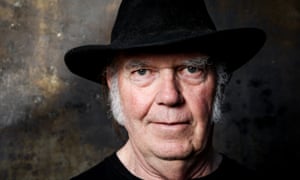
Neil Young: ‘Be like our brothers and sisters at Standing Rock. Be there
if you can. The progress we have made over 240 years as a nation, has
always come first from the people.’
Photograph: Rich Fury/Invision/AP
Guardian music
Neil Young has called on President Barack Obama to intervene in the North Dakota
pipeline standoff and criticized the “unnecessary and violent
aggression” faced by protesters gathered at the Standing Rock site.
In November, Young spent his 71st birthday performing for those at the Dakota Access pipeline protest site, and on Monday, in a long Facebook post, he requested Obama step in and “end the violence” against protesters.
“The camp grows as winter comes,” he wrote together with the actor
Daryl Hannah. “Standing in protection of our most vital life support
systems, but also for the rightful preservation of Native American
cultural ways and their sovereignty.”
“It is an awakening. All here together, with their non-native
relatives, standing strong in the face of outrageous, unnecessary and
violent aggression, on the part of militarized local and state law
enforcement agencies and national guard, who are seemingly acting to
protect the interests of the Dakota Access pipeline profiteers, at a cost of hundreds of thousands of tax-payer dollars, above all other expressed concerns.”
The musician then expressly appealed to the outgoing president to
step in. “They stand for all that is good and they stay strong. We are
calling upon you, President Barack Obama, to step in and end the violence against the peaceful water protectors at Standing Rock immediately.”
He then turned his attentions to president-elect Donald Trump, who he
refers to as the “surprise president”, saying he brings a “bounty of
opportunity” and his tenure will highlight the “great issues of our
time”.
“The surprise president claims he does [not] believe in climate
science nor the threats it presents and his actions and words reflect
that claim in tangible and dangerous ways,” he wrote.
“Do not be intimidated by the surprise president’s cabinet appointees
as they descend the golden escalator. Those who behave in racist ways
are not your leaders. The golden tower is not yours. The White House is
your house.”
In May, Young – who said he supported Bernie Sanders – allowed Trump to use his song Rockin’ in the Free World on the campaign trail, after initially saying he would not have allowed him to use it if he had been asked beforehand.
He ended the post with an appeal for people to be inspired by the
Standing Rock protesters and stand up to the Trump-led administration.
“Be counted,” he wrote. “Be like our brothers and sisters at Standing
Rock. Be there if you can. The progress we have made over 240 years as a
nation, has always come first from the people.”
John
Falzon
We need to change the way we think about housing. Like access to
education and health, having a home is a human right
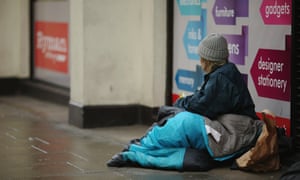
‘If the government continues to walk away from the problem, we
can only arrive at the scandalous conclusion that homelessness is not
just caused by government policy, it is government policy.’
Photograph: Dan Kitwood/Getty Images
Tuesday 29 November 2016 06.30 AEDT
Inequality is not an accident. Nor is it an economic
inevitability. It is a political choice.
The failure to fight inequality is a failure to govern. Government
should be the chief means by which we achieve collectively, what we
cannot achieve individually.
In Australia, we have historically understood this reasonably well
in areas such as health and education. We understand that government
has the responsibility to guarantee that everyone has the right to
these goods.
It should not matter if you are struggling to survive because you
are one of the 1.1 million who are underemployed; or whether you are
unemployed or a student; or if you are living with a disability or
have a caring responsibility, or are living on an aged pension.
We hold as a common value that none of these conditions should bar
your access to the highest quality health care and education.
This right, however, has been significantly denuded over time. The
trend towards commodification has a growing and ever more toxic
presence in these domains. What should be fiercely protected as a
good for all, is increasingly being threatened with becoming a
commodity affordable only for some.
The neoliberal trajectory leads to the miserable idea that you pay
for what you get and that there should only be low-quality, residual
versions of the health or education “product” for those who
cannot “pay their own way”.
This is not only unjust, it is a lie. The whole idea of good
government and a fair society is that we should all contribute what
we are able, in order to collectively ensure that no one misses out
on essentials such as health and education.
We know from the Gonski Review that class and educational outcomes
are correlated.
Which is why we need to reallocate our education resources on the
basis of student need, rather than the preservation of privilege. And
we know from the social determinants of health framework that health
outcomes are closely correlated with class as well. Housing is just
as much a human right as education and health. If you do not have a
place to call home, it is very hard to look after your health. It is
hard to go to school or Tafe or university. If you do not have a safe
and appropriate place to call your home it is hard to connect with
other people, to feel as if you are part of society.
As the poet, Maya Angelou, writes: “The ache for home lives in
all of us. The safe place where we can go as we are and not be
questioned.”
With housing, however, we tend not to imagine that it is
government’s responsibility to ensure that no one misses out on it.
We rather view the market as the “normal” mechanism by which
housing is allocated.
Further to this, some see housing, particularly with the aid of
unfair and inefficient settings such as negative gearing, as a
speculative sport rather than a fundamental human right.
We need to change the way we think about housing. With more than
100,000 people experiencing homelessness, around 200,000 families on
the waiting list for social housing and 850,000 plus households
experiencing housing stress (where a household’s income is in the
bottom 40% of incomes and it is paying more than 30% of this income
on housing), it is becoming one of the clearest indictors of
inequality in prosperous Australia. And when inequality is the
problem, the market is not the answer. We need to compel governments,
starting with the Commonwealth, to take responsibility for the
housing crisis.
The Federal government must realise that a failure to address
housing inequality is a failure to govern. It must strengthen, rather
than cut, its current commitments to homelessness and social housing.
It also needs to initiate a further, significant and visionary
investment in social housing (around $10bn over three years according
to The
Ache for Home: a plan to address chronic homelessness and housing
unaffordability in Australia).
If it continues to walk away from the problem, we can only arrive
at the scandalous conclusion that homelessness is not just caused by
government policy, but rather that homelessness is
government policy.
In the meantime, the federal government appears to be intent on
continuing on the path towards deeper inequality enunciated in the
2014 budget.
Witness the attacks on the people who are forced into poverty. In
a massive act of collective character assassination, good people are
being described as a burden on society. The truth is that it is they
who are forced to bear the burden of inequality, carrying the can and
cursed for it!
The fight against inequality is also a fight against lies. The
truth is that people are structurally locked out of jobs and income
adequacy (even when they have jobs) and then condemned for being
excluded, as if it were a perverse and immoral choice.
Marginalisation is actually an historical intersection between the
personal and the structural. The choice to deepen and entrench
inequality is a political choice made by government, not a personal
choice made by those who experience it.
In addition to the structural deficits of the labour market, the
inability of the housing market to provide a place to call home for
so many is itself an obstacle to employment. It’s notoriously hard
to get a job or keep one if you haven’t got a home, or if you are
at risk of homelessness.
We are tired of being told that the housing crisis is too complex
to address, or that the market is the best means of allocating
resources, or that the answer lies with not-for-profits.
Both the market and the not-for-profit sector can and should
contribute to the solution, but governments must do what markets
cannot. Markets might be able to meet some human needs, but they
cannot guarantee access to human rights. Housing, like health and
education, is a human right and should be recognised by government as
such.
The great social objective of housing for all, as a matter of
justice rather than luck, must be set by government and achieved by
government as a means of addressing our collective ache for home. Now
is not the time for government to abrogate its responsibility to the
people. It is government that must invest and government that must
lead. Is that too much to ask?
Internet giants are accessing vast amounts of personal data and using it
to shape our behaviour. It’s reminiscent of East Germany under the
Stasi
Illustration by Nathalie Lees
In
1998, I joined the UK launch team for an e-commerce startup named after
the world’s largest river. The smart idea was to harness the
unprecedented cataloguing capacity of the emerging internet to sell
books – a product with a long shelf-life – online. In those days, now
regarded as the classical era in tech history, the boundary between the
product consumed and the medium used to deliver it was clear.
Increasingly, the boundary between product and platform is dissolving
before our eyes. First, we offered the freedom of the biggest selection
of books in the world. Then we said: “If you liked that, you will like
this.” We were following you into the bookshop, recording your
purchasing history and suggesting your future. It started with books,
but it was always intended to be everything, in the end.
Two years later, in 2000, Harvard Law School professor Lawrence Lessig predicted
that the internet would become an apparatus that tracks our every move,
erasing important aspects of privacy and free speech in our social and
political lives. “Left to itself,” he said, “cyberspace will become a
perfect tool of control.” A sceptical reviewer scoffed: “Lessig doesn’t offer much proof that a Soviet-style loss of privacy and freedom is on its way.”
Sixteen years later, it’s clear that the digital world born in
freedom has evolved into a creature of control. Post-Snowden, we know the scale of NSA and GCHQ surveillance.
We know we’re being watched. But equally, we might consider that the
employee who decides what does and doesn’t go on Facebook for its 1.79 billion active users is the most powerful censor in the world. Do you know her name?
We also know that corporate internet giants gather data to maximise
profits from our consumer habits, from grocery shopping to TV viewing
patterns. Just like trawlers with dragnets, all sorts of other
collateral data gets hauled in along the way. Data surveillance, once
intangible and invisible, now blatantly announces its presence in our
everyday lives. Mobile accessories and the interconnectivity between
gadgets and appliances in our homes – the internet of things – create an
unprecedented network of tracking devices capturing data for commerce
and government.
The technology we thought we were using to make life more efficient
started using us some time ago. It is now attempting to reshape our
social behaviour into patterns reminiscent of the total surveillance
culture of the medieval village, East Germany under the Stasi, or the
white supremacist state of South Africa in which I grew up.
In an increasingly online everyday life, our use of social media has
become a medium for normalising the acceptability of intrusion and
behavioural correction. We are bombarded by “helpful recommendations” on
education, health, relationships, taxes and leisure matched to our
tracked user profiles that nudge us towards products and services to
make us better citizen consumers. The app told you that you only took
100 steps today. The ad for the running shoes will arrive tomorrow.
We risk allowing ourselves to become a vast network of informants on
each other and ourselves. Think about GPS-based location tracking on
your mobile phone; think about social media apps where we broadcast our
spontaneous thoughts, social lives and relationships.
As individuals we behave on a spectrum of complicity with the demise
of our privacy. We know Twitter is broadcasting. We’re generally naive
about the limits to our visibility and history on Facebook.
We’re in self-denial where there ought to be a reasonable expectation
of privacy, as with texts, emails and online shopping. In truth we
already know nothing’s private because the corporates and government can
get it anyway. And the icing on the cake is that we are paying for our
surveillance out of our own hard-pressed pockets.
Whether the internet is a “public good” is a question that has so far
focused primarily on anxiety about government intervention into our
digital lives. We are rightly concerned that Donald Trump will soon get
his hands on the NSA, and that Britain’s snooper’s charter
legitimises rather than limits the vast intrusions exposed by Snowden.
But just as the internet knows no international borders, neither does it
recognise outmoded distinctions between state and corporate power,
citizens and consumers and platforms and products.
‘So this is the action I’m taking.’ Patrick McGoohan as Number Six in the TV series The Prisoner. Photograph: Channel 4
The fact that billions of us now use a handful of corporate-owned
global platforms to manage pretty much every aspect of our daily lives
indicates how fast the potential of digital culture is shrinking. A
tectonic rift exists between the corporate apparatuses of Google,
Facebook, WhatsApp (now owned by Facebook), Twitter, Apple and Amazon, and the open source and creative commons ideals of the “internet of public good”.
Our concern about government snooping sometimes distracts from
self-awareness of our complicity as consumers of products so ubiquitous
they have become everyday verbs.
So, I’m going to act. Of course there are all sorts of measures we
can take to improve our internet security. Using encryption and password
managers, securing our sources. We can even put our mobile phone in a
heavy copper purse and drag it round with us. But while there are tools
we can use to avoid surveillance and hackers, as a consumer I’m trying
to avoid or limit using services offered by corporates who don’t pay
their taxes; are idolisers of borderless free trade but arch-enemies of
the international labour movement; are destroying privacy and creating
an architecture of commercial surveillance of every aspect of our
existence.
The so-called hippy libertarians in Silicon Valley are more like
unelected tyrants. They demand free speech and low tax to suit them but
impose de facto censorship, surveillance and behavioural correction on
us. No privacy for us and barely any scrutiny of them. The barons who
own the digital kingdom that most of us inhabit declare themselves
libertarians but not when our liberties are at stake.
None of the internet giants has unionised employees. Trade unionists are derided by Silicon Valley as modern-day luddites. But the recent landmark UK court ruling that Uber drivers are not self-employed demonstrates that the gig economy does not, in the words of TUC general secretary Frances O’Grady,
have to be a rigged economy. “Our role isn’t to try to stop this
progress, it’s to make sure that technology is used to make working
people’s lives better, and to make sure the gains from new technology
are fairly shared.”
I’m also worried about how we use social media. The so-called neutral
platforms facilitate hate against women, racism and homophobia, and
they may have put Trump in the White House as well. It may not be the
platform itself, but the way in which it favours those outside the
conventional media establishment and its notions of balance. Analytics expert Laeeq Khan suggests
a behavioural change in our social media habits: “As social media
consumers, we should resist limiting ourselves to an echo chamber of
like-minded voices.”
Trump dominated rivals on social media. He tweeted, Facebooked and
Instagrammed directly to followers, apparently personally and
spontaneously. It wasn’t necessarily the content that people identified
with, but the carefully crafted lack of spin. This modern-day Big
Brother mastered Twitter by propagating a sense of immediacy, blatant
expression and human risk, rather than balance and caution. What Trump
tweeted at 3am, the mainstream media reported the next day.
So this is the action I’m taking. I have stopped using Google as my
search engine and deactivated my Facebook account. WhatsApp followed
when it announced in August that it had abandoned its principled
pro-privacy stance and would share data
with its new parent and others in the “Facebook family of companies”.
I’m putting on my tin hat, dusting off my open-source kitbag, and
heading off to the dark woods to join the resistance. Like Patrick McGoohan playing Number 6 in The Prisoner, I expect it’s going to take many failed attempts to try to escape the Village.
A Senate report has recommended that Australia should move completely
away from coal-generated electricity, citing economic factors as the
primary drivers.
It comes about a month after the unplanned closure
of Hazelwood, Australia’s dirtiest coal station, and before the
expected unplanned closure of several others around the country.
With the backing of both the Labor and Green members of the
committee, the report called for a comprehensive energy transition plan
and the development of a mechanism that would ensure coal-fired power
stations close in an orderly fashion and with plenty of warning.
It also backs a call from the Australian Council of Trade Unions, which argued in a report
this month for an independent “energy transition authority” to manage
the transition, ensuring that particular workers and communities are are
not unfairly affected by the changes.
The committee’s chairwoman, Larissa Waters, said: “This report should
be a wake-up call for the government. The electricity market is going
through a dramatic transformation but it must be managed.
“Evidence to the committee showed that Australia’s biggest power
companies, unions, climate NGOs and affected communities like the
Latrobe Valley are all pleading with the government for a national
plan.”
The interim report also called for a change to the national
electricity objective, which governs the national electricity market but
currently demands regulators focus only on price, quality, safety,
reliability and security but not environmental factors. The report said
it should include an objective that was “consistent with Australia’s
obligations under the Paris agreement”.
The report was backed by both the Labor and Greens members. The Liberal members wrote a dissenting report.
It came after two public hearings in which energy companies,
environmental groups, unions and academics urged the government to
devise an orderly transition away from coal-generated electricity,
rather than relying on market forces to lead to the closure of
Australia’s ageing fleet of coal-fired power generators.
“The
question is not if coal-fired power stations will close but how quickly
and orderly these closures will occur and what supporting policies, if
any, will be in place to help manage the process,” the report said.
The requirement to plan the transition was driven mostly by economic
and energy security factors, the report said, since a disorderly closure
could wreak havoc with energy supply and communities that rely on jobs
in coal-related industries.
The closure of most power plants in the coming decades was
inevitable, with most of Australia’s fleet already more than 30 years
old. Several large coal power stations have already been slated for
closure.
But closure within a decade was also demanded by Australia’s
commitment to keep global warming at well below 2C, the report said.
During the first of the two public hearings,
Olivia Kember of the Climate Institute told the committee: “For
emissions reductions consistent with the 2C goal, Australia’s existing
coal stations essentially needed to have closed by the early 2030s and
what that works out to is roughly the rate of the equivalent of a
Hazelwood a year.”
A submission from AGL said it welcomed the discussion of the closure
of coal as a “critical element of the transition to a decarbonised
energy sector”. AGL argued that governments needed to plan the closure
of power stations – including ones they own – so that investors had
enough lead-time to plan replacement clean energy.
The Minerals Council of Australia, however, argued the discussion was
“remarkably one-dimensional” and pushed for the construction of
“super-efficient coal generation”, saying eliminating coal generation
would push the costs of the transition higher.
During the public hearings, Erwin Jackson from the Climate Institute
said that since existing coal power stations were going to close no
matter what, energy prices were inevitably going to rise.
And Frank Jotzo from the Australian National University said the cost
of building renewables and coal power stations was about the same, so
there was no commercial reason to preference coal.
“I would judge it highly unlikely you would see commercial investment in coal-fired power in Australia,” he said.
Jotzo also said while new coal power stations were more efficient
than existing ones, they would lock Australia into a high-emissions
future.
“In the short term, as a thought experiment, if you replaced the La
Trobe generators with ultra supercritical [efficient coal power
stations] you’d make something like a saving of 50% in emissions in
rough terms,” he said. “But of course you’re locking in that investment
for a long time and that’s fundamentally incompatible even with the
existing Australian national 2030 emissions target.”
In a dissenting report, the Coalition senators said they did not support any of the recommendations of the majority report.
“Inappropriate policy, regulation and interference in an attempt to
pick winners or mandate inefficient investment means consumers, industry
and communities will ultimately suffer through increased energy prices
and loss of energy security,” they wrote.
The Coalition senators argued the government already had, or was
developing, a comprehensive set of energy transition policies, and
rejected the majority report’s recommendations mostly for being
redundant.
The Greens’ climate change and energy spokesman, Adam Bandt, said:
‘This is a red-letter day for clean energy. For the first time ever, a
parliamentary body has called for a managed replacement of coal-fired
power with renewables.
“When everyone from the Greens to Australia’s biggest coal-fired
power company are calling for a national plan to phase out coal-fired
power stations so workers, communities and clean energy investors can
plan for the future, it is time for the government to get on board.”
Union report finds jobseeker program is ‘deeply punitive’ and there
is a high level of dissatisfaction with services provided by private
contractors
Australian Unemployment Workers Union national advocacy hotline report
relates concerns about job agency bullying and safety fears within the
work for the dole program.
Photograph: Matt King/Getty Images
Jobseekers are reporting high levels of bullying and safety concerns
about job agency providers, according to a report that describes the
jobseeker program as “deeply punitive” and in need of a complete
overhaul.
The Australian Unemployment
Workers Union (AUWU) national advocacy hotline report, launched on
Sunday, reveals numerous examples of dissatisfaction with the welfare
services provided by private agencies on behalf of the federal
government.
The report drew together a sample of 170 unemployed callers who
contacted the advocacy hotline seeking advice about unemployment
services.
The federal government has contracted private companies to deliver
welfare services and provide job agency services. In some cases they
have erroneously penalised applicants or cancelled welfare payments.
Of the callers surveyed by the AUWU, 52% raised concerns about job
agency bullying, while 30% raised safety concerns about work for the
dole programs.
The report said: “The AUWU is deeply concerned by the data gathered.
The broad spectrum of issues poses serious questions regarding the
quality of services being provided by job agencies.
“The data exposes not only the unscrupulous and punitive practises of
job agencies, but also the failure of the Department of Employment to
effectively regulate the industry and ensure that job agencies follow
the relevant government deeds and guidelines.
“Alarmingly, there were little to no consequences for job agencies that failed to uphold the government’s rules.”
It included statements from jobseekers about the difficulties they have faced.
Blake
Hourigan said that he was scared to attend work for the dole programs
after a series of bad experiences with job placement providers. He said
he had worked at a farm that involved building gardens, carpentry and
brickwork; all areas he had no experience in.
“The health and safety rules or regulations were almost non-existent.
It was a miracle that no one was seriously injured,” he said. “Although
I do believe work for the dole or other activities to help get
jobseekers ready for work is a great idea on paper, that was not the
case in the experience I had during my time.”
“I would rather live on the streets than to be afraid everyday I go to work for the dole.”
The number of penalties imposed by job agencies on unemployed workers
had increased by 50% in the past financial year, the report found,
citing data from the Department of Employment. Guardian Australia has previously reported
that Centrelink could face legal action from jobseekers over penalties
or abrupt suspensions of welfare payments imposed by private employment
companies.
The AUWU report calls for an investigation into the jobseeker program and warns of the risks of further deregulation.
“Given the dysfunctional and punitive nature of the employment
services industry, the Coalition’s recent push to give job agencies
unprecedented powers to penalise the unemployed is inappropriate and
dangerous,” it said.
The department has been contacted for comment.