Sunday, 29 May 2022

What will the new Labor government do for rural and regional Australia?

Extract from The Guardian 

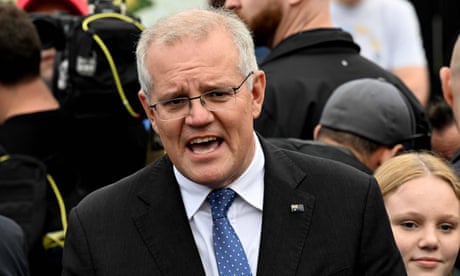
Anthony Albanese campaigning in the New South Wales seat of Eden Monaro with Labor candidate Kristy McBain.
Supported by
Vincent Fairfax Family Foundation
About this content
Sun 29 May 2022 06.00 AEST

Anthony Albanese says his desire as prime minister is to unite Australia, with “no one left behind, no one held back”, but for many living outside the capital cities in Coalition-held seats, being left behind is exactly what they fear.

Chief executive of the Foundation for Rural & Regional Renewal, Natalie Egleton, says despite the federal election results indicating the Nationals’ base is declining, the party held all their seats, meaning “there’s still a sentiment in the bush about the need to have parties focused on rural communities”.

Labor’s election win, Egleton says, offers an “optimistic message for many rural communities on the frontline of climate change”.

But while the party has tailored its policies in areas like the NDIS and aged care to account for the added challenges regional Australians face, important questions remain unanswered around agriculture and rural industries.

Tyson Cattle, a spokesperson for of AUSVEG, the peak body for the vegetable industry, said agriculture and horticulture “hasn’t been a strong portfolio or a highly regarded portfolio within [Labor’s] cabinet”.

Speculation still surrounds who will be the Albanese government’s minister for agriculture, though Julie Collins has been the shadow minister.

So what does a Labor government mean for regional Australians?

Agriculture workers

Foreign agricultural worker visa rules was one of the most contentious agricultural policies during the federal election campaign.

Labor announced it would create a dedicated agriculture visa stream under the established Palm (Pacific Australia Labor Mobility) scheme. It says this version of the visa has 55,000 workers ready to go.

The National Farmers Federation has been critical of Labor’s decision to scrap the Coalition’s new visa for workers from south-east Asia. No workers have arrived under that scheme yet.

Labor’s visa plan pays workers’ upfront travel costs for the seasonal worker program, while arrivals under the Pacific labour scheme will be permitted to bring their partners and children to Australia.

Cattle welcomes Labor’s national labour hire licensing scheme, as he says the agricultural industry relies on labour hire and a licence will provide stronger safeguards.

Water

Labor has committed $34m to establish a National Water Commission aiming to drive reform, future-proof water resources and increase policy transparency, after Barnaby Joyce dissolved the national advisory body to scrutinise major water projects in March.
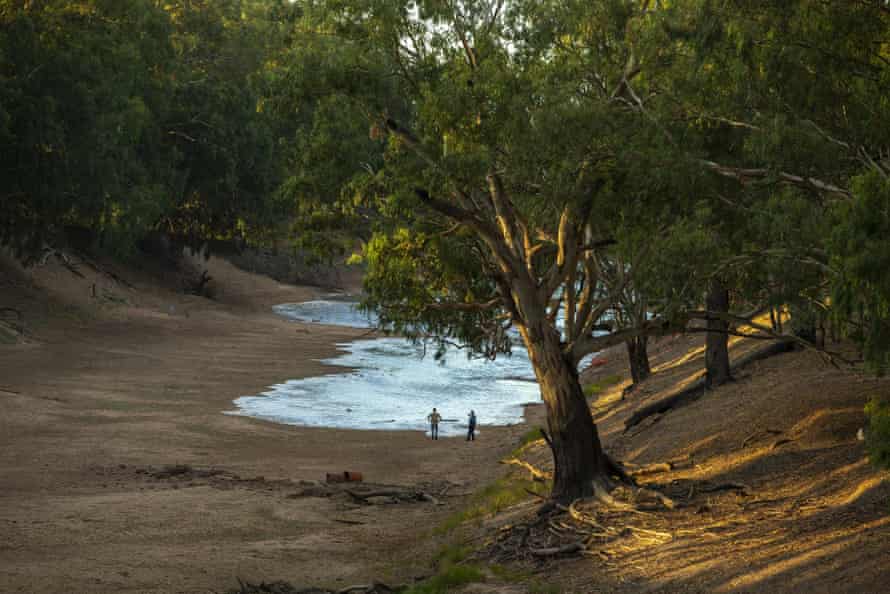
Water begins to flow in the Darling Barka River, in Louth, New South Wales

Water begins to flow in the Darling Barka River, in Louth, New South Wales. Photograph: Jenny Evans/Getty Images

Labor has also committed to uphold the Murray Darling Basin Plan in full, delivering on water commitments including 450GL for South Australia.

David Papps, the former commonwealth environmental water holder, said the delivery of the plan by 2024 would require a “remarkable change”.

Labor’s five point plan for the basin includes improving metering and monitoring with a “no meter, no pump” policy, and increasing transparency through market surveillance and making data publicly available.

The Albanese government has also committed to increasing First Nations ownership, including $40m of cultural water promised in 2018, as well as incorporating First Nations’ knowledge into planning for environmental flows.

The Labor government will also broaden the National Water Grid mandate to include town water supplies.

National disability insurance scheme

Fixing regional access was one of the six key measures outlined in Labor’s plan to restore the NDIS.

The then shadow minister for the NDIS, Bill Shorten, said that Labor would appoint a senior officer within the NDIA to tackle the concerning barriers to service in regional areas.

Shorten said regional people with disability have had to “battle to get on the scheme and to access services in increasingly thin markets” as there is a only a small number of providers in regional locations, leaving participants with nowhere to go if a provider terminates their service provision.

Aged and health care

As two-thirds of aged care homes in regional areas are operating at a loss, Labor has committed to fully fund an aged care worker pay rise decided by the Fair Work Commission.

As shadow minister for aged care, Clare O’Neil described the aged care system as “in crisis in our cities – but even more so across regional and rural Australia”.
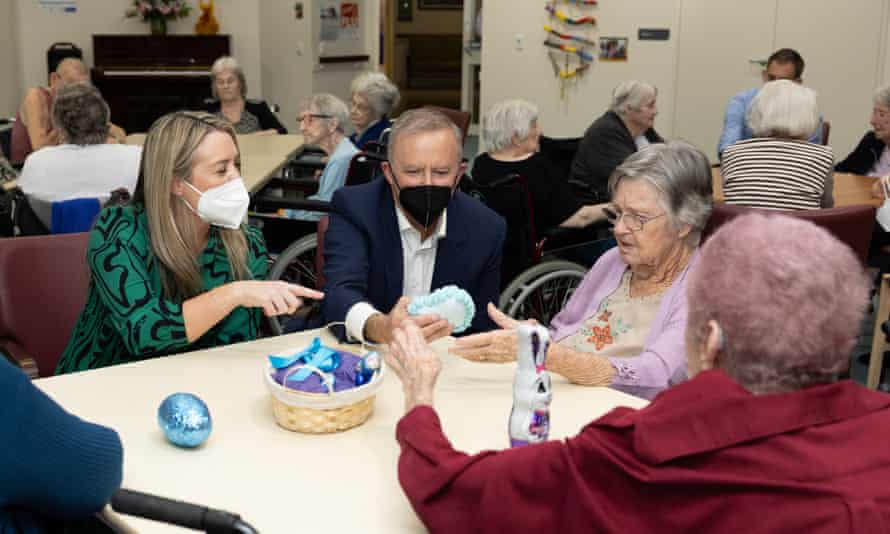
Anthony Albanese and partner Jodie Haydon visit Fairways aged care in Bundaberg, Queensland

Anthony Albanese and partner Jodie Haydon visit Fairways aged care in Bundaberg, Queensland. Photograph: Alex Ellinghausen/AAP

The CEO of Rural Doctors Association, Peta Rutherford, welcomed Labor matching the Coalition’s commitment of $146m of rural-specific initiatives, including the rural generalist pathway, the changes to the medical stream of the workforce incentive program, as well as the expansion of the single employer model.

Future-proofing the regions

Labor has committed $16.7m towards establishing an agri-tech hub in Richmond, New South Wales, as well as reserving $500m of its national reconstruction fund to help regional businesses enter new markets, adopt new technology and adapt to a low-carbon economy.

They have also committed to improve regulations for accurate and clear food labelling.

The National Farmers Federation has welcomed Labor’s commitment to improve biosecurity including addressing the potential spread of lumpy skin disease in cattle, reforming livestock traceability, pest and weed controls, and doubling the number of Indigenous Rangers.

Labor has also promised to replace the emergency response fund with a disaster ready fund, which will invest up to $200m a year on mitigation projects to help reduce the effect of natural disasters.

Unanswered questions

Labor has not provided a drought strategy for regional communities. The Coalition had the future drought fund, allocated for drought resilience and preparedness, but there was no national strategy on how aid would be distributed in the next severe drought, apart from farm household allowance for food and loans.

The new government has pledged to ban live sheep export, which will predominantly affect Western Australia, but has not provided a timeline.

There has been no commitment from Labor whether they will continue initiatives that measure and create incentives for farmers’ environmental performance such as the Coalitions’ national biodiversity stewardship market.

The emissions reduction fund remains in turmoil after a whistleblower alleged major failures in the carbon credit scheme, as well as a plunge in the price of credits, triggered by a contentious change by the previous emissions reduction minister Angus Taylor.

Infrastructure
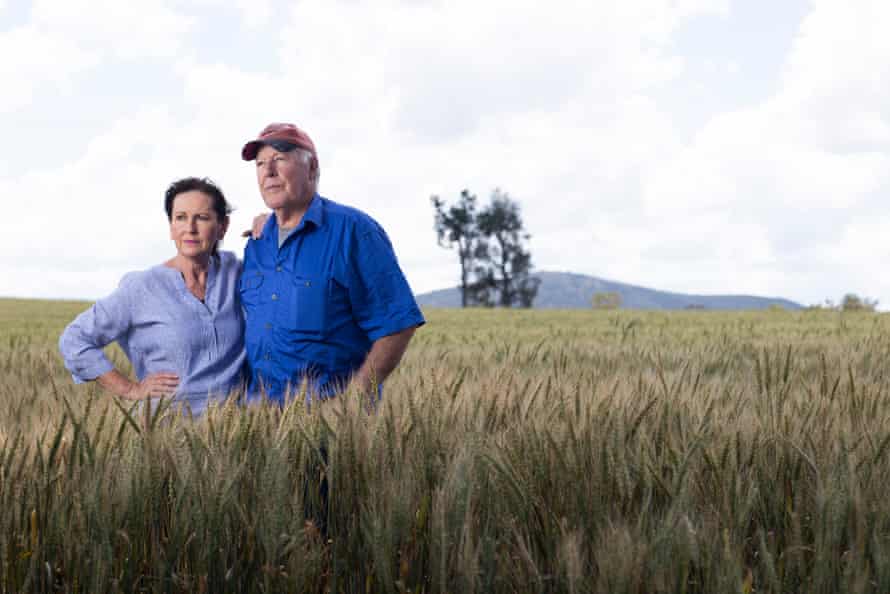
Caroline and Ashley Hermes of Bethungra, NSW, in their wheatfield which will be cut in two by the inland rail line. Photograph: Mike Bowers/The Guardian

The government says its decisions regarding nation-building infrastructure will be guided by the Infrastructure Australia model. This means uncertainty for controversial infrastructure projects such as Hell’s Gate Dam with Labor set to delay the $5.4bn project in favour of further consultation.

Labor has committed support for the inland rail but will be closely guided by the recommendations of the senate inquiry, over half the recommendations of which the government did not support.

While the Coalition repeatedly told communities that it was too late for amendments, Labor says it will listen to those concerned by the project. The Albanese government has also said it will continue the business case into extending the project to the Port of Gladstone.

Telecommunications

The better connectivity for rural and regional Australia plan commits $400m to expand multi-carrier mobile coverage along roads, as well as for regional homes and businesses.

Labor says in order to guide future priorities they will spend $20m on an independent national audit of mobile coverage in 2022.

A tender will be released to place mobile phone signal measuring devices on Australia Post vehicles to gather the necessary data.

Saturday, 28 May 2022

How Australia’s electoral system allowed voters to finally impose a ceasefire in the climate wars.

Extract from The Guardian

Opinion

Australian election 2022

Preferential voting opened a pathway for independents to bypass the right’s hyperpartisan approach to climate policy.

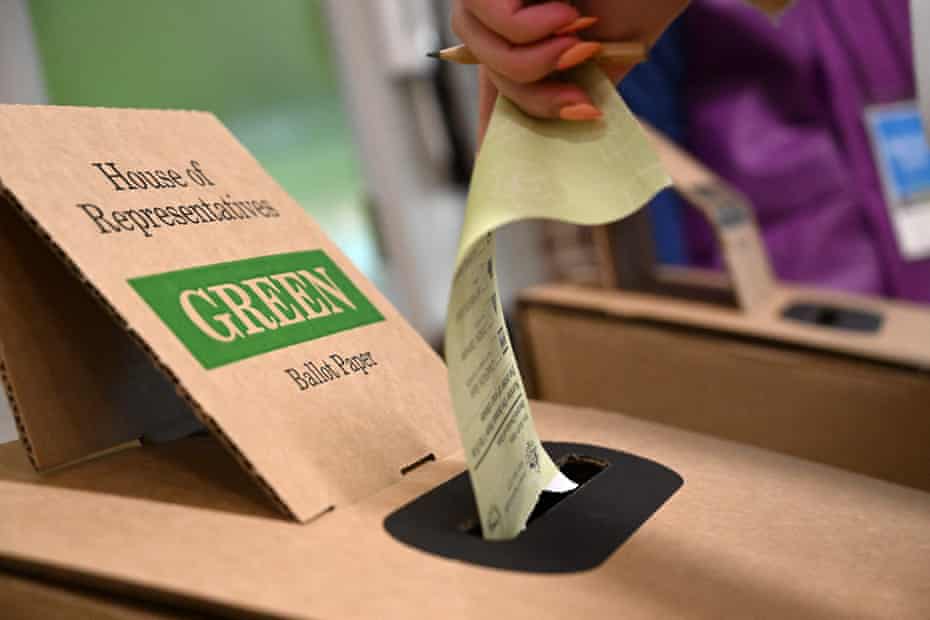
A ballot paper being placed into a ballot box in the 2022 Australian federal election

‘The flexibility of preferential voting meant that an independent could come through the middle, offering voters policies and personalities that they wanted.’

For the first time in a long time, climate action had a good election. It’s instructive to ask why. Certainly, the enduring legacy of the “black summer” was part of it. But we must not understate the role that the rise of the teal independents – and the tectonic shift in Australian politics that it represents – played here.

The Labor party government, led by Anthony Albanese, is committed to a 43% reduction in emissions by 2030 (from 2005 levels). As prime minister, one of the co-authors of this piece, Malcolm Turnbull, committed to a target of 26-28% at Paris in 2015, in the expectation that the target would be increased. His successor Scott Morrison’s refusal to do so at the 2020 Glasgow COP was bitterly resented by Australia’s closest allies, including the United States and the United Kingdom.

It seems hard to believe today but there was a time when both major parties agreed on establishing an emissions trading scheme (ETS). It was first proposed by prime minister John Howard in 2006 and the first piece of legislation to set it up was introduced by Turnbull as environment minister the following year.

At the 2007 election Howard and Labor leader Kevin Rudd had a lot of things to argue about, but an ETS was not one of them.

After the election, Rudd retained the same team of public servants who had been working on the ETS under Howard and they produced what Rudd called a carbon pollution reduction scheme (CPRS).

By this time Turnbull was Liberal leader and Opposition leader. His goal was to maintain the Howard-era policy in favour of an ETS and negotiate with Rudd on the terms of it.

However a growing insurgency on the right of the Liberal and National parties, supported by the coal industry and the Murdoch media, resulted in a party room coup that saw Turnbull lose the leadership to Tony Abbott, who then went on to wage a shamefully dishonest, but highly effective, campaign against the CPRS. (There is some poetic justice in the fact that Abbott would later lose his seat to one of the leading independent climate champions, Zali Steggall.)

Now, 13 years and five prime ministers later, any form of ETS has become a political third rail and it does not feature anywhere in Labor’s climate policies.

Australia can swiftly end the climate wars and become a renewable superpower. Here’s how
Nicky Ison

During the last election Morrison sought to present Labor’s modest 2030 targets as dangerous economy wreckers and he was backed up by the Murdoch media with a campaign that exceeded any before it.

If you saw the election as being one where a climate laggard government was replaced by another with a more activist approach, you would miss the real story.

Sure, Labor won, we have a new prime minister and that will enable Australia – the only developed country not to increase its 2030 target at Glasgow – to rejoin the global effort to cut emissions with credibility.

In a parliamentary system like Australia, winning government means winning the support of a majority of members in the House of Representatives or its equivalent. So typically a political party will have electorates in which its members have large majorities and others where the majorities are slender – a few percent. Government is won or lost in these marginal seats, they can be lost at one election and won back at another.

That means the bedrock of a political party’s parliamentary power lies in its safest seats – the ones they can always rely on winning.

But in this latest election, the “teal” independents, so called for the colour of their campaign livery, succeeded in winning six of the Liberal party’s safest seats, including Turnbull’s old electorate of Wentworth, which he had held with a 67% majority.

Together with three others won in earlier elections, this meant that nine of the Liberal party’s safest, wealthiest seats were now held by independents, all women, who had persuaded thousands of lifetime Liberal voters to defect.

In Australia, once an independent wins a seat they are generally very hard to dislodge.

What lessons does all of this have for the fraught climate policy debate for the world’s largest cumulative carbon polluter, the United States?

How, for example, did Australia manage to defeat the Murdoch climate disinformation machine, which has so effectively waged war on climate policy in the US for years? Murdoch outlets such as Fox News and the Wall Street Journal editorial pages have almost single-handedly created the asymmetric polarisation of the American political right that today serves as such a formidable obstacle to meaningful action on climate.

Murdoch has an even greater stranglehold on the Australian media. Yet several features of Australia’s electoral system made it resistant to Murdoch’s influence. The boundaries of parliamentary districts are set by an independent electoral commission and have been for generations – there are no gerrymanders. Voting is compulsory and participation is always well over 90%.

Both policy goals are laudable, but they’re an uphill battle in the US, likely to be fought out bitterly along red state/blue state boundaries.

Finally, and most importantly, though, Australia has preferential or ranked choice voting, where electors have to write a number against each candidate’s name indicating the order in which they are preferred. Right now, ranked choice voting is the law in only two US states, but interestingly, they aren’t blue states: they’re purple (Maine) and deep red (Alaska). This may explain why the two Republican Senators from those States – Lisa Murkowski and Susan Collins – are more centrist than most of their Trump-dominated caucus.

A growing number of cities and municipalities have implemented ranked choice, which experiences levels of bipartisan support that are unusual in today’s hyperpartisan American politics. And 29 states are now considering implementing it.

The teal independents in Australia were running against Liberal incumbents, most of whom would normally get a first-preference vote of 50% or more. However if they could take a substantial part of that and get the incumbent’s primary vote down to 40% or less, and if they ran second, they would probably win with the benefit of Labor and Green preferences. And this is more or less what happened.

So a big tent political party was captured by the political right and on several issues, especially climate, and dragged to a position that did not reflect the values of many of its lifetime voters. But the flexibility of preferential voting meant that an independent could come through the middle, offering voters policies and personalities that they wanted.

People power trumped Murdoch. Perhaps it can do so in the US.

Americans have nothing to lose and everything to gain, including a return, like Australia, to a position of global leadership on climate

Michael E Mann is distinguished professor of atmospheric science at Pennsylvania State University. He is author of The New Climate War: The Fight to Take Back Our Planet

Malcolm Turnbull is former prime minister of Australia and author of A Bigger Picture

Voters often invest their hopes in a new government, but the atmosphere feels more like relief.

Extract from The Guardian

Katharine Murphy on politics

Australian election 2022


With empathy and goodwill Anthony Albanese’s Labor government can end the inane climate wars.
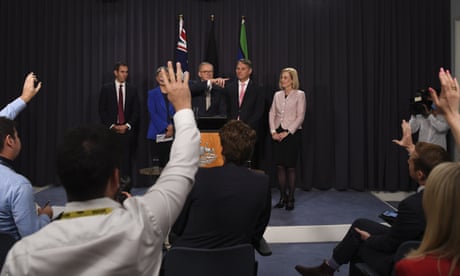
Anthony Albanese, Penny Wong and Richard Marles
Newly minted prime minister Anthony Albanese holds a press conference in Parliament House’s Blue Room last Monday, with foreign minister Penny Wong and deputy leader Richard Marles.

This observation is more whimsy than science, but indulge me for a moment. Australians don’t change the stripe of their federal government that often and when they do, they make an emotional investment in the new regime.

The emotional investment often translates as hope. But this time, the prevailing atmosphere feels more like relief. Relief is adjacent to hope, but it’s not quite the same thing.

I honestly can’t remember if Tony Abbott looked relieved when he faced the media for the first time as prime minister. It’s too long ago. But this week Anthony Albanese and his praetorian guard certainly looked relieved as they took their first questions after being sworn in.

Anthony Albanese, Penny Wong, Richard Marles, Katy Gallagher and Jim Chalmers stood together at parliament house shortly after they returned from Government House. I watched all of them process their new reality in real time. They were in government. This was actually happening. They were in the Blue Room. This was not a drill.

After the relentless performance art of Morrison’s reign, Australia needs a reset
Katharine Murphy

A short time later, Albanese was in Tokyo reacquainting himself with Joe Biden and introducing himself to the prime ministers of India and Japan. Wong went to Tokyo and then separately to Fiji, flying headlong into the geopolitical challenges that will define this period in government. While the election vote count grinds on, and on, and on, the transition has been lightning fast.

For Albanese and Wong, critical figures in the Rudd-Gillard era, returning to the government benches carries significant emotional freight because they understand from experience just how easy it is to botch the opportunity conferred by voters. Chalmers knows this too, as a senior adviser to then treasurer Wayne Swan during that whole period. These people endured the consequences of gaining power, losing it and watching their opponents dismantle their legacy and write the first draft of history.

So this group understands at a cellular level that voters have given them the last opportunity of their professional lifetimes to be a Labor government.

Grasping the gravity of the present opportunity certainly doesn’t guarantee success – this is the Labor party after all – but the collective intention is to make the time count. Albanese has mulled what went wrong during the last period in government, and has concrete ideas about how to avoid a similar fate.

Labor is coming to government in incredibly complex times. The pandemic is not yet over, and reducing the current death rate will require sustained public health interventions that the Australian public may not be happy with.

Inflation is back. Interest rates will rise, hurting the many households that are massively leveraged. When Scott Morrison cut the petrol excise in his pre-election budget, he made it clear that the relief at the bowser was only temporary – but it will be Albanese who will preside over the return to normal arrangements, which is obviously a poison pill.

Scott Morrison

Labor is also politically locked in to implementing the Coalition’s stage three tax cuts when the budget desperately needs more revenue as well as systematic expenditure control. Labor says it wants to lift wages, but has only limited power to do so, and if the new government elects to use the powers at its disposal, business will kick up a stink, that being the natural way of things.

Sticking with the natural way of things, events will of course shape the Albanese prime ministership. China is on the march in our region, elevating the imperatives of national defence and healthy alliances with major powers nurtured by muscular middle-power diplomacy.

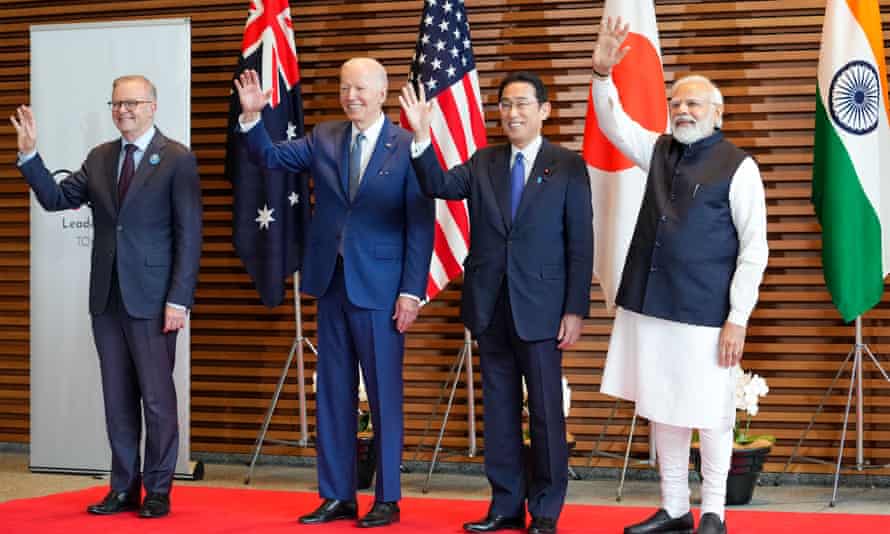
Anthony Albanese, US president Joe Biden, prime minister of Japan Fumio Kishida and prime minister of India Narendra Modi at the Quad leaders’ summit in Tokyo

Anthony Albanese, US president Joe Biden, prime minister of Japan Fumio Kishida and prime minister of India Narendra Modi at the Quad leaders’ summit in Tokyo. Photograph: Getty Images

Labor’s suite of climate measures buttressed the first week of the new Albanese government. A higher medium-term emissions reduction target was a point of connection and easy rapport between Albanese and Biden, a promise of more enlightened regional times that Wong could take to the Pacific nations being duchessed or coerced by China, and a diplomatic downpayment to help repair Australia’s battered relationship with France.

But domestically, the progressive bent of the new parliament will be complex for Albanese to navigate. Labor is set to govern in majority, which makes life easier than the parliamentary conditions he was called upon to manage in the 43rd parliament.

Sign up to receive the top stories from Guardian Australia every morning

Electorally, Labor has to maintain and consolidate its terrain between the teals and the Greens, while holding its traditional blue-collar territories, because as the Liberal party has just learned, taking your heartland for granted is a recipe for a swingeing defeat.

Just before we persist with the imperative of climate action in the new parliament, a quick note on the electoral realignment that happened last Saturday night. The rout of the Liberal party in this contest is comprehensive and crushing. To win a parliamentary majority in 2025, the Coalition is going to have to gain 17 or more seats. Normally in a parliament where the governing party has a slender majority like Labor is expected to have, we’d all be writing columns about how the opposition remains within striking distance. Not this time. Truly extraordinary.

Now let’s return to climate change. On 21 May, voters told Australia’s political class to get on with reducing the risk of runaway global heating, so it would be tremendous if all political actors in the federal arena could approach the coming parliament in the spirit of ending the climate wars, rather than just winding up one phase before launching another.

Australian prime minister Anthony Albanese and his interim ministers, Penny Wong, Jim Chalmers, Richard Marles and Katy Gallagher, speak to the media during a press conference, journalists have their hands raised to ask questions

I’m going to say this to all of the protagonists upfront: Australians in 2022 have voted for the transition to low emissions. Global capital has already placed its bets, informed by climate science. We are already living with an altered climate. The risks to lives and livelihoods are not speculative, they are present and observable. So I will have zero tolerance for any self-serving political bollocks over the next three years, whether the bollocks is progressive or conservative.

We’ve made the perfect the enemy of the good. We’ve repealed a perfectly good carbon price that reduced emissions without crashing the economy. We’ve endured the peak partisan bastardry of the fraudulent “war on the weekend” and the grating non sequitur of “technology not taxes” (when the taxes bankrolled the technology).

So, enough. Stop posturing. Get on with it.

In no particular order – Peter Dutton: get over yourself, deal with it, the Liberal party’s metropolitan heartland has sent you a message too definitive to ignore.

To whomever leads the National party after the leadership spill on Monday: farmers have everything on the line as the climate changes – how about representing their interests and the interests of communities that rely on the prosperity generated by the production of food and fibre, while helping create future jobs for miners, who know the world is changing? Not that hard, surely.

Adam Bandt: bank the increments over the next three years, allow the public see the world won’t end if we manage the transition, then keep focused on ratcheting up ambition while bringing people with you.

Teals: bring the voices of your communities into these deliberations, and model democratic representation done differently.

Finally – prime minister: you want to model a different style of political leadership, something measurably distinct from entitlement, arrogance and hubris. Have the courage of that instinct. With some empathy, ambition, political smarts, a bit of luck and reciprocal goodwill, you can change the trajectory, and make ending the climate wars an enduring Labor legacy.