Contemporary politics,local and international current affairs, science, music and extracts from the Queensland Newspaper "THE WORKER" documenting the proud history of the Labour Movement.
MAHATMA GANDHI ~ Truth never damages a cause that is just.
A Ukrainian soldier near Bakhmut carries a shell with a written message to the Russian army.(AP: Efrem Lukatsky)
Russian
soldiers are edging closer in their attempt to seize Bakhmut,
an eastern city that has remained in Ukrainian hands despite Moscow
seeking to capture the entire Donbas region bordering Russia.
Key points:
Bakhmut is the heaviest battle site in the Donetsk region
Claiming Bakhmut would open routes for Russia to enter key Ukrainian strongholds in Donetsk
Residents in Bakhmut have been without electricity or water for a month
While much of the fighting in the past month has unfolded in southern Ukraine's Kherson region,
the battle heating up around Bakhmut demonstrates Russian President
Vladimir Putin's desire for visible gains following weeks of setbacks.
Taking
Bakhmut would rupture Ukraine's supply lines and open a route for
Russian forces to press on toward Kramatorsk and Sloviansk, key
Ukrainian strongholds in Donetsk province.
Pro-Moscow separatists have controlled part of Donetsk and the neighbouring Luhansk province since 2014.
Before invading Ukraine, Mr Putin recognised the independence of the Russian-backed separatists' self-proclaimed republics.
A graphic map shows the areas of Ukraine annexed by Russia, with the frontline as at October 7, 2022, highlighted in orange.
Russia has battered Bakhmut with rockets for more than five months.
The
ground assault accelerated after its troops forced the Ukrainians to
withdraw from Luhansk in July. The line of contact is now on the city's
outskirts.
Mercenaries from the Wagner Group, a shadowy Russian military company, are reported to be leading the charge.
Russia's
prolonged drive for Bakhmut exposes Moscow's "craziness," Ukrainian
President Volodymyr Zelenskyy said in a nightly address to the nation
this week.
"Day
after day, for months, they have been driving people there to their
deaths, concentrating the maximum power of artillery strikes there," Mr
Zelenskyy said.
The shelling killed at least three people between Wednesday and Thursday, according to local authorities.
Ukraine's
military is firing mortars and heavy artillery to repel the Russian
forces who were less than 5 kilometres away by early Thursday, according
to the Institute for the Study of War, a think tank in Washington.
Russia
needs a victory in Bakhmut given it is losing control over large swaths
of the north-eastern region of Kharkiv to a Ukrainian counteroffensive
last month and its deteriorating position in Kherson.
The areas were among the first the Russian military captured after the February 24 invasion of Ukraine.
"Russia's
suffering defeats across the board. They need the optics of some kind
of an offensive victory to assuage critics at home and to show the
Russian public that this war is still going to plan," said Samuel
Ramani, an associate fellow at the Royal United Services Institute, a
defence and security think tank based in London.
Ukrainian soldiers capture a Russian tank on the road to Bakhmut.(AP: Efrem Lukatsky)
The
Wagner Group has played a prominent role in the war, and human rights
organisations have accused its soldiers for hire of committing
atrocities.
Their deployment around Bakhmut
reflects the city's strategic importance to Moscow. However, it's
unclear if the mercenaries have made many tangible gains, according to
Mr Ramani.
"We're
seeing a situation where the Wagner Group is quite effective at
creating terror amongst the local residents but much less effective at
actually capturing and holding territory," he said.
At the very best they're gaining 1km a week toward Bakhmut, he said.
While
in the city this week, journalists from The Associated Press saw
burned-out cars, destroyed buildings and people struggling to survive
amid a cacophony of constant shelling.
'Terrible' conditions
Bakhmut has been without electricity or water for a month, and residents worry about heating their homes as temperatures drop.
"We
hoped that this [war] would end or that we would have conditions that
allow us to live. But since last month, conditions have been terrible,"
resident Leonid Tarasov said.
Few shops are open. The AP saw people using firewood to cook on the streets and drawing water from wells.
Bakhmut
had a population of about 73,000 people before the war, but
approximately 90 per cent have left the city, according to Pavlo
Kyrylenko, the Ukrainian governor of the Donetsk region.
Some
of those who remained asked in recent days to be evacuated from areas
that are now too dangerous for volunteers or soldiers to get to because
of the fighting, said Roman Zhylenkov a volunteer with the local aid
group Vostok-SOS.
Others feel trapped.
"People
who left moved to stay with their children or brothers and sisters.
They had places to go," Ilona Ierhilieieva said as she mixed soup on an
open fire by the side of the road.
"But as for us, we don't have a place to go. That's why we are here."
Russian citizens have flocked to public service centres in Kazakhstan to be able to work and access their money.(Reuters: Pavel Mikheyev)
Though
thousands of kilometres away from the front-line in Ukraine, the
consequences of Vladimir Putin's deadly war are being sharply felt in
Kazakhstan.
Nestled in the foothills of the
Trans-Ili Alatau mountains, locals in the sprawling metropolis of Almaty
will tell you there has been a noticeable shift since September 24.
There are more Russian visitors at train stations, on city streets and inside the city's cosy cafes.
After
Putin declared a "partial mobilisation" in an attempt to get his
disastrous war back on track, more than 200,000 Russians packed up their
bags and descended on Kazakhstan.
The sudden influx caught many small communities by surprise.
Locals say they have spotted more Russians arrivals since the mobilisation announcement.(ABC News: Naubet Bisenov)
Hotels,
hostels and Airbnb apartments quickly sold out within days, sending
prices for remaining accommodation skyrocketing and forcing new arrivals
to find emergency lodging in schools, cinemas and gyms.
Locals
like Gaukhar Dossova have watched the unexpected series of developments
play out in their hometown with a mixture of surprise and perplexity.
"Who
would have thought people would wish to come and live in our city,
Almaty? Normally it is people going in the opposite direction," the tour
guide tells the ABC.
Kazakhstan used to be a disembarkation point for Central Asian workers, enticed by Russia's higher wages and work opportunities.
But, just like with so much else, the invasion of Ukraine has ushered in a new reality.
Some
migrants who left for Moscow and St Petersburg have made their way
back and now Kazakh cities are grappling with how to adequately look
after the deluge of people fleeing to their towns.
Many have welcomed the new arrivals, starting grassroots organisations and Telegram forums to provide advice and assistance.
But
the influx has also ignited tensions between the two countries, as
economic pressures mount and memories of an unresolved colonial past
resurface.
As these dynamics play out locally, the consequences of Moscow's war are also rupturing fault lines at the geopolitical level.
With
Putin's forces in trouble in Ukraine, the Kremlin's ability to exert
influence over post-Soviet states is being put to the test, driving some
allies to seek other powerful relationships in the region.
Russians flock to the church only to be turned away
Putin's war in Ukraine is having very real consequences for millions of people.
Nearly
one-third of Ukraine's population has been displaced since the invasion
began, and some 4.2 million Ukrainian refugees have registered for the
European Union's temporary protection scheme or other national
programs.
Russia's partial mobilisation order last
month has also sent hundreds of thousands of its own citizens fleeing,
including people like Dima Poltavets.
On a grey
October morning following a religious service in Almaty, Dima lingers
outside, recalling his escape from Yaroslavl, a city 250 kilometres
north-east of Moscow.
Dima Poltavets has found a job as an event organiser in Almaty after fleeing Vladimir Putin's mobilisation order.(ABC News: Naubet Bisenov)
After
flying to the capital, he embarked on a 3,000-kilometre journey that
would take him from Barnaul in Siberia to the eastern Kazakh city of
Oskemen and then to Almaty, where he has now settled.
He says he turned to his church friends to help him find refuge abroad when his life was turned upside down.
"I
am living in a flat provided to me for free by my fellow churchgoers
and have now found a job as an event organiser and am waiting for my
wife to join me," the 26-year-old told the ABC.
Kazakhstan
and Georgia both offer visa-free entry to Russian nationals, and are
popular destinations for those fleeing the draft.
Volunteers
and churches have acted as important lifelines for these exiles,
sometimes providing a soft landing as they contemplate their next steps.
Unlike
many fringe Protestant churches, however, Kazakhstan's main Christian
denomination – the Russian Orthodox Church – has not provided shelter or
food to Russian refugees, draft escapees told the ABC.
The
head of the church, Patriach Kirill, is an ally of Putin and shortly
after the partial mobilisation, he said Russians who die in the war in
Ukraine will be cleansed of their sins.
Seventy
per cent of Kazakhstan's population is nominally Muslim and
mosques offered accommodation if the requesters were of that faith.
"Church
is a place of help. Young men had nowhere to go and we offered them
shelter and food," Vasiliy Kim, the administrator at the New Life
church, told the ABC after a crowded Sunday service.
"The
church has bought bunk beds but churchgoers have brought mattresses,
blankets, beddings and food [so] we could offer a temporary home to
them."
Bakhtiyar, whose last name has not been included, has also leaned on the church for support since arriving in Kazakhstan.
The ethnic Kazakh man does not support the war but couldn't leave his family in Kalingrad when it started.
"But
when I faced a choice of supporting my family from afar or dying in
Ukraine, I chose to flee Russia," he said of Putin's partial
mobilisation order.
He spent five days in a shelter provided by a Protestant church in the border town of Kostanay before coming to Almaty by train.
Some new arrivals have been offered accommodation in New Life's hostel in Almaty.(ABC News: Naubet Bisenov)
Speaking
in a tiny room stacked with three bunk beds along the walls inside the
New Life's guest house, Bakhtiyar says as an IT specialist he could
bring his work with him to Kazakhstan but he had no savings to afford
accommodation in Almaty.
It's a situation many
other Russians are struggling with, either because they left without
much money or are unable to access it overseas due to sanctions on
credit cards and Russian banks.
Since arriving,
hundreds have stood in long queues outside Almaty's town centre to
register in Kazakhstan's national ID system, a requirement for getting a
job or a bank account.
About 200,000 foreigners
have received a taxpayer number in Kazakhstan since September 21, Deputy
Digital Development Minister Aset Tursynov said this week.
Skyrocketing rents spark tensions in cities
The
arrival of thousands of Russians in such a short period of time has
also strained housing markets in some cities, prompting landlords to
raise rents against a backdrop of rampant inflation.
A sign displaying different exchange rates in Almaty on October 21.(ABC News: Naubet Bisenov)
Dariga
Zhakupova rents in Almaty with her husband and two kids, but said she
was warned that her rent would go up after Russia's partial
mobilisation.
Her landlady agreed to limit the rent
increase to about $US100 (more than $156), but only if Dariga repairs
and decorates the flat by the end of January.
"My husband and I just need to try to earn more to cover for the increase," Dariga said, acknowledging this was the reality now.
"She said she could rent it out for $US1,300 to Russians, so we just agreed to her conditions."
Not
only are Kazakh tenants falling victim to rising prices, but so are
Russians who arrived in Kazakhstan as part of the first exodus in
February.
Petr Andreev, a 51-year-old Muscovite
who helps people with special needs, says that his rent went up by 50
per cent to $US420 for a tiny 19-square-metre studio in central Almaty.
Petr Andreev says his rent in Almaty went up by 50 per cent since Russia's "partial mobilisation".(ABC News: Naubet Bisenov)
Realising
this may pose a potential social problem, Kazakhstan President
Kassym-Jomart Tokayev described the situation of fleeing Russians
as "hopeless" and said Kazakhs "need to show care of them and ensure
their safety".
Many have taken up the cause,
including offering advice to those fleeing in a Relocation to Kazakhstan
Telegram chat, but a few express their fears that the arrivals may make
Kazakhstan a target for Russia.
With an already
sizeable ethnic Russian population, there are concerns that Putin may
one day turn his attention to "liberating" citizens in the north.
Putin's war creates tensions with Central Asian allies
As
these dynamics are playing out in cities all over the country, there
has been a broader shift in the geopolitical landscape in Central Asia
since Putin's war.
The Russian leader has clung to
the idea of Moscow's "sphere of influence," a collection of former
satellite states that once belonged to the Soviet empire.
But when Putin arrived in Kazakhstan on October 13 to attend a series of regional meetings, he received a surprising response.
Vladimir Putin visited Kazakhstan to attend the summit of leaders of the
Commonwealth of Independent States (CIS) earlier this month.(Sputnik/Dmitry Azarov/Pool via Reuters)
In
a lengthy rebuke, the leader of Tajikistan, one of the region's
smallest and poorest countries, complained that Moscow's attitude had
not improved since the Soviet era.
Kazakhstan's
leader has also stood up to Moscow, with observers noting he held no
bilateral meeting with Putin, despite hosting the summit and meeting
with several other leaders.
Since the war, he
has refused to recognise the Donetsk and Luhansk regions as independent
republics and in an apparent veiled reference to Russia, he has
complained of personal attacks on national leaders that "poison the
atmosphere of cooperation" in the post-Soviet space.
However, Kazakhstan still maintains important trade ties with its neighbour and shares a long cultural past.
It
also looks to Russia as the region's "policeman" within the group of
six countries that make up the Collective Security Treaty Organization
(CSTO).
The group, which includes Kazakhstan,
Russia, Belarus, Tajikistan, Kyrgyzstan and Armenia, was set up after
the collapse of the Soviet Union and is regarded by observers as a
regional answer to NATO.
When Tokayev faced
widespread protests and riots in January after lifting the price cap on
liquefied petroleum, it was the CSTO that stepped in with Russian
paratroopers to help "stabilise the country".
Putin
may have expected Kazakhstan to return the favour with Ukraine,
observers say, but the country has so far held off on making any such
commitments.
In another sign of the strained
relationship between the two countries, Kazakh authorities also snubbed a
demand from Russia to expel Ukraine's ambassador Petro Vrublevskiy over
comments she made about the war in Ukraine.
Kazakhstan rejected what they called Russia's inappropriate tone between "equal strategic partners".
"I
think there's a lot of people who talk about Putin's grand strategy,
with the Ukraine war he pretty much did the exact opposite of everything
he wanted," Paul Stronski, an expert on Russia and Central Asia
relations and a senior fellow for the Carnegie Endowment for
International Peace, said.
As a result, Russia's
standing in the region has diminished, prompting some Central Asian
countries to respond with more assertiveness.
"Russia
has long wanted what it calls a "multipolar world," where it's not just
a western-dominated international system, but rising powers have an
equal say," Stronski said.
"Well, they kind of have a multipolar world [now], which is not the one that they wanted. It's right in their backyard."
Could China be strengthening ties in Central Asia?
In
alienating some of its closest neighbours, Stronski says Russia has
also driven them to seek ties with other powers, including Turkey,
Japan, the United States, and China.
In
September, China's President Xi Jinping made a notable visit
to Kazakhstan ahead of the Shanghai Cooperation Organisation (SCO)
Leaders Summit.
Kazakhstan President Kassym-Jomart Tokayev presents Chinese President Xi Jinping with an award during their meeting last month.(Press service of the President of Kazakhstan via Reuters)
Xi had been ensconced inside China since the country all but shut its borders in response to the COVID-19 pandemic in 2020.
But Stronski said there were a few other factors at play.
"I
think Kazakhstan and then Uzbekistan were likely choices to visit
because the Chinese knew he'd get a good reception there," Stronski
said, adding that both were "authoritarian states and wary of
criticising China".
With the world's largest oil
and gas reserves as well as a rich supply of minerals from gold
to uranium and tungsten at its disposal, Kazakhstan also has important
economic standing in the region.
"Kazakhstan was
[Xi's] first stop and Uzbekistan was the second ... those are both the
most important countries politically and with the biggest
markets," Stronski said.
"Both are important for Beijing if it wants to re-route its Belt And Road infrastructure around Russian territory."
In 2016, there were also massive anti-land reform demonstrations, which were held because the public thought it could lead to China buying up cheap Kazakh land.
"Whether Kazakhstan really wants a closer relationship with China is unclear," Stronski said.
But, he says Kazakhstan "certainly wants enhanced security ties with China both to counterbalance Russia and its threats".
With
his reliable allies beginning to challenge his influence, Putin has
been delivered another blow to his campaign to assert Russia as a global
power.
"Countries [like Kazakhstan] are looking for new economic partners in dealing with Russia," Stronski said.
"I really think Russia is losing some of its clout in the region."
With additional reporting from Naubet Bisenov in Almaty and Reuters.
Fri 28 Oct 2022 02.00 AEDTLast modified on Fri 28 Oct 2022 02.02 AEDTPeople kicked out of New South Wales
pubs for being too drunk could be tracked via facial recognition
technology if new laws introduced to parliament last week are not
changed, with the powerful gambling lobby refusing to rule out expanding
the use of the controversial tool.
A week
after ClubsNSW announced it would roll out facial recognition technology
to pubs and clubs across the state as a harm minimisation tool that
could “only be used to enforce self exclusion” by gamblers, it now
concedes its use will be more widespread.
The
report called for the introduction of a cashless gambling card to
address what it said was a “$95bn-a-year information black hole” for
authorities attempting to track the proceeds of crime.
But
in a statement after the report’s release, the ClubsNSW chief
executive, Josh Landis, cited the use of facial recognition technology
along with a crime commission recommendation for an exclusion register
to allow police to alert venues to “patrons with criminal links”, as
making it “near impossible for a criminal to enter a club in the
future”.
Those comments contradicted what ClubsNSW said when it announced the use of the technology only a week ago.
At the time ClubsNSW and the Australian
Hotels Association said facial recognition technology would be used to
“combat problem gambling”, saying that it could “only [ClubsNSW’s italics] be used to enforce self-exclusion in gaming areas”.
When
Guardian Australia asked ClubsNSW about the discrepancy, the lobby
group did not acknowledge the change in its position, but pointed to
legislation introduced last week by the state’s gaming minister, Kevin
Anderson, formalising the use of the technology.
The
bill would allow the use of “technology” to “identify, and prevent”
people from entering a club or pub if that person has been “excluded”
from a venue.
But
the definition of an exclusion would also extend to people banned from a
venue under the state’s Liquor Act, which allows a pub or club to ban
people for being “intoxicated, violent, quarrelsome or disorderly”. It
also includes people who smoke in a non-smoking area.Asked
about the technology’s use in those circumstances, a ClubsNSW
spokesperson pointed to Anderson’s speech in parliament when introducing
the bill, which stated its provisions mean it could “only be used for
gambling harm minimisation or to identify people suspected of committing
a serious offence such as money laundering”.While
the bill states the use of the technology “must comply with guidelines
issued by the secretary about the use of the technology”, Guardian
Australia reported last week that those guidelines don’t yet exist.ClubsNSW
did not respond to multiple requests for comment asking if it intended
to use the technology to enforce those broader types of exclusions, and
experts say the uncertainty about its use is part of the problem.“This is exactly what we have been concerned about,” Kate Bower, a Choice consumer data advocate, said.“Without
regulation the use of the technology is being determined by the
business and it can be introduced for one reason and then rapidly
changed,” she said.“The issue of consent is a
concern because most people entering these premises aren’t aware facial
recognition is being used and for what purpose it is being used.”
NSW
Greens MP Cate Faehrmann said the change in ClubsNSW position showed
the “claims that they’re serious about stopping money laundering are
totally disingenuous”.
“Clubs NSW are
desperately attempting to appear as though they’ve solved the problems
plaguing their industry without having to undergo genuine reform to
clean it up,” she said.
The cashless gambling
card was championed by former gaming minister Victor Dominello before he
was removed from the portfolio by the premier after opposition to the
proposal from the gambling lobby.
On Wednesday the NSW premier, Dominic Perrottet, said he was open to considering its use, but wanted to “work very closely with industry”.
Netball Australia has been in the news after players expressed concern over wearing the logo of mining company Hancock Prospecting on their uniform. But netball isn’t the only sport to make headlines recently relating to claims of sportswashing. The Socceroos issued a statement this week about human rights abuses in Qatar ahead of the World Cup next month.
In this episode of Full Story, Gabrielle Jackson talks to Lenore Taylor and Jo Tovey about players finding their voice, the politics of sport, and sportswashing
All industry needs to avoid locking in "fossil fuel-intensive infrastructure", the report authors have warned.(Getty Images: baranozdemir)
The
world is headed for "economy-destroying levels of global heating" as
signatory countries to the Paris Agreement fail to commit to more
ambitious emissions reduction targets.
Key points:
Current emissions pledges have us on track to hit as much as 2.8C of warming this century
Calls for countries to increase their emissions-reduction ambitions after COP26 have failed to move the dial
A rapid transformation of power, food, and economic systems is needed to head off a "global catastrophe", the UN says
The
"emissions gap" refers to the difference or "gap" between where
emissions are projected to be in 2030, versus what's required to put us
in step with the targets of the Paris Agreement for 2030 and beyond. The
wider the gap, the worse the likely climate outcomes.
UN
climate leaders requested last year (at COP26 in Glasgow) that
countries should increase the ambition of their emissions reduction
pledges further in line with the Paris targets by the 2022 COP27 Climate
Summit, which kicks off in Egypt on November 6.
But that has barely happened, leaving the world "hurtling" towards increasingly dangerous warming this century.
Updated
pledges since Glasgow will only shave an extra 1 per cent off global
emissions by 2030, and see us on a path to reach or surpass 2.4 degrees
Celsius of warming this century, the report says.
To
keep warming on track for 2C this century, those pledges would have to
shave around 30 per cent off projected 2030 global emissions.
Limiting
warming to 1.5C above pre-industrial levels would require emissions to
be cut by 45 per cent more than is currently pledged for 2030.
"Droughts,
floods, storms, and wildfires are devastating lives and livelihoods
across the globe. And global and national climate commitments are
falling pitifully short," Mr Guterres said.
"The
emissions gap is a by-product of a commitments gap. A promises gap. An
action gap. That gap must be filled — starting with COP27 in Egypt."
The
longer it takes to get global emissions down, the faster we chew
through our carbon budget — the amount of carbon dioxide we can emit in
total before we push past crucial temperature increases.
That makes
strong 2030 targets all the more important, said ANU climate scientist
and IPCC contributing author Mark Howden, who wasn't associated with the
report.
"There's a sense of urgency which relates to the carbon budget and how quickly that's running out," Professor Howden said.
"It
also relates to the acceleration of temperature increases — we're
likely to exceed 1.5C in the next decade or so. The urgency can't be
understated."
Countries falling short of 'insufficient' targets
Pledges, known as nationally determined contributions (NDCs), are made by each signatory country to the Paris Agreement.
Signatory
countries are expected to periodically ramp up the ambition of their
nationally determined contributions in order to help achieve the goals
of the Paris Agreement (to keep warming under 2C, ideally 1.5C).
A clean energy transition offers great economic potential, and can help reduce future costs from natural distasters.(Supplied: Queensland government)
Nationally
determined contributions fall into either "unconditional" or
"conditional" categories, with the latter reliant on certain caveats,
such as the provision of international financial or technical support.
Full
implementation of the current unconditional and conditional nationally
determined contributions would see the world on track for average
warming of 2.6C and 2.4C respectively this century, according to the
report.
But even with the current "highly insufficient" global targets, current policy settings meanmany countries aren't on track to achievetheir pledges, Mr Guterres warned.
"Under current policies, the world is headed for 2.8 degrees of global heating by the end of the century.
"In other words, we are headed for a global catastrophe."
'Incremental change no longer an option'
Describing
the past 12 months since COP26 as a "wasted year" for climate action,
the Emissions Gap Report warns time is rapidly running out to bring
emissions under control.
Fourteen countries
submitted updated emissions reduction pledges since Glasgow,
including Australia, Brazil, Indonesia, and the Republic of Korea.
UN Secretary-General Antonio Guterres says droughts and floods are devastating lives across the globe.(AP: Zahid Hussain/File)
Australia's
new target of a 43 per cent reduction on 2005 levels by 2030 brings us
more in step with the Paris Agreement, compared to the 26-28 per cent
target committed to by the previous governments.
"For Australia to remain within
its 2C carbon budget, we would need to reduce emissions by 50 per
cent on 2005 levels by 2030, reaching net-zero emissions by 2045.
"To
remain within the 1.5C carbon budget, the targets would be 76 per
cent below 2005 levels by 2030 and net-zero emissions by 2035."
Eighty-eight countries have now adopted some form of net-zero commitment, up from 74 at COP26.
Australia
also has a 2050 net-zero target; however, Professor Howden says the
date we get to net zero is less important than how quickly we get
emissions down today.
"It's not so much the end point of when you get to net zero, it's actually what you do over the next few years.
"If we're
emitting at record levels at a global scale or fairly constant levels
at a national scale, that chews through our carbon budgets very quickly,
so we need very rapid action."
The report warns that the global overhaul of our energy, food, and economic systems needs to be rapid and comprehensive.
That includes avoiding "locking in new fossil fuel-intensive infrastructure".
"Incremental
change is no longer an option: broad-based, economy-wide
transformations are required to avoid closing the window of opportunity
to limit global warming to well below 2C, preferably 1.5C," it said.
"Every fraction of a degree matters."
A report from Deloitte Access Economics last year forecasted climate change-related natural disasters would cost Australia $73 billion a year by 2060.
Post-COVID rebound puts emissions at record high
Though
global emissions dipped during COVID, they've since rebounded, with
2021 the highest on record, according to energy systems decarbonisation
researcher Sven Teske from the University of Technology Sydney.
"They
actually went down a bit during COVID but they've popped straight back
up in 2021," said Associate Professor Teske, who was a reviewer of the
Emissions Gap Report.
"Obviously China is the
largest emitter in that regard — one-third of all global energy-related
carbon emissions are from China. While they keep growing or plateauing
we will not close the gap."
The
rate of global emissions growth has slowed though, to an average
increase of 1.1 per cent per year in the decade to 2019, compared to 2.6
per cent per year between 2000 and 2009.
And that includes China's emissions growth, Dr Teske said.
"The
good news is China's emissions aren't rising as much as they were a
decade ago. They are in charge of more than half of all new
installations of renewable energy technology.
"It's
also not true anymore that every week another coal-fired power plant is
connected to the grid. That hasn't been the case since 2018-19 —
several years.
"You keep hearing that statement all the time, but it's not true."
Professor Howden said moving to low-emissions economies was aboutmore than tackling climate change.
"Action
on climate change is extraordinarily well aligned, when well designed
and well implemented, with sustainable development goals.
"Action
on climate change can generate significant profits for companies that
engage with it — it can generate regional development and create jobs.
It's not only urgent, but it actually makes a lot of sense to do it."


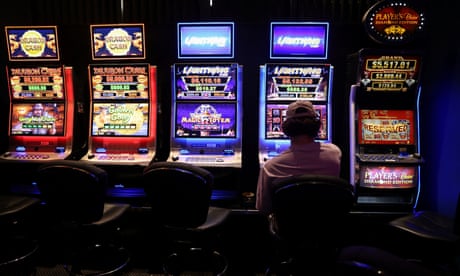
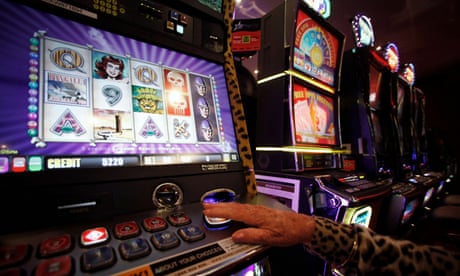

 Photograph: Darren Pateman/AAP