Contemporary politics,local and international current affairs, science, music and extracts from the Queensland Newspaper "THE WORKER" documenting the proud history of the Labour Movement.
MAHATMA GANDHI ~ Truth never damages a cause that is just.
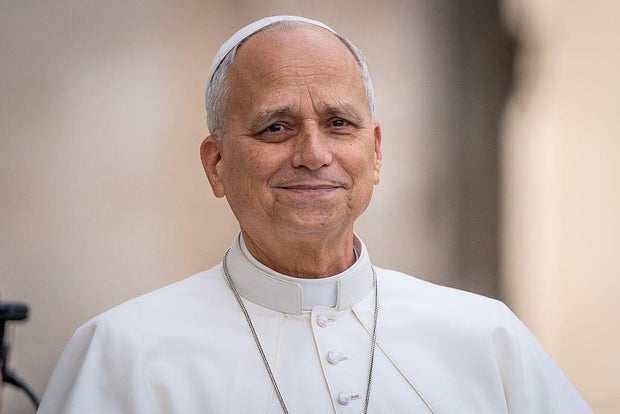
Pope Leo XIV has become the first pontiff to vote in a U.S. election. The Vatican confirmed Friday that the American-born pope submitted a mail-in ballot in his native Chicago ahead of November's midterm elections, citing his longstanding belief in civic participation.
The pope, formerly Cardinal Robert Prevost, "has exercised his right to vote as a United States citizen, whenever he was eligible to do so," the Holy See press office said.
"The Holy Father expresses his belief in the right and the duty of citizens to participate in democratic processes," the Vatican said in a statement.
The Will County Clerk's Office confirmed to CBS News that he is on the list of voters who requested a mail-in ballot, with a registered address in New Lenox.
The Chicago Sun-Times first reported Leo's vote and quoted the chief of staff at the Will County Clerk's Office as saying the pope requested a mail-in ballot on Oct. 3. This was just days before his recent lung cancer surgery.
Pope Leo XIV arrives to lead his traditional Wednesday General Audience in St. Peter's Square.
Stefano Costantino/SOPA Images/LightRocket via Getty Images
Last month, Leo told a general audience at the Vatican that the faithful should leave behind "all passivity and indifference" toward current events.
"We cannot remain as unengaged spectators; rather, we must listen with our hearts, allow ourselves to be challenged, and become involved," the pope said on Sept. 2 in St. Peter's Square, according to the Catholic News Service. "With Christ and sustained by the power of his Spirit, believers are called to take on the burdens of their brothers and sisters, especially those who are crushed by injustice, discrimination and violence."
The pope has a long history of civic engagement in the U.S., the Vatican said, confirming that during his nearly two decades as a missionary then bishop in Peru, Leo voted whenever he was eligible. He holds U.S. and Peruvian citizenship.
According to records from the Illinois State Board of Elections, the pope, as Robert Prevost, was registered to vote in Cook County. The Associated Press reports he previously voted in five primary elections since 2000 — on the Democratic ballots in 2008 and 2019 and Republican ballots in 2012, 2014 and 2016.
Illinois has closed primaries, which means voters must declare a party preference to receive a ballot. No such declaration is required in general elections.
The pope submitted ballots in every general election since 2000, except in 2020 and 2022, the AP reported, citing Illinois election records.
Residents left Oleshky on buses, mini buses and by train.
In short:
Residents of Russian-held Oleshky in southern Ukraine have began evacuating as part of a joint relief operation by the opposing sides.
Under a local ceasefire brokered by US first lady Melania Trump, an aid convoy arrived and people were given the opportunity to leave if they wished.
What's next?
Russia hopes that the US can pressure Kyiv into accepting a deal that meets many of Moscow's conditions.
The evacuation of stranded residents in Oleshky, a ravaged Ukrainian frontline city under Russian occupation has begun as part of a US-brokered ceasefire, officials from Russia and Ukraine said.
Captured by Russia in 2022, locals in the city had faced food, water and medicine shortages for months, with some being forced to hunt and eat pigeons, former residents said.
Officials from Moscow and Kyiv arrived in Oleshky on Friday to oversee the operation.
"Evacuation and distribution of humanitarian aid have begun," Ukrainian negotiator David Arakhamia said on social media.
Yana Lantratova (left) spoke to reporters after sending a video message to announce that many Oleshky residents were leaving. (Reuters)
Russia's human rights ombudsman Yana Lantratova posted a video showing groups of people waiting to board buses.
Some would be taken to Russia, others to Kyiv-controlled parts of Ukraine, she said.
The population of Oleshky has dropped from 24,000 before the war to about 2,000.
Ukraine's human rights ombudsman Dmytro Lubinets posted videos of himself talking to locals, several of whom thanked him, were crying and wiping tears from their eyes.
Groups of residents were seen waiting outside their buildings with bags of belongings ready to leave.
Officials from both countries have said some in the city would choose to stay, even if the fighting resumed.
Oleshky's population has dropped from 24,000 before the war to about 2,000. (AP)
Now in its fourth day, it is the longest pause in fighting anywhere on the front line since Russia invaded in 2022.
Several other partial ceasefires, for instance, around Orthodox Easter, have been marred by accusations of violations.
Oleshky residents have given harrowing accounts of risking their lives travelling along mine-strewn roads, one known as the "road of death", just to get food and water.
A man rides a bicycle beneath anti-drone nets stretched over a street during the ceasefire in Oleshky. (AP: Evgeniy Maloletka)
Some say they have survived on a cup of rice or buckwheat a day, sometimes with a tomato, cucumber or wild plants added.
Despite the brief respite in the conflict around Oleshky, attacks elsewhere have continued unabated.
Some 200,000 households were left without power in the Ukrainian city of Dnipro after Russian attacks overnight.
A drone strike on a train station there a day earlier killed at least 14 people, while an attack on the northern city of Chernigiv killed two teenage girls.
US-mediated peace talks are due to resume next month in Abu Dhabi for the first time since February, as US President Donald Trump seeks to end a conflict he once said he could solve in a day.
A man walks across a road beneath anti-drone nets in Oleshky ahead of the evacuation. (AP: Evgeniy Maloletka)
Russia still hopes that Mr Trump can pressure Kyiv into accepting a deal that meets many of Moscow's conditions, such as full Russian control of Ukraine's Donbas region and a bar on Ukraine joining NATO.
Kyiv wants to ensure that US intelligence sharing continues, along with full access to Elon Musk's recently disrupted battlefield communications system, Starshield, and that European-bought US military hardware, including Patriot interceptor missiles, keeps flowing.
Residents left Oleshky on buses, mini buses and by train.
(AFP: David Arakhamia)
The situation with the ceasefire in Oleshky, coordinated with the US, is an isolated case, Kremlin spokesman Dmitry Peskov said on Friday on Russian state TV.
It should not be extrapolated to the broader peaceful settlement process in Ukraine, Mr Peskov added.
Benjamin Netanyahu has reduced Israel's complexities to the most binary of choices. (AP: Dan Balilty)
The 2026 Israeli election campaign was widely described as a referendum on Benjamin Netanyahu, the country's longest serving prime minister.
It says much for Netanyahu's political aggression that within 24 hours of an inconclusive election result, he had turned the debate from a referendum about him, to a referendum about keeping Palestinian citizens of Israel out of government.
On election day, Netanyahu repeatedly attacked Palestinian-Israeli voters in posts on social media. He accused them of "stealing the election" because they had turned up to vote in record numbers. He accused the "Arab parties" of "serious criminal offences of bribery, threats, violence, forgeries, and the use of prohibited software to mobilise voters".
In Israel, the parties that predominantly represent Palestinian Israeli citizens are referred to as Arab parties.
Election officials and the police dismissed the claims.
On election day, Shin Bet chief David Zini said "the elections in Israel are secure, conducted properly, and under supervised control". But by Thursday the domestic intelligence agency had been asked to investigate claims that Qatari money was behind a record surge in the vote of Palestinian-Israelis.
The leader of the anti-Netanyahu bloc, Gadi Eisenkot, accused Netanyahu and his Likud party of launching "a coordinated, orchestrated campaign to delegitimise the election results".
An extraordinary 80 per cent of eligible Palestinian-Israelis turned up to vote on Tuesday. That's almost 760,000 votes. Political disillusionment has kept Palestinian turnout low in the past. But anger over the government's refusal to deal with crime in Palestinian towns helped change that this time.
Another leader of the anti-Netanyahu forces, Yair Golan, said Israelis "must no longer accept Netanyahu's racist division between Jewish votes and Arab votes".
"We have no future here if we don't stop being afraid," he said.
Protesters in Tel Aviv have called for Arab parties to be included in a future government. (Reuters: Jamal Awad)
Racism with a lethal political purpose
The racism that Golan accuses Netanyahu of using can have a lethal political purpose. The election outcome gave no bloc the capacity to form a government.
The parties that oppose him have 67 seats, comprising the 48 seats won by the Jewish-Israeli anti-Netanyahu bloc led by Gadi Eisenkot, as well as the 19 seats won by Arab Israeli parties, compared to Netanyahu's 53.
The problem for the anti-Netanyahu forces is that its Jewish-Israeli members have insisted that they would not enter a coalition with the Arab parties. Yair Golan, quoted earlier, who leads the Democrats with a bloc of eight seats, is the exception.
In attacking the legitimacy of the Palestinian vote, Benjamin Netanyahu is maximising the pressure on the Eisenkot bloc not to change its position on doing deals with the Palestinians.
In a political system where the disdain for Palestinian-Israelis is such that they are usually just ignored in the reporting of political events, it would be an exceptionally high-risk move for the opposition parties to change their stance. But the anti-Netanyahu bloc is also aware that the majority of Israelis — Jewish and Palestinian — voted against Netanyahu.
If they do not find a way of forming a government, the veteran Likud leader will win by default: yet another election will have to be called with Netanyahu remaining caretaker prime minister until that happens.
Former military chief Gadi Eisenkot's Jewish-Israeli anti-Netanyahu bloc won 48 seats. (Reuters: Shir Torem)
Battlelines are drawn
While negotiations continue, the mechanics of the Israeli parliament, the Knesset, in the next few weeks are likely to become the next scene of battle. The political system in Israel allows the new parliament to meet two weeks after an election, even if a government has not been formed.
The opposition parties have signalled they will immediately move to elect a new speaker of the Parliament to replace Likud's Amir Ohana. The speaker can control much of the legislative agenda.
The combined anti-Netanyahu parties, with 67 seats, potentially have enough votes to advance legislation and are pushing for the election of a new speaker to proceed as soon as possible.
Netanyahu's Likud Party says a vote on a new speaker should be suspended while the inquiry into foreign interference in the election take place.
If the opposition parties can nominate a non-Likud speaker, they can move legislation to implement election promises, including for an independent inquiry into security failures leading to October 7, limits on prime ministerial terms, and laws banning someone indicted for crimes from serving as prime minister.
It would be the most pragmatic possible test of numbers if a vote to replace the speaker was successful and could change the dynamics of negotiations over government. It would also confirm the acceptance of Arab votes without those votes being attached to a particular government.
A crack in Netanyahu's forces
One reform that highlights some of the complex chains of support being canvassed here concerns military conscription.
The exemption from the military draft currently given to ultra-Orthodox Jews is highly contentious, given IDF reservists have been forced into long and repeated deployments because of Israel's actions in Gaza, the West Bank, Lebanon and Syria.
Eisenkot has vowed to legislate for universal military service.
Israel's Channel 12 reported on Thursday that the ultra-Orthodox United Torah Judaism party — which has seven seats — was proposing supporting a government led by Gadi Eisenkot from "the outside". That is, in exchange for compromises on the military draft, it could absent itself from Knesset votes and wouldn't use its seven seats to vote against an Eisenkot government.
It would also accept Eisenkot relying on seven votes from the smaller of the two Arab parties — Ra'am. The speculation is that if the UTJ moved, the other ultra-Orthodox party, Shas, would also move across with its seven votes.
It's the first sign of a crack in the Netanyahu forces and is based on the UTJ'S pragmatic assessment that the sitting PM can do no more for them.
"Our alliance with him has been exhausted, certainly in a situation where he does not have 61 [seats]", the source told Channel 12.
"Our interest is to return to being a decisive factor in the Knesset," the source said.
The problem with this scenario is two parties in the Eisenkot bloc have flatly refused to be part of a minority government. And there is a fundamental clash about the draft exemptions between the UCJ and Eisenkot's position.
Workarounds have been suggested. For example, the conscription laws being passed before the UCJ joined the government.
Parties opposed to Benjamin Netanyahu, with 67 seats, may have enough combined votes to advance legislation. (Pool via Reuters)
Pragmatically, this is a sign of one of the smaller parties making an early pitch to maximise its bargaining power, rather than a proposal which was being taken very seriously when it was first floated.
But the choice the UCJ seems to be making with this proposal is between some power in the Knesset under an Eisenkot government, and possible exclusion from government if the deadlock is eventually broken by Eisenkot joining Netanyahu in a centre-right government that excludes the far right and the Palestinian parties.
The complexity of the election result could make almost anything possible — apparently even the spectre of an ultra-Orthodox Jewish party and an Islamist Arab party propping up the same government.
Netanyahu has shown a mastery of reducing the complexities of Israeli politics back to the most binary of choices. The battle now is whether his opponents can defeat that mastery which has dominated Israeli politics for much of the past 30 years.
Snowy 2.0 requires digging 27 kilometres of tunnels beneath rugged terrain in the Snowy Mountains. (Supplied: Snowy Hydro Limited)
The origin story of Snowy 2.0 is a fitting metaphor for one of the most ambitious renewable energy projects in Australia's history.
"We had a couple of Snowy Hydro execs having a beer in the corner, and the plans for Snowy 2.0 were just drawn out on a coaster," the publican of the Alpine Hotel in Cooma told the ABC's Four Corners program in 2023.
As it turned out, it was not that easy.
A recent major review of the project cited design immaturities and building complexities among the reasons for the $25 billion price tag, about 12 times the original cost.
Digging through hard rock beneath the Kosciuszko National Park has been harder than anticipated. (ABC: Melissa Clarke)
"It was a political announcement at the time," said Stephanie Bashir, a former AGL Energy executive and now CEO of Nexa Energy.
"If they had just taken a bit more time at the start … but I mean, that's history now and we've got to keep moving on."
Batteries getting bigger, able to run longer
It was March 2017 when then-prime minister Malcolm Turnbull announced Snowy 2.0, during a heated national debate around climate and energy policy that would eventually factor in to his political downfall.
Malcolm Turnbull tours the Tumut 3 power station at the Snowy Hydro Scheme in 2017. (AAP: Lukas Coch)
At the time, big grid-scale batteries did not really exist. Remember when Elon Musk and Mike Cannon-Brookes made a bet on Twitter to build the world's biggest battery in South Australia in 100 days?
Nearly 10 years on, the latest quarterly report from the Australian Energy Market Operator (AEMO) shows the contribution of big batteries to evening out power in Australia's biggest grid has more than doubled in a year, overtaking gas.
As a result, power prices in the last quarter fell to their lowest average since 2021.
Centralised power in a decentralised grid
Next to the Eraring, NSW coal-fired power station, which is set to close in 2029, Origin Energy is building a series of battery storage systems.
The latest is flagged to have 500 megawatts of capacity with the ability to supply power for eight hours — enough storage to run hundreds of thousands of homes.
AEMO has approved 3.6 gigawatts in battery projects, which will come online between 2028-29, about the same time Snowy 2.0 is set to be finished.
A model of Origin Energy's $US400 million battery project at the retiring Eraring coal power plant in New South Wales. (Supplied: Origin Energy)
By then, rooftop solar and household batteries will be even more common. Apartment dwellers will soon be able to hang solar panels off their balconies and plug portable, esky-sized batteries into the wall.
Trials are also underway to plug electric cars into the home and connect them to the grid.
"We had centralised energy, and we're moving to more decentralised energy," Ms Bashir said
"Wind farms, solar farms, batteries, they can be located anywhere."
Where does this leave Snowy 2.0?
The relevant number with Snowy 2.0 is the one with the 'h' in it. It stands for hours.
Gigawatts (GW) measure how much power can be delivered at once. Gigawatt-hours (GWh) tell us how much energy is available to be delivered over time.
Snowy 2.0 has a generating capacity of 2.2GW, and the water stored in its reservoir provides 350GWh of energy storage,according to Snowy Hydro.
Snowy 2.0 connects two existing dams via tunnels and six reversible turbines in a power station 800 metres underground. (Supplied: Snowy Hydro)
So while Origin might be building a battery that can run for about eight hours, Snowy 2.0 can run for about 160 hours — or as its promotional material suggests, about long enough to power 3 million homes for a week.
"We have so many batteries being installed, but it still adds up to being about kind of 30 gigawatt hours," professor Marnie Shaw, an energy infrastructure expert from Australian National University, said.
"It's really only one 10th of the size of Snowy 2.0 in terms of gigawatt hours."
Snowy 2.0 is expected to be delivered in late 2029. (ABC South East NSW: Floss Adams)
AEMO's energy road map to 2050 says Australia needs about 650GWh of dispatchable storage, and with its 350GWh, Dr Shaw said Snowy 2.0 made up more than half of that.
"So the majority of our energy, our long-term energy storage in the future, is being supplied by Snowy 2.0," she said.
But Bruce Mountain from Victoria University has long questioned how useful that capacity would be in practice.
"The top reservoir does not have a water supply of its own," Dr Mountain told the ABC's Business Daily this week.
"The problem is you need to pump the water up to the upper dam, which means you need to have the water available in a lower dam, which only gets some water from a river."
"This fantastic ability to run flat out for a week is a service that is simply not practically usable because once you've done that, you've spent your resource."
Snowy as an insurance policy
There are also questions about how often Snowy 2.0's enormous storage capacity will be needed, according to associate professor Roger Dargaville, an energy systems and storage expert from Monash University.
"The idea that you would need to run the Snowy 2.0 for two weeks continuously, it's not very likely that would actually eventuate," he said.
"It's nice to have as an insurance policy in case."
But Snowy 2.0 does have an advantage because achieving the same amount of deep storage with batteries is much more expensive.
"The difference for pumped hydro is to have more hours of storage, you just make the reservoir bigger, which is only a small component of the total system," Dr Dargaville said.
"Whereas for batteries, if you want to double the storage, it is doubling the cost."
The future is modular
Snowy 2.0's cost blowout will continue to be a focus for critics, and nobody could have foreseen how fundamentally the energy landscape in Australia would change in just 10 years.
"At $24 or $25 billion, we're starting to question whether it makes sense anymore," Dr Dargaville said.
"And it's going to require really, really high volatility in the market for it to make its money back."
But Snowy 2.0 is built to operate for 150 years, long after the talk of cost blowouts has faded.
Snowy 2.0 is built to operate for about 150 years once completed. (Supplied)
"There will always be volatility in the market in a renewable energy system, and storage will always be useful," Dr Dargaville said.
Ms Bashir said the lesson from Snowy 2.0 was that long-duration storage was needed in the energy grid, but future pumped hydro projects might be smaller and more modular.
"You can have pumped hydro projects that are actually much smaller, and they can be located much easier and built much faster and therefore at a lower cost," she said.
"We're so used to big builds, and we're used to centralised energy.
"We need to be thinking in the way that technology is going, which is smaller, flexible, and can be located in a distributed way rather than in a centralised way."
Wondering what to read next? ABC critics review the best new books out this month. (ABC Arts: Nicola Heath)
October was a huge month for books.
Barbara Kingsolver — whose 2022 bestseller, Demon Copperhead, transfixed readers the world over — returned with the much-anticipated Partita, a novel of music and what-ifs.
Fellow literary heavyweight Min Jin Lee, of Pachinko fame, questions the role of education in a family saga set in the influential world of for-profit tutoring businesses known in Korean as hagwons.
And a Pulitzer Prize winner, Hernan Diaz, imagines a dystopian future where the United States has fractured and electricity is currency.
Our critics review these books and more this month. Enjoy!
"The Hagwon is a very central part of being a Korean person," Min Jin Lee told ABC Radio National's The Book Show. (Supplied: HarperCollins Australia)
American Hagwon is both an epic yet intimate story of family and perseverance. Author Min Jin Lee balances social commentary with deep character work as the Koh family is buffeted across Korea, Australia and America by the winds of a personal betrayal and the 1997 Asian financial crisis. At the heart of this book is a conversation about education: what does it look like, who has access to it, what is it for and how can it change your life?
In her third novel, Lee — known for her exploration of the Korean diaspora in works such as Pachinko — introduces the reader to the world of hagwons, Korean private after-school tutoring businesses or "cram schools". The reader, as well as the novel's characters, must grapple with the efficacy and purpose of these businesses. Are they further perpetuating the pressure many children feel to get the best grades and entry into the best schools or are they spaces of learning necessary for success?
Helen and John Koh sacrifice much for their three children, Bo, DH and Mido, who come to learn that educational success is fundamental to their identities and self-worth. We follow the children as they go from students to teachers themselves, continuing to live by the tenet that education is the gateway to freedom from financial and societal vulnerability. Lion, a hagwon owner in California who employs Bo and Mido, is desperate for his community to reject this thinking, proclaiming "our children should not have to save us". However, he is met with exasperation and reticence by parents who want a better life for their children and see only one path.
Lee is a master of building rich, character-led stories. We follow characters' journeys rather than a plot-driven narrative, showing how each member of the Koh family rises to the challenge when met with obstacles and barriers over the course of their lives.
— Rosie Ofori Ward
One for Sorrow by Favel Parrett
Hachette Australia
Favel Parrett's debut, Past the Shallows, was number 173 in ABC Radio National's 2026 Top Australian Books. (Supplied: Hachette Australia)
Award-winning Australian author Favel Parrett's long-awaited fourth novel for adult readers was conceived during a writer's residency in Trondheim on the shores of Norway's third longest fjord. That intimate connection — notably with the landscape and seasons of that unique city, but also with its culture and people — pulsates through the prose, providing a rich backdrop to what deftly evolves into a heart-stopping tale of love and betrayal.
A two-hander told through the eyes of a child and his teacher, One for Sorrow opens with the now grown Einar returning to his hometown of Trondheim for a nostalgic sojourn. There he is persuaded to take an impromptu tour around his old school building where he is touched and somewhat perturbed by memories of an inspirational teacher. He visits his parents' and sister's graves but, we are told with an ominous thud, the teacher, Herr Kristiansen, "is not here".
The story then jumps back to 1939, when Einar is at primary school. Johan Kristiansen has struggled to find a teaching position in Oslo and is prepared to embrace a more parochial existence in this northern outpost, with its snowy and sometimes bleak beauty. Johan is vibrant, progressive, young; so different to the hated Herr Berg he is replacing, and Einar is quickly enthralled.
Johan reads to the class and later shares Ernest Hemingway's work with Einar, whom he recognises as a fellow scribe. A bond forms. But a clandestine passion has also been ignited between this charismatic teacher and Einar's mother. That love affair is painted with erotic tenderness that morphs into fevered desperation when Nazi occupation changes everything. Short chapters, written with a lilting cadence and sophisticated spareness, build tension and a brooding intensity reminiscent of Parrett's Miles Franklin award-shortlisted 2011 debut, the equally compelling Past the Shallows.
— Juliet Rieden
Ply by Hernan Diaz
Picador
Hernan Diaz — In the Distance (2017) and Trust (2022) — was born in Argentina and lives in the US. (Supplied: Pan Macmillan Australia)
Ply, the third novel by Pulitzer Prize-winning author Hernan Diaz, is set in an unnamed American city centuries in the future.
While people still prosper in the countryside, life in the city — reminiscent of New York — is hardscrabble. Life expectancy and the birthrate are low, and health care is primitive — a minor wound can prove fatal.
In this dystopian world ruled by gangsters and militarised corporations, humans rely on their ingenuity. The novel's narrator is a pincher, someone who makes a living from stealing electricity from the grid — controlled by a single energy giant, Tensor, and patrolled by private police force CTS — storing it in a "brick" and selling it on. The pincher, whose mother was a type of DIY mechanic or engineer known as a tinker, has developed a new, more powerful brick that promises her financial security.
The first 200 pages are a pleasing mix of world-building and plot, as the pincher reveals her past in flashbacks. She soon realises she is being followed — but by who? Thugs covetous of her high-powered brick? CTS contractors? Another malevolent actor?
In Part Two, the perspective unexpectedly shifts from the first to the third person as the pincher embarks on a project with Pola, an eccentric and, unusually for their world, mature-age scientist. Here, large blocks of scientific exposition act as a brake on the narrative but soon the plot picks up again, as the pincher and Pola plan an ambitious heist.
Diaz's play with perspective enables him to explore the idea of universal consciousness as a counterpoint to the individualism of contemporary Western society. He renders the world of Ply in lyrical prose, paying close attention to the unexpected beauty of the rewilded landscape. And while much of Ply is given over to high-energy physics, Diaz also describes more organic human pursuits, particularly music, in loving detail. Subatomic particles can generate unprecedented energy, he seems to be saying, but so can human connections.
— Nicola Heath
Too LA: Letters Never Sent (But Some Were) by Eve Babitz, contributions by Lili Anolik
Atlantic
Lili Anolik is a contributing editor at Vanity Fair and has published three books on the life of Eve Babitz. (Supplied: Allen & Unwin)
Continuing Lili Anolik's chronicle of Eve Babitz's life — her previous book, Didion and Babitz, was reviewed here — Too LA puts Babitz's correspondence in conversation with Anolik's sassy commentary.
Born in the 40s to artist parents, Babitz was a chronicler of 60s and 70s LA, a masterful "gossip storyteller" who embedded herself within its cultural and artistic scenes. Her voice is at once intimate, excitable and fragile.
Anolik presents the material in a style that speaks to Babitz's own, appending photos, drawings and diary entries, annotated by Anolik's footnotes. What emerges is not only a picture of Babitz but LA in its hedonistic heyday. With her taste for good times and good company, names drop like nobody's business.
One moment she's in Florence, a city she dismisses for its "small town kind of atmosphere", dating "this typical La Dolce Vita type — handsome, rich", the next, her letters take on a spurned lover-esque quality as her other obsessions — notably Joan Didion — turn sour. The bubbly, charming, vivacious Babitz gives way, in the 70s, to a more brittle persona as her earlier success fails to grow.
Babitz channels her insecurities into diva strength, her hijinks showing how braggadocio and chutzpah can put life in the world. A 1964 letter to Joseph Heller inviting him to read her first novel (he responds that the draft "is eminently readable, but probably not publishable") becomes weightier when, several years later, she writes to him again, criticising the boxes in which female artists are placed. Responding to a man who says disappointment has made her "disciplined", she says: "Because I didn't ball him he assumes I must have some fantastic discipline."
Full of quotable tales and telling quotes, memorable side remarks and bristly, frank divulgences, Too LA is incisive and quietly moving. It has a lot to say about the City of Angels and about being a woman, a scenester and a lover of life.
— Declan Fry
Spent Light by Lara Pawson
Text Publishing
Lara Pawson's Spent Light was shortlisted for the Goldsmiths Prize in 2026. (Supplied: Text Publishing)
It starts so simply: the unnamed narrator's neighbour gives her a toaster after his wife dies. Inspecting the item sets our protagonist off on a wild train of thought: "Above each light, fractionally off centre, a word is printed in the same restrained font found in CIA documents. Together, they form a synopsis of the anthropocene: REHEAT DEFROST CANCEL."
London-based author Lara Pawson's experimental novel, her third book and first work of fiction, only gets more audacious from there. In every simple task she does lurks reminders of horrific chapters of history: "Standing here, in front of the cooker, peering down on the black grates that straddle the hob, swastikas are what I see. Looking at the dials, turning on the gas, who could fail to consider the camps?"
There's strange beauty, too. Someone mentioning Impressionist art on Antiques Roadshow sparks a reflection on how a moth trap "ripples and glistens, a little like Monet's lake with the water-lilies". These successive digressions take the place of a plot, as darkly funny stream-of-consciousness discursions reveal the ingenuity and tangled history concealed in the objects we use every day without a second thought.
Where other fiction strains for relatability, Spent Light takes a different tack, following its narrator's oddest impulses down endless rabbit holes. You may find yourself siding with the shopkeeper who bustles her out the door when she asks about knitting items from discarded dog's hair. On the other hand, if you've ever felt goaded by your toilet's immobility and "developed the urge to wrench it from the floor and shove it out of place", you may find a kindred spirit here.
In its disdain for formal convention, Spent Light captures something unique that a more traditional novel can't: the way the human mind pinballs between tenuously connected tangents, unpredictably bouncing from the fraught to the frivolous. You'll never look at your toaster the same way again.
— Daniel Herborn
Music Against the Night by Yiyun Li
Fourth Estate
Yiyun Li's memoir Things in Nature Merely Grow won a Pulitzer Prize in 2026. (Supplied: HarperCollins Australia)
American author Yiyun Li was born and raised in China, moving to the US in her 20s, but writes exclusively in English. Her books include fiction (The Book of Goose and others) and a memoir that includes reflections on the death by suicide of both her sons (Things in Nature Merely Grow).
The reason to mention these personal details is both to say that her latest novel, Music Against the Night, is drenched in grief and includes many stories of the death of children, and also that it is not in any way a work of autofiction or disguised autobiography.
Instead, this is a beautifully realised imaginative work of music and time, striving and finding, and lives that eventually meet — without sentimentality but with plenty of art.
The story centres upon the fictionalised lives of two real people born at the end of the 18th century: the Irish composer John Field, inventor of the nocturne, destined for acclaim — and a life soaked in vodka — and Adelaide Percheron, a mixed-race musical genius born in India, who also believed she was destined for greatness. They marry but soon become estranged; when he dies while they are living in Russia, she carefully selects her widow's weeds so they show her to her best advantage.
None of this is straightforward, and it begins at the end rather than the beginning. We know, as readers, that these two characters will meet, marry and separate and yet somehow remain entwined, without quite knowing how or even why. Along the way, we meet them as children, allowing for an exploration of race and ambition, prodigies and discipline, pianos and melody as they grow into adulthood. Time marches on and then retreats, beats out peculiar rhythms, suddenly flashes forward to the present and hints at what is to come — all of it tautly controlled and evocatively played.
— Kate Evans
Finding Justice by Larissa Behrendt
UQP
Larissa Behrendt has published three novels, including After Story (2021), and numerous non-fiction titles. (Supplied: UQP)
Gamilaroi/Eualeyai woman Larissa Behrendt (host of ABC Radio National's Speaking Out) came of age in Paul Keating's Australia, a world that seemed ready for change. But the promise of reconciliation created by the Redfern Speech and native title reform soon gave way to the callous, begrudging hostility of the Howard years (to say nothing of the long period of inertia since).
Legal victories — in parliament, courtrooms and constitutional reform — do not always feel like justice. Convinced justice is more than statutes and policy, courts and parliaments, Behrendt examines the lessons Country, lore, kinship and culture have for all peoples, a lived practice of justice and care that is essential to survival and flourish.
What emerges in Finding Justice is a highly personal account of what justice means, with Behrendt reflecting on her mentors and heroes, on elders, activists, colleagues and family members. She writes about the experiences that went into her award-winning novels and films, asking: what does justice really look like?
At its best, the book is memorably punchy and heartfelt — there are moving passages about Behrendt's parents and family, her mentors and comrades. At times, though, it has a rhetorical, TED talk, corporate quality that occasionally becomes repetitive (through, for example, an over-reliance on "not X, but Y" formulations: "It wasn't one great defeat, but a series of small ones.")
It's a truism to say that the law is about stories: who tells them, who sustains them. It's also a brutal reality. Finding Justice shows a writer, lawyer and tireless advocate for whom justice is relational: a story that belongs to more than one person, and that it is being told, and retold, each and every day.
— Declan Fry
Partita by Barbara Kingsolver
Faber Fiction
Barbara Kingsolver is the author of 11 novels, including The Poisonwood Bible (1998) and Unsheltered (2018). (Supplied: Allen & Unwin)
What does it mean for a clever girl to escape a small town and a bitter mother in search of something larger and more expansive? To long for music and art? Not to be belittled for daring to step into the spotlight, daring to receive applause?
But what if, somehow, she ends up back there anyway, with a ruined hand that can no longer stretch the required octave-plus on a piano keyboard. Despite her once-held dreams, it's a fate she seems to accept.
This is the mystery at the heart of Barbara Kingsolver's latest novel, Partita. Kingsolver has long written powerful Appalachian stories of underclasses and inequality, most recently in Demon Copperhead. Art and beauty have also been themes in her work, as in, for example, The Lacuna, which circles the lives of Frida Kahlo and Diego Rivera. All these themes come together in this latest novel.
Livia finds both discipline and expression in the piano, which as a child she can only access after hours, in the local church. Eventually, against her mother's wishes, she wins a musical scholarship to a university, where her life begins to expand — even in the face of poverty, discrimination and mistreatment as someone with the wrong clothes, hair and accent. She feels that clashing counter-tune again and again: you don't belong here.
Then, she meets a charismatic young man, a sexy class warrior, and the world begins to sparkle … and unravel.
In a story told across two timelines, the question of how our hero ends up where she ends up creates an anxious tension. We meet her as an older woman, married to a farmer in her hometown; but we also follow her as a young woman, leaving that same town and never looking back. Between those two different trajectories, what happened? How did she get there, and what are all those skeletons stuffed into every cupboard in her dreadful childhood home, secrets and objects and scraps of paper her mother hoarded? What does family — and found family and kindness, love and getting by — mean for the shape of a life? Perhaps Kingsolver is playing a duet with the idea of fate.
— Kate Evans
Tune in to ABC Radio National at 10am on Mondays for The Book Show and 10am on Saturdays for The Bookshelf.