Contemporary politics,local and international current affairs, science, music and extracts from the Queensland Newspaper "THE WORKER" documenting the proud history of the Labour Movement.
MAHATMA GANDHI ~ Truth never damages a cause that is just.
On January 7 AEDT, we'll watch the penultimate step of the 2020 US election play out.
In a flashy joint session, the US Congress will gather to count and formalise the votes of the electoral college.
In a normal election year it's a boring, mostly ceremonial process that passes without much notice. But friends, the 2020 election has been anything but normal.
Which means that on Thursday AEDT, there's going to be drama.
What normally happens in January is pretty boring
Things get a little cramped during joint sessions of Congress.(Reuters: Joshua Roberts)
The US Constitution requires one final step to formalise the results of a presidential election.
After the electoral college has voted (which in 2020 was in Joe Biden's favour 306-232), each state sends sealed certificates that have a record of who their electors voted for.
Both the US House of Representatives and Senate gather for a joint session at precisely 1:00pm local time, and then they open those certificates one by one and count the results.
Obviously there's no real suspense because in modern times we know the result of the election well before this step.
Two appointed "tellers" do the official business of opening the certificates (which are delivered to them in mahogany boxes) and read the votes out loud.
Congressional staff open cases containing electoral college votes during a joint session of Congress after the 2016 election.(Reuters: Aaron P Bernstein)
Once each certificate has been opened, the president of the Senate — which is currently Vice-President Mike Pence — reads the final results, closing the book on another presidential election.
All pretty boring, right? We already know the result after all.
So why is President Donald Trump teasing it like a television cliffhanger?
It won't be boring this time
The reason this process is mostly ceremonial is because the US constitution does allow any member of Congress to stand up and object to a state's electoral college vote once it's announced by the teller.
But, that objection needs to be in writing and signed by both a member of the House of Representatives and the Senate otherwise it's ignored. And ahead of the vote, it's confirmed that members from both chambers are planning to object.
Hawley, a senator from Missouri, is a staunch Trump supporter and reportedly harbours presidential ambitions of his own in 2024.
He plans to object despite Republican Senate Majority Leader Mitch McConnell reportedly warning the President's own party that supporting Trump's push to dispute the electoral college vote would lead to a "terrible vote" for Republicans.
After the electoral college voted, Mitch McConnell recognised Joe Biden as the president-elect.(Reuters: Caroline Brehman)
With two votes locked in, get ready for two hours of drama
After both a representative from the House (Brooks) and a senator (Hawley) object to a state's results, the drama begins.
The joint session will be suspended, then both the House and the Senate will go into separate sessions for no more than two hours to debate the objection.
Members get just five minutes to speak in favour of or against the objection.
At the end of it all, there will be a simple majority vote in both chambers.
If both chambers agree to the objection, then the votes from that state are rejected. If both don't agree, the original votes are counted.
The last time this happened was in 2005, only the second time in US history. Back then, both chambers rejected the objection to Ohio's electoral college votes.
No, Vice-President Mike Pence can't step in here
Fringe groups have urged the Vice-President to disrupt the process of counting the votes.(AP: Lynne Sladky)
Once the objections are dealt with, all that's left for Vice-President Mike Pence to do is carry out the uncomfortable task of announcing Joe Biden and Kamala Harris will be the next president and vice-president of the United States.
CNN reported Trump was "confused" as to why his Vice-President could not just overturn the election results at this step.
A group of Republican congressmen even filed a last-ditch lawsuit, asking a judge to declare Pence had "exclusive authority and sole discretion" to decide which electoral college votes would be counted.
Which is … not at all how this process works (a point made by election law experts).
There's nothing Pence can do to overturn the result on his own. His job is basically just to read the votes.
Because Democrats still control the House of Representatives and will vote down any objection. And Republican Senate Leader Mitch McConnell has already flagged he's not interested in entertaining such a challenge.
Any attempt to overturn the US election result this way is doomed to fail.
So while it might look like a lot of high drama and theatre, the result of the US election will never actually be on the line.
One of Joe Biden's (left) last duties as vice-president in 2017 was announcing the electoral college results of Donald Trump's win.(Reuters: Jason Reed)
And all that's left once Pence announces the results is inauguration on January 21 AEDT.
On that day, Trump will leave office at 11:59am local time. Biden will be sworn in as the next president at noon.
And the speculation over whether Trump will run in 2024 will continue until he says otherwise.
Melbourne-based Chinese businessman Huifeng "Haha" Liu.(ABC News: Illustration by Alex Palmer)
A Melbourne-based Chinese businessman who has aligned himself to prominent Liberal Party MPs is facing deportation after being assessed by ASIO as a national security risk, an ABC investigation can reveal.
Key points:
Melbourne businessman Huifeng "Haha" Liu is challenging a government deportation order after an adverse ASIO security assessment
Mr Liu is a Liberal Party donor and has links with Assistant Treasurer Michael Sukkar and backbencher Gladys Liu
He co-founded a community assistance group which has an agreement to receive funding from and share information with the Chinese consulate in Melbourne
The businessman, Huifeng "Haha" Liu, is a Liberal Party donor and former soldier in China's People's Liberation Army (PLA) who developed links with federal Liberal MP Gladys Liu and Assistant Treasurer Michael Sukkar.
Mr Liu is contesting the deportation order after the Federal Government rejected his application for permanent residency when security concerns were raised.
The Australian Federal Police (AFP) has also confirmed it is investigating Mr Liu as part of the joint ASIO-led Counter Foreign Interference Taskforce, but declined to comment further.
Mr Liu told the ABC he believed ASIO had assessed him as a security risk because he was the president of a popular Australian-Chinese neighbourhood watch organisation which had an agreement to take instructions from the Chinese consulate in Melbourne.
Haha Liu is photographed with Liberal MP Gladys Liu on the occasion of her maiden speech to Parliament in July 2019. .(ABC News: Supplied)
The group, the Australian Emergency Assistance Association Incorporated (AEAAI), actsas a middleman in police incidents and legal cases involving Chinese speakers.
The association has promoted itself as a grassroots community platform to its more than 55,000 members from the Chinese diaspora in Australia on the Chinese social media platform WeChat.
It has more than 1,000 volunteers who promise to race to the scene of incidents across Australia in a matter of minutes.
According to confidential documents obtained by the ABC, theAEAAI was promised funding from the consulate and agreed to report back on criminal incidents, emergencies, accidents and "security risks" involving Chinese citizens deemed to require consular assistance.
The AEAAI was promoted publicly by Gladys Liu (no relation), who has close links to Mr Liu.
Ms Liu helped the 52-year-old develop a relationship with Victoria Police and, by Haha Liu's account, translated for him at events with MPs and business leaders.
He also watched from the public gallery in the House of Representatives as Ms Liu delivered her maiden speech in July 2019 as MP for the federal seat of Chisholm in Melbourne's east.
Haha Liu and Liberal MP Michael Sukkar pictured at various events and party fundraisers between 2016 and 2018.(ABC News: Supplied)
Mr Liu has also ingratiated himself with Assistant Treasurer Michael Sukkar, the MP for the neighbouring seat of Deakin, who invited him to Parliament House to join him at his table for the 2017 Budget night dinner.
Mr Sukkar posed for photos, embracing and drinking with the political donor at a series of exclusive events between 2016 and 2018.
The Assistant Treasurer sent a Christmas card thanking him for his "friendship and support" in 2017, six months after the consulate announced its agreement with Mr Liu.
Haha Liu received a Christmas card from Assistant Treasurer Michael Sukkar.(ABC News: Supplied)
Geoffrey Watson SC, a former counsel assisting for the NSW Independent Commission for Corruption (ICAC), called on Prime Minister Scott Morrison to crack down on what he described as foreign influences within the Liberal Party.
"This shows that a person who's now thought maybe to be a person of malign influence has got access to government at the highest level, to Mr Sukkar, a minister," he said.
Mr Watson said it was time for Mr Morrison to sack Gladys Liu in response to the revelations.
"Gladys Liu has now been tied to several instances of inappropriate influence," he said.
"I am stunned that she still holds the confidence of the Prime Minister and that there haven't been actions to separate her from the Government and even from the Liberal Party itself."
Close contact with Liberal Party figures
The allegations about the nature of Mr Liu's activities come as he mounts a Federal Court challenge against the Immigration Minister and ASIO in a bid to remain in Australia.
The court granted him a stay on his deportation order after the minister rejected his application for a significant investor permanent residency visa on character grounds in September.
"I've done nothing wrong or against Australian law," Mr Liu told the ABC at his Melbourne home. "The decision to revoke my visa was extremely unfair."
Mr Liu has lived in Australia since at least 2014.
Sources close to Mr Liu have told the ABC he has been on ASIO's radar since at least 2016, when he had one of several meetings with the agency.
The same year, he founded the AEAAI and appeared in a photograph attending the launch of a new Australian association for Chinese PLA veterans.
The visa decision and the ongoing ASIO-AFP investigation raise questions over whether the Liberal Party and some of its MPs developed a mutually beneficial relationship with Mr Liu.
Gladys Liu and Mr Sukkar gave the Liberal Party donor access to the corridors of power, in Federal Parliament and at events with Cabinet ministers and government MPs.
In April 2017, Mr Liu and Mr Sukkar attended a private function hosted by a Liberal Party fundraising association called the Deakin 200 Club, of which the Assistant Treasurer is one of the founding members.
The Liberal Party's 2015-16 public records show that in the lead-up to the July 2016 election, Mr Liu donated $20,000 to its federal Victorian division.
In June 2016, he attended a series of pre-election fundraising events headlined by then-foreign affairs minister Julie Bishop and former prime ministers John Howard and Tony Abbott.
The same month, he officially launched the AEAAI and flooded his social media profile on the Chinese platform Weibo with photographs and posts about his encounters with senior Liberals.
Haha Liu shows off cosmetic products autographed by former prime minister John Howard, left, and Assistant Treasurer Michael Sukkar.(ABC News: Supplied)
He posted photos of the politicians autographing samples of products he was exporting to China. One photo shows Mr Sukkar and Mr Liu brandishing an autographed box of "hyaluronic acid collagen face masks".
In another of the photos, former prime minister John Howard is seen autographing a box of "ultra anti-wrinkle face serum" at a function organised by the Liberal Party's fundraising arm Enterprise Victoria at the exclusive Athenaeum Club.
In his Weibo posts, Mr Liu thanked Gladys Liu for translating for him with Mr Abbott, Ms Bishop and business leaders.
"Under the simultaneous interpretation from sister Liu, my speech was full of emotion," he wrote. "Tony and I talked about the election, refugees, immigration policy, and security [issues]."
Haha Liu poses for the camera with former prime minister Tony Abbott at an event.(ABC News: Supplied)
In 2018, Ms Liu attended a meeting with Haha Liu in Melbourne between the AEAAI, Victoria Police and Monash City Council to discuss community safety.
It was one of a series of meetings and community forums involving the AEAAI and Victoria Police in 2018 and 2019.
And in a gesture of her ongoing support, Gladys Liu has attended and spoken at the AEAAI's annual conferences, including after her election as an MP.
Mr Liu also posted photos of events and dinners between 2016 and 2018 with Mr Sukkar, including while the MP was chair of Parliament's Joint Committee on Intelligence and Security.
"Tonight, I was invited to attend a private dinner hosted by the Assistant Treasurerof the Commonwealth of Australia Michael Sukkar," Mr Liu said in a post dated April 27, 2017. "He kept telling others that I was his old friend …"
In a statement provided to the ABC, MP Gladys Liu said her only dealings with Mr Liu were in his capacity as president of the AEAAI.
"Outside of this we have no relationship," her statement said. "Allegations made against Mr Liu are concerning and should be thoroughly investigated."
She said she had never received "financial support" from Mr Liu and was unaware of the allegations against him until contacted by the ABC.
A spokesperson for Mr Sukkar said that although the minister and Mr Liu had attended a number of the same "local events", this had not happened "in the past two- to three-year period".
He declined to answer questions about specific fundraising events.
Haha Liu received this invitation from Mr Sukkar to attend Budget night at Parliament House in 2017.(ABC News: Supplied)
"Mr Sukkar has never had a private meeting or conversation with Mr Liu, who is known locally not to speak English," the spokesperson said in a statement given to the ABC.
The statement also said that the card received by Mr Liu was one of about 5,000 "personalised Christmas cards" sent by Mr Sukkar each year.
Mr Liu also donated $1,125 to the NSW Liberals for tickets to a Premier in Conversation event featuring Gladys Berejiklian in November 2017
It is not known if Mr Liu made any other donations to the party.
The director of the Liberal Party's Victoria division, Sam McQuestin, said Mr Liu's "financial contribution … was disclosed to the Australian Electoral Commission in accordance with our obligations under the Commonwealth Electoral Act".
Under federal electoral laws, donations under $14,300 do not have to be declared.
Mr Liu was also feted by the Victorian Labor Government, when Premier Daniel Andrews handed him an award at the 2018 retirement banquet for the outgoing parliamentary secretary for multicultural affairs, Hong Lim.
"MPs from all political parties are invited to numerous community and multi-cultural events where they are often asked to be photographed with attendees," a spokesperson for Mr Andrews said.
Street crime fears
In 2016, Haha and Gladys Liu shared a common goal to mobilise large groups from Melbourne's Chinese community on WeChat.
They both spread stories about street crime targeting the Chinese community.
At that time, Gladys Liu was a campaigner and prodigious fundraiser for the Liberal Party's Victorian division.
Haha Liu, who started with a small fashion business in Melbourne in 2014, was building a profile as a well-connected leader and protector of the Chinese community.
According to a senior member of the AEAAI leadership committee interviewed by the ABC, Haha Liu often boasted of a close connection to Gladys Liu "to give other people the impression that he is a big guy".
The ABC is protecting the committee member's identity because he fears reprisals from the Chinese Government.
"He mentioned they were old friends for a long time," he said. "He used to mention, 'we have dinners together'. Sometimes, for some events, she would invite him."
Gladys Liu and Haha Liu pictured at a meeting with Victoria Police.(ABC News: Supplied)
"People are so frightened about safety — and they relate that to immigration policy," she said.
"People blamed Labor for letting immigrants — especially refugees — in. So, in response to the worsening of safety, people set up WeChat groups to scare the robber away. People are scared …
"They see that police are not protecting them."
Mr Liu was beating the same drum, including in an article on local Chinese news site Yeeyi, the AEAAI's official media partner.
"Mr Liu told reporters there are incidents happening every minute in Victoria …" the article said. "However, the police force in each Melbourne jurisdiction has only a few people."
In an interview with SBS Mandarin, Mr Liu said, "we provide the police with the function of [assistance] because the police force is really limited right now."
Haha Liu stands behind the then-prime minister Malcolm Turnbull, former MP Julia Banks, left, and former Victorian Liberal Party organiser Gladys Liu during a campaign visit to the seat of Chisholm in 2016.(ABC News: Supplied)
She targeted voters in the Melbourne electorates of Deakin and Chisholm, where the Liberals' Michael Sukkar and Julia Banks won their seats.
When the Coalition's election victory was close to being declared, Mr Liu attended media events and posed for photos with then-prime minister Malcolm Turnbull, Julia Banks, Mr Sukkar and Gladys Liu in Melbourne.
"The Australian news broadcasts were full of me and Prime Minister Malcolm Turnbull," Mr Liu posted on Weibo on July 9. "Congratulations to the Liberal Party and Prime Minister Malcolm Turnbull for his second term in office."
A deal with the Chinese consulate
In November, Mr Liu stood down as president of the AEAAI after a fractious dispute with some of the association's leadership team, who accused him of concealing his interactions with ASIO.
"I feel betrayed, I feel angry, I feel used," said the AEAAI committeemember interviewed by the ABC. "I think everybody, our normal members, have a right to know the truth behind this."
In the four-and-a-half years since it was launched, the AEAAI has built its profile as a 24/7 community service where volunteers can be reached on WeChat, over the phone, on a new mobile app and in person.
Chinese citizens and Chinese Australians have been willingly giving the association's volunteers sensitive and personal details about their lives.
The group, which is registered as a non-profit with charitable purposes, assists Chinese-speaking residents to cooperate with Australian police, judiciary and emergency services in criminal incidents, emergencies, accidents, disasters and disease outbreaks.
The AEAAI has gained coverage in the mainstream media recently with stories about its army of volunteers responding to missing persons cases, robberies, and delivering supplies to residents in home quarantine during the COVID outbreak.
But what the news stories didn't say was that China's Melbourne consulate had announced the AEAAI as its official "consular protection assistance agency" in July 2017, assisting in cases where Chinese citizens needed to deal with Australian authorities.
Haha Liu signs the letter of intent between AEAAI and the Chinese consulate in Melbourne in 2017.(ABC News: Supplied)
In the announcement of the deal, Mr Liu reportedly promised to "communicate closely" with the consulate.
Confidential documents obtained by the ABC reveal the AEAAI agreed to take instructions from the consulate, report to it on incidents involving Chinese citizens and provide "security risk information".
A letter of appointment signed between the AEAAI and the consulate stipulated that "the association assigns volunteers in accordance with the Consulate-General's authorisation and clear requirements on a case-by-case basis".
It said volunteers should "assist the Consulate-General by going to the scene of an incident to understand the situation of the case, provide assistance within its capacity to Chinese citizens … and promptly report the case to the Consulate-General."
The document, which also required volunteers to abide by Australian laws, was signed in July 2017 and renewed until at least July 2020, according to members of the AEAAI leadership committee.
As part of the arrangement, the consulate agreed to fund the AEAAI's activities.
Internal communications obtained by the ABC show Mr Liu told the committee that the consulate instructed the AEAAI to establish a third-party entity to receive consular funds.
While the agreement deals with citizens living in Victoria and Tasmania, the AEAAI operates localised WeChat groups and volunteers in every state and territory.
Swinburne University China specialist Professor John Fitzgerald says Beijing sees its consular activities extending to all Chinese descendants, not only its citizens.
"While these consular offices have a duty to protect citizens from China, they have no duty and no right to interfere in Chinese-Australian community affairs," he said.
"If they're supporting an organisation which is setting out in effect to protect Chinese Australians, not just Chinese citizens, one has to ask why?
"That could be considered consular overreach … That's the business of the federal or local police forces."
Australian Emergency Assistance Association Incorporated (AEAAI) logo.(ABC News: Supplied)
The letter of appointment also stated the AEAAI should "provide security risk information to the Consulate-General in a timely manner, pass on relevant security warnings issued by the Consulate-General through WeChat groups, and assist the Consulate-General in carrying out preventive publicity activities".
The agreement stipulated that designated contact persons at the AEAAI and consulate were to "communicate and report on each case" and "report to their superiors".
Each night, an on-call night-shift volunteer "writes a formal report to be archived for future reference", according to a 2019 AEAAI document.
The terms of the arrangement with the consulatehave split the AEAAI community.
"He's saying white but he is doing black," claimed one committee member who did not wish to be identified.
"Haha has been telling everyone, especially the committee members, never take a political line, never choose your side, stay away from politics.
"But it seems like he's maintaining a very good relationship with the Chinese Embassy and some local politicians."
Mr Liu told the ABC he had not committed any crime.
"I have not harmed Australia and I have not broken any laws," he said.
"If I have done anything wrong, I can accept this result, but I didn't. I believe the law will give me the justice I deserve."
China's Consulate-General in Melbourne and Embassy in Canberra did not provide a response to questions sent by the ABC.
The AEAAI also declined to respond to the ABC's questions.
‘What does it look like if we don’t have a shared sense of reality?’
Illustration: Nico Krijno/The Guardian
At the beginning of 2021,millions of Americans
appear to disagree about one of the most basic facts of their democracy:
that Joe Biden won the 2020 presidential election.
The consequences of Donald Trump’s repeated, baseless claimsof voter fraud will come in several waves, researchers who study disinformation say, even if Trump ultimately hands over power and leaves the White House. And there is no quick or easy way to fix this crisis,
they warn. Because when it comes to dealing with disinformation, simply
repeating the facts doesn’t do much to change anyone’s mind.
In the short term, Trump’s false claims about election fraud have
weakened Biden’s ability to address the coronavirus pandemic. “If only
20% of the population is like, ‘You’re not my president, I’m going to
double down on my mask resistance,’ or ‘I’m going to continue to have
parties over the holidays,’ that means we are going to be even less
likely to bring this thing under control,” said Whitney Phillips, a
professor of communications at Syracuse University.
Over the longer term, the president’sfalsehoods may
also undermine Biden’s overall governing capability, just as the racist
“birther” conspiracy theory, another false claim spread by Trump,
helped fuel political resistance to Barack Obama’s presidency. And the
damage to Americans’ basic trust in their democracy may have effects far
beyond electoral politics.
“What does it look like if we don’t have a shared sense of reality?”
said Claire Wardle, the executive director of First Draft, a group that
researches and combats disinformation. “We’ve seen more conspiracy
theories moving mainstream. There’s an increasing number of people who
do not believe in the critical infrastructure of a society. Where does
that end?”
How we got here
America’s current disinformation crisis is the culmination of more
than two decades of pollution of the country’s information ecosystem,
Wardle said. The spread of disinformation on social media is one part of
that story, but so is the rise of alternative rightwing media outlets,
the lack of investment in public media, the demise of local news
outlets, and the replacement of shuttered local newspapers with
hyper-partisan online outlets.
This
“serious fragmentation” of the American media ecosystem presents a
stark contrast with, say, the UK, where during some weeks of the
pandemic, 94% of the UK adult population, including 86% of younger
people, tuned into the BBC, a publicly funded broadcaster, according to
official statistics.
And the left and right in the US don’t merely have different sets of
media outlets for their different audiences: they have also developed
distinct models of information-sharing, Wardle said. Mainstream media
outlets still follow a traditional top-down broadcast model: an
authoritative source produces the news and sends it out to consumers.
The rightwing media ecosystem, which developed through talk radio, on
the other hand, operates as a network of media personalities interacting
with each other, “a community telling stories to their own community”,
Wardle said.
Trump has built on that, embracing what Kate Starbird, a University
of Washington professor who studies disinformation, on Twitter called a
model of “participatory disinformation”.
Trump’s false claims about election fraud have weakened
Biden’s ability to address the coronavirus pandemic. Photograph: Drew
Angerer/Getty Images
“Trump
didn’t just prime his audience to be receptive to false narratives of
voter fraud, he inspired them to create them … and then echoed those
false claims back at them,” she wrote.
Participatory disinformation might actually be “stickier” and more
effective than “top-down propaganda”, Starbird argued, in part because
of the “positive reinforcement” of Trump supporters seeing their
“‘discoveries’ repeated by their media & political celebrities”.
When their platforms turned out to be ideal environments for making
and monetizing participatory disinformation, social media companies were
slow to curb its spread.
Companies like Twitter and Facebook did not begin putting warning
labels on Trump’s false voting fraud claims until very close to the
election. Even then, only a handful of his tweets were flagged, Wardle
noted, while Trump sent dozens of other tweets pushing the same story
and media outlets continued to report on his statements, creating a
powerful national narrative about fraud despite the attempts at
factchecking.
The social media platforms’ decision to finally flag some of Trump’s
disinformation right before a consequential election also may have had
its own damaging political consequences. “They spent so much time
refusing to moderate content that what they’re doing now feels like the
worst kind of censorship,” Joan Donovan, the research director at
Harvard’s Shorenstein Center on Media, Politics and Public Policy, said.
“If they had been doing that for years, it wouldn’t be so shocking.”
A new approach?
The rapid spread of Trump’s election lies should be a “wake-up call”
for the “well-intentioned people” who think that disinformation can be
cured by providing “more quality information”, such as encouraging
people to eat “more spinach instead of chocolate”, Wardle, who has
conducted training sessions for journalists on how to understand and
deal with disinformation, said.
“We have an emotional relationship to information. It is not
rational,” Wardle said. But people who work in the “quality information
space”, Wardle’s term for journalists, scientists, researchers and
factcheckers, still often act as if information-processing were
fundamentally rational, rather than deeply tied to feelings and the way a
person expresses their identity.
It’s crucial to understand that the way people process information is
through entire narratives, not individual facts, Wardle said. Trying to
combat disinformation through factchecking or debunking individual
false claims just turns into an endless, fruitless game of
“whack-a-mole”.
Take the New York Times’ banner headline a week after the election:
“Election Officials Nationwide Find No Fraud”. The story cited election
officials from both political parties in dozens of states.
But that reporting, though valuable, wasn’t likely to change many minds, Phillips, the communications professor, said.
“There is an enormous percentage of the population who sees the word
‘election official’ and actually, in their brains, decodes that as
liberal, anti-Trump,” she said. “If you’re disinclined to trust
institutions, who cares what election officials are saying, because
they’re corrupt, they’re in bed with Biden and the fake news media.
“The
impulse to throw facts at these problems is really strong, and it’s
understandable,” she said “But simply saying what the facts are is not
going to convince minds that aren’t already open.”
Conspiracy theorists, in particular, tend not to be very open to
falsification of their claims, added Deen Freelon, an associate
professor at the University of North Carolina Chapel Hill who studies
social media and politics. “Almost any new piece of evidence or fact can
be converted to the conspiracy theory perspective.”
Research has also shown that disinformation and conspiracy theories are often deeply intertwined
with racial prejudice and hatred, he added. Some of this year’s most
dangerous disinformation, about the seriousness of coronavirus pandemic,
which disproportionately killed black Americans, and about Trump
supposedly winning the election, based on the argument that votes in
majority-black cities were fraudulent and should not be counted, were
clearly influenced by white Americans’ racial views, he noted.
It’s no accident, Freelon said, that some of the same people
suggesting Covid is a myth are also arguing that black votes are
illegitimate.
‘A lot of the country’s been taken’
While it is possible to engage with people who believe deeply in
false narratives, and sometimes change their minds, that work is most
successful on an individual basis, with people who know each other well,
experts said.
It’s helpful to understand someone’s fundamental framework for
viewing the world, including whom they view as the “good guys” and the
“bad guys”, in order to understand what kind of additional information
might sway them, Phillips said.
“The other thing that makes people move on this – it’s corny – is
love,” Freelon added. “People who love you, your family, people who are
willing to engage.”
But disinformation is also sustained by personal relationships.
“Nearly all conspiracy theories are supported by social connections
and ties. It’s not just one person subscribing to this in isolation, but
a network of people who support each other in their beliefs,” Freelon
said. “Leaving the group means at a minimum betraying those friends and
cutting those social ties.”
There are other emotional barriers to people changing their minds.
“Nobody anywhere likes to feel like they’ve been duped,” said Shafiqah Hudson, an author and researcher who has studied online disinformation campaigns.
“We will fight tooth and nail as humans to avoid feeling foolish.
That’s why you see people double down. Nobody wants to feel like they’ve
been taken, but a lot of the country’s really been taken.”
While personal relationships can help to combat disinformation, many
Americans have simply given up trying to fight relatives’ false beliefs.
During the holidays in the US, “people are muting their uncles [on social media] or refusing to talk to their mom,” Wardle said.
“I am worried,” she said. “If you have two different senses of
reality, with two different sets of actors who don’t trust the other
side, who are not open to listening to the other side, that’s not how
democracy functions.”
This article was amended on 1 January 2021 to remove a reference to the BBC being “taxpayer-funded”.
One of GE’s 260-metre-high Haliade-X wind turbines, of the type being installed on the Dogger Bank.
Photograph: SSE
Beyond the horizon off the coast of North Yorkshire, a quiet revolution is emerging from the waves of the North Sea.
More than 80 miles from land, hundreds of the world’s most powerful
wind turbines have begun reaching into the air as construction
progresses on the biggest windfarm ever built. Almost 200 turbines, each
almost as tall as the Eiffel tower, will soon rise above the submerged Doggerland to populate an expanse of sea as large as North Yorkshire itself.
The Dogger Bank windfarm is an engineering feat that marks a step
change in the growth of renewable energy. Each steel structure, weighing
2,800 tonnes, has been designed to soar more than 250 metres from where
their heels are buried in the seabed to the top of each 107-metre
blade. The staggering scale of the turbines
means that each one can generate enough electricity to power 16,000
homes, at less than the average price of electricity in the wholesale
energy market.
This offshore windfarm, and others like it, promises to power a surge
in clean electricity – which will soon be needed in vast volumes to
charge cars, heat homes and produce green hydrogen gas for factories and
transport. It is a central part of the government’s plan to make the UK carbon neutral by 2050, and to reimagine Britain’s global role in what will be an industrial revolution for the low-carbon age.
And
it is already playing a significant role: on Boxing Day, Storm Bella
ensured that more than half of Britain’s daily electricity came from
wind turbines for the first time.
The construction of the Dogger Bank farm will fall to one of the UK’s
few major renewable energy companies, SSE. Built on the legacy of some
of Britain’s earliest renewable energy projects – its roots are in
Scotland’s hydro-electricity board – SSE will construct the windfarm in
three phases through the 2020s. Each phase represents a
multimillion-pound investment, hundreds of jobs in the north-east of
England, and enough clean electricity to power millions of homes.
Alistair Phillips-Davies, SSE’s chief executive, announced a £6bn
financing deal – involving 29 banks and advisers – last month to support
the cost of building the first two phases, and the third deal could be
announced by this time next year.
“For SSE,
and for all our staff, there’s definitely nothing that we could be more
proud of at the moment than reaching financial close on what will
ultimately be a £9bn project,” he said.
“It will be the world’s biggest, most innovative offshore windfarm.
It will generate more energy per turn of those rotors than any other
project, enough to power a house for two days. But the amazing thing is,
we’re going to do more. We’re going to see more and more [offshore
wind] on the back of the prime minister’s 10-point plan.”
Boris Johnson’s plan for a green industrial revolution relies heavily
on offshore wind power, which he hopes to increase threefold to 40GW by
2030. This is important for two reasons. The first is the rapid
expansion of the renewable energy industry to help generate enough clean electricity to displace fossil fuels
in the energy system, as the UK works to create a net-zero-carbon
economy by 2050. The second reason is to spur a supply-chain boom that
can help to drive the UK’s green economic growth and create substantial numbers of “green-collar” jobs.
Alistair Phillips-Davies, chief executive of SSE, inside
the wind turbine testing facility in Blyth, Northumberland. Photograph:
Richard Saker/The Observer
On a grey December day in Northumberland, Phillips-Davies led the
prime minister on a tour of a wind turbine testing facility in Blyth –
just one example of the industrial innovation mushrooming in several of
Britain’s embattled coastal towns thanks to the burgeoning offshore wind
boom.
The Offshore Renewable Energy
(ORE) Catapult centre employs 200 people tasked with testing the
equipment used to build offshore windfarms, including the world-beating
turbines at Dogger Bank. In a heavily fortified state-of-the-art testing
hangar, each 100-metre-long rotor blade is put through its paces to
make sure that it can withstand the harsh conditions of the North Sea.
This involves specially designed equipment which can “waggle” the blade
through a 25-metre range, 24 hours a day, for four to six months.
“We can build world-beating, world-class wind turbines, and have them tested here,” said Phillips-Davies. “But we want to get more UK content involved in our projects.
We’re hoping to encourage more supply-chain companies to come to the UK
so we can increase the UK-made content in our windfarms to well beyond
60%.”
Today, blades for the Dogger Bank farm are manufactured overseas and
shipped to Port of Tyne before being brought to the testing facility on
giant barges along the river. Soon, though, the US industrial giant GE
may begin building the huge turbine – known as the Haliade-X – at a
factory in the UK, providing much-needed jobs for Britain’s struggling
manufacturing sector.
The Dogger Bank windfarm, to date, has supported more than 300 jobs
in the coastal communities of Hartlepool and Port of Tyne, which are set
to reap economic benefits from the project. Employment is expected to
climb into the thousands as construction on the second and third phases
begins. SSE’s earlier offshore windfarms have also created new renewable
energy centres along the east coast of Britain from Wick and Dundee in
Scotland to the Norfolk coast.
Offshore windfarms built by Danish power company Ørsted and
ScottishPower Renewables have supported thousands of jobs and
supply-chain hubs across the east coast of the UK too. In total, the offshore wind industry expects to create 27,000 new jobs by 2030.
“A lot of these offshore facilities are in less well-known places.
They’re all around the edges of the UK, in places that probably need
investment and more jobs. So it’s a fantastic opportunity,”
Phillips-Davies said.
“I think we’re at over 1,000 green jobs created so far, and close to
£10bn-worth of projects done. So we feel like we’re in a really strong
place, and I hope we can go forward strongly from here over the next
decade.”
Draft of Chapter 44 of Sophie’s Planet is available here for fact checking. The people – all of us – must help the President understand the climate situation and the strategy that is needed.
You can sign up for our monthly global temperature updates here.
‘In 2020 the residential solar sector smashed all previous records, no
doubt buoyed by housebound families turning their attention to their
homes and yet another year of falling system costs.’
Composite: Carly Earl
In his speech
to the Smart Energy Summit in mid-December 2019, New South Wales energy
minister Matt Kean fired a shot that has reverberated all year.
As Kean spoke, smoke from the bushfires enveloping Sydney permeated
the hotel conference room such that a cone of illuminated particulates
appeared to hang beneath every ceiling light.
“This is not normal and doing nothing is not a solution” said Kean,
breaking ranks with his federal counterparts. “We need to reduce our
carbon emissions immediately”.
Kean’s ambitious moves, which prepare NSW for the coming wave of coal
power station retirements, received almost no pushback from
conservative media. Whimpers of protest from federal energy minister
Angus Taylor barely registered. (To nobody’s surprise, a recent poll of AFR readers voted Taylor “worst minister” of 2020.)
Labor-led governments haven’t sat still either. Victoria announced a
“humongous” new battery for Geelong, a huge housing energy efficiency
program and development of six renewable zones. Queensland committed to
developing three new zones and appointed a minister for renewables and
hydrogen.
Refreshingly, Australia’s conservative media have largely bitten
their collective tongues. It is now politically safe to pursue clean
energy.
Watch Morrison gradually reposition on climate in 2021, just as Howard did before the 2007 federal election
Our three biggest coal customers — Japan, China and South Korea —
each committed to net-zero emissions. And with the pool of debt, equity
and insurance providers shrinking, the long-term decline of our coal
sector is now certain.
Australia’s energy transition continues apace. In 2009 Kevin Rudd’s
government extended the Howard era renewable energy target (RET) to a
nominal “20% by 2020”. Worried that the RET would be too successful,
Tony Abbott took an axe to the scheme in 2015, cutting about 40% of the
remaining demand. Despite years of sustained attacks, and thanks to
states, corporates and literally millions of households and their solar
panels, we’ve blown past Rudd’s target. In 2020 more than 26% of energy
in the national electricity market (NEM) was delivered by renewables.
2020 marked the lowest coal use in the NEM this century and the
lowest gas usage since 2006 — so much for the “gas led recovery”. It’s
increasingly clear that multiple coal power stations will close this
side of 2030.
In 2020 the residential solar sector smashed all previous
records, no doubt buoyed by housebound families turning their attention
to their homes and yet another year of falling system costs.
South Australia continued to power ahead with an average of 59% of
demand met by wind and solar. In earlier years, renewable generation
exceeded the state’s total demand for moments — in 2020 it did so for
10% of the year. In a marked turnaround, over the last half-year South
Australia recorded the lowest wholesale energy prices in the country.
Despite dire warnings from (inexpert) pundits, record heat and
fire-related transmission outages, our grid performed exceptionally well
over summer. A freak storm at the end of January knocked out a major
power line between Victoria and SA. Thanks to new levels of preparation
and conservatism in the wake of the 2016 blackout, this time SA didn’t
skip a beat, and ran “islanded” from the NEM for 17 days straight.
Sadly, Audrey Zibelman, CEO of Aemo, the electricity market operator
and system planner, returned to the US. Zibelman leaves behind a
transformed organisation, no longer struggling with the pace of change,
but one approaching the transition with the rigour required to manage
such a critical service.
One of Zibelman’s crowning achievements at Aemo is the integrated
system plan, one of the most detailed network planning processes
globally. The ISP models multiple “least cost” development pathways for
our national grid. The “step change” scenario, arguably the most
plausible, has our grid at 96% renewable energy in 2042 — solving the
energy trilemma of affordable, reliable and clean power.
Two massive renewables projects were granted major project status.
Between the 26GW Asian Renewable Energy Hub (which plans to produce
cheap power for the Pilbara and massive quantities of green hydrogen for
export) and the 10GW Sun Cable project (which aims to send power by
undersea cable to Singapore) the projects would increase total
electricity generation in Australia by more than 50%.
"Australia’s energy transition continues to play out between the states, business and households"
Despite our great progress in greening the electricity system,
Australia is floundering in the transport sector. Preliminary 2020 sales
numbers indicate flat growth in electric vehicle sales, in stark
contrast to much of the rest of the world.
While
a growing number of countries are introducing future bans on new
fossil-fuelled car sales and have provided subsidies on EVs for years,
Australia has no federal electrification policies and disincentivises
with high taxes on electric vehicles.
Without federal electrification policies, states and territories are
going their own way. At one end of the spectrum, the ACT is removing
taxes and providing interest free loans for EVs. Victoria, on the other
hand, is planning to impose a new tax on EVs. Given the mess, it’s no
surprise that Volkswagen has chosen to pass over Australia for their new EV range.
When Matt Kean prodded Scott Morrison to sharpen up his climate stance a year ago, the prime minister shot back dismissively that “most of the federal cabinet wouldn’t even know who Matt Kean was”.
As we kick off 2021, every cabinet member has seen how Kean and his
state counterparts have deftly transcended the party’s historical
opposition to renewable energy and are instead embracing decarbonisation
to popular acclaim. The emergence of centre-right advocacy group
Coalition for Conservation and thinktank the Blueprint Institute have
emboldened MPs acutely aware the party’s position is untenable.
Credit where credit is due, the government dropped plans to apply
Kyoto carbon credits against our Paris agreement commitments and
re-committed to funding clean energy research and development, including
for the nascent hydrogen industry. But after seven years in government,
the federal government still has no credible emissions reduction plan,
so it was no surprise that when UK prime minister Boris Johnson held the
Climate Ambition Summit in December, Morrison was denied a speaking
slot.
For all his failings, Morrison knows how to read the room. His many
“micro-pivots” indicate that he knows coal’s best days are behind us,
that his advisors over-egged the promise of gas, that renewable energy
is extremely popular and climate science denial a major turn-off.
Watch Morrison gradually reposition on climate in 2021, just as
Howard did before the 2007 federal election, and for the same reasons.
The need for economic stimulus provides Morrison with the perfect
opportunity to complete his slow pivot and the conservative media appear
ready to give him the requisite leeway.
In the meantime, Australia’s energy transition continues to play out between the states, business and households.
Veteran environmentalist Bill McKibben makes the point that, on
climate action, winning slowly is the same as losing. Are we winning
fast enough? No, but we are accelerating.







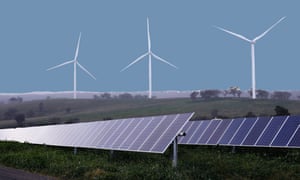
As we kick off 2021, state governments are embracing decarbonisation to popular acclaim