Monday, 28 December 2020

Ruth Bader Ginsburg: The Last Interview and Other Conversations – review.

Extract from The Guardian

In seven revealing interviews, the late US supreme court justice sheds light on her astonishing career in a profession once the preserve of men
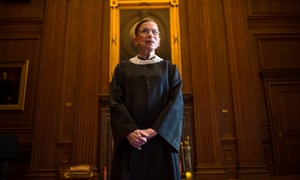
‘She displayed a refusal to be bullied’: Ruth Bader Ginsburg in the supreme court, Washington DC, August 2013
‘She displayed a refusal to be bullied’: Ruth Bader Ginsburg in the supreme court, Washington DC, August 2013. Photograph: The Washington Post/Getty Images

When Ruth Bader Ginsburg graduated from law school in 1959, women made up 3% of lawyers in the US and there were no women judges on the federal courts of appeal. The most she could aspire to, the late justice tells us, in one of seven interviews that make up this timely and inspiring book, was to earn her living as a lawyer, but even that was no foregone conclusion. The story of Bader Ginsburg’s rise from one of nine women in her class at Harvard Law School to a justice on the supreme court and a beloved American figure, becomes no less astonishing the more times one revisits it.

Bader Ginsburg died in September this year, at the age of 87. This book, marketed as The Last Interview, is part of a series of interview compilations with late thinkers and writers that features, among others, James Baldwin, Nora Ephron and Hannah Arendt. It’s a wonderfully wide-ranging and unmediated way to engage with each subject and to be transported back to their earliest ventures in public life. When we meet Bader Ginsburg, it is as a 38-year-old speaking to the New York Times on the occasion of her accepting a professorship at Columbia University. The year is 1972 and it is the first time Columbia has chosen a woman for a full-time post higher than lecturer. Reading Bader Ginsburg’s comments gives one slight vertigo – to encounter her as a young woman and see, for a second, the entire arc of her life, right up to her death – and an intimacy with the justice that a more conventional retrospective might lack.

No law firm, in 1959, wanted to hire a woman, even one as brilliant as Bader Ginsburg

One also gets to see the evolution of a star. In that first interview, Bader Ginsburg displayed many of the qualities that would come to inspire, in her later years, not just respect, but a kind of devotion and a fame unusual for one in her line of work. When she graduated from Columbia Law School, having transferred there from Harvard, Bader Ginsburg tied for first place in her class, yet for a long time couldn’t find a job. At first, she tells the journalist, she thought there must be something wrong with her. “But then,” she said, “when I got so many rejections, I thought it couldn’t be they had no use for me — it had to be something else.”

No law firm, in 1959, wanted to hire a woman, even one as brilliant as Bader Ginsburg, and what is revealing about her comments on the matter is that even in 1972, she displayed the simultaneous mildness of tone and absolute refusal to be bullied that would mark her entire career. “The only confining thing for me is time,” she says, when asked by the journalist how she planned to deal with being the only woman on a faculty of men. “I’m not going to curtail my activities in any way to please them.”

The tone was, as Bader Ginsburg’s adversaries would discover, deceptive. In an interview in 2018, conducted by Nina Totenberg at the Sundance film festival, she revisits one of the first things she did when she joined Columbia: far from keeping her head down and avoiding confrontation, she immediately took on the university authorities for firing 25 women on staff who were working as maids, while keeping on all their male peers. “I went to the university vice-president,” says Bader Ginsburg, “and told him that the university was violating Title VII.” He replied: “Professor Ginsburg, Columbia has excellent Wall Street lawyers representing them and would you like a cup of tea?”

She didn’t back down. She took her own employers to court and got a temporary injunction to protect the women from being fired. Eventually, Columbia reversed its decision and, faced with public pressure to fire an equal number of men as women, decided in the end to fire no one. As Bader Ginsburg remarked drily in the interview, “faced with the necessity of having to drop about 10 men before they reached the first woman, they found a way to avoid laying off anyone”.

It was an extraordinarily bold move and the joy of hearing Bader Ginsburg recount this and other old battles, many of which I had never heard of before, acts as a rallying cry to be a bit braver in our own lives. The big set pieces are revisited, too, of course, including the early, frightful year at Harvard Law School, when her husband, Marty, was diagnosed with cancer. Thankfully he survived, but for the year of his treatment, Bader Ginsburg cared for him, raised their baby daughter, studied for her law degree and took notes so Marty didn’t fall behind in his own. Under tremendous pressure, she carried the entire family over the line.

It’s a virtue of the book that the interviews range from those focusing heavily on her judicial work, to one with, for example, a group of high-school students, in which Bader Ginsburg is much more playful, to the transcript of an interview she did at a synagogue in Washington DC, in which she talks about the importance of her faith. In the interview with the students, she refers to how, as a girl, she dreamed of becoming an opera singer; however, “in my grade school, I was put in with the – they were called sparrows as opposed to the robins, and I was told to mouth the words. So being a great diva was not in the cards for me.”

In another interview, Bader Ginsburg talks about how her son’s school would always call her, and never her husband, when there was a problem that required their attendance. She informed them, curtly, that their child had two parents and they should switch between them with demands. Suddenly, the principal’s office stopped calling. “I suspect,” says Bader Ginsburg, “that the school was reluctant to take a man away from his work – it wouldn’t hesitate to call a mother away from hers – anyway, there was no quick change in my son’s behaviour, but the calls came barely once a semester. And the reason was they had to think long and hard before asking a man to take time out of his work day to come to the school.”

We learn of what she thought about the meme the Notorious RBG, her friendship with the late, conservative justice Antonin Scalia, how she doesn’t sweat wrong decisions and how she formed her most striking dissenting opinions. As is often the case with interviews, it is the small, human moments that can reveal the most. At the end of Bader Ginsburg’s conversation at Sundance, Nina Totenberg, with whom she had been friends for years, tells a story about her. “When my late husband died,” says Totenberg, “and I started to date the doctor I am now married to, I remember walking down the hall one day with Justice Ginsburg, and I said, ‘Ruth, I’ve started to date a doctor in Boston.’ And in my mind’s eye, I remember her head spinning around and what she said was, ‘Details. I want all the details.’”

Ruth Bader Ginsburg: The Last Interview and Other Conversations is published by Melville House (£12.99)

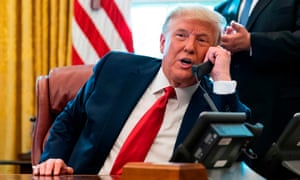
Americans’ acceptance of Trump’s behavior will be his vilest legacy.

 Extract from The Guardian

Most of the 74,222,957 Americans who voted to re-elect Donald Trump – 46.8%of the votes cast in the 2020 presidential election – don’t hold Trump accountable for what he’s done to America.

Their acceptance of Trump’s behavior will be his vilest legacy.

Nearly forty years ago, political scientist James Q Wilson and criminologist George Kelling observed that a broken window left unattended in a community signals that no one cares if windows are broken there. The broken window is thereby an invitation to throw more stones and break more windows.

The message: do whatever you want here because others have done it and got away with it.

The broken window theory has led to picayune and arbitrary law enforcement in poor communities. But America’s most privileged and powerful have been breaking big windows with impunity.

In 2008, Wall Street nearly destroyed the economy. The Street got bailed out while millions of Americans lost their jobs, savings, and homes. Yet not no major Wall Street executive ever went to jail.

In more recent years, top executives of Purdue Pharmaceuticals, along with the members of the Sackler family that own it, knew the dangers of OxyContin but did nothing. Executives at Wells Fargo Bank pushed bank employees to defraud customers. Executives at Boeing hid the results of tests showing its 737 Max Jetliner was unsafe. Police chiefs across America looked the other way as police under their command repeatedly killed innocent Black Americans.

Here, too, they’ve got away with it. These windows remain broken.

Trump has brought impunity to the highest office in the land, wielding a wrecking ball to the most precious windowpane of all – American democracy.

Trump has brought impunity to the highest office in the land, wielding a wrecking ball to the most precious windowpane of all – American democracy.

The message? A president can obstruct special counsels’ investigations of his wrongdoing, push foreign officials to dig up dirt on political rivals, fire inspectors general who find corruption, order the entire executive branch to refuse congressional subpoenas, flood the Internet with fake information about his opponents, refuse to release his tax returns, accuse the press of being “fake media” and “enemies of the people”, and make money off his presidency.

And he can get away with it. Almost half of the electorate will even vote for his reelection.

A president can also lie about the results of an election without a shred of evidence – and yet, according to polls, be believed by the vast majority of those who voted for him.

Trump’s recent pardons have broken double-pane windows.

Not only has he shattered the norm for presidential pardons – usually granted because of a petitioner’s good conduct after conviction and service of sentence – but he’s pardoned people who themselves shattered windows. By pardoning them, he has rendered them unaccountable for their acts.

They include aides convicted of lying to the FBI and threatening potential witnesses in order to protect him; his son-in-law’s father, who pleaded guilty to tax evasion, witness tampering, illegal campaign contributions, and lying to the Federal Election Commission; Blackwater security guards convicted of murdering Iraqi civilians, including women and children; Border Patrol agents convicted of assaulting or shooting unarmed suspects; and Republican lawmakers and their aides found guilty of fraud, obstruction of justice and campaign finance violations.

It’s not simply the size of the broken window that undermines standards, according to Wilson and Kelling. It’s the willingness of society to look the other way. If no one is held accountable, norms collapse.

Trump may face a barrage of lawsuits when he leaves office, possibly including criminal charges. But it’s unlikely he’ll go to jail. Presidential immunity or a self-pardon will protect him. Prosecutorial discretion would almost certainly argue against indictment, in any event. No former president has ever been convicted of a crime. The mere possibility of a criminal trial for Trump would ignite a partisan brawl across the nation.

Congress may try to limit the power of future presidents – strengthening congressional oversight, fortifying the independence of inspectors general, demanding more financial disclosure, increasing penalties on presidential aides who break laws, restricting the pardon process, and so on.

But Congress – a co-equal branch of government under the Constitution – cannot rein in rogue presidents. And the courts don’t want to weigh in on political questions.

The appalling reality is that Trump may get away with it. And in getting away with it he will have changed and degraded the norms governing American presidents. The giant windows he’s broken are invitations to a future president to break even more.

Nothing will correct this unless or until an overwhelming majority of Americans recognize and condemn what has occurred.

Georgia Senate runoff elections: a guide for non-Americans on how they work and why they matter.

 Extract from The Guardian

The two runoffs on 5 January will decide whether the Republicans continue to control the Senate, with profound implications for Joe Biden’s presidency

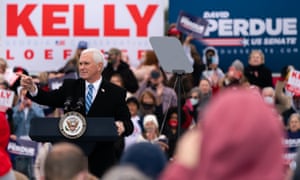
Mike Pence at a rally
US vice president Mike Pence spruiks for Republican senators David Perdue and Kelly Loeffler at a Defend the Majority campaign on 17 December in Columbus, Georgia. Photograph: Elijah Nouvelage/Getty Images

On 5 January the US state of Georgia will vote, again, on who to send to the Senate.

The control of the Senate is up for grabs, and thus the prospects for the Biden administration – at least for the next two years.

As millions of dollars and hundreds of campaigners descend on the state, here is an explainer about what is happening.

What is at stake?

Two seats are up for grabs.

Republicans hold 50 of the 100 seats, and Democrats hold 48. There are 46 formally party-aligned and two independents – Angus King of Maine and Bernie Sanders of Vermont – who caucus with the Democrats. When there is a 50-50 tie, the deciding vote is cast by the vice president. That will be Democrat Kamala Harris after the Biden administration is sworn in on 20 January.

If Democrats can win both seats they will control the Senate.

A Senate majority is crucial in deciding a range of legislative changes, cabinet appointments, potential presidential impeachments and nominations to the supreme court. Republicans have controlled the Senate since 2014.

The Democrats have a majority in the House, so a Democratic Senate majority would make Joe Biden’s next two years much easier. Conversely a Republican-controlled Senate under majority leader Mitch McConnell would be able to block much of his agenda, just as it did with former president Barack Obama’s. Biden has a history of attempting compromise across the aisle and could try to entice one or more Republicans on individual votes, but given McConnell’s history of obstructionism that seems a distant prospect.

With so much hanging on the result, money has been pouring in to the state to support both sides. More than US$400m was spent on political ads by the middle of December, most going to the two Republicans.

Who are the candidates?

One race pitches Republican David Perdue, incumbent senator since 2015, against Democrat Jon Ossof, a former journalist, who is only 33.

Their battle has been vitriolic at times, Ossof repeatedly calling Perdue a crook and referring to investigations into Perdue’s alleged insider trading.

But Perdue has mostly not risen to the bait, and he declined to meet Ossof in their scheduled TV debate earlier this month, leaving Ossof to make his points on an empty podium.

The other, much more colourful, race is between Republican Kelly Loeffler, a seriously wealthy former businesswoman, and Democrat Rev Raphael Warnock.

Warnock, bidding to become Georgia’s first black senator, is a pastor at the Atlanta church where Martin Luther King held the same position. A long-time civil rights campaigner, he is a powerful orator in the tradition of King, and a strong supporter of the Black Lives Matter movement.

As a result he has been denounced as a “radical liberal” by his opponent, Loeffler, at every possible opportunity, but has responded in disarming campaign ads by accusing Loeffler of having nothing positive to say about herself and stressing how much he loves puppies.

Raphael Warnock puppy ad

Loeffler ran into controversy when she criticised players from the WNBA team she owns – the Atlanta Dream – over their support for Black Lives Matter, saying BLM had “Marxist foundations”.

Loeffler is also technically an incumbent – she was appointed an interim senator on 6 January after former Republican senator Johnny Isakson resigned due to ill health.

Why are they runoffs?

Georgia state law requires runoffs in both elections because no candidate in either seat reached 50% in the November election.

For the Loeffler-Warnock seat, the vacancy was created by the resignation of a sitting senator.

This meant the November vote was contested by 20 people, in what is known as a “blanket” or “jungle” primary, which is to say it was almost always going to a runoff, with the top two from the first round going through. In that blanket primary, Loeffler also faced strong competition from moderate Republican congressman Doug Collins, and Warnock competed against a range of Democrats.

Warnock topped the blanket primary with 32.9%, Loeffler came second with 25.9% and Collins came third with 19.95%. The top two – Warnock and Loeffler – then advanced to the runoff.

In the other seat, contested by Perdue and Ossof, the 2.32% of the vote won by Libertarian party candidate Shane T Hazel was enough to ensure that neither main party candidate reached 50% in a tight race: Perdue received 49.73% and Ossof 47.95%.

Who is likely to win?

A Democrat has not won a Senate race in Georgia in 20 years, so the odds of winning two at the same time do not look great.

However, Biden won the state in the November presidential election, the first time in 30 years a Democratic candidate had done so.

How the outcome of the presidential race will affect the runoffs is the great unknown. Will traditionally Republican voters who rejected Donald Trump return to the party to ensure the Biden agenda is tempered by Republican control of the Senate? Or will Trump’s insistence on continuing to campaign in Georgia on the basis that the election was a fraud – and tying the Senate candidates to that cause – again motivate Democratic voters to turn out in high numbers?

A few more younger voters will be eligible to vote in January. Anyone who turns 18 on or before 5 January is eligible to vote, according to the Georgia Voter Guide. Registration to vote closed on 7 December.

What do the polls say?

By 24 December the poll average compiled by FiveThirtyEight had Perdue ahead of Ossof by 0.5%, but Warnock leading Loeffler by 0.6%. Real Clear Politics on 22 December gave the Republicans slightly better figures, with Perdue up by 1% and Loeffler by 0.2%, but the numbers for the Democrats were improving over the past week or so with both agencies.

Both polling outfits came under sustained criticism over the presidential election when they drastically underestimated Republican support in some states.

When will we know the result?

It depends how close the races are. The first Ossof-Perdue race from November was so close that the result was not known for three days, but under most circumstances the result should be apparent on the night. 

US unemployment benefits for millions in limbo as midnight deadline for Donald Trump to sign relief bill passes.

Extract from ABC News

,
People who lost their jobs wait in line wearing face masks.
Without Mr Trump's signature, about 14 million people could lose their extra unemployment benefits.(Reuters: Nick Oxford)

Unemployment benefits for millions of Americans struggling to make ends meet have lapsed after President Donald Trump failed to sign an end-of-year COVID-19 relief and spending bill that had been considered a done deal before his sudden objections.

Mr Trump stunned Republicans and Democrats alike when he said this week he was unhappy with the US$2.3 trillion ($3.02 trillion) pandemic aid and spending package, which provides $892 billion in badly needed coronavirus relief, including extending special unemployment benefits expiring on December 26, and $US1.4 trillion for normal government spending.

Without Mr Trump's signature on the bill by midnight Saturday night (US time), about 14 million people will lose those extra benefits, according to Labor Department data.

A partial government shutdown will begin on Tuesday unless Congress can agree a stop-gap government funding bill before then.

"It's a chess game and we are pawns," said Lanetris Haines, a self-employed single mother of three in South Bend, Indiana, who will lose her $129 weekly jobless benefit as a result of the package not being signed.

Mr Trump insisted the bill did not do enough to help everyday people.(AP: Evan Vucci)

Washington has been reeling since Mr Trump threw the package into limbo after it had already won sweeping approval in both houses of Congress and after the White House assured Republican leaders that Mr Trump would support it.

Instead, he has assailed the bill's plan to provide $US600 COVID relief checks to most Americans — insisting it should be $US2,000.

House Republicans swiftly rejected that idea during a rare Christmas Eve session. But Mr Trump has not been swayed.

Unemployment has skyrocketed this year due to the COVID-19 pandemic.(Reuters: Jonathan Ernst)

Many economists agree the bill's aid is too low but say the immediate support is still welcome and necessary.

"All these folks and their families will suffer if Mr Trump doesn't sign the damn bill," Heidi Shierholz, director of policy at the liberal Economic Policy Institute, tweeted Wednesday.

However, she said the unemployed could potentially receive payments retroactively if the bill is eventually signed.

'Abdication of responsibility'Two young women sitting on the ground filling out unemployment papers on clipboards

Special unemployment benefits are set to expire on December 26.(Reuters: Nick Oxford)

President-elect Joe Biden called on Mr Trump to sign the bill as two federal programs providing unemployment aid were set to expire Saturday.

"This abdication of responsibility has devastating consequences … This bill is critical. It needs to be signed into law now," Mr Biden, who is spending the holiday in his home state of Delaware, said in a statement.

Americans face an unprecedented holiday season amid a pandemic that has killed nearly 330,000 people in the United States, with a daily death toll now repeatedly well over 3,000 people, the highest since the pandemic began.

"I've been talking to people who are scared they're going to be kicked out from their homes, during the Christmas holidays, and still might be if we don't sign this bill," said Representative Debbie Dingell, a Michigan Democrat.

Sharon Shelton Corpening had been hoping the extra help would allow her 83-year-old mother, with whom she lives, to stop eating into her social security payments to make their $1,138 rent.

Ms Corpening, who lives in the Atlanta area, had launched a freelance content strategy business that was just taking off before the pandemic hit, prompting several of her contracts to fall through.

She is receiving about $125 a week under the pandemic unemployment program and says she will be unable to pay her bills in about a month.

Mr Trump is spending the holidays at his Mar-a-Lago club with his family.(Twitter: @realdonaldtrump)

On Saturday, Mr Trump remained at his Mar-a-Lago club, with minimal staff but with members of his family, including senior advisers Jared Kushner and Ivanka Trump.

He has been sending tweets repeating his baseless claims about election fraud and accusing his fellow Republicans of abandoning him in his bid to overturn the election result, already shot down multiple times by US courts.

He is yet to acknowledge Mr Biden's November 3 victory.

In addition to freezing unemployment benefits, Mr Trump's lack of action on the bill will lead to the expiration of eviction protections and put on hold a new round of subsidies for hard-hit businesses, restaurants and theatre's, along with money to help schools and vaccine distribution.

The relief bill is also attached to a $US1.4 trillion government funding bill to keep the federal government operating.

ABC/wires

From bushfires to flash flooding, what will the Australian summer of the future look like?

Extract from ABC News 

By Bridget Judd

People stand on a verandah watching as a man and a child paddle a kayak down a street.
Residents of Tumbulgum paddle their kayaks down a street on December 15.(AAP: Jason O'Brien)

"State of emergency declared", read the headlines in the days leading up to Christmas last year.

Twelve months on, and some Australian communities once under threat from fire now find themselves grappling with a new emergency as a La Nina weather pattern takes hold.

In parts of northern NSW, where flood warnings were issued this month, consecutive days of wild weather caused thousands of residents to remain on standby for evacuation.

And with the Bureau of Meteorology and the CSIRO's latest biannual report on the climate observing "a more tangible shift in the extremes", questions are emerging about what the summers of the future may hold.

The silhouette of a firefighter is seen in front of a large bushfire burning high into trees.

Last summer was marred by bushfires.(Supplied: Gena Dray)

"The idea that we can use the past as a reliable index for the future has sort of been dynamited at the foundations," says David Bowman, a fire ecologist at the University of Tasmania, "because we're seeing such extreme unpredictable things."

'We're talking about really major extremes'

It was around this time last year — just as a series of bushfires that would later be known as Black Summer were beginning to escalate — that Bowman was fielding calls from journalists.

"The year 2020 has been historic in the sense of completely reframing how our modern civilization feels about its place in the environment," he says.

"And certainly the catastrophic bushfires in Australia, and again, in California ... they've all underscored that the earth system is responding to global heating."

Last summer's fires claimed the lives of 33 people, garnering international headlines and prompting an outpouring of donations and support in the months shortly after. But Bowman believes the coronavirus pandemic "papered over the shock of the bushfires".

Now, as we enter a new summer, "all those anxieties and unfinished business is bubbling up in a way that's different", he says.

"Because during the pandemic — and during winter, strangely — bushfires felt a long way away," he says. "The declaration of a La Nina, I think, was a bit of a false flag game that sort of provided a sense that we were going to be avoiding bushfires."

Bowman points to the K'gari-Fraser Island blaze, which burnt through nearly half the World Heritage-listed site before being contained by heavy rain.

The problem, he says, is "the lining up of the heatwaves and the flooding events".Play Video. Duration: 1 minute 20 seconds

Water bombers attempting to contain Fraser Island bushfire

"Unfortunately, what happened in south-east Queensland is that there was this stupendous heatwave that enabled a fire to occur during a La Nina year," he says, adding: "We wouldn't have predicted such an intense fire".

"And now, literally in days, it switched from an uncontrolled bushfire burning Fraser Island to this side of a category one cyclone in southern Queensland and northern New South Wales.

"So ... we're talking about really major extremes."

Could our coastal environment change?

Days of heavy rain and powerful winds in border communities have eroded some of the country's most famous beaches.

Rodger Tomlinson, director of the Griffith Centre for Coastal Management at Griffith University, says areas like Byron Bay — where he has been studying erosion more broadly — were "hit very badly" by the major storm system.

"Generally speaking, if we're going to have more storms, we're going to see more coastal erosion, more rainfall and wet weather, such as we've been seeing," he says.A disabled access wooden bridge is damaged on a sand hill at a beach

An erosion-damaged disabled access to Clarkes Beach at Byron Bay.(AAP: Dan Peled)

Asked if today's beaches will be the same in a few decades' time, Tomlinson says there is a risk of change in areas "particularly vulnerable to increased storminess, or if there's no management strategies to keep pace with those events".

"But the general projections in the long-term is that we will see changes to our coastal environments due to climate change," he says.

The key to preserving these coastlines for summers to come, Tomlinson says, will come down to our ability to adapt.

Sea walls are one option, he says — noting that they have been unpopular in the past — as is the long-term possibility communities may need to "be moved away from that erosion".Play Video. Duration: 47 seconds

Storm causes erosion and sea foam at Tugun on the Gold Coast.

"But that's very problematic, and there's no evidence of that being seriously considered anywhere on our coast," he says.

"After the floods in 2011, in the Lockyer Valley, the community of Grantham was relocated to higher ground. But applying that kind of a process on the coast is a lot more difficult, mainly because of the intensity of development in nice locations."

Looking — and planning — ahead

As communities in northern and eastern Australia prepare for a wet summer — vastly different scenes to those witnessed just a year ago — Bowman cautions we are not out of the woods yet.

"It's really going to get down to when did the rain come? And when did the heatwave come?" he says.

"What happened on Fraser Island is that the order was wrong. It just got this incredible heatwave, then it got the rain."

Reflecting on the Black Summer bushfires, Bowman believes political leaders need to look beyond simply funding new firefighting equipment, and invest in bushfire mitigation strategies for future.

"Really, where I'm at 12 months on, is not asking 'Was there a royal commission? Was there soul searching? Was there grief and anxiety?" he says.

"All of those things are absolutely true. But what we haven't done is committed to an adaptation pathway."

Friday, 25 December 2020

Donald Trump expected to grant more pardons to allies in frenzied final month.

Extract from  The Guardian

President is said to be considering further interventions on behalf of aides, friends and family members

Around nine in 10 of the pardons Trump has granted have been for individuals who can claim personal ties to him or to offer him political gain.
Around nine in 10 of the pardons Trump has granted have been for individuals who can claim personal ties to him or to offer him political gain. Photograph: Alex Edelman/AFP/Getty Images

Donald Trump is expected to grant further waves of audacious pardons for allies and supporters – possibly even for himself – in a frenzied final month as US president.

Trump caused revulsion at home and abroad with dozens of pardons that included on Tuesday four former government contractors convicted in a 2007 massacre in Baghdad that left more than a dozen Iraqi civilians dead. On Wednesday the slew of pardons included close political allies such as Roger Stone and Trump’s former campaign manager Paul Manafort as well as Charles Kushner, the father of his own son-in-law and top adviser, Jared Kushner.

The pardons of Manafort and Stone rewarded two of the most notorious of Trump’s former advisers, both of whom were convicted of crimes after being indicted by the special counsel Robert Mueller, who investigated Russian meddling in the 2016 campaign.

Critics warned that the flood of pardons is still likely only the beginning. In the waning weeks of his presidency, Trump is said to be considering further interventions on behalf of aides, friends and family members he believes have been unfairly jailed, indicted or put in legal jeopardy.

The pardons on Tuesday also included two men convicted as a result of a special counsel investigation into Trump’s ties with Russia, three corrupt former Republican congressmen and, perhaps most controversially, four security guards employed by a private security company in Iraq.

Nicholas Slatten, Paul Slough, Evan Liberty and Dustin Heard were all serving lengthy prison sentences. Prosecutors alleged the men launched an unprovoked attack in a busy traffic circle using sniper fire, machine guns and grenade launchers in September 2007 in Baghdad’s Nisoor Square.

Critics in the US pointed out that the four men worked for Blackwater, which was founded by Erik Prince, one of Trump’s longtime supporters and allies. Prince is the brother of Betsy DeVos, the education secretary.

Hina Shamsi, the director of the American Civil Liberties Union’s national security project, said the shootings caused “devastation in Iraq, shame and horror in the United States, and a worldwide scandal. President Trump insults the memory of the Iraqi victims and further degrades his office with this action”.

There were also pardons for three Republican congressmen, including the first two to endorse Trump’s presidential campaign in 2016. Duncan Hunter pleaded guilty last year to misusing campaign funds and was sentenced to 11 months’ imprisonment. Chris Collins pleaded guilty last year to conspiring to commit securities fraud and making false statements to the FBI and is serving his 26-month sentence.

The president also granted clemency to George Papadopoulos, a former campaign aide who pleaded guilty in 2017 to lying to FBI agents about the timing and significance of his contacts with people who claimed to have ties to top Russian officials.

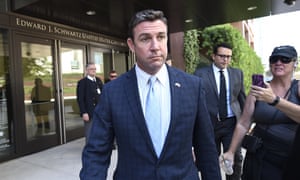
Trump pardoned the former congressman Duncan Hunter.
Trump pardoned the former congressman Duncan Hunter. Photograph: Denis Poroy/AP

Trump has issued divisive pardons before, including for his former national security adviser Michael Flynn, who also admitted lying to the FBI, but Tuesday’s batch were seen as crossing a new moral line and drew sharp rebukes.

Noah Bookbinder, the executive director of Citizens for Responsibility and Ethics in Washington, said: “There have been many shameful, craven displays of Donald Trump using the presidency to benefit himself and his cronies, but there may not be any worse than these pardons.”

The Democratic National Committee said in a statement: “Christmas came early for convicted criminals with personal ties to Trump and who serve his political interests.”

The pardons came as Trump hurtles into his final four weeks in office, eager to test the loyalty of Republican allies. He upset the apple cart again on Tuesday by threatening to derail a $900bn coronavirus relief package that Congress had spent months negotiating, demanding payments of $2,000 to American citizens instead of the $600 agreed.

President Trump insults the memory of the Iraqi victims and further degrades his office with this action

Trump is also pushing Republicans to overturn the presidential election when Congress convenes to ratify the results of the electoral college on 6 January. Democrat Adam Schiff, the chair of the House intelligence committee, told CNN that Trump’s pardons convey a typically transactional message: “If you lie for me, if you’re loyal to me, I will abuse my power to protect you.”

Trump is not the first president to exploit what can seem an anachronistic power of the presidency. On his last day in office, Bill Clinton pardoned Marc Rich, a commodities trader accused of tax evasion and illegal trading, in what a New York Times editorial called “a shocking abuse of presidential power”.

But Trump has gone further: around nine in 10 of the pardons he has granted have been for individuals who can claim personal ties to him or to offer him political gain. Few observers doubt that there are more to come, possibly including pre-emptive ones for himself – the constitutionality of which would be hotly disputed – and his family.

Allan Lichtman, a history professor at American University in Washington, said: “Trump has already broken so many American traditions that I’m not sure what he does with pardons will stick or establish a precedent for future presidents. I don’t think Biden, for example, is going to follow any Trump precedent.”

Donald Trump leaves for Christmas break at Mar-a-Lago. Will we see him at the White House again?

Extract from ABC News

US Election 2020

By Lucia Stein and Rebecca Armitage

Donald Trump points in front of a christmas tree backdrop to his cheering supporters in Orlando.
Donald Trump is expected to enjoy Christmas with his family in Florida, with just 26 days left of his presidency.(AP: Joe Burbank, Orlando Sentinel)

As Donald Trump hopped on a plane bound for Florida yesterday, he left behind a cloud of uncertainty in Washington DC.

The Commander-in-Chief will be in his favourite place on earth for the Christmas break: his Mar-a-Lago resort in Palm Beach, Florida.

But before boarding Marine One, Trump made some 11th-hour moves that shocked many on Capitol Hill, including asking Congress to amend a $US900 billion coronavirus relief bill that Republicans and Democrats have spent months negotiating and following through on a threat to veto a massive defence bill.

Whether it was Trump trying to secure a better deal for Americans by asking for the stimulus payments to be more than tripled or a small act of revenge on Senate Majority Leader Mitch McConnell who wanted to cap the payment at $US600 ($AUD794), the money is desperately needed by millions of people.

Now Americans will usher in a festive season tainted by anxiety as many — including some of his closest aides — wonder what the remaining 26 days of his presidency will look like.

Will Trump run down the clock at Mar-a-Lago?

Last week there were signs Trump may be coming to terms with a life outside the White House.

Far from returning to his former home in New York City, the family were set to move to a far more Trump friendly location: sunny Florida.

President Donald Trump's Mar-a-Lago resort across the water.

Donald Trump and his family are expected to stay at their Mar-a-Lago resort until at least New Years Day.(AP: Lynne Sladky)

But like most of Trump's presidency, the move has courted controversy.

US outlets reported his potential neighbours would be seeking to enforce a decades-old contract that says Mar-a-Lago, his private social club, cannot be used as a full-time residence.

Unsurprisingly, a looming legal battle over his right to live in Mar-a-Lago full time doesn't mean he won't follow through with it anyway.

Trump already changed their legal residence from New York City to Palm Beach last year.

But what may shock some is that a permanent move to Florida could already be underway.

Some of those closest to the President have speculated he may simply decide to stay in Florida instead of returning to the White House for his final weeks in office, according to CNN.

Does Trump have to go back to the White House?

There is no law requiring the president to reside in the White House, so he could theoretically govern from the comfort of Mar-a-Lago until January 20.

That's when Joe Biden will be officially sworn in as the 46th president of the United States.

Reports suggest Trump won't attend the inauguration ceremony, and may even decide to announce another run for the presidency in 2024.

It's certainly one path the President could take come January. But the rising influence of one of Trump's lawyers suggests he does not intend to go down without a fight.

And just as a relic of Trump's former life is due to be blown up, the President may be waiting for the right moment to drop a bomb about what he plans to do next.

How Sidney Powell could influence the next 26 days

In the lead up to Christmas, far from having their foot out the door, the White House press corps has been on high alert.

A woman is speaking at a podium and a man is standing next to her

It's unclear if Sidney Powell is still a member of President Donald Trump's legal team, but she has been visiting the White House in recent days.(AP: Jacquelyn Martin)

A woman known for stoking conspiracy theories has been spotted leaving the building.

Sidney Powell was hired as a lawyer for Donald Trump's election campaign. And she's proved to be just as divisive as the president she serves.

Some Trump allies, including his personal lawyer Rudy Giuliani, have even tried to distance themselves from her despite reports suggesting she's still in touch with the president.

She has claimed the electronic voting systems used in several key battleground states had switched millions of ballots to favour Mr Biden, without providing any evidence.

Ms Powell also claims to have "evidence of foreign interference" in the election by Iran and China, but if evidence exists, she hasn't made it public yet.

But if Ms Powell does still have the ear of the President, commentators have already warned that it could mean another dark chapter of the Trump presidency is about to unfold.

What does she want Donald Trump to do next?

Nothing has been confirmed publicly, but Axios, the New York Times and others are reporting that Powell and her allies have floated several options with Trump.Donald Trump walking past an open door in the Oval Office

Donald Trump has reportedly been discussing with his lawyers and allies ways to challenge the election result, but has so far taken no action.(Reuters: Carlos Barria)

One was to encourage the Department of Homeland Security to seize possession of voting machines as part of a push to overturn the results of the election (that's illegal, though).

Another was to instal Powell as a special counsel to investigate allegations of voter fraud (probably not possible under federal law)

And Michael Flynn, Donald Trump's former national security advisor, also reportedly suggested the president impose martial law and demand the election be re-held (which is unconstitutional — the president can't unilaterally invoke martial law).

Trump denied that report on Twitter.

The President hasn't followed through with any of his lawyers' ideas, but discussions of martial law in the Oval Office has been enough to make some of his aides nervous.

It doesn't help that Trump has apparently turned on many of those around him.

Trump's pardon bonanza

Even if Trump refuses to accept his time in office is coming to an end, he's still acting like a man who may be about to lose power.

Tuesday brought us a pardon bonanza, with Trump granting 15 pardons, and commuting five sentences. The next day, the President issued pardons for 29 more people.

Notably, some of those pardons were granted to people caught up in the investigation into Russian meddling in the 2016 US presidential election, such as George Papadopoulos, a former campaign aide who pleaded guilty as part of the probe, and Alex van der Zwaan, the Dutch son-in-law of Russian billionaire German Khan.

Trump has also previously granted a pardon to Michael Flynn, who pleaded guilty to lying to the FBI about discussions he had with a Russian official before Trump took office in 2017.

And this may mark just the start of his pardon spree.

US media have been reporting for the last few weeks that Trump is considering pre-emptive pardons for his three children.

Donald Trump with three of his children

Speculation is mounting that Donald Trump may issue pardons to his children Eric Trump, Donald Trump Jr, and Ivanka Trump.(Reuters: Gary Cameron)

Giuliani, who is being investigated for breaking lobbying laws in his dealings in Ukraine, could also make the cut.

It's not unusual for presidents to grant pardons on their way out the door. Bill Clinton issued 140 of them on his final day of office, including one for his own brother.

But with a big question mark still over the President's plan for his last days in office, what does seem clear is that Trump's looking to clean house as much as he can before he goes.

A rush of people have already been putting in special requests with the man in charge.

CNN reported last week that "calls and emails have been flooding into the West Wing from people looking to benefit from the President's powers of clemency".

But how many of those friends will remain come February when he is known as a former president?