Saturday, 30 January 2021

Chris Bowen will use jobs deal and ‘roadmap to net zero’ to sell climate action to voters.

Extract from The Guardian

Chris Bowen

Labor’s climate spokesman says Joel Fitzgibbon was wrong to advocate surrender on carbon emissions

Chris Bowen
Chris Bowen says Labor will focus on the economic arguments to persuade voters of the need to tackle climate change.
Political editor

Last modified on Sat 30 Jan 2021 06.03 AEDT

Chris Bowen says Labor will develop a jobs and emissions “compact” to put to voters at the next election, and he has rebuffed Joel Fitzgibbon’s campaign to have the opposition adopt the same medium-term emissions reduction target as the Coalition.

In an interview with Guardian Australia after being appointed shadow minister on climate change and energy this week, Bowen declared Labor could win the political battle to take climate action consistent with the science if it won the argument that ambition was good for jobs and long-term economic growth.

“The Liberals have weaponised climate change quite destructively as an anti-jobs message and I see my key role as winning the debate that good policy on climate change is good jobs policy and good economics policy, which then gives you the ability to prosecute the case for a good, sensible climate change policy,” Bowen said.

“There are some voters who are convinced and satisfied about the moral need to tackle climate change, and there are other voters who aren’t, but that doesn’t mean they aren’t open to be convinced that a climate change policy is sensible, even if they remain unpersuaded about the moral argument.”

Bowen said he would use his time in the portfolio to speak to those voters particularly.

“The jobs argument is so vital in closing the bridge,” Bowen said. “I intend to really focus on the economic argument to close that bridge. I’ll do in my own style, but that’s what I’ll be doing.”

He said a key part of his advocacy would be raising awareness about the vulnerability of the Australian economy if governments bungled the transition to net zero because our economy is structurally reliant on carbon-intensive industries and exports.

“Part of my job is to prosecute that case: the economic upside of climate change is real and the economic downside of not acting is very significant,” he said.

Bowen, a former treasurer and shadow treasurer, hails from the New South Wales right faction. He took the portfolio in a frontbench reshuffle from Mark Butler, a leftwinger, who prosecuted the case for ambitious climate action over seven years in the portfolio.

Fitzgibbon, a veteran rightwinger, ran a public campaign against Butler and the party’s climate policy after the party’s 2019 election loss, arguing that Labor would not win government unless it moderated ambition in emissions reduction. He contended Labor needed to adopt the same 2030 target as the Morrison government to defang the climate debate.

Bowen said Fitzgibbon was wrong to advocate surrender: “I don’t share the view that simply replicating the government is the answer.”

The new shadow minister said Labor would develop a “sensible, strong, science-based, evidence-based and economically focused policy” to take to voters in an election that could be held in the second half of 2021.

“The policy will be consistent with our Paris obligations, and with our Glasgow obligations, it will be based on science and economic evidence.”

He said it would also be underpinned by economic analysis in an effort to neutralise inevitable political controversy about the cost of action.

Bowen said Joe Biden’s policy approach contained some useful ideas for Labor in Australia but his own view was a compact was the right conceptual framework.

“The idea of an emissions and jobs compact is important to me,” he said. “A Green new deal is an amorphous concept that means different things to different people … but to the degree it means we will act on climate change and we will invest in the people impacted, and we will invest in regions and communities as we go – that is what I am talking about.

“A compact means not pretending that we don’t have to deal with climate change but also not pretending that Australians aren’t concerned about job security, vibrant suburbs and vibrant regions.”

He said climate action should be a key part of Australia’s recovery from the Covid-19 pandemic.

“The pandemic, and rebuilding from the pandemic, is of course front and centre – resetting the economy after the pandemic is very important, but climate change policy is part of that, investment in renewable energy is part of that rebuilding, and a very important part of that.

“Just as science guided the policy during the pandemic, it should guide our policy on climate change.”

Butler gave a firm commitment that Labor would adopt a medium-term target consistent with the science before the next federal election.

Bowen said Labor would formulate “a roadmap to get to net zero by 2050”.

“There are various ways that roadmap can be constructed. That’s what I will think through in coming weeks and months. Roadmaps are about bringing the community with you as you tackle a wicked problem.”

In terms of medium-term targets, Bowen said: “I’m currently working through all the options and our policy position will be crystal clear before the election.

“The Liberals have said they will have a target for 2035 that they won’t reveal until after the election – it is hypocritical for the government to demand that we produce ours today when they won’t produce theirs for the people’s verdict.”

Bowen said he was keen to work with the environment movement as he shapes Labor’s pre-election policy. But there is also a message for advocates.

He said a range of progressive groups, including the environment movement, “banked a Labor win” in 2019 and campaigned for tougher policy rather than critiquing the Coalition’s position.

“I’m not saying we lost because of that, but I’m saying this was an issue right across the board – lobby groups spent a lot of time lobbying us to strengthen our policies and not much time helping Labor win.”

‘Breathtaking’: what Joe Biden’s sweeping climate plan means for Scott Morrison.

Extract from The Guardian

Environmental investigations Environment

As the US president vows to push the rest of the world to do more on climate change, the prime minister will face increasing pressure to measure up

Joe Biden
Joe Biden has declared climate change an existential threat to the planet and pledged to put ‘environmental justice’ at the heart of all decision-making.
Supported by
Limb Family Foundation
About this content

Environment editor

Last modified on Sat 30 Jan 2021 06.02 AEDT

When John Kerry, the United States’ new special presidential envoy for climate, stepped up to speak to the World Economic Forum in Davos on Wednesday he had Australia on his mind.

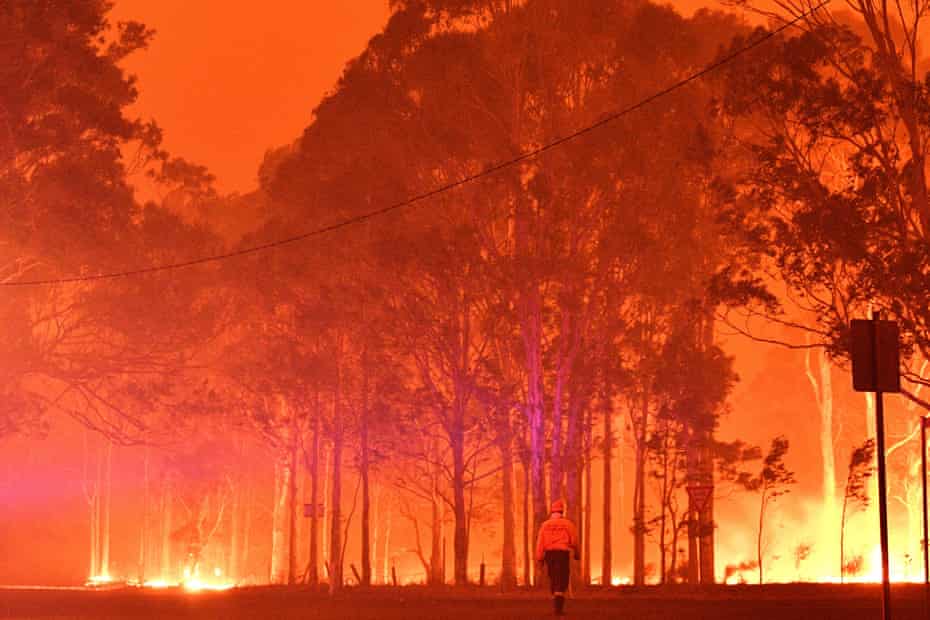
The former secretary of state had been struck by an article in the New York Times by the author Michael Benson that described satellite images of the “flame vortexes” that spiralled into the atmosphere as the continent’s wildlife burned a year ago, sending a plume across New Zealand and into the Pacific.

It was, Kerry said, evidence of the urgency of climate change “literally all around us”. He quoted Benson: “In the end Australia’s fires killed dozens of people, destroyed 5,900 buildings and quite likely, according to the best science, rendered some of the country’s endangered species extinct.

“With shocking iconographic precision, that unfurling banner of smoke said: ‘The war has started, we’re losing’.”

The expectation that Joe Biden would move quickly to reverse US recalcitrance on the climate crisis under Donald Trump has built since his election, but even those expecting an ambitious re-positioning have been stunned by the pace and breadth of the changes made.

The new president made a detailed and multi-part executive order on Wednesday, a week after signing papers to re-join the Paris agreement on his first day in office.

Observers who spoke with Guardian Australia about the plan emphasised the comprehensiveness of the Biden administration’s vision. The order embeds dealing with the climate emergency across all government operations, with a particular focus on its importance in foreign policy and national security.

It underscores the scale of the international pressure the Morrison government is likely to face this year if it maintains its resistance to making the science-based commitments expected under the 2015 climate pact.

Where the Morrison government prefers not to use the term “climate change”, having banished it from the ministry and its main emissions reduction policy, Biden declared it an “existential threat to the planet” and his order says there is only “a narrow moment to pursue action at home and abroad” to avoid “the most catastrophic impacts” and to seize opportunities to create jobs.

His instructions include pausing and reviewing oil and gas drilling on federal land, doubling energy from offshore windfarms by 2030, moving federal government agencies from fossil fuel to clean cars, setting a goal of conserving at least 30% of lands and oceans by 2030, and ordering a national intelligence estimate on the economic and security implications of climate change.

The White House will introduce an office of domestic climate policy to coordinate Biden’s agenda, a national climate taskforce comprising of 21 government agency leaders and an environmental justice interagency council to address racial and economic inequities exacerbated by climate change and air and water pollution. It hopes to pass a $2tn clean energy package, with 40% of investments aimed at disadvantaged communities.

Bill Hare, chief executive of Berlin-based Climate Analytics and an adviser to developing countries on climate change for decades, says the scope of Biden’s actions so far has been surprising.

“It’s more than people thought they would do,” he says. “It’s comprehensive and coherent. Breathtaking really is the word.”

Martijn Wilder, a former chair of the Australian Renewable Energy Agency and founding partner of the climate advisory firm Pollination, says he believes Biden’s plan is “the most comprehensive plan by any government ever on climate change”, and people were yet to fully grasp its significance, particularly in terms of national security and foreign policy.

How Biden intends to wield his influence internationally will become clearer in the lead up to a major economies climate summit he plans to host on Earth Day, 22 April. He has set the summit as a deadline to announce a new emissions reduction target for 2030 to put the US on the path to net zero by 2050. He has already promised a carbon-free power supply by 2035.

In contrast, Scott Morrison has said he will not increase what is widely seen as an unambitious 2030 emissions target (a 26-28% cut below 2005 levels) this year. The government has pulled out of the global climate fund, and continues to resist a mid-century net zero emissions target despite it being backed by more than 120 countries collectively responsible for about three-quarters of global GDP.

There is a growing expectation Morrison may relent on that point before a year-ending UN climate summit in Glasgow. But scientists and parts of the international community say a net zero target for 2050 would mean little unless backed by a detailed plan to get there, including deeper emissions cuts this decade. A group of policymakers and scientists this week released an analysis warning Australia should be aiming for net zero emissions well before 2050 if it was to take a science-based approach.

This isn’t a fly-by-night effort. This is a serious change to government operations and ... it is going to have a profound effect globally

Reports have suggested the government believes it will not come under pressure from the US to do more on climate after an initial phone call between Kerry and the emissions reduction minister, Angus Taylor, which is said to have included discussion about establishing a working group on developing low-emissions technology.

Analysts largely dismiss this as bravado or wishful-thinking, but it is unclear how forceful and direct any pressure would be.

John Morton, a former senior director for energy and climate change in Barack Obama’s national security council and now a Washington DC-based partner in Pollination, says Biden has left no doubt in his first 10 days that he plans to do exactly what he promised on climate. His rhetoric before taking office included using “every tool of American foreign policy to push the rest of the world” to do more.

“Climate is a top priority for his government. I think it would be foolhardy to expect the Biden administration would not pursue it in its interactions with Australia. It will with every country, but particularly countries with significant means and significant fossil fuel and extractive industries,” Morton says.

“Australia obviously fits into both of these categories. I think Australia has to expect this will play a central role in how the US deals and hopes to interact collaboratively with it.”

Hare says it is unlikely US will accept a belated commitment to a net zero goal for 2050 as a substantial shift in Australia’s stance. “They’ll want to see an improvement in the 2030 target,” he says.

forest on fire

John Kerry, the United States’ new special presidential envoy for climate, said the Australian bushfires were evidence of the urgency of climate change ‘literally all around us’. Photograph: Saeed Khan/AFP via Getty Images

The international push for Australia to do more is not coming from the US alone. Morrison was embarrassed when rejected for a speaking slot at a leaders’ climate ambition summit in December due to Australia’s perceived lack of ambition, and is likely to come under similar pressure ahead of a G7 meeting in Cornwall in June.

The British prime minister, Boris Johnson, has invited the leaders of Australia, India and South Korea to attend every session of the summit in what is seen as an attempt to turn the forum into a D10 meeting of major democracies.

Diplomatic sources say Britain has made clear climate and energy will be a top priority at the summit, and it plans to push for commitments on both net zero emissions by 2050 and deeper cuts and financial commitments to help developing countries for 2030. With every G7 member having already adopted a carbon neutrality goal, the expectation is the three guests will be pressed to put their names to an ambitious communique.

Morrison appeared to pre-emptively respond to this push in an interview with the Australian last week in which he argued the political debate over whether to act on climate change was over, and it was now just a matter of how - and, by implication, when – emissions were reduced. He said he would tell the G7 and G20 that his priority was to take action by developing technology, not committing to new emissions goals.

It puts him directly at odds with Kerry, who stressed this week that all countries must increase ambition before meeting in Glasgow in November “or we will all fail”.

Howard Bamsey, a former Australian special envoy on climate change and executive director of the green climate fund, now an honorary professor at the Australian National University, says an underlying message from the US beyond the specifics is the extent to which its plans had been considered and mapped out before taking office.

In one sense, this isn’t surprising. Many of the people in key roles are former Obama administration officials, and Biden signalled his plans on climate change in advance in a way no other incoming president has.

Bamsey says people should be reassured that his administration is clear in what it is doing, and that Kerry has emphasised it was being realistic about what could be achieved.

It also means it is more likely to follow through.

“This isn’t a fly-by-night effort. This is a very serious change to government operations and now they have put it in a national security setting it is going to have a very profound effect globally,” Bamsey says. “It’s really hard to see the Australian government keep resisting.”

Friday, 29 January 2021

Australia urged to overhaul environment laws and reverse 'decline of our iconic places'

 Extract from The Guardian

Graeme Samuel makes 38 recommendations to transform the EPBC Act, including new independent oversight bodies

Graeme Samuel reviewed Australia’s Environment Protection and Biodiversity Conservation (EPBC) Act
Graeme Samuel’s review of the EPBC Act has found the environment is suffering from two decades of failure by governments.

Last modified on Thu 28 Jan 2021 19.20 AEDT

The Morrison government must overhaul Australia’s environmental laws, including establishing new independent bodies to take on responsibility for monitoring the environment and enforcing compliance with the law, a once-in-a-decade independent review has found.

The final report from the review of the laws finds the environment is suffering from two decades of failure by governments to improve protection systems meant to ensure the survival of the country’s unique wildlife.

The head of the review, the former competition watchdog head Graeme Samuel, made 38 recommendations to transform the Environment Protection and Biodiversity Conservation (EPBC) Act.

They include short-term reforms, including the immediate introduction of legally-binding national environmental standards to boost protection, and longer-term changes needed to address the “trajectory of environmental decline”.

In a major shift, Samuel also called on the government to abolish the effective exemption from environment laws granted to all native forest logging covered by regional forestry agreements between the federal and state governments.

Samuel said the government would be accepting “the continued decline of our iconic places and the extinction of our most threatened plants, animals and ecosystems” if it shied away from the fundamental reforms recommended by the review.

“This is unacceptable,” he wrote. “A firm commitment to change from all stakeholders is needed to enable future generations to enjoy and benefit from Australia’s unique environment and heritage.”

The Morrison government released the report on Thursday, three months after receiving it from Samuel.

The report reiterates Samuel’s interim findings that Australia’s animals, plants and habitats are in unsustainable decline, and concludes the EPBC Act is failing both the environment and developers.

Samuel concluded dealing with the laws had created a “cumbersome” system for business that duplicated some processes that exist at state level.

But he said the EPBC Act was also unclear about what it was trying to achieve for the environment, which was now so under pressure it could not withstand current, emerging or future threats, including climate change.

The centrepiece of Samuel’s recommendations was the creation of a new set of national environmental standards that “should be adopted in full and immediately implemented”.

Samuel called on the government to establish a new independent Office of Compliance and Enforcement with “regulatory powers and tools” that would sit within the Department of Agriculture, Water and the Environment.

He also recommended the creation of two new officeholders: an environment assurance commissioner responsible for overseeing and auditing government decision-making, and a “custodian” responsible for managing and coordinating a national supply of information about the environment.

Samuel said successive governments had taken a “piecemeal” approach to the recovery and management of threatened species, and highlighted the failure to adopt and implement recovery plans or properly address major threats.

The review recommended the introduction of regional recovery plans to address threats and secure the survival of species and habitats across a landscape.

The environment minister, Sussan Ley, said Samuel’s report was “far-reaching”, but did not hold a media conference to discuss the report. The government has not released its response to the recommendations.

Ley said in a statement the government was “committed to working through the full detail of the recommendations with stakeholders”.

“This is a process that will take some time to complete, as Prof Samuel has flagged, and it is important that our legislation is fit for meeting the challenges facing our natural environment,” she said.

She said the government would still pursue its plan to try to pass legislation that would clear the way for the handover of federal environmental approval powers to state and territory governments.

Samuel’s final report reiterates his interim recommendation that this occur under a framework of legally-binding standards.

The report warns that while the government should consult the states and territories about the environmental standards, the “process cannot be one of negotiated agreement to accommodate existing rules or development aspirations”.

“To do so would result in a patchwork of protections or rules set at the lowest bar,” he wrote.

The report makes detailed recommendations for standards covering threatened species, engagement with Indigenous Australians, legal compliance and enforcement, and environmental data and information, with further standards to be developed over time.

In particular, Samuel noted that governments had failed to support the rights of Indigenous Australians in environmental decision-making and were not harnessing the “extraordinary value” of traditional knowledge in managing the environment.

He found data and information about threatened species and habitats was not easily accessible and that good outcomes for both the environment and heritage – including the cumulative effects of habitat destruction – could not be achieved under the current laws.

Conservationists welcomed the report and its recommendations, including the call for an independent office of compliance.

“It is time to overhaul our national environment law with a full package of reforms that includes strong legally-enforceable standards and an independent regulator – and these must be in force before the government pursues its Streamlining Amendment legislation,” said Basha Stasak of the Australian Conservation Foundation.

“As Prof Samuel states, national environmental standards alone are not enough.

“Standards need to be backed up by strong, independent oversight and increased accountability.”

The Wilderness Society (TWS) said the review had accepted the view of scientific and legal experts, and the community, which had “overwhelmingly” called for changes that would halt the extinction of Australian wildlife.

“After all this work, after decades of worsening extinctions, out-of-control habitat loss and without reform, we can’t just have another round of this government choosing to consult and ignore. Our ancient and unique natural heritage is at stake,” TWS’s environmental laws campaigner, Suzanne Milthorpe, said.

Labor’s environment spokeswoman, Terri Butler, said the shadow cabinet and caucus would carefully consider the report’s recommendations “and any government response”.

“We have called on the Morrison government to introduce strong national environmental standards and establish a genuinely independent ‘cop on the beat’ for Australia’s environment,” Butler said in a statement.

The Greens environment spokesperson, Sarah Hanson-Young, said the report sounded the alarm that the environment was under unprecedented stress.

“After sitting on the report for 90 days, the Morrison government needs to respond with a genuine commitment to a full reform package that makes our environmental laws stronger, with an independent watchdog to hold corporations and governments to account,” she said.

Guardian Australia has spent more than three years examining systemic failings under the act.

This reporting has uncovered widespread problems, including poor monitoring of endangered species, major delays in the listing of threatened species and ecosystems, failure to develop, update and implement recovery plans for species and habitats threatened with extinction, failure to list key threats to species, failure to protect important habitat, and threatened species funding being used for projects that do not benefit threatened species.

In 2020, Guardian Australia revealed the Morrison government began drafting its bill that would help the transfer of approval powers to state and territory governments before it received Samuel’s interim report, with documents showing the federal and Western Australian governments began discussing such an agreement as early as February.

The government attempted to ram its bill through parliament last year, but it was blocked in the Senate in part because it contained no mention of legislated national environmental standards.

Stop the empty gestures and start listening to First Nations people. We are the experts.

Extract from The Guardian

Opinion

Indigenous Australians

Daniel James for IndigenousX

Punitive laws are destroying our children’s futures. Changing a word in the national anthem won’t help

A mural of Scott Morrison dressed as Captain Cook holding a cocktail
‘The task at hand is to try and cut through the chatter and the feelgood funfair of political leadership which is a million miles from reality.’

Last modified on Thu 28 Jan 2021 16.26 AEDT

Recently, Scott Morrison granted a gift to the nation by changing a word in the national anthem from “we are young and free” to “one and free”.

What largely meaningless gestures like rewording a line in the national anthem achieve is to deprive oxygen from issues that need to be properly spoken about. Systemic racism, interpersonal racism and cyclical torment of intergenerational trauma are far from the tip of the tongue when it comes to any dialogue in the broader community.

Every January, the national discourse becomes consumed by the same debates, often instigated by rightwing cultural warriors in the Murdochracy, designed to inflame outrage and division, ready to combust at the merest waft of change or progress.

Aboriginal people are left to defend against or to attack prejudice head-on, to not do so is not in our nature. But it’s draining, time-consuming and seemingly, at times, a pointless exercise.

The oxygen expended annually on these matters would leave the general public thinking it’s all there is when it comes Aboriginal Australia. Let me highlight an example here in Victoria, the so called “progressive state”.

Recently the Guardian has done a brilliant job at bringing to life the damage done by over-representation of Aboriginal kids in juvenile justice systems across the country. The impact of punitive policing and the entry point that is out-of-home care, which snatches scores of Aboriginal kids from their culture, our culture and opportunity.

But we don’t often think about the plight and number of kids that are held on remand. Remand refers to holding someone accused of criminal offending in custody pending the finalisation of their proceedings.

Spending weeks at a time in remand for anyone has a traumatising impact, for a 13-year-old, it can forever shape who they will become

Released in late September, the Children held on remand in Victoria report charts not only a disturbing growth in the use of remand within the criminal justice system – more than doubling from 42 to 90 children in the eight years to June 2019 – it shows around 66% of remanded children do not go on to receive a custodial sentence.

Aboriginal children comprise 15% of remanded children, despite making up only 1% of the broader population of Victoria.

We are placing these children in remand because as a society we are not good enough to surround them with the love, the culture and the promise of a hopeful future that every child deserves. Spending weeks at a time in remand for anyone has a traumatising impact, for a 13-year-old, it can be an experience that forever shapes who they are and who they will become.

These numbers may seem comparatively small, but what we do know is that justice systems in particular have a great and inexhaustible propensity to grow. We’ve seen this with the increase of Aboriginal women incarcerated, the steep growth in the number of Aboriginal men in prison. It is therefore important that we have open conversation about the use of remand as a way of conveniently conjuring a solution to a problem that must be hidden from this country’s view of itself.

So one is not the number I will be thinking about this year in the spirit of reconciliation. We are beyond empty feelgood gestures. The crisis is here and now.

If only we could take our own example from our response to Covid. We actually stopped and listened to the science. Where there is a will, there is a way. Yet we continue not to have a will to change system-induced injustices.

In 2021 the challenge will be to stop and listen to First Nations people. We are the experts. Again, take Covid as an example: despite being the most vulnerable cohort in the country, there has not been one recorded death of anyone from our communities. We mobilised quickly, we knew what to do and we led the way. It’s something we like to call self-determination.

In 2021 I’ll be focusing on localised realities, away from the goading of rightwing keyboard warriors.

I will not be grateful for a legislated, watered-down voice to parliament, I will not be grateful for acknowledgments of country or the amazing job a not-for-profit has done to launch its reconciliation action plan.

If only the national conversation would allow for nuance and a genuine yearning for understanding. The task at hand is to try and cut through the chatter and the feelgood funfair of political leadership which is a million miles from reality.

I will remain grateful to the dedicated, the determined and the composed.

  • Daniel James is a Yorta Yorta man. He is an award-winning writer and broadcaster and hosts The Mission on 3RRR FM every Tuesday

Thursday, 28 January 2021

Joe Biden freezes public oil and gas drilling, boost wind power in series of executive orders.

Updated:

Joe Biden will sign a series of executive orders on what has been dubbed 'climate day'.

Joe Biden has ordered a freeze on public oil and gas drilling and boost offshore wind power as he embarks on the most wide-ranging effort to tackle climate change of any US president.

Mr Biden has signed a series of executive orders on what has been dubbed ‘climate day’ as he warned climate change was an issue of national security.

The series of orders include a halt on oil and gas drilling on federal lands, eliminating fossil fuel subsidies and doubling offshore wind energy production by 2030.

He will also instruct the US government to transforms its fleet of federal cars with electric vehicles.

The moves are designed to enable the US to meet its target of zero net emissions by 2050, with about one-quarter of its output currently coming from fossil fuel production on public lands.

“Today is climate day at the White House,” said Mr Biden on Wednesday (local time).

“We have already waited too long,” he said. “And we can’t wait any longer.”

Mr Biden’s presidential orders include establishing a White House office of domestic climate policy and a summit of leaders to be held in April on Earth Day.

It comes after Mr Biden last week re-entered the US in the Paris Climate Accord as he makes climate change a central focus of his administration.

President Joe Biden signs an executive order on climate change, in the State Dining Room of the White House. Photo: AAP

At an earlier press briefing, Mr Biden’s national climate adviser Gina McCarthy said the push towards more clean energy would create more jobs.

“It’s going to benefit jobs, it’s going to benefit our health and it’s going to lead to the future we want to hand down to our children,” Ms McCarthy said.

Climate envoy John Kerry said Americans had “been fed a falsehood” that addressing climate change would affect employment when in fact clean energy was growing faster as an industry.

Mr Kerry, the first international presidential envoy on climate change, said the security risk of climate change would be assessed and a global climate finance plan developed.

“The stakes on climate change just couldn’t be any higher,” Mr Kerry said.

“We have a big agenda in front of us on a global basis,” he said.

“Failure, literally, is not an option. 2021 is going to be the year to make up for the last four years.”

Joe Biden's 'climate day' of executive actions signals clean break with Trump.

Extract from The Guardian 

Joe Biden

  • Fossil fuel subsidies to end plus pause on drilling on public land
  • Environmentalists hail ‘important step in right direction’
  • US politics – follow live
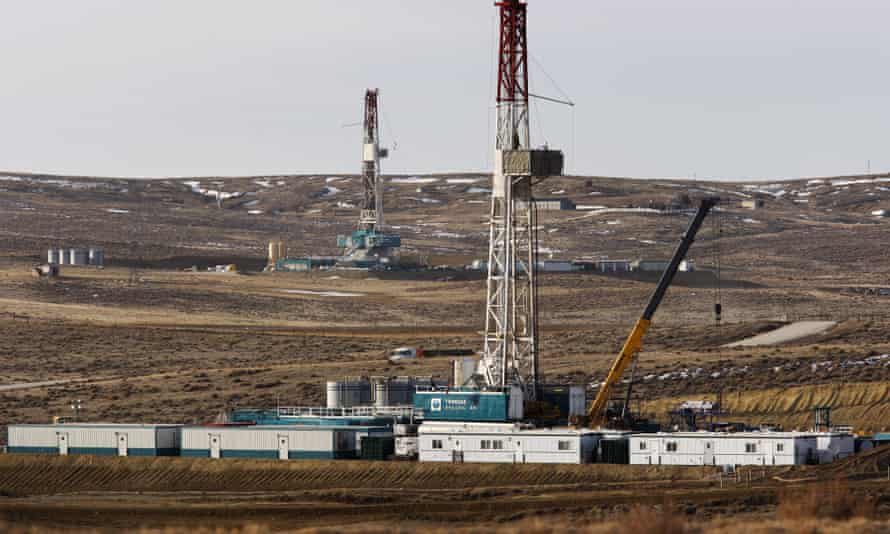
Drilling rigs on public land near Douglas, Wyoming.

First published on Thu 28 Jan 2021 01.12 AEDT


Joe Biden is to instruct the US government to pause and review all oil and gas drilling on federal land, eliminate fossil fuel subsidies and transform the government’s vast fleet of cars and trucks into electric vehicles, in a sweeping new set of climate executive orders.

The battery of executive actions, to be signed by the US president on Wednesday, will direct the Department of the Interior to pause new oil and gas leases on public lands and offshore waters and launch a “rigorous review of all existing leasing”, according to a White House planning document.

The directive opens up a path to the banning of all new drilling on federal land, a campaign promise made by Biden that has been widely praised by climate groups and caused outrage within the fossil fuel industry. Biden has called the climate crisis the “existential threat of our time” and the White House has said the new executive orders will help push the US towards a goal of net zero greenhouse gas emissions by 2050.

“President Biden and his administration are taking an important step in the right direction by limiting oil and gas development on federal lands,” said Robert Howarth, professor of ecology at Cornell University, who added that the world “must rapidly transition away from fossil fuels” to avoid disastrous climate change.

Jesse Prentice-Dunn, policy director at the Center for Western Priorities, added that “Hitting pause on oil and gas leasing is a crucial first step toward reforming a rigged and broken system that for too long has put oil and gas lobbyists ahead of the American people.”

Around a quarter of the US’s planet-heating emissions comes from fossil fuel production on public lands and it is estimated a national ban on leasing would reduce carbon emissions by 280m tons a year. Donald Trump’s administration opened up almost all federally owned land to drilling, a move cheered as a job creator by industry but decried by environmentalists and Native American tribes.

“There has to be a balance point: people over money,” said Daniel Tso, a member of the Navajo Nation.”I welcome an end to federal fossil fuel leasing and the necessary transitions to more sustainable economies for the Navajo Nation.”

Kathleen Sgamma, president of the Western Energy Alliance, which represents oil and gas drillers in western states, has said her group will challenge the moratorium in court. “The environmental left is leading the agenda at the White House when it comes to energy and environment issues,” she said.

Biden’s new set of executive orders, dubbed “climate day” by environmental campaigners, adds up to one of the most wide-ranging efforts ever taken by a US president to tackle the climate crisis, building upon his decision last week to re-enter the Paris climate agreement.

Alongside the review of public lands, the Biden administration will install climate as an “essential element” of US foreign policy and national security, craft a strengthened national emissions reduction target and will set a new goal of conserving 30% of American land and oceans by 2030. The new emissions goal may well be presented at an international climate summit that Biden is planning for Earth Day, on 22 April.

The White House, for the first time, will have an office of domestic climate policy to coordinate Biden’s climate agenda alongside a national climate taskforce that will comprise of 21 government agency leaders to adopt a “whole of government” approach to reducing emissions. A review of scientific integrity practices will roll out.

The orders also establish an environmental justice interagency council to address the racial and economic inequities exacerbated by climate change and air and water pollution. Biden hopes to pass a $2tn clean energy package through Congress and he will direct that 40% of investments will be aimed at disadvantaged communities.

In all, the climate package is a strong repudiation of the Trump administration, which consistently sidelined or derided climate science, dismantled policies designed to lower emissions and withdrew from the Paris climate deal.

“This is the single biggest day for climate action in more than a decade, and what makes it all the better is that President Biden and Vice-President Harris are just getting started,” said Gene Karpinski, president of the League of Conservation Voters.

Doomsday clock panel welcomes Biden win but keeps hands at '100 seconds to midnight'

Extract from The Guardian

Nuclear weapons

The Bulletin of the Atomic Scientists’ measure of the world’s vulnerability to catastrophe, remains at 100 seconds to minute

The Doomsday Clock reads 100 seconds to midnight, indicating the planet remains dangerously close to nuclear and climate change catastrophe.

in Washington

Last modified on Thu 28 Jan 2021 05.27 AEDT

The election of Joe Biden could be a step towards a “safer and saner world” but the planet remains dangerously close to nuclear and climate change catastrophe, at “100 seconds to midnight” according to a panel of top scientists.

The Bulletin of the Atomic Scientists announced that the hands of its “Doomsday Clock”, a measure of the “world’s vulnerability to catastrophe”, had not moved since last year.

“The pandemic revealed just how unprepared and unwilling countries and the international system are to handle global emergencies properly,” the Bulletin, co-founded in 1945 by Albert Einstein, said in a statement.

It added that the worsening spread of disinformation and conspiracy theories was acting as a multiplier to the worsening threats of nuclear conflict and the climate emergency. The statement did not mention Donald Trump by name, but pointed to the 6 January storming of the US Capitol, which was incited by the former president, saying it renewed “legitimate concerns about national leaders who have sole control of the use of nuclear weapons”.

“In 2020, online lying literally killed,” it added.

The statement welcomed Biden’s first steps as president, rejoining the Paris climate accord and extending the New Start arms control agreement with Russia for five years.

“The election of a US president who acknowledges climate change as a profound threat and supports international cooperation and science-based policy puts the world on a better footing to address global problems,” the Bulletin said.

“In the context of a post-pandemic return to relative stability, more such demonstrations of renewed interest in and respect for science and multilateral cooperation could create the basis for a safer and saner world.”

But it raised concerns that plans for economic recovery around the world lacked the needed emphasis on low-carbon investment

“In aggregate, the G20 countries had committed approximately $240bn to stimulus spending that supports fossil fuel energy by the end of 2020, versus $160bn for clean energy,” the statement said. “At present, national plans for fossil fuel development and production are anything but encouraging.”

The statement was drawn up by the Bulletin’s science and security board in consultation with its board of sponsors, which includes 13 Nobel laureates.

It said that despite the extension of New Start, the nuclear modernisation plans of the major nuclear powers raised the risk of a nuclear conflict being sparked by miscalculation. It pointed to the development of hypersonic glide vehicles, ballistic missile defenses and missiles that can use both conventional and nuclear warheads, as raising the risk of mistakes.

“Donald Trump was an accelerant for existential risk. We got lucky – and you’d be forgiven for breathing a sigh of relief now that he’s gone,” said Derek Johnson, head of Global Zero, a nuclear disarmament advocacy group. “But ‘safer’ isn’t ‘safe’. The Doomsday Clock was within striking distance of catastrophe long before a reality TV host was handed the nuclear codes. It will stay that way until nuclear weapons are taken off the board entirely.”