Contemporary politics,local and international current affairs, science, music and extracts from the Queensland Newspaper "THE WORKER" documenting the proud history of the Labour Movement.
MAHATMA GANDHI ~ Truth never damages a cause that is just.
Tuesday, 11 July 2017
Just 100 companies responsible for 71% of global emissions, study says
A relatively small number of fossil fuel producers and their investors could hold the key to tackling climate change
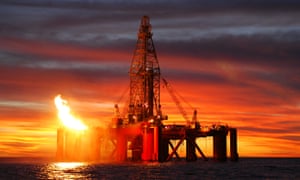
An oil rig exploring for oil and gas. A new report says more than 50% of
global industrial emissions since 1988 can be traced to just 25
companies.
Photograph: Dazman/Getty Images/iStockphoto
Just 100 companies have been the source of more than 70% of the
world’s greenhouse gas emissions since 1988, according to a new report.
The Carbon Majors Report
(pdf) “pinpoints how a relatively small set of fossil fuel producers
may hold the key to systemic change on carbon emissions,” says Pedro
Faria, technical director at environmental non-profit CDP, which
published the report in collaboration with the Climate Accountability
Institute.
Traditionally, large scale greenhouse gas emissions data is collected
at a national level but this report focuses on fossil fuel producers.
Compiled from a database of publicly available emissions figures, it is
intended as the first in a series of publications to highlight the role
companies and their investors could play in tackling climate change.
The report found that more than half of global industrial emissions
since 1988 – the year the Intergovernmental Panel on Climate Change was
established – can be traced to just 25 corporate and state-owned
entities. The scale of historical emissions associated with these fossil
fuel producers is large enough to have contributed significantly to
climate change, according to the report.
ExxonMobil, Shell, BP and Chevron are identified as among the
highest emitting investor-owned companies since 1988. If fossil fuels
continue to be extracted at the same rate over the next 28 years as they
were between 1988 and 2017, says the report, global average
temperatures would be on course to rise by 4C by the end of the century.
This is likely to have catastrophic consequences including substantial species extinction and global food scarcity risks.
While
companies have a huge role to play in driving climate change, says
Faria, the barrier is the “absolute tension” between short-term
profitability and the urgent need to reduce emissions.
A Carbon Tracker study in 2015 found that fossil fuel companies risked wasting more than $2tn
over the coming decade by pursuing coal, oil and gas projects that
could be worthless in the face of international action on climate change
and advances in renewables – in turn posing substantial threats to
investor returns.
CDP says its aims with the carbon majors project are both to improve
transparency among fossil fuel producers and to help investors
understand the emissions associated with their fossil fuel holdings.
A fifth of global industrial greenhouse gas emissions are backed by
public investment, according to the report. “That puts a significant
responsibility on those investors to engage with carbon majors and urge
them to disclose climate risk,” says Faria.
Investors should move out of fossil fuels, says Michael Brune,
executive director of US environmental organisation the Sierra Club.
“Not only is it morally risky, it’s economically risky. The world is
moving away from fossil fuels towards clean energy and is doing so at an
accelerated pace. Those left holding investments in fossil fuel
companies will find their investments becoming more and more risky over
time.”
There is a “growing wave of companies that are acting in the opposite
manner to the companies in this report,” says Brune. Nearly 100
companies including Apple, Facebook, Google and Ikea have committed to
100% renewable power under the RE100 initiative. Volvo recently announced that all its cars would be electric or hybrid from 2019.
And oil and gas companies are also embarking on green investments. Shell set up a renewables arm
in 2015 with a $1.7bn investment attached and a spokesperson for
Chevron says it’s “committed to managing its [greenhouse gas] emissions”
and is investing in two of the world’s largest carbon dioxide injection projects
to capture and store carbon. A BP spokesperson says its “determined to
be part of the solution” for climate change and is “investing in
renewables and low-carbon innovation.” And ExxonMobil, which has faced heavy criticism for its environmental record, has been exploring carbon capture and storage.
But for many the sums involved and pace of change are nowhere near
enough. A research paper published last year by Paul Stevens, an
academic at think tank Chatham House, said international oil companies
were no longer fit for purpose and warned these multinationals that they
faced a “nasty, brutish and short” end within the next 10 years if they did not completely change their business models.
Investors now have a choice, according to Charlie Kronick, senior
programme advisor at Greenpeace UK. “The future of the oil industry has
already been written: the choice is will its decline be managed,
returning capital to shareholders to be reinvested in the genuine
industries of the future, or will they hold on, hoping not be the last
one standing when the music stops?”

No comments:
Post a Comment