Extract from The Guardian
Saturday, 31 October 2015
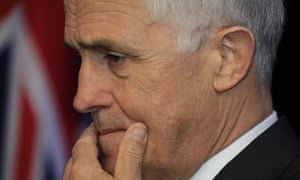

International climate plans leave 'door open' to keeping global warming below danger threshold: UN
Extract from ABC News
Updated about 5 hours ago

Carbon-cutting pledges from 146 nations for a
universal rescue pact leave the "door open" to capping
global warming below the danger threshold, the United Nations says, a
month ahead of crunch talks in Paris.
Key points:
- UN says climate plans from 146 nations have potential to keep global temperature rise under 2 degrees Celsius
- But "greater emissions reductions efforts" needed to meet 2100 goal
- Finding comes one month before Paris climate talks
But the UN's Climate Change Secretariat warned
that even if the plans are fulfilled, humanity will have used up
three-quarters of its carbon "budget" by 2030 and must
slash greenhouse gas output even more to avoid devastating climate
impacts.
"An unprecedented worldwide effort is under
way to combat climate change, building confidence that nations can
cost-effectively meet their stated objective of keeping a global
temperature rise to under 2 degrees Celsius," it said in an
assessment of the country pledges.
"The national contributions are a game
changer, and distance us from the worst," said French foreign
minister Laurent Fabius, who will host the year-end climate talks.
At the same time, "much greater emissions
reductions efforts ... will be required" to meet the two degrees
Celsius target endorsed by the UN 195-nation climate body, it said.
The Secretariat's 66-page review comes exactly one
month before the November 30 to December 11 talks in the French
capital tasked with finalising a historic global pact.
Prince Charles, who has long argued that profound
changes are needed to change the planet, has announced he will attend
the Paris talks to urge leaders to send an unequivocal message to the
world on climate change.
"Paris will be an absolutely crucial
milestone ... in the long overdue international effort to keep to a
two-degree world," he said.
"The two-degree world is therefore still just
— if we stretch every sinew by setting a proper price for carbon —
within reach."
Slowing emissions would still rise
As they stand, the pledges place the world on
track for warming of some 2.7 degrees Celsius by 2100 — "by no
means enough, but a lot lower than the estimated four, five or more
degrees of warming" that would have otherwise taken place, said
UN climate chief Christiana Figueres.
If countries commit in Paris to periodically
revising ambition upward, the goal stays within reach, she added.
The so-called Intended Nationally Determined
Contributions (INDCs), will be a pillar of the Paris pact, which
would be the first to bind all the world's nations in a single action
plan.
The UN reviewed the 146 INDCs submitted by October
1, including all developed nations and three-quarters of developing
ones.
Collectively, they cover 86 per cent of the
world's greenhouse gas emissions.
Many of the pledges from developing countries are
contingent on receiving financial support for cutting emissions and
adapting to climate impacts — drought, sea level rise, flooding —
already in the pipeline.
Taken together, the carbon reduction schemes would
cause average per capita emissions to decline by up to 9 per cent
over the next 15 years.
If commitments are met, combined annual emissions
in 2025 will be about 55.2 billion tonnes of carbon dioxide
equivalent (GtCO2e) — a measure used to group different greenhouse
gases such as carbon dioxide, methane and nitrous oxide — compared
to some 50 GtCO2e today.
By 2030, the figure will be 56.7 GtCO2e, showing
that global emissions — while slowing — would still be on an
upward trajectory.
'From catastrophe to disaster'
The UN Environment Programme has previously
estimated that emissions must fall to about 32-44 GtCO2e by 2030 if
we are to have a better-than-even chance at hitting the 2 degrees
Celsius goal.
"As the report makes clear, to stay below 2
degrees — much less the 1.5 degrees that many countries are calling
for — the Paris agreement must have meaningful provisions designed
to quickly ramp up the level of ambition," said Alden Meyer, a
climate analyst at the Union of Concerned Scientists.
To stay under the 2 degrees Celsius threshold
scientists estimate that humanity has a total CO2 budget of about
1,000 gigatonnes.
Taking the INDCs into account, that allowance
would be 54 per cent spent by 2025, and 75 per cent by 2030, the
report said.
Even if parties do not ramp up their pledges until
as late as 2030, the possibility of a 2 degrees Celsius limit "still
remains," said the report.
However, "this could be achieved only at
substantially higher annual emission reduction rates and cost,"
compared to action now.
Analysts have noted that many INDC pledges are
probably conservative, leaving room for greater ambition.
"It's very likely that China, for example,
can and will move faster than it has offered," said Martin
Kaiser, head of climate politics at Greenpeace.
"It's already rapidly getting out of coal and
into renewables."
AFP
Friday, 30 October 2015
Tony Abbott's ideology laid bare: no compromise, just fight, fight, fight
Extract from ABC The Drum
Opinion
Updated about 8 hours ago

Close the borders in the name of decency and
compassion - not since George Orwell's 1984 satire has logic been so
twisted. Tony Abbott's speech in London didn't tell the real story
about Australia, writes Barrie Cassidy.
The political shackles that bind leaders - the
restraint against their most basic instincts - are sometimes a
helpful thing.
This week Tony Abbott broke free of the shackles
and exposed his creed: a fundamental rejection of negotiation and
compromise, and a refusal to allow compassion to get in the way of a
nation's self-interest.
Delivering the Margaret Thatcher lecture at
London's Guildhall, Abbott insisted it's strong leadership that makes
a difference.
His definition of strength?
Thatcher on the Falklands, he said, "did not
see an Argentine grievance to be negotiated, but a monstrous
violation of British sovereignty".
No negotiation.
Fight. Fight. Fight.
He urged Europe to study Australia's experience,
turning boats around and denying entry at the borders. "It will
require some force," he declared.
Fight. Fight. Fight. Even against desperate
refugees.
On safer ground, he urged even more force against
Daesh terrorists, but even then he argued for more effective local
forces on the ground:
As Margaret Thatcher so clearly understood over the Falklands, those that won't use decisive force, where needed, end up being dictated to by those who will.
Fight. Fight. Fight.
Even on domestic policy, the message was the same:
She (Thatcher) didn't see unions protecting workers so much as bullying their employers into bankruptcy.
Black and white. Fight. Fight. Fight.
To Thatcher the prime ministership wasn't about achieving consensus...
No consensus. Fight. Fight. Fight.
Abbott insisted "no country can open its
borders to all comers without fundamentally weakening itself",
and that Europe needed to close its borders to migrants "for the
universal decencies of mankind, lest the world rapidly becomes a much
worse place".
Close the borders in the name of decency and
compassion - not since George Orwell's 1984 satire has logic been so
twisted.
"War is Peace", "Freedom is
Slavery", "Ignorance is Strength", wrote Orwell of a
new world government that had brainwashed its population.
Abbott's speech caught the attention of the
British media, and most of it was negative.
The Huffington Post (United Kingdom) said the
speech was so ironic you couldn't script it, and his suggestion that
the borders be closed in the interests of universal decency "had
many Tory ministers present wince".
If the speech was designed to lay down markers for
Abbott's eventual return to the top of Australian politics, then the
only winner can be Malcolm Turnbull.
Having demonstrably captured the crucial middle
ground, why should Turnbull fear a campaign from Tony Abbott intent
on pitching even further to the right?
Abbott's speech in the end was a missed
opportunity. Why do our leaders not tell our real story when they
travel abroad?
George Megalogenis in his latest book "Australia's
Second Chance" topically raised the question that Australian
leaders should respond to: "How did you make the world's
greatest migrant nation?"
Good question. And the answer is obvious, or
should be.
Megalogenis writes:
Our unique strengths are social cohesion; our ability to turn the disparate querulous cultures of the world into a unified people.
That's our story; that's the real story. It's not
one that preaches hardnosed indifference to the tragedies befalling
the rest of the world. It's not one that favours tough action, force
if necessary, to prevent the suffering of others from spoiling our
utopia, a utopia built on migration.
And it's not one - at home - that favours force
and the will of a single leader over negotiation and consensus.
Barrie
Cassidy is the presenter of the ABC program Insiders. He writes a
weekly column for The Drum.
Focus on bikies in Queensland led to neglect of other crimes, report finds
Extract from The Guardian
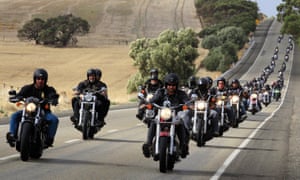
The Newman government’s focus on bikies drew attention away from other crimes in Queensland such as child exploitation, an inquiry has found.
The Queensland Organised Crime Commission of Inquiry’s report, released on Friday, shows the previous Liberal National Party (LNP) government directed a disproportionate amount of resources at bikie gangs at the expense of other areas like child exploitation, illicit drugs and financial crimes.
“The focus has been on OMCGs [Outlaw Motor Cycle Gangs], it has not been on other areas,” commissioner Michael Byrne QC said.
While the report said bikie gangs have a major role in illicit drug markets and extortion, OMCGs technically accounted for only 0.52% of all criminal activity between 2013-15.
“The focus upon and resources solely dedicated to the threat of Outlaw Motor Cycle Gangs by QPS [Queensland Police Service], has meant that other types of organised crime have not been appropriately investigated,” the report said.
The inquiry also highlighted the scourge of ice in the state, which it ranked as “the biggest threat to Queensland” because of its prevalence and consequences.
The report found there were a number of online child sex offender networks operating in the state and “a significant numbers of Queensland children caught up those enterprises”.
Financial crimes and money laundering were also an area of crime found to have developed significantly in recent years.
However, the report found no evidence of corruption in the government or public service.
The Queensland Organised Crime Commission of Inquiry’s report, released on Friday, shows the previous Liberal National Party (LNP) government directed a disproportionate amount of resources at bikie gangs at the expense of other areas like child exploitation, illicit drugs and financial crimes.
“The focus has been on OMCGs [Outlaw Motor Cycle Gangs], it has not been on other areas,” commissioner Michael Byrne QC said.
While the report said bikie gangs have a major role in illicit drug markets and extortion, OMCGs technically accounted for only 0.52% of all criminal activity between 2013-15.
“The focus upon and resources solely dedicated to the threat of Outlaw Motor Cycle Gangs by QPS [Queensland Police Service], has meant that other types of organised crime have not been appropriately investigated,” the report said.
The inquiry also highlighted the scourge of ice in the state, which it ranked as “the biggest threat to Queensland” because of its prevalence and consequences.
The report found there were a number of online child sex offender networks operating in the state and “a significant numbers of Queensland children caught up those enterprises”.
Financial crimes and money laundering were also an area of crime found to have developed significantly in recent years.
However, the report found no evidence of corruption in the government or public service.
TRANSCRIPT OF MPI ON CLIMATE CHANGE
Mark Butler MP.
Shadow Minister for Environment
Climate Change and Water
MARK BUTLER, SHADOW MINISTER FOR CLIMATE CHANGE: This
is a matter of very significant public importance and has been for a
considerable period of time. There has been a growing sense of despair
within the Australian community about this country's direction on
climate change policy and the spread of renewable energy. Frankly, that
sense of despair is no wonder, given the track record of this government
over a short period of only two years.
To recap, this was the government that
abolished the legal targets, the 2020 and 2050 targets, to reduce
Australia's carbon pollution and to start to decarbonise Australia's
economy. This was the government that abolished the legal cap on carbon
pollution that would act as the discipline on the natural growth in
emissions that would otherwise occur in a growing economy with a growing
population like Australia's.
This was the government that attacked the
renewable energy target and talked down every possible expansion of
renewable energy—particularly the expansion of wind power—and this is
the government that continues to seek to abolish the Clean Energy
Finance Corporation, in spite of the Prime Minister's gentle words today
in question time, and to abolish the Renewable Energy Agency, ARENA, in
spite of a clear election promise to the contrary.
The despair has become even more pronounced
as it has become increasingly clear to the Australian community and to
the international community that there is growing global momentum in the
lead-up to the Paris conference in December—a global momentum
particularly led by the two largest emitters, the two largest economies,
the two most significant powers in the world today: the United States
and China. It has been quite clear for a good 12 or 18 months that those
two nations, under the leadership of President Obama and President Xi
Jinping, are committed to Paris reaching an ambitious agreement to
reduce global carbon emissions.
A great number of Australians held out very
significant hope that a change in leadership on the other side, a change
in Prime Minister, would mean real substantive change in these policy
areas. It was hoped that the change would drag the Liberal Party back to
the sensible centre on climate change and we could get to a position,
like the one you see in places like the United Kingdom, where there
would be a broad consensus between the alternative parties of government
that would underpin the real change that we need to see in the face of
climate change and in the long-term investments that businesses are
going to have to make.
Australians were perfectly entitled to hold
out that hope, given what the member for Wentworth had said about
climate change policy for many, many years—particularly in that painful
change in leadership from the member for Wentworth to the member for
Warringah only five or six years ago.
It has become increasingly clear in recent
weeks just how high a price the Prime Minister, the member for
Wentworth, was willing to pay to achieve his lifelong ambition of
becoming Prime Minister. There is no price higher than the price the
member for Wentworth has paid in the area of climate change and
renewable energy policy. It is now clear that this Prime Minister has
adopted the member for Warringah's climate change and renewable energy
policies hook, line and sinker.
This is no trifling matter. This is not an
academic issue for broad debate. In two short years these policies have
already been having a very real impact on our ability to deal with the
threat of climate change—a very real impact that no amount of kinder,
gentler, more florid language from the member for Wentworth, the new
Prime Minister, will be able to change. That impact started very quickly
following the election of the Abbott government.
Bear in mind that Labor's policies were
driving down carbon pollution levels. They were starting to work
significantly. In the last full year of the Howard government
Australia's carbon emissions were about 600 million tonnes. In the last
year of the Labor government, those emissions had reduced to 548 million
tonnes—a reduction of eight per cent in six short years.
Since then, all of the trends across the
economy have been bad. Most obviously, trends in the electricity sector
have been particularly bad as the former Prime Minister launched an
all-out attack on the renewable energy industry, in spite of taking to
the election in 2013 a promise to keep the renewable energy target in
place and a promise to keep the Renewable Energy Agency in place as
well. Unsurprisingly, renewable energy investment collapsed last year—it
collapsed by 88 per cent in the large scale sector, which obviously led
to an increase in coal-fired power and an increase in carbon emissions
from the electricity sector, our largest source of carbon pollution. In
2014-15 alone carbon pollution increased by four per cent—four per cent
in one year alone in the National Electricity Market.
In the land sector as well, massive
reductions in carbon pollution were achieved because of the historic
land clearing laws that were put in place by Premier Peter Beattie, with
the support of Prime Minister John Howard—Prime Minister Howard
understood how important those reforms were to achieving our commitments
under the Kyoto protocol in the first commitment period. Unsurprisingly
the LNP government of Campbell Newman reversed all of those reforms and
we have started to see emissions rise again in that very critical
sector. I can go through other sectors where emissions have continued to
rise.
The parliament does not need to take my word
for this. As we pointed out in question time today, the Department of
the Environment's own official projections show that emissions will rise
from the time of the election of the Abbott government to 2020 by 20
per cent. Page 32 of those emission projections shows that in 2013-14,
when we left government, emissions were 548 million tonnes, and the
department's projections are that by 2020 emissions will be 656 million
tonnes—more than 100 million tonnes higher.
Mr Hunt interjecting—
MARK BUTLER, SHADOW MINISTER FOR CLIMATE CHANGE:
The Minister says I am behind the times, but these are the latest
projections published by the minister's own department. I will be more
generous to the minister and just refer to the RepuTex projections which
were published in August. The minister had a go, as is this
government's wont, at shooting the messenger; the minister had a go at
RepuTex yesterday but RepuTex's projections are much more generous than
his own department's projections. RepuTex says that by 2020 emissions
will only be 12 per cent higher than they were when this government took
office, or about 10 per cent higher than 2000. There is no surprise in
this, because this is what analyst after analyst after analyst said
would happen.
All through the five- or six-year history of
this policy being in the political marketplace, the policy that the
member for Warringah directed the now minister to go and cook up over a
summer in 2009-10, this is exactly what every analyst has said would
happen. We know the Emissions Reduction Fund is a waste of money. It
apparently bought 47 million tonnes of abatement in the first auction,
but the minister does not often say that three-quarters of that was from
projects that existed before the auction. Some of them were projects
that had been in existence for more than 10 years. There were landfill
and waste gas projects that had been established under GGAS under the
Carr government for more than 10 years.
This week RepuTex has confirmed that not one
single company—not one of the country's largest polluters—will be
obligated at all to reduce their carbon pollution levels by the
safeguards mechanism. Such is the headroom given to every large polluter
in Australia and such are the ways in which companies can renegotiate
their baselines under this safeguards mechanism that not one company
will be obligated to reduce their pollution levels. That is why Climate
Action Tracker, an international NGO that compares policies and the
nationally determined contributions that nations are taking to the Paris
conference, has found that Australia has the largest gap of any nation
between the target it is taking to Paris, which admittedly is a
back-of-the-pack target, and the policies that are in place.
That is why an emissions trading scheme is
the only policy that is going to deliver meaningful reductions in carbon
pollution levels in a country like Australia with a growing economy and
a growing population. That is why Labor will continue to advocate the
interests of an emissions trading scheme up to and during the next
election. But the Prime Minister knows all this. He has known it for
many years. He has just been willing to pay the price to assume his
lifelong ambition of becoming Prime Minister, and that is a terrible
shame.
ENDS
NO COMPANY FORCED TO CUT EMISSIONS UNDER DIRECT ACTION
Mark Butler MP.
Shadow Minister for Environment
Climate Change and Water
A report
by leading analyst RepuTex has shown that no companies will be forced
to cut their emissions under the Abbott-Turnbull Government’s pathetic
Direct Action policy.
Regulations released by the Government just
last week are so watered down they fail to impose any downwards pressure
on pollution.
This report has confirmed that Direct Action
will do nothing to cut emissions, making even the most pathetic target
the Government sets completely unachievable.
While the rest of the world is acting on climate change, the Abbott-Turnbull Government is taking Australia backwards.
Without a true market mechanism, companies will not modernise and will not reduce their emissions in the most efficient way.
It’s time for Malcolm Turnbull to deliver on his hyperbole and commit to an Emissions Trading Scheme for Australia.
The RepuTex report found none of the 140 companies covered by Direct Action will face any obligation to reduce their emissions.
The Government’s new ‘safeguards’ allow companies to adjust their baseline, exposing Direct Action for the failure it is.
Malcolm Turnbull has clearly sold-out on climate change in order to take the top job.
Unfortunately it will be future generations that pay for Malcolm Turnbull’s blatant self-interest.
Bill Shorten, Subjects: Labor’s plan to inspire young women to learn to code; Malcolm Turnbull and the Liberals’ plan to increase the GST; Tony Abbott’s comments on Australia’s border protection policies and Syria; Tax reform; Unions; Nuclear energy; Constitutional recognition for Australia’s first people.
E&OE TRANSCRIPT
DOORSTOPSYDNEY
WEDNESDAY, 28 OCTOBER 2015
ED HUSIC, SHADOW PARLIAMENTARY SECRETARY ASSISTING WITH DIGITAL INNOVATION AND STARTUPS: (audio cuts in)…Making sure that young people are starting to embrace computational thinking and so what you are seeing in the room next door to us is young school students that are starting to embark on the journey that will potentially take into the world of technology and in a world of work that will ensure that their skills will give them productive, meaningful employment, but that they make a bigger contribution to the economy.
And today Bill is going to be announcing, and making an announcement that will build on our investment that was made in the Budget and it’s a pleasure to be able to join also with my friend and colleague the Member for Griffith but also importantly the co-chair of Parliamentary friends on Innovation, Terri Butler. We both believe that in terms of the type of agenda that Bill’s advanced that this is crucial to the future of the economy in our country and I’d like to now invite Bill to be able to provide more detail on what our investment, that we’ll be making today.
BILL SHORTEN, LEADER OF THE OPPOSITION: Thanks Ed, and good morning everyone. It’s great to be here with two of Labor’s rising stars Ed Husic and Terri Butler. Terri’s been working hard about encouraging women to get involved in the digital economy and Ed of course is my Parliamentary Secretary for Digital Innovation. It’s also good to be here with Annie Parker, and a lot of the volunteers who are really spreading the word about encouraging our young people to learn computational thinking and coding.
It’s projected that as soon as 2020, we’re going to need an extra 100,000 Australians with ICT skills – information and computer technology skills. But the problem is that in the last 10 years we’ve seen a 50 per cent reduction in the number of people enrolling in IT related courses. So this is a real challenge for the jobs of the future, to make sure that Australia’s young people can get some of the jobs of the future, good paying jobs.
There’s another big challenge of course, not only do we not have enough young people studying ICT or computer courses at university, but women in particular are not sharing the benefits of the digital revolution that’s under way. Previously 1 in 4 people studying in IT were women, now it’s in down to 1 in 10. So what we’ve got is, we’ve got a shortage of skilled people for the future, we don’t have enough people studying at university which means that there’s a challenge in our school system and women are not sharing equally in the digital revolution. How on earth can Australia succeed in the 21st century of the digital age and innovation if half of our population isn’t fully deployed?
So today, following on the announcements we’ve made in the Budget and other announcements we’ve made since about encouraging students, and women in particular to do science and mathematics at university – in fact we said that 50,000 of the places have to go to women. Following upon our Smart Innovation Funds, our proposal of a Startup Year which we see smart graduates being able to spend an extra year, receive an income contingent loan so they can learn business and entrepreneurship as well as backing their ideas.
Today I’m pleased to announce that Labor will fund $4.5 million to support the sort of clever innovations which we see here: code to clubs. We’re proposing that $150,000 per grant would be made available to organisations like Code Club Australia to help encourage schools to teach kids the skills they need in the future. I know that under the Liberal Government there’s been a lot of discussions about back basics but we also need to make sure that we have creative computing as part of the basics. No point educating our kids if we’re not giving them the skills for the future.
So today Labor’s announcing that we will put $4.5 million to help our teachers and schools take up more coding. In the other room here at the Sydney Town Hall we saw really bright 10 and 11 year olds grappling with the language of the future, computational thinking and programming. We need kids to be interested and we need innovation and in particular this $4.5 million will be aimed at encouraging young girls to take up computing and related courses.
See it’s no trouble in getting young girls interested in coding, the challenge is in the system to make sure they maintain their interest and don’t drift away. Today Labor’s committed to making sure that the young women in the future will get their fair share of access to the digital revolution, and after all when you look at some of Australia’s best IT companies, they’re run by very successful women. If we can ensure that young girls today are encouraged to follow their role models in business, they too can help drive Australia’s digital revolution. I might ask Terri Butler to talk a little bit further about the really important need to encourage young girls and women in particular to take part in the digital revolution.
TERRI BUTLER, CO-CHAIR, PARLIAMENTARY FRIENDS OF INNOVATION: Thanks very much. We know that startups are incredibly important for our future employment, but we also know that only 4 per cent of tech startups in Australia have been founded by women – that has to improve.
This year the Australian Computer Society and Deloitte worked together on a report called ‘Digital Pulse’ which highlighted some of the problems that we presently have in terms of gender gaps in ICT and getting women involved in tech. The importance of getting young girls coding in schools cannot be overstated.
Coding and computational thinking more broadly are important skills for the future, not just because they are skills that are worthwhile in and of themselves, but because it is actually really important that women get a slice of the action when it comes to the future economy of this country and the jobs of the future. If you look at Labor’s excellent innovation policy announced recently, you will see that we observe that over the next 20 years there is a potential for 540,000 new jobs in tech startups in the sector. It’s so important that women get a share of those jobs and those opportunities. That’s why it’s so great to be part of a party and party of Bill Shorten’s group who is so committed to making sure that young Australians get their opportunities to share in those future benefits, future jobs and why it is particularly great that under Bill’s leadership we are focusing on women in tech, we are working towards policies that promote women in tech, so that future entrepreneurs, future Naomi Simpsons are being built here in Australia today learning the skills that they’ll need for the future, getting the opportunities, and it will become I hope, unremarkable to see female entrepreneurs. There will be as many female entrepreneurs as there are male entrepreneurs, that’s the vision that I’d like to see for the future and it’s so great to be part of such a fantastic group of parliamentarians led by Bill who are really working towards that vision. Thanks everyone.
SHORTEN: Thanks Terri, are there any questions on this?
JOURNALIST: Mr Shorten, Mr Turnbull this morning said that when it comes to changing the tax system it is not just up to the Commonwealth it’s also up to the states as well to help out with any changes, that includes not ruling out changes to the GST. Where does Labor stand on this and are you willing to work with the Government?
SHORTEN: I believe that Malcolm Turnbull and the Liberals have an undeclared plan to put a GST on everything and to increase the cost of the GST. I represent working people in this country, people who can’t afford to pay more taxes. I think that Malcolm Turnbull and the Liberal Party should focus on the existing unfairness in the tax system rather than slugging people who go to work every day and asking them to pay more taxes. Specifically, I think Malcolm Turnbull needs to support making sure that multinationals pay their fair share of taxation. Specifically, I believe Malcolm Turnbull has to get down to business and spell out what he is going to do about the superannuation tax concessions at the top end. It is unreasonable in this country that people who already have millions of dollars in superannuation can earn tax-free income from that pile and yet they receive tax concessions, subsidies from all the other taxpayers.
No, I think Malcolm Turnbull and the Liberal Party need to focus on the unfairness in our system rather than slugging millions of people with new and extra taxes. And of course the great myth of the Liberal plan on GST is it’s a magic pudding, you know, on one hand, the GST when it goes up all has to go to the States. On the other hand, it’s got to remedy the holes in funding of schools and hospitals, and then again it’s got to provide, according to the Liberal’s income tax cuts, and help balance the deficit; so I think that the Liberals need to come clean with their plans for Australians. There is no doubt in my mind that the next Budget when it is brought down by Malcolm Turnbull is a real test for the Liberals.
JOURNALIST: With regards to Tony Abbott’s speech last night in the UK, he raised significant concerns regarding Daesh. Do Western forces need to be sent in to deal with Daesh?
SHORTEN: First of all, in terms of what Australian Defence Forces are doing in the Middle East, I think they’re currently doing a good job. Our defence forces, in particular the RAAF, the flying missions which, according to the reports I receive, are degrading and diminishing the capacity of ISIL to damage the Government and the people of Iraq. But I’m not sure that the case has been made for any expansion. If Malcolm Turnbull has any plans to expand Australian boots on the ground in Syria as Tony Abbott is suggesting, I think we deserve to hear what those plans are.
JOURNALIST: During his speech Mr Abbott also talked about protecting borders and he encouraged European countries to have a look at what the Abbott Government introduced here in Australia. Do you believe European countries need to toughen up their border protection policies?
SHORTEN: Tony Abbott’s flown to Europe to lecture Angela Merkel, the head of the German Government, to lecture Hollande in France, to lecture David Cameron in England about what to do with this issue. I am not sure European that leaders grappling with a scale and a dimension of a problem which we don’t have in Australia are necessarily going to benefit by Tony Abbott’s advice. I’d like Malcolm Turnbull to confirm if he agrees with Tony Abbott’s lectures of European leaders and how to run Europe.
JOURNALIST: Do you find those lectures are embarrassing?
SHORTEN: Well, as we’ve seen from the dreadful scenes in the Mediterranean, to the massive border queues and the literally movement of millions of people, I am not sure Tony Abbott on a victory lap giving a Margaret Thatcher lecture is exactly what Europe needs to solve its problems. I don’t think European leaders need lectures from Malcolm Turnbull, Tony Abbott or Bill Shorten about what to do. I think the issues there are issues which the Europeans have to grapple with and simply saying that Australia’s got all the answers I think isn’t the right way to go.
JOURNALIST: Should they look at Australia’s policies?
SHORTEN: I think the challenge is that we’ve lots of things in Australia which I think other people could look at, a strong minimum wage, a well-funded Medicare system. I probably wouldn’t put Tony Abbott giving a Margaret Thatcher lecture as the top of the lecture list for what Europe needs to do.
JOURNALIST: Do you agree Tony Abbott’s comments along his concerns with regards to Syria falling under Iranian and Russian influence and therefore one of the reasons why the West probably needs to do more there?
SHORTEN: I think Syria already has significant influence from Russia and Iran already. I don’t think that’s a new development. My concern about further engagement in Syria is that certainly ISIL are dreadful, ethno-fascist is one term, a dreadful murderous group of people. But the Government of Syria has got a shocking track record in human rights of killing their own people. I think it’s very difficult at great distance for Australia or some other countries to say they’ve got the answers to Syria. I think the challenge is how do we help the victims of Syria. That’s why I think when Labor led by proposing we would take 10,000 refugees and the Liberals then matched that offer, I think that was a healthy development. I am not sure that military intervention alone, extending right through a very complex situation where there is a lot of barbarity and the Government itself has behaved in a shocking manner, I don’t know that Australia just wading in with some sort of naive approach is going to add a lot to what’s already the misery that’s already going on there.
JOURNALIST: Just going back to the GST issue, Malcolm Turnbull did say if changes were to be made, then the States and Territories would also have to alter other taxes to ensure that those people aren’t left worse off. So if that’s the case, would Labor look at that option and is there any room for movement?
SHORTEN: Malcolm Turnbull’s got a very ambitious agenda, fresh from running Australia, he now wants to tell the States how to run the States. I understand that this nation needs tax reform but I’m putting forward the tax reform we need isn’t making lots of people pay a lot more taxes. What I actually think we need is a fairer tax system, a simpler tax system. I’d like Malcolm Turnbull to address concrete propositions.
It’s been interesting over the last six and seven weeks to hear a whole lot of thought-bubbles and ideas. The next Budget thought will be a test of the Liberal thought-bubble machine. What are they actually going to do?
The truth of the matter is that unemployment unacceptably high. The truth of the matter is that infrastructure investment in this country has stalled. The truth of the matter is we’ve been moving from the mining boom we’re not seeing enough policies to create other jobs. The truth of the matter is that our schools aren’t well funded and we should be funding them according to need. The truth of the matter is that the Government has cut $3 billion from science and research while we’re on the front of talking about the importance of science and research. There’s been $115 million cut from the CSIRO. There’s been a $107 million cut from Cooperative Research Centres. We see our Government twice now in the last two years, with Malcolm Turnbull voting for this following measure, cutting money from tax R&D funding. I think it’s important that the rubber hit the road in the Turnbull administration. That’s why the next Budget is really, really important and that is to me the test which Labor will be studying most carefully. Is this Government managing the Budget properly so that Australia can have growth rather than wallowing in the sorts of economic mediocrity which we currently are.
JOURNALIST: Are you concerned by union figures showing union membership is declining?
SHORTEN: Union membership and its levels is an issue for unions. What I also recognise is that traditional organisations across this country from organised religion to service groups to unions are experiencing declines in membership. Of course what I do also see is what happens when you don’t have unions in the workplace, it is called 7-Eleven. Thousands of people being paid far less than the minimum wage.
JOURNALIST: Now the government has indicated that the Philippines have said that it’s not going down the line of permanent resettlement. Should we continue trying to get into the Philippines or are there other options?
SHORTEN: I’ve seen that report. I think it is important that Australia for its regional resettlement engages with the larger economies and societies of Asia which includes the Philippines. So I don’t think Australia should simply give up. It does make me shake my head though and realise the opportunity that was squandered by the Liberals when they were in Opposition with the Malaysia solution which would have seen people having the opportunity to resettle in Malaysia. To me, the Government needs to redouble its efforts with Thailand, with Malaysia, with Indonesia, with the Philippines.
JOURNALIST: Malcolm Turnbull says he doesn’t think Australia would be powered by nuclear power stations and has pointed towards Australia’s uranium stores. What are your thoughts on that and what do you think Australia should be powered by in years to come?
SHORTEN: I think Malcolm Turnbull is probably right. I think the cost of setting up a nuclear industry from scratch is quite expensive. There is a South Australian Royal Commission underway, I guess it will be interesting to see what they propose out of that. That’s a discussion about nuclear power, and it might put some of the evidence on the table. All the research and data I’ve seen is if you are going to start with a nuclear industry, that decision should’ve been made decades ago.
The other thing I believe is that we’ve got the opportunity to go into the second part of your question, we do have renewable energy. We are a continent with more sunlight per square metre than any other continent. I think, when you look at the prospects for investment in the Asia Pacific region, $2.5 trillion is estimated to be available for investment in renewables in the next 15 years. I don’t want Australia to miss the technological and economic opportunities of embracing climate change and renewable energy. Labor’s the only party who has proposed that 50 per cent of our energy mix by 2030 should be powered from renewable energy. Quite frankly I’m excited by the opportunities of battery storage, I am excited by the ability to expand solar power into small businesses, so more companies can go off the grid and be price setters as opposed to price takers. I think renewable energy offers pretty exciting prospects, for an energy revolution in Australia which generates jobs, investment and of course a cleaner environment. Last question.
JOURNALIST: Are you concerned a referendum council hasn’t been announced yet for the referendum recognition?
SHORTEN: Labor strongly believes we should include our first Australians on the Australian Constitution. Our first Australians should be on the national birth certificate. It is important that the change we push for is not just symbolic, it’s not just empty poetry or a pretty preamble, it has to be real and meaningful, not just symbolic. I think an important step towards building a national consensus is to have a referendum council which would include Indigenous and non-Indigenous Australian leaders. I’ve met with Malcolm Turnbull to discuss these matters, I’m optimistic we will see progress on that in the near future. Labor’s up for changing the Constitution, I think it is long overdue. I think Australians are rightly proud of the Indigenous background of Australia and I do believe we should include that in our Constitution. We should get rid of the race powers. It’s an anachronism for, you know, from two centuries age and it’s time we junked that old stuff. It is not relevant to the future or including Indigenous Australians. Thanks everyone.
ENDS
Subscribe to:
Posts (Atom)
Without getting rude about it, Turnbull is enjoying a protracted honeymoon.
And it is true his particular style of intelligent reasonableness, professed reluctance to engage in crude partisan politics before doing just that, does appear to overwhelm some listeners’ critical faculties.
Asked about Australia’s future energy sources this week, Turnbull expounded the indisputable proposition that we should be rational and businesslike, rather than irrational and “ideological” about our choices.
He put it like this: “Some people talk about it in an ideological way, as though one type of coal is better or worse than wind which is better or worse than solar which is better or worse than nuclear power.
“These are all things. They don’t have any moral characteristics ... coal, depending on where it is, can be cheap but has higher emissions. Nuclear energy has low emissions but is hugely expensive to construct and has a number of obviously very big environmental problems associated with it ... and so on down the list. The appropriate … way to deal with this is to be, I think, to be thoroughly rational about it and to say the object is to make sure we have access to all of the energy we need at the cheapest possible price.”
This caused some observers to purr the new prime minister had hit a “practical mainstream” sweetspot with climate policy, when it fact it was a masterclass in just how good he is at avoiding the question.
Because if we just wanted energy at the cheapest possible price we’d just keep burning brown coal. The whole point of the climate debate we’ve been having this past decade or so has been how we reduce the emissions from power generation and how to calculate and factor in the environmental cost of coal generation.
We were going to use a carbon price but that ended badly for the country and for Turnbull. Now the prime minister points out, quite correctly, that a carbon price is just one means to an end, but the Coalition’s current policy is actually helping the dirtiest brown-coal generation – emissions from brown coal generators grew by 6.2% in the year to March 2015, part of the overall increase in emissions from the electricity sector.
The renewable energy target is capped and the extraordinary advances in battery storage technology are going to take a while to be cost competitive with coal-fired grid power if there are no carbon constraints. In fact, as his policy stands, there is nothing to stop emissions from the power sector continuing to rise.
Turnbull gets this and may well be working on a policy answer, but until we hear it his practical mainstream means practically nothing. Oh, and just quietly, there is a pretty big moral dimension to the question of slowing global warming.
That said, it’s reasonable for Turnbull to avoid questions for a little while longer, and when they stop gnashing their teeth for a moment Labor knows it. He can’t be expected to make considered changes and also to announce them straight away.
Adding to the frustration, Labor has completely ditched its attack on Abbott as an incompetent ideological throwback with no good ideas for Australia’s future. Turnbull’s own qualities and all his talk about a nimble, agile nation springing into new opportunities like the economic equivalent of an Olympic gymnast has sent those lines to the cutting room floor.
Labor’s only option now is the hard grind of policy detail – their own, and forensically analysing the fine print of Turnbull’s when it comes, which isn’t likely to be until the economic update and the innovation review at the end of the year.
Given Turnbull’s obvious problems balancing any changes to his climate policy with the sceptical views on the right of his party that is an obvious early area of attack and Shorten will try to build pressure in the lead up to the December climate conference in Paris, which both he and Turnbull will attend. Next week the Labor leader will tour Pacific Islands, a few weeks after that he has scheduled a major address at the Lowy Institute to outline Labor’s stance on the international talks.
Ruled out by almost all senior Labor figures is the option of changing the leader because of the difficulties of the new grassroots leadership selection rules imposed by Kevin Rudd, because Labor understands it has resorted to leadership assassination a few times too often and because most of the alternative leaders aren’t ready yet and probably calculate their best interests lie in having a shot after the next election, on the assumption Turnbull will win it.
And that leaves Labor backing in and shoring up a leader who is the preferred prime minister of just 17% of the population and who was already suffering a crisis of confidence even when Labor was leading the polls. Stand by for a lot of talk about the team.
The contrast with the new prime minister, who is so confident, so certain in his grasp on power, could not be greater. Labor has no choice but to concentrate on the policy detail because the more the election is a presidential-style contest of charisma and personality the worse Shorten is likely to fare.
Reading Kerry O’Brien’s biography of Paul Keating this week highlights the whiff of Keating in the new prime minister’s style.
Like Keating, Turnbull worked and waited for power and fully intends to put it to good use.
Like Keating, he has always seemed to see the “game” of politics as a means to an end. And like Keating he is supremely confident that he knows best what that end, that vision for the nation, should be.
They share big ideas about national identity, a bit of what Keating used to call his “dash and elan”.
When Turnbull was thinking about leaving politics after his party dumped him as leader in 2009, Keating was reportedly one of those who advised him against it because he thought Turnbull was the kind of politician the parliament needed. And Keating said recently if Turnbull is allowed to govern as he wants to, without too much hindrance from the Liberal conservative right, he will present big strategic problems for the Labor Party.
And Twitter reminded me this week of a question I asked Turnbull when he addressed the National Press Club in 1992 on behalf of the Australian Republican Movement. Keating, then prime minister, had backed a republic but not said how he thought Australia should get there. I asked Turnbull whether he thought Keating should have spelled out the detail.
“Frankly, I am awestruck by Keating’s courage. Keating is the first mainstream politician to put his toe in this pool and he should be congratulated for his courage,” Turnbull replied.
In O’Brien’s book, Keating constantly describes political capital as a resource, replenished by popularity and drawn down by real, brave leaders who know the big changes they want to make and are prepared to take risks to get there.
Leadership courage – the quality Turnbull and Keating seem to admire in one another – burns through political capital much more quickly than leaders who stay safe, as Keating discovered.
Keating had already used a lot of his capital before he took the prime minstership. Turnbull is starting with close to a full tank. Labor may be gnashing teeth for a while.