Bill Shorten MP
Leader of Opposition
Right now, two versions of the great Australian dream are being debated.
I believe the great Australian dream is families having the chance to own a home.
Mr Turnbull’s Liberals seem to think it means owning your sixth or seventh investment property.
Anyone who’s been to an auction recently knows how tough it is. Australians looking to buy their first home are competing with dozens of property speculators, including cashed-up investors from overseas.
Labor wants to level the playing field for families looking to buy their first home.
The Prime Minister promised ‘new economic leadership’ and ‘a new respect the intelligence of the Australian people,’ but the Turnbull-Morrison scare campaign against Labor’s plan for housing affordability has been loud, long and full of misinformation.
The Liberals have said a lot of different things about Labor’s policy in the last week but almost none of it has been accurate.
Labor is always happy to talk about our plans for fair budget repair, for funding health and education, for making sure our tax system works for all Australians.
We are proud of our plan to put home ownership back in reach of working and middle class families who have been priced out of the market for too long.
So let’s have an honest economic debate based on facts, not fearmongering.
It’s time to tackle the three big scares the government has been peddling for three weeks – and put some facts on the table.
Scare Number One:
“Two-thirds of those who engage in negative gearing have a taxable income of $80,000 or less.”
- Scott Morrison
Firstly, Labor’s changes do not come in until July 2017 and they are not retrospective, no-one will be caught high and dry. The Liberals have repeatedly refused to rule out making retrospective changes to negative gearing.
Under our plan, any Mum and Dad investor who already owns a property that is negatively geared will not be affected.
Secondly, negative gearing and the capital gains tax discount are not equity measures, or tax benefits for battlers.
The key words in the quote from Scott Morrison are ‘taxable income’.
64,000 Australians have used negatively geared property to eliminate their taxable income to zero.
These Australians with property portfolios are not earning zero dollars, they are just not paying any income tax.
64,000 Australians who can afford investment properties currently pay less income tax than three million low paid Australians in the lowest tax bracket.
Don’t let anyone tell you the benefits of this tax subsidy are fairly shared.
More than half of the benefit of the capital gains discount and negative gearing goes to the top 10 per cent of income earners, people earning over $110,000 per year.
Scare Number Two:
“Vote Labor and see your house price go down”.
- Malcolm Turnbull
The Prime Minister has kept dialling up the volume on this one, but he doesn’t have any evidence to back it up.
Professor Richard Holden from the University of New South Wales has said our policy was unlikely to have “a material impact on house prices.”
ANU Associate Professor Ben Phillips, who undertook independent modelling of Labor’s policy, has said: “we would expect house price growth”.
Scare Number Three:
“From 1 July 2017, no investor could safely buy residential property in Australia if the Labor Government introduces its policy…
…It drives all investors out of the market”
- Malcolm Turnbull
This is embarrassing hyperbole from the Prime Minister, he has got his basic facts wrong.
Not every investor is negatively gearing their investments, in fact one third of investors are earning more in rent than they pay in expenses.
And, as experts from the Treasury have said:
“investor behaviour is not driven by tax treatment…investors make decisions based on a whole range of factors”
So let’s not have any more baseless scares about the end of real estate investment.
Labor’s reforms to negative gearing and capital gains tax are overdue, sensible and fair.
Over time, they will make a substantial contribution to getting the budget back in the black and help level the playing field for working and middle class families looking for their first home.
It is time for Australia to close loopholes that give taxpayer subsidies to speculators who don’t need extra assistance.
This is the right thing to do, for our budget, for first-home buyers, for renters and for the future of health and education in this country.
Forget the scare campaign, remember the facts.
Let’s keep the Australian dream alive.
This opinion piece was first published in the Daily Telegraph on Thursday, 3 March 2016


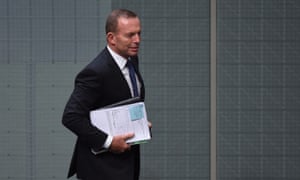
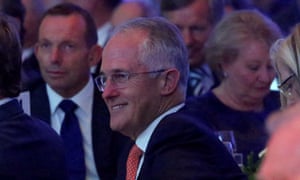



Abbott’s latest covert intervention came in the form of a coodabeen election speech, a remix of the kind of fact-free slogans that worked for him in opposition but failed so spectacularly as a basis for running the country. It was presented as an attack on Labor but was aimed as much at Turnbull.
Abbott told a Liberal party gathering on Friday that Labor was advocating “five new taxes” – a “housing tax” (negative gearing), a wealth tax (less generous tax discounts on capital gains), a seniors tax (changes to superannuation), a workers’ tax (higher excise on cigarettes because apparently bosses don’t smoke) and a carbon tax (an emissions trading scheme).
Putting aside for a moment the simplistic nonsense that reducing an overly generous tax concession amounts to a new tax, the problem with Abbott’s coodabeen campaign is that many of those policies are also being considered by his own side. Which was, of course, his real point.
Anyone who has been paying even the slightest bit of attention knows Turnbull is also considering changes to superannuation concessions, cigarette excise, capital gains tax on superannuation and negative gearing in his torturously long (almost) everything on the table tax process. That would be “three new taxes” from the Coalition itself on Tony Abbott’s terms.
It’s also been pretty obvious that Abbott and his supporters are trying to corral Turnbull into renouncing any of these reductions in taxation loopholes and returning to Abbott’s own 2014 budget strategy of finding additional revenue only by cuts to spending on things like health, welfare and education. Because the electorate responded really well to that strategy.
They want the Coalition to be able to use another slogan – “only Labor increases taxes” – which airbrushes away the tax increases Abbott presided over.
And they advance the insulting argument that the electorate is incapable of assessing two competing policies on negative gearing at the same time, so the Coalition should abandon any ideas of restricting access to “excessive” negative gearing deductions in the interests of “not confusing the message” (translation: not confusing the dumb voters).
Turnbull’s expenditure review committee will consider the tax package next week but sources say the government is indeed “less likely” to proceed with negative gearing changes in order not to complicate its attack against Labor’s plan, although they remain on the table.
But what if the government took decisions based on the effectiveness of the outcomes rather than the effectiveness of the slogans? Like Turnbull once promised to do. What if it respected the intelligence of the electorate to weigh up competing policies? Like he said he would.
Then surely the Coalition would consider some changes to negative gearing, which costs the budget billions and delivers the most benefit to the richest investors. Surely it has to seriously consider tax concessions because that is the only way to share the burden of bringing the budget back into the black without cutting spending that hurts the less well off.
And what if a government really wanted a debate, rather than a shouting match? Then it would relish the chance to explain the differences between the policies in measured and factual terms, rather than with exaggerated claims about the impact of Labor’s policies, or by brandishing “modelling” reports that don’t stand up to scrutiny – as the Coalition did with the BIS Shrapnel report this week.
The saga that led to Turnbull calling in the cops should tell him everything he needs to know about the decision-making processes of his predecessor and how smart it would be to follow them.
Abbott was trying to paint Turnbull as negligent on national security with his controversial remarks about the defence white paper leak but he actually revealed far more about the way his own government did business.
At the centre of his extraordinary attack was the fact that Turnbull’s defence white paper said Australia’s new submarines would be ready from the early 2030s and that work would be done to “extend the life” of the existing Collins-class submarines until then. Abbott told his good friend Greg Sheridan, the recipient of the leak, that this decision had left him “flabbergasted” and “disappointed” because it was “vital for our national self-respect” and “vital for our national security” that Australia get its new submarines by the mid-2020s, which is what the Abbott government had promised.
But this is what the secretary of the defence department, Dennis Richardson, told a Senate estimates committee on Thursday.
“Our advice has been that the risks of bringing forward or rushing the future submarine project would outweigh the risks of extending the life of the Collins class. You rush a project like that at your own peril, that is the advice we have consistently received from anyone in the world private or public who has been involved in design and constructing submarines.”
Richardson said advice from the Department of Defence “has been consistent over the last three or so years ... I was not aware of a single professional view in defence which supported the mid 20s.”
Now assuming the secretary of the Department of Defence has not lied under oath, which seems a reasonably safe assumption, that means Abbott and his defence minister, Kevin Andrews, took a decision to demand the submarines from the mid-2020s against advice from the department and all available experts that this would be a risk.
Abbott and Andrews were obviously concerned about the security implications during the changeover between the ageing Collins class and the new submarines, but the announcement by Andrews that the first of the new subs would be ready by the mid-2020s came in the same press release last February 20 in which he also promised that the project would deliver 500 jobs to Adelaide, come what may.
The jobs issue was contentious at the time because Abbott was facing the first leadership spill motion (it was right after he knighted Prince Philip, which raises some other questions about his desire for “national self-respect”, but that’s another story).
The South Australian senator Sean Edwards had agreed not to support that looming spill motion because Abbott assured him South Australian ship builders could be involved in the submarine bidding process, contrary to a widespread perception at the time that the government was likely to have them built in Japan.
But the timing of that submarine build was also crucial for the “500 jobs come what may” promise to be believable, because a later construction would leave the shipyards idle and workers laid off before the new jobs came into play. There are various defence projects that help answer this question but Labor is already on the attack this week over whether the 500 jobs promise still holds, and it would have been asking the same questions had the Abbott government made the 500 new jobs claim with the later delivery date.
So the timing decision, apparently against expert advice about its practicality, also had political advantages.
Turnbull promised measured decision-making and reasoned debate that respected the voters’ intelligence. He promised policies designed for what they did, rather than how they fitted into a slogan.
If he meant all of that, he could say this. “Some of the things you call ‘new taxes’ Tony, are actually inequitable loopholes and cracking down on them is a fair way to pay for the things Australian society believes a government should do.” Alternatively, he could dance to the tune of a coodabeen.