Friday, 3 September 2021

Spotlight on hospitals as states and Commonwealth debate opening up Australia.

Extract from The New Daily

News

6:04am, Sep 3

A leading clinician has warned of a “tsunami of cases and hospitalisations” even at 70 per cent double dose vaccination as debate rages about when Australia should open up.

Editor-in-chief of the Medical Journal of Australia Laureate Professor Nick Talley tweeted that 70 per cent coverage will “still not be enough” and that 80 per cent full vaccination of the “entire” population was needed.

“The data I’ve seen from overseas and from recent modelling indicate ~2 weeks after 70% FULLY vaccinated (when they will be protected) will still NOT be enough to prevent a tsunami of cases & hospitalisations,” he wrote.

“Realistically, over 80% of the ENTIRE population need to be vaccinated.”

It comes as an agreement between federal and state governments to gradually ease restrictions at 70 and 80 per cent over-16 vaccine coverage continues to fracture and doctors warn of hospitals straining under the case load.

Prime Minister Scott Morrison will chair a national cabinet meeting on Friday that will discuss hospital capacity amid concern the health system will struggle to cope with rising coronavirus cases.

Health Department boss Brendan Murphy has asked intensive care experts from across Australia to provide advice about the pressures higher caseloads could present.

That will be examined by Mr Morrison and his his state and territory counterparts at Friday’s meeting.

Australian Medical Association president Omar Khorshid said emergency departments were already full and elective surgery waiting times too long before the pandemic.

“While national cabinet is considering the cost of expanding intensive care capacity for an expected COVID surge, a funding top-up alone won’t cut it,” he said.

“The Commonwealth will need to address the longer-term public hospital funding crisis.”

Dr Khorshid urged Australia to prepare the health system based on the ability of hospitals to cope with more coronavirus cases before opening up.

On Thursday, NSW Premier Gladys Berejiklian said opening up would mean more people would die, but that Australia had to “sensibly transition to what living with COVID is like”.

COVID-19
Gladys Berejiklian says we have to accept that living with COVID-19 is a reality. Photo: AAP

“We have to get really real about what we are facing, and I know sometimes it is difficult to hear, and I remember specifically the day I said we would never get to COVID zero, but that is the reality,” she said.

“What we need to do is live with COVID normal, and getting to 80 per cent double-dose adult population gets us on our way.”

National cabinet will also consider if healthcare workers who were close contacts should still be sidelined when high vaccination coverage is achieved.

Mr Morrison has indicated vaccinated staff might not have to be furloughed in the future, while Dr Khorshid believes the practice is unsustainable.

There are 184 coronavirus patients in intensive care nationally, with 160 in NSW.

Labor’s health spokesman Mark Butler said national cabinet needed to urgently lock in a plan to bolster hospitals.

“NSW hospitals are at breaking point with much worse yet to come but Scott Morrison still has no plan to guarantee our hospitals stay strong and stay safe,” he said.

Wrangling over when borders in Western Australia and Queensland will open to states with the virus continues. But the issue is not addressed in Doherty Institute modelling behind the national plan.

Left-leaning think tank the Australia Institute has released a paper questioning the evidence behind politicians agitating for state borders to open.

The institute’s chief economist Richard Denniss said Doherty modellers could not be blamed for failing to anticipate NSW government failures in controlling the outbreak.

“But you can blame politicians and business leaders who are using the Doherty modelling to justify opening interstate travel when the modelling provides no clear evidence that it would be safe to do so.”

Six in 10 Australians aged 16 and over have received one coronavirus jab while 36.4 per cent are fully vaccinated.

NSW

Exercise restrictions have been eased in Sydney’s hotspots as the state reported 1288 new local COVID-19 cases on Thursday.

Residents of the hotspot council areas are now allowed to exercise as much, after a one-hour limit was lifted.

A curfew still applies, so they cannot start going for jogs or walks before 5am and must be home by 9pm.

Ms Berejiklian announced the slight easing of restrictions on the day the state reached 70 per cent single-dose vaccination coverage of people aged 16 and over.

More than seven million jabs have been administered in NSW.

The milestone all but guarantees NSW will soon enough reach double-dose vaccination for 70 per cent of the population, triggering a wider easing of restrictions.

Some 38.68 per cent of NSW residents are already fully vaccinated.

NSW is on its way to 70 per cent double dose vaccinations. Photo: AAP

Seven more people died, including two who caught the virus in hospital. The death toll from the current outbreak is 107.

Meanwhile, seven men have been fined more than $30,000 for breaching public health orders by leaving Sydney and canvassing for work in the Lake Macquarie area.

The 27-year-old company owner had a Service NSW permit to leave Sydney and go to regional NSW. Police say it contained untrue and inaccurate information.

Victoria

Border restrictions will be tightened, including a ban on crossing to use physical recreation facilities, amid rising concern at the risk posed by NSW.

The number of communities in the border bubble has also been reduced with Greater Bendigo, Greater Shepparton, City of Benalla, Buloke, Loddon, Yarriambiack and two NSW LGAs, Broken Hill and Edward River, no longer defined as cross border communities.

In an announcement late Thursday, the Specified Worker List was also reduced and testing obligations for those entering on a Specified Worker Permit extended.

There is some reprieve from Friday, including the reopening of playgrounds for children aged 12 and under, with certain rules such as QR code check-ins and masks for their one permitted supervisor.

Victoria has turned its back on COVID zero in favour of vaccinations, with tough restrictions to stay until at least 70 per cent of eligible Victorians are fully inoculated.

Of the 176 cases on Thursday, 67 were in the northern suburbs of Melbourne, 61 in the west, 22 in the east and south, and 13 in the regional town of Shepparton.

“This virus is here, right now, and it is spreading fast,” acting chief health officer Ben Cowie said.

People line up for COVID vaccines in Melbourne. Photo: AAP

“The increasing case numbers are a herald of what our health system is going to be faced with in the coming weeks and months.”

Health Minister Martin Foley said Burnet Institute research had suggested the state’s lockdown had avoided a further 6000 cases in the past month, but now was the time to pivot.

“You’ve got to follow the advice of the science. Delta has changed the script,” he said.

To aid Victoria’s quest to ramp up vaccinations, the interval between doses of the AstraZeneca COVID-19 vaccine has been halved to six weeks.

The move, effective immediately, makes the wait time between AstraZeneca doses the same as for Pfizer. It will help the state reach its 80 per cent double dose target faster.

ACT

ACT Chief Minister Andrew Barr maintains Canberra can return to COVID-zero despite continued mystery cases, people infectious in the community and the “extreme risk” from NSW.

Canberra’s lockdown has stretched out from one to five weeks as cases continue to emerge without an immediate source and in people not in quarantine.

Of 12 cases on Thursday, six were household contacts of existing cases and eight were in the community for at least some of the time with the virus.

“I don’t think COVID-zero is out of reach in relation to this outbreak,” Mr Barr said.

“If we continue on this trajectory, then we would be able to contain this outbreak and get to the point where we have no infectious cases in the community.

“However, I readily acknowledge we are still at extreme risk from NSW.”

About 44 per cent of residents aged 16 and older are double-dosed, with 68 per cent having received a single shot.

The ACT has become Australia’s first jurisdiction to cross the 80 per cent full vaccination mark for people aged between 75 and 79.

Queensland

A family at the centre of a coronavirus scare on the Gold Coast has tested negative to the virus, a school principal has told parents in a letter.

The family was ordered into hotel quarantine, with some of them unwell after reportedly returning from Melbourne without quarantining.

Separately the Queensland government reported a new local case of COVID-19, a truck driver who is now in NSW.

Queensland Premier Annastacia Palaszczuk.

Premier Annastacia Palaszczuk said the driver, who lives at Windaroo, returned a positive result on Thursday.

The 46-year-old man was infectious in the community in Logan and the northern Gold Coast between August 28 and September 1.

He is the second truck driver to test positive in as many days.

Health Minister Yvette D’Ath said a Gold Coast family of five were ordered into hotel quarantine after the children told their classmates they had been to Melbourne.

She said early indications were the family returned to the state undetected via an inland route without going into hotel quarantine.

Some family members were unwell with symptoms and the situation had been complicated by an initial refusal to cooperate with health authorities and contact tracers.

By late Thursday afternoon, health authorities had confirmed all family members had been tested.

Late on Thursday, school principal Christine Harman said she had been informed all the family’s test results were negative.

“Having conferenced with Queensland Health, they have deemed that there is no risk of exposure at our Carrara campus and the need for students and staff to isolate has been lifted,” she said in a statement.

-with AAP

Hubble Space Telescope captures rare Herbig-Haro object in stunning detail.

Extract from ABC News 

Science

By Genelle Weule
Posted 
Herbig–Haro object
A rare Herbig–Haro object captured by the Hubble Space Telescope.
(Supplied: ESA/Hubble & NASA, B. Nisini)

Jets of blue gas blast out of a cloud of dust in a photo of a rare space object just released by the Hubble Space Telescope.

The image captures a phenomenon known as a Herbig-Haro object.

Snapped in the constellation of Orion, the object known as HH-111 is around 1,300 light years away from Earth.

So what are we seeing in this striking image?

A Herbig … what?

Essentially what you are looking at is the birth of a star system, explains astronomer Brad Tucker of the Australian National University.

"At the centre you have what we call a protostar — where gas from a previous star has been collapsing down into a new baby star," Dr Tucker explains.

The new object is rapidly spinning and as it does so, it shoots out a stream of ionised gas — gas that's so hot it's had all its electrons stripped off — from its north and south poles.

The gas moves out through clouds of dust in the stellar nursery.

As it moves further away, it starts to spread out in much the same way your breath does on a frosty morning, Dr Tucker explains.

"As this gas disperses into the neighbouring areas, it starts to mix and spread in the area and starts to create what we call a bow shock," he says.

"And that's why you get these nice kind of clear edges that we see at the end of this object." 

So why is it so rare?

Despite being so spectacular, these objects are hard to spot.

For a start, they only hang around for 10,000–20,000 years.

The objects are not very bright because the dust absorbs much of their light, so we can only see them if they are nearby.

"We can't see them in other galaxies — you only see them in the Milky Way," Dr Tucker says.

And as for how rare they are? There's a hint in the numbers in their name.

"When their number is 111, there's not many of them," he adds.

How did we spot this one?

The image was captured by the Hubble Telescope's Wide Field Camera 3.

"The great thing about Hubble is that you can see things in both the visible light spectrum and the infrared spectrum," Dr Tucker says.

"So you kind of get this nice complete picture of what's going on."Hubble Space Telescope

The Hubble Space Telescope can see objects in visible and infrared light.
(NASA)

While we can see the gas jet in the visible light, the infrared gives us more detail about the dust cloud.

"This is especially important for these objects; because it's a baby or forming star, they have lots of dust," Dr Tucker says.

Launched 31 years ago, the Hubble Space Telescope is coming to the end of its life and has recently had some equipment failures.

Its replacement, the James Webb telescope, is due to be launched in November or December this year.

This telescope will have greater infrared capacity than Hubble, but not as much visual ability.

That means an image of an object like HH-111 would look different than the one above, with even more detail in the dust clouds but less visual definition.

But Dr Tucker says optical images will be picked up eventually by other telescopes on the ground.

"We'll be able to see better in the optical colours than what Hubble can."

Thursday, 2 September 2021

When the US requires a deputy sheriff Australia reports for duty – but not when it comes to climate action.

Scott Morrison hoped to focus on the positives of the US alliance on the 70th anniversary of the Anzus treaty but Labor focused on climate ambition differences.

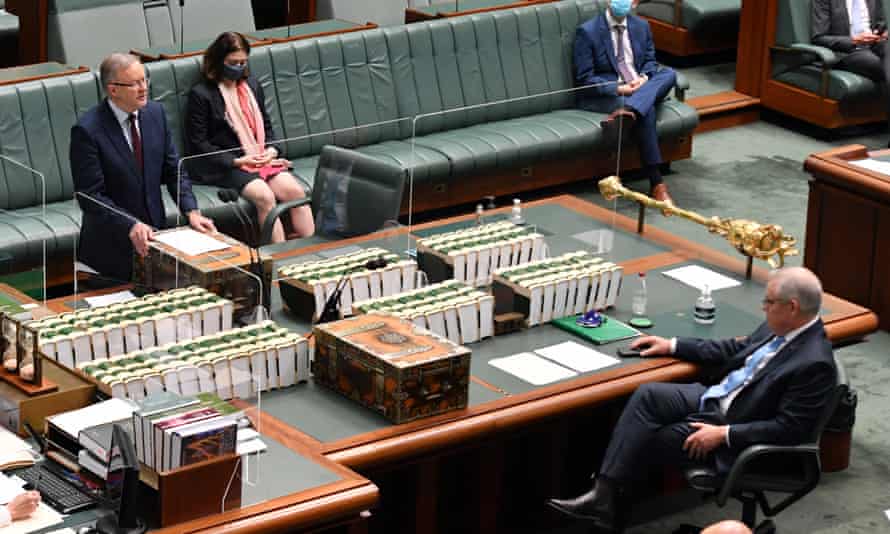
Leader of the opposition, Anthony Albanese addresses parliament

Leader of the opposition, Anthony Albanese addresses parliament on the 70th anniversary of the Anzus treaty. Albanese highlighted the Morrison government’s lack of action on the climate crisis.

Last modified on Wed 1 Sep 2021 17.42 AEST

On the 70th anniversary of the Anzus treaty, Scott Morrison would have hoped he’d be in the United States, marking the occasion on the south lawn at the White House, or that Joe Biden would have been in Australia on his first presidential visit, concealing jet lag behind his signature Ray-Bans.

Instead, the milestone was Covid-safe. Biden’s anniversary reflections travelled to Australia on the social media accounts of the state department, and the prime minister found himself behind perspex in the parliament on the first day of spring, reading his carefully turned anniversary reflections into the Hansard, while his wing man, the deputy prime minister, Barnaby Joyce, advised the Speaker he wasn’t that smart and opined that “your heart is where your legs are”.

The minor vexations of Anzus anniversary day emanated not only from Joyce, rumbling with all the eloquence of a semi trailer hindered by a couple of flats, but from across the dispatch box as well.

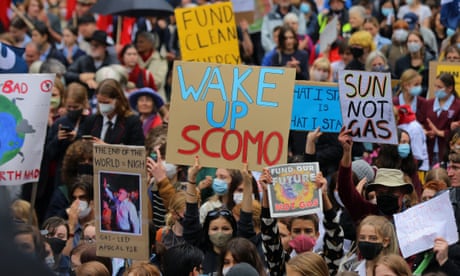
Climate protest by students in Sydney

If Morrison’s pre-Delta aspirations for Anzus day had come to pass, Anthony Albanese would have been a total irrelevance. He would have been invisible, as opposition leaders in pandemic times most often are. But the Labor leader was present on Wednesday morning – by convention, granted equal time at the dispatch box – and Albanese chose a moment of institutional equivalence to tease out one of the weak points in one of Morrison’s narratives about Australia’s relationship with Washington.

So the loose thread was there, and Albanese pulled it.

Australia’s relationship with the US rests on the bedrock of shared liberal democratic values. But at its heart, the seven decades long pact is about security. The Labor leader correctly characterised the challenge of averting runaway climate change as one of the most significant security challenges of the 21st century, and he noted the Morrison government’s failure to rise to that reality.

“Climate change remains beyond this government’s grasp,” the opposition leader said.

The uncomfortable truth Albanese wanted to get at on Wednesday morning was this: Morrison notes empirically, and with some frequency, that Australia is a lifter, not a leaner, in this alliance. When the US requires a deputy sheriff (to revisit that cringeworthy Howard-era analogy), Australia reports for duty.

But not when it comes to climate action. Here, we’ve been draft dodgers.

Albanese’s point was climate change is one of the most significant priorities of the current US administration, important enough for Biden and the secretary of state, Antony Blinken to name check that issue in their official Anzus anniversary hurrahs to Australia. But on climate, Australia has not yet shown up.

Albanese noted Morrison regularly points to the importance of regional security, when “it is our Pacific partners who face current and existential threats of rising sea levels – and who are urging Australia to step up in word and in deed”.

Deputy US presidential climate envoy, Dr Jonathan Pershing

He said the security risks of a changing climate were becoming more obvious to Australians, and certainly to a national defence force assisting with recovery after once-in-a-century bushfires, or deployed in the region to mop up after “climate driven natural disasters” in Fiji and elsewhere.

Albanese said the security risks of climate change – the geo-strategic and regional impacts, as well as direct impacts on defence systems, infrastructure and operations – were now clearly acknowledged by the US military, which understood climate change was not a future defence problem, “but an immediate challenge”.

“It is time that the Australia-US alliance reflected this reality,” Albanese said. “We should immediately deepen US-Australian cooperation on climate change security issues”.

“We must develop operational plans to address the natural disasters and humanitarian outcomes. Despite this government’s abstinence, the importance of climate change and the impact it will have on defence and security has been embraced by our alliance partner, the United States.”

Possibly to remind onlookers of Morrison’s facility for dealing pragmatically with Biden’s predecessor in the White House, Albanese was also sufficiently forthright to welcome the end of Trumpism. He welcomed the return of “American leadership in the rules-based order under president Biden, and his dedicated effort in repairing alliances”.

He noted Australia had been idling for four turbulent years, waiting for the US to regain its mojo. “Even when the United States stepped back from its longstanding leadership on trade and other forms of multilateralism during the Trump administration, Australia held the line and, importantly, held the door open for the United States.”

Morrison’s remarks on anniversary day also referenced the importance of collaboration on new technologies, critical minerals, strengthening our supply chains, providing vaccines throughout the Pacific, “and meeting the challenges of climate change and the new energy economy”.

But the prime minister does not yet have an answer to Biden’s persistent question – the question about whether Australia will continue to dodge the global climate change draft.

Coalition’s misleading tactics will no longer cut it – the IPCC report shows our future depends on urgent climate action

Adam Morton

Morrison is working on an answer to that question.

The prime minister is also waiting on a catch-up call from Biden. The guidance is that conversation will happen later this week, which probably means sooner.

Obviously the president has been heavily preoccupied with the calamitous end to the 20-year war in Afghanistan – a conflict he has chosen to end.

Biden has a lot on, and many other issues to engage an Australian prime minister on.

The president will probably not need Australia’s answer to his climate question yet.

But the persistence of US advocacy on this issue suggests he will soon.

‘Get on with it’: Australia already has low-carbon technology and Coalition should embrace it, scientists say.

 Extract from The Guardian

Technology and engineering academy tells government not to wait for a ‘miracle’ and aim for net zero emissions now.

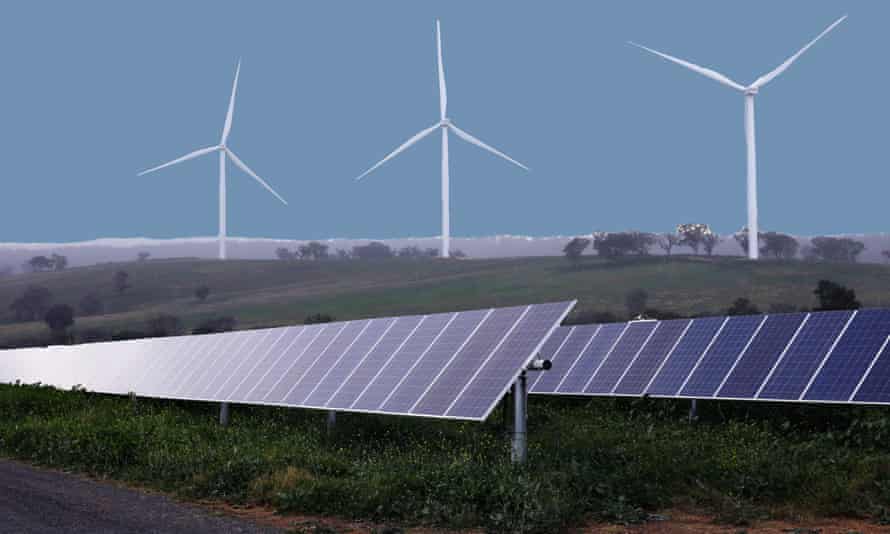
Solar panels and a wind farm

The Australian Academy of Technology and Engineering has called on the Morrison government to prioritise existing low-carbon technologies to make deep cuts to emissions.

Last modified on Thu 2 Sep 2021 03.31 AEST

Australia’s leading scientists and engineers have told the Morrison government the technologies needed to make significant cuts in greenhouse gas emissions already exist – and the Coalition should immediately implement a national net zero policy.

In an explicit response to the government’s “technology, not taxes” approach to reducing emissions, the Australian Academy of Technology and Engineering has released a position statement calling on the government to “prioritise the immediate deployment of existing mature, low-carbon technologies which can make deep cuts to high-emitting sectors before 2030”.

The academy has also urged the government to set a more ambitious emissions target for 2030 ahead of the Cop26 climate summit in Glasgow, following calls by diplomats, scientists, business leaders, and backbench Coalition MPs Warren Entsch and Jason Falinski.

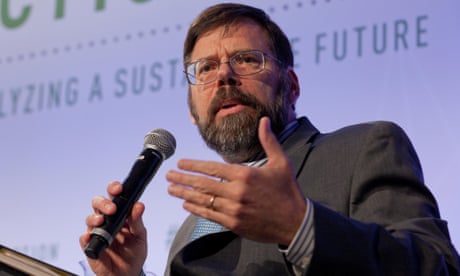
The academy’s president, Prof Hugh Bradlow, said “the technologies we can use to actually make significant progress are here today”.

“We don’t have to take risks and their economics are proven,” he said. “It’s not a case of … waiting for some miracle to happen. It’s a case of getting on with it now.”

When the US requires a deputy sheriff Australia reports for duty – but not when it comes to climate action

Katharine Murphy

Bradlow said setting a target of net zero emissions by 2050 – as most business and industry groups, all the states and more than 100 national governments have – was an “unequivocal requirement” that countries should meet.

“Most countries are stepping up to recognise that requirement, and without that sort of commitment you don’t take the actions that you need in order to get there,” he said.

Prof Renate Egan of the University of New South Wales, a member of the academy’s energy forum working group, said existing technologies – including solar and wind power, energy storage, electric vehicles and energy efficiency for buildings – could rapidly reduce emissions in the electricity, stationary energy and transport sectors.

Morrison under pressure

The Morrison government has emphasised the latter, promising to support five priority areas – also including carbon capture and storage, and soil carbon – under a low-emissions technology statement released last year.

It is under rising pressure to do more to reduce emissions in the short term. An Australian Conservation Foundation survey of 15,000 people released this week found a majority of people in every federal electorate believed the Morrison government should be doing more to tackle the climate crisis.

Entsch and Falinski both called for the 2030 emissions target to be increased beyond the government’s six-year-old commitment of a 26-28% cut compared with 2005 levels. On Wednesday, Falinski tweeted that the government should commit to reaching net zero by 2050 and set a new “stretch target” for 2030. Entsch said he had been lobbying his senior colleagues to commit to “stronger interim emissions reduction commitments”.

But some Nationals MPs remain strongly opposed to greater climate action, and Morrison has resisted calls to join the US, European Union, UK, Japan and Canada in significantly increasing 2030 goals, and the more than 100 countries that have set a mid-century net zero target. He has promised a long-term emissions strategy before the Glasgow summit in November.

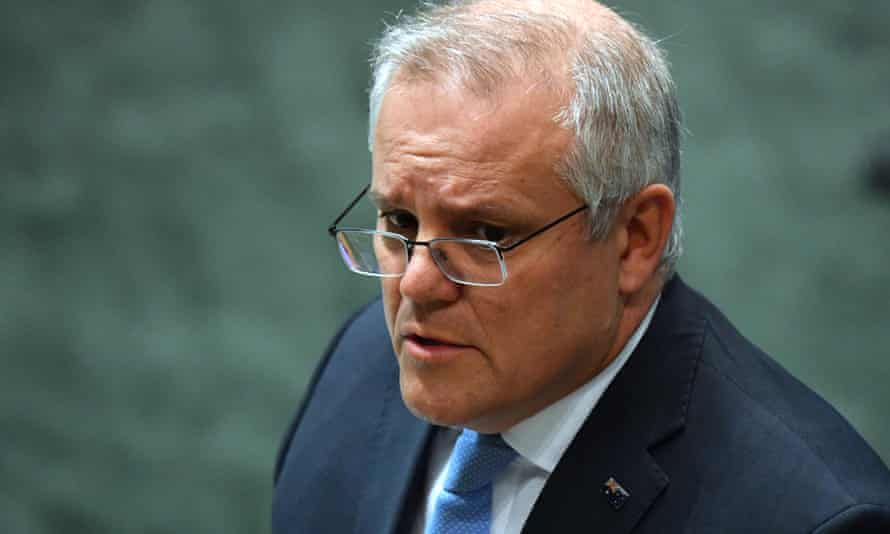
The prime minister Scott Morrison has resisted calls to set more ambitious climate goals.

The prime minister Scott Morrison has resisted calls to set more ambitious climate goals. Photograph: Mick Tsikas/AAP

The treasurer, Josh Frydenberg, last week told Guardian Australia “progress is being made behind closed doors” within the government on climate change, but said he was “very comfortable” with the 2030 target.

“This is not anything controversial: state and territory governments, businesses, industry associations have already adopted such targets and are calling for them,” he said. “We have lost a lot of time. We could have been much further down the path if we had had a more planned and structured approach to reducing our emissions.”

The opposition leader, Anthony Albanese, on Wednesday painted the climate crisis as one of the most significant security challenges of the 21st century, and accused the Morrison government of failing to rise to that reality.

Retired defence figures join call for action

A group of retired defence force personnel stressed this point in a report to be released on Thursday, saying government inaction on climate change meant it was failing in its duty to protect Australians.

The Australian Security Leaders Climate Group, which includes retired defence figures such as Admiral Chris Barrie, Air Vice-Marshal John Blackburn and Colonel Neil Greet, called on the government to change its approach to climate change “as a matter of urgency”.

Coalition’s misleading tactics will no longer cut it – the IPCC report shows our future depends on urgent climate action

Adam Morton

Its report said the politicisation of climate change had “paralysed” government departments, and called on the public service to “reestablish a ‘frank and fearless’ voice on climate policy choices”.

“Former APS personnel report experiences in which initiating new work on climate change could not be overtly identified as climate focused because that may lead to the project being closed down.”

The group pointed to Australia’s catastrophic 2019-20 bushfires, when soldiers were mobilised to fire-ravaged regional areas. It called for the development of holistic policies to prepare for and prevent climate-related security risks, including protecting the country’s “precarious” global supply chains.

“In an emergency [in which] supply chains are disrupted, domestic oil and petrol supplies would last only weeks and military capacity to move and fly would be compromised,” it warned.

The latest assessment by the Intergovernmental Panel on Climate Change, published earlier this month, found emissions were already affecting weather and climate extremes in every region across the globe, contributing to an increase in heatwaves, heavier rainfall events and more intense droughts and tropical cyclones. In Australia, average temperatures above land have increased by about 1.4C since 1910.

Angus Taylor and Keith Pitt asked by Senate inquiry chair to explain dealings with firm awarded Beetaloo gas grants.

 Extract from The Guardian

Email records show Empire Energy sought information from the government before Beetaloo Basin scheme guidelines released.

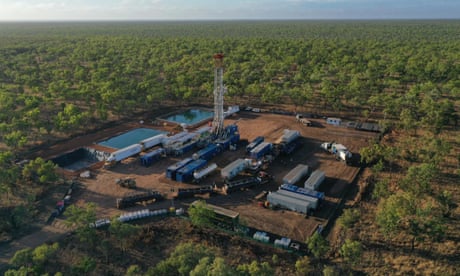
Empire Energy’s Carpentaria-1 exploration well at its Beetaloo Basin gas site
Empire Energy’s Carpentaria-1 exploration well. Ministers Angus Taylor and Keith Pitt have been asked questions about their dealings with the Liberal-linked company that’s received $21m in grants.

Last modified on Thu 2 Sep 2021 03.31 AEST

The energy minister, Angus Taylor, and resources minister, Keith Pitt, have been asked to explain their dealings with the Liberal-linked firm Empire Energy before it received $21m in federal grants, after email records showed it asking for information on “eligibility criteria” and the “application process” well before the program guidelines were released.

A Senate inquiry has been probing the Coalition’s plans to open up the Northern Territory’s Beetaloo Basin to fracking and incentivise exploratory drilling by handing $50m in grants to resource companies.

So far, almost half of that money has gone to a single firm, Empire Energy, which the inquiry has heard has significant ties to the Liberal party. Empire’s managing director, Alex Underwood, has told the Senate inquiry that the company’s connections with the Liberal party did not help it obtain the grants.

Empire Energy’s Carpentaria-1 exploration well at its Beetaloo Basin gas site

“They played no role whatsoever in our applications for these grants. We follow due and proper process at all times,” he said.

The inquiry had previously ordered that any correspondence about the grant scheme between Taylor and Empire be produced to the Senate. It was told “there has been no correspondence between the Minister for Energy and Emissions Reduction and Empire Energy or its subsidiaries discussing the [Beetaloo Cooperative Drilling] program”.

The chair of the committee, Sarah Hanson-Young, has now written to Taylor, Pitt and Empire Energy asking detailed questions about their interactions prior to the grants being awarded.

“Can you confirm that there has been no correspondence between you and Empire Energy or its subsidiaries discussing the Beetaloo Cooperative Drilling program?” Hanson-Young asked Taylor.

Taylor was also asked when the pre-Christmas discussion occurred, whether he introduced the company to Pitt, and why the January email canvasses the “eligibility criteria and application process” well before the release of the program guidelines in March.

The Guardian understands that Taylor’s office took the request as asking specifically for any correspondence between the minister himself and Empire. It believes there is no such correspondence.

Pitt said he would consider the requests in the letter but described the inquiry as a “politically motivated, anti-resources, fishing expedition”.

“I again stress that the decision to award the grants was my responsibility alone, and made with no input from any other minister,” he said. “As the sole decision-maker on the Beetaloo Cooperative Grants program, I assessed and accepted the advice of my department and an independent panel in awarding the grants.”

Hanson-Young said the ministers had “some serious explaining to do”.

“If the Ministers cannot adequately clarify their evidence then the committee will be asking them to front up and explain themselves under questioning by senators,” she said.

The inquiry has previously heard that in October, Empire Energy organised for Taylor, the member for Hume in New South Wales, to visit its first Beetaloo well in the Northern Territory. The company paid for a “return charter flight and hospitality” for the minister, the inquiry has heard.

Also on that flight was the chairman of Liberal fundraising body the Hume Forum, Ryan Arrold, according to an attendance list provided to the Senate inquiry.

The night before, Empire had paid $4,500 to attend a Country Liberal party fundraiser in Darwin.

Empire said it invited Arrold to inspect its site because it had learned that he was in Darwin. Taylor’s office said Arrold was a guest of Empire Energy and that Taylor did not invite Arrold on the trip.

Empire Energy Beetaloo Basin

Empire is chaired by Paul Espie, a frequent Liberal donor and director of the Menzies Research Centre, the inquiry has heard. Espie has previously been described in parliament as a doyen of the Liberal party.

The grants were decided by a three-member committee and Empire was declared as having satisfied the eligibility criteria. Documents tendered to the inquiry suggest one member of the committee had concerns about Empire’s satisfaction of some of the criteria.

The Department of Industry, Science, Energy and Resources says it was not aware of any links between Empire and the Liberal party prior to media coverage.

The department says Pitt was not advised of any conflict of interest concerns. That was because “no grant applicants or advisory committee members declared any actual or perceived conflicts of interest”.

The government insists the grant program has only given money to companies that “possess the highly specialised skills to meet the challenges of developing the basin as determined by an expert assessment panel”.

Labor has referred the administration of the grants scheme to the auditor general, but did not support a Greens disallowance motion that would have prevented the money from flowing to Empire. The Greens are planning to force a vote on another disallowance motion next month.

Wednesday, 1 September 2021

‘It was shocking’: how did a Bob Ross documentary become so contentious?

Extract from The Guardian

Netflix’s look at the life and legacy of the TV artist has caused conflict and a reawakened fight over his estate.

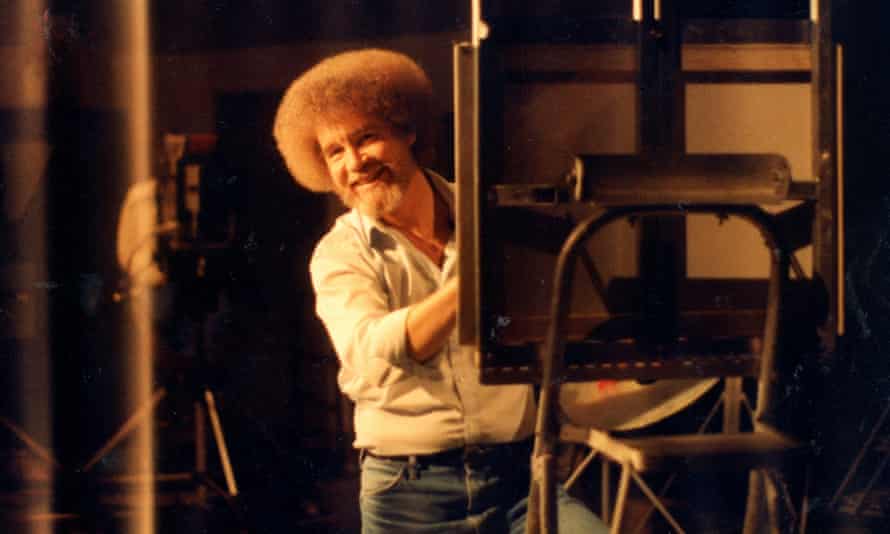
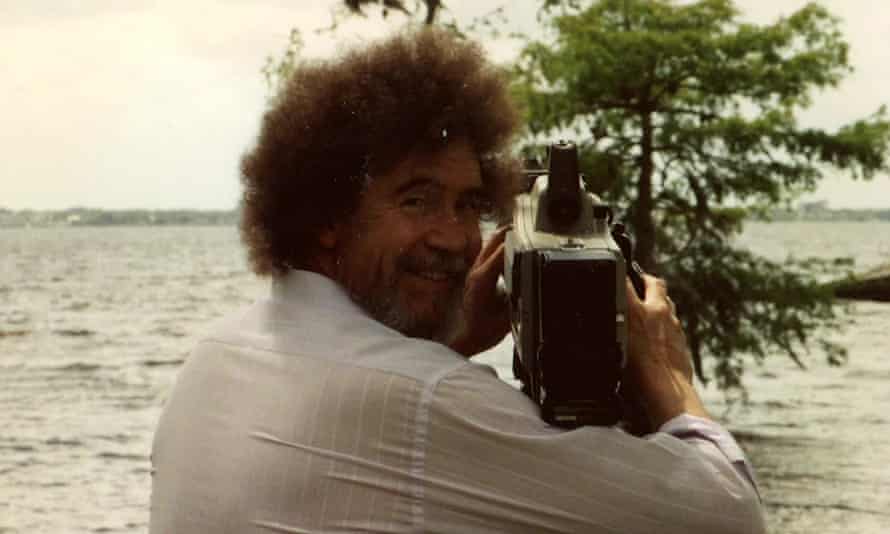
‘I just want people to feel connected to Bob in a way that actually has depth emotionally than they ever had the opportunity to’ ... A still of Bob Ross

Joshua Rofé on his Bob Ross documentary: ‘I just want people to feel connected to Bob in a way that actually has more depth emotionally than they ever had the opportunity to.’


in Washington

Last modified on Wed 1 Sep 2021 03.33 AEST

Making a documentary about the TV artist Bob Ross should, in theory, have been a pleasant meander through the life of a beloved figure – a cross between America’s Mister Rogers and Britain’s Tony Hart.

But when Joshua Rofé got to work as director, he plunged into a maze of ugly legal disputes, interviewees too scared to go on the record and bitter wrangling over Ross’s legacy.

This is the surprise twist in Bob Ross: Happy Accidents, Betrayal & Greed, a Netflix film about the landscape artist who created more than 30,000 paintings and touched millions of lives before his death from lymphoma in 1995 at the age of 52.

“In no way did I set out to make a film that was a ‘gotcha!’ film,” Rofé says via Zoom from New York. “I just wanted to make a film that would represent this individual who is in many ways a mystery and yet completely beloved by so many.”

Indeed, the documentary starts as conventional biography, telling how Ross served in the air force for 20 years, learned a wet-on-wet painting technique from a close friend and became best known for producing tranquil nature scenes featuring “happy little trees”.

With permed hair and balmy voice, he hosted The Joy of Painting on PBS (Public Broadcasting Service) from 1983 to 1994. His words of whimsy included, “Every day is a good day when you paint,” and “We don’t make mistakes. We just have happy accidents.” It was comfort television, like soaking in a warm bath, in the days when appointment television ruled.

Rofé, 38, says: “It was right size for the era. There was no Twitter. There was no Instagram. There was no Netflix and so to see Bob Ross was to tune into his show when it was programmed to be on television and he had a huge following.

Now the artist is enjoying a posthumous second act as pop culture figure on the internet. Rofé adds: “If you fast-forward to around 2015, we’ve got the advent of streaming platforms and all of these apps and technology and now a whole new generation is discovering Bob Ross for the first time. He becomes an iconic figure, I would say, at a level that he hadn’t even reached previously.”

So far, so innocent. Rofé had been mulling a film idea about American artists and their relationship with American history when he was brought in by Melissa McCarthy and husband, Ben Falcone, both actors, writers, producers – and enthusiastic fans of Ross. The couple had originally conceived a biopic but, with information about his life sketchy, switched focus to a documentary.

Once Rofé and his team got to work tracking down potential interviewees, however, it was clear even this project would not be straightforward – less warm bath than shark attack. “I got two things back pretty much every time. One was everybody loved Bob and missed him dearly and then, two, they also let us know that there’s no way that they’re going to participate in a documentary about him because they’re afraid to speak about him on camera publicly.

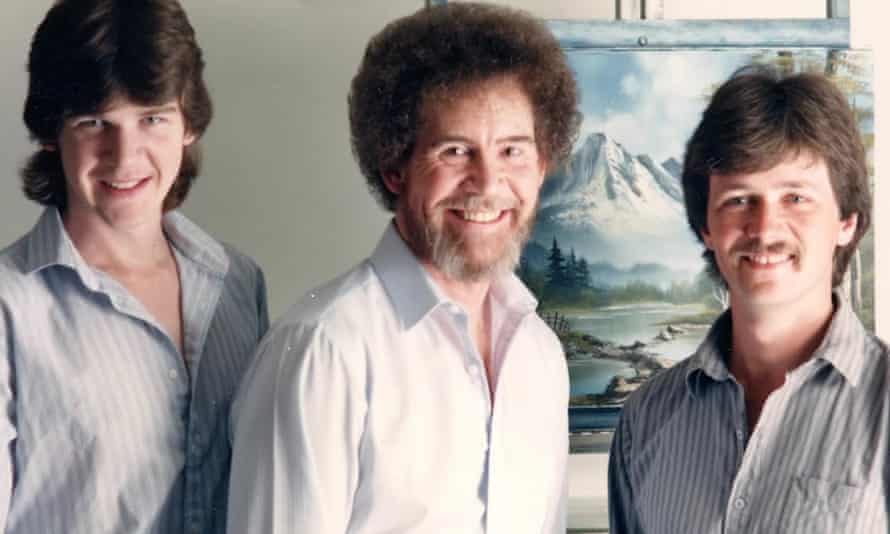
More than a dozen people who knew Ross declined to be interviewed for the film. The source of their fears was a couple, Annette and Walter Kowalski, longtime business partners of Ross during the glory days of The Joy of Painting. They helped build his brand but the relationship was messy. In the film, Ross’s son, Steve, giving his first on-camera interview, says: “There was an affair between my father and Annette, yes.” (The Kowalskis deny this.)Steve Ross, Bob Ross and Dana Jester

Steve Ross, Bob Ross and Dana Jester. Photograph: Courtesy of Netflix

More consequentially the Kowalskis, who declined to be interviewed, now control Bob Ross Inc, the company that oversees the lucrative use of Ross’s name and image on paints, brushes and other merchandise. Steve alleges that, when his father was nearing death, the Kowalskis asked him to get Ross to sign a “memorial agreement”.

Steve says in the film: “It looked to me like they were trying to get Bob to sign his name over to them,” and claims this led to a furious argument. “You could hear him screaming, ‘I’m not giving you my name’ … They literally wanted to steal Dad’s name, and did.”

Steve says the Kowalskis did not attend his father’s funeral but exploited his cultural afterlife. He lost a lawsuit against Bob Ross Inc in 2019, leaving hm unable to financially benefit from his father’s name or image. The film suggests that while the Kowalskis clearly have the law on their side, the morality is more ambiguous.

“You have to let the story guide you. You can’t dictate or manipulate a story when you’re making a documentary. It reveals itself to you and you’re there to just honour it, I think.”

Bob Ross Inc denies the allegations. In a statement issued after the documentary was released on Netflix, it said: “Bob Ross Inc takes strong issue with the inaccurate and heavily slanted portrayal of our company in the Netflix film, Bob Ross: Happy Accidents, Betrayal & Greed.”

The company added: “If not for the efforts of the remaining founders and their dedication to this mission, Bob’s artistic and cultural relevance – and his expressed desire to become the world’s most beloved painting teacher and friend – would have been lost decades ago with his passing.

“Bob Ross may not have shared the inherent structural features of his company with family and friends – which are very common in small private companies – resulting in many of the unsubstantiated accusations made in the film.”

Bob Ross

Bob Ross. Photograph: Courtesy of Netflix

Rofé says he was disappointed by the Kowalskis’ unwillingness to go on camera. “We reached out a few times. They chose not to participate. They got to say their piece via a few statements that they provided to us. It would have been great if they participated. They chose not to and I stand by everything in the film completely.”

Ross fans will be relieved that his avuncular reputation emerges intact. And while the legal battle has garnered most attention since the film’s release, for Rofé it is not the emotional heart of the piece. The documentary includes a poignant segment about Steve making awkward appearances on The Joy of Painting and being put under pressure to follow in his father’s brushstrokes.

Steve recalls: “There was a power struggle between us, I guess you would say. There was a little bit of a fight that broke out between us. I wanted to go off and do my own thing and he wanted me to do what he did. There was probably a few years that we didn’t talk much at all. I’m still a little bit angry inside with myself over that.”

The pair reconciled before Ross’s death and Steve, like his father, now teaches art classes. Rofé adds: “In many ways, I think of this as a father-son story and I think of this as a story that is a reminder of what life could be like when we were robbed of years with our loved ones because somebody gets sick and passes away far too early.

“So for me, it really all goes back to the emotional connection to Bob and that certainly extends to Steve. The love and loss that is so present in the dynamic between the two of them in the film is really, above all, what I hope people connect with and walk away remembering.”

  • Bob Ross: Happy Accidents, Betrayal & Greed is available on Netflix now