Thursday, 2 December 2021

Global push for green steel could hit Australia’s $150bn iron ore exports if miners don’t adapt, report finds.

Extract from The Guardian

Cheap renewable energy could see industry upgrade iron ore production and lure steelmaking onshore, expert says.
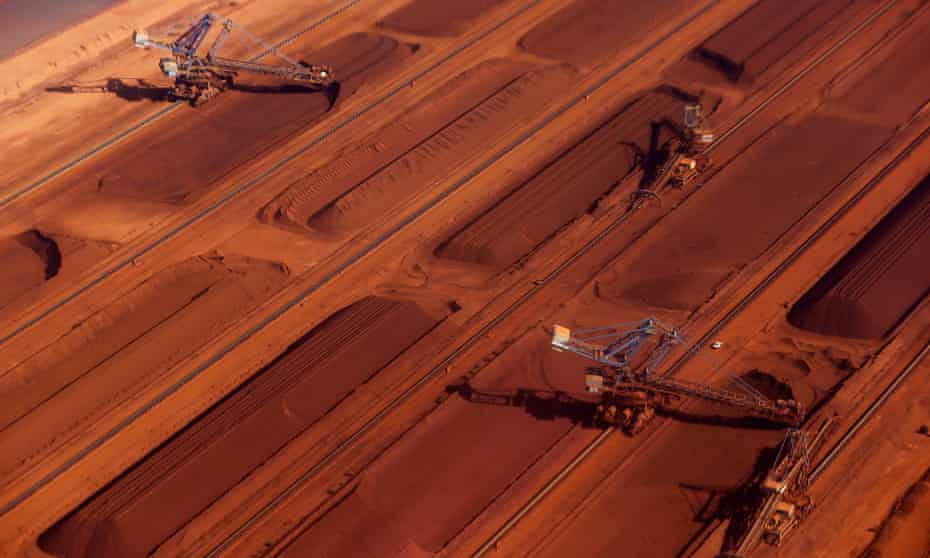
Iron ore

Australia’s relatively low-quality iron ore could be less attractive to steelmakers using green hydrogen, a report has found.

The conclusion is contained in the consultancy’s “Decarbonising Steel: A Net-Zero Pathway” report released on Tuesday. It identified different ways one of the biggest greenhouse-gas emitting industries could wean itself off fossil fuels.

The report estimated the transition to net zero emissions would need as much as $US278b ($A388b) in extra investment, a shift to greater use of recycled steel and also a range of carbon prices.

The report noted the move to electric arc furnaces, preferably powered by renewable energy, would typically require high-grade iron ore pellets as feedstock.

“There is a limited amount of high-grade ore currently being produced, mostly in the Americas, Europe and the Middle East, though there are good quality reserves in South Africa, India, Russia and Brazil,” the report said.

“Lower-quality ore producers in Australia will need to further refine their product in order to make it suitable for hydrogen [electric arc furnaces], potentially raising production costs,” it said.

“This issue could impede the uptake of hydrogen direct reduction technology, or conversely it could result in iron ore production and possibly green steelmaking capacity moving closer to higher-grade ore producers.”

Iron ore is Australia’s largest single export, worth about $150b in the year to June. With falling ore prices, the commodity is forecast to bring in about $113b by 2022-23, the government said earlier this year.

Accounting for about 7% of global emissions, the steel industry will be at the forefront of efforts to cut carbon pollution if dangerous climate change is to be averted. Hydrogen, particularly made from renewable energy, offers a potential substitute for the metallurgical coal burned in the steel-making process if production of the fuel can be scaled up and prices fall.

Academics such as associate professor at Australian National University John Pye have also identified the threat to Australia’s predicted mineral wealth if green steel developments end up favouring ores other than those found in Western Australia’s Pilbara region.

“It’s so important to Australia’s balance sheet,” Pye said, adding “the jury’s out as to how competitive we can be in a decarbonised steel sector.”
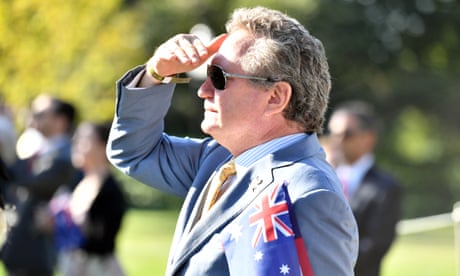
Fortescue Metals Group boss Andrew Forrest

Pye said a process known as beneficiation – which removes impurities in the ore -would be needed to raise the quality of Australia’s minerals to that of Brazil’s or other rivals’, but that would add to costs and cut miners’ profits.

Similarly, green hydrogen processes may favour magnetite ores over the hematite ores that dominate in the Pilbara, Pye said.

The region, though, is not without magnetite. Fortescue Metals is currently building a magnetite operation in the Pilbara called Iron Bridge, with first production scheduled for the end of 2022. It would be the only one of the big three with a magnetite operation when it comes online.

Global head of industry decarbonisation at BloombergNEF, Kobad Bhavnagri, said the shift to green steel “could cause both great disruption, and great opportunity, for Australia’s iron ore miners”.

Sign up to receive the top stories from Guardian Australia every morning

“Numerous studies show that green hydrogen is emerging as both the cheapest and most practical way to make green steel,” Bhavnagri said. “But this technology change poses a challenge for Australia. Not only will it virtually wipe out metallurgical coal exports, but iron ore exports could take a hit too, if miners don’t adapt.”

Bhagnagri said it wasn’t inevitable Australian iron ore producers would lose out since the country’s abundance of low-cost renewable energy gives the country an opening to upgrade iron-ore production onshore and also lure more of the steelmaking to Australia.

“Australian companies will need to take the lead to shape the future of the industry in their favour, or risk it evolving in a way that deals them out,” he said.

The Guardian Australia approached several iron ore producers and steelmakers for comment.

Super funds with responsible investment are increasingly profitable, finds Responsible Investment Association Australasia report.

 Extract from ABC News

By business reporter Samuel Yang
Posted 
A woman pouring gold coins out of a watering can on to a plant.
Australian super funds are investing in a responsible and sustainable way. (ABC News: Andrew Harrison)
Help keep family & friends informed by sharing this article

Australian superannuation funds that invest responsibly are becoming increasingly profitable, according to a new study from the non-profit Responsible Investment Association Australasia (RIAA).

The research released today found the average performance of leading responsible investment super funds outperform traditional super funds in their default products, over 3-year (+0.87pc), 5-year (+0.74pc) and 7-year (+0.56pc) time frames.

The report stopped short from showing a longer-term performance due to the lack of data.

A responsible investment super fund means that a fund is managed with a demonstrated commitment to good governance and accountability, and with a high degree of transparency and a greater gender-balanced board, according to the RIAA.

Responsible investment is an overarching but not yet universal term, and can overlap with descriptions such as ethical investment.

However, they both adopted measures like environmental, social and governance (ESG) criteria from the United Nations' Sustainable Development Goals.

A man leans on a wall.

Simon O'Connor says leading responsible investment funds have a systematic approach based on key sustainability issues.(Supplied: RIAA)

"What this report really shows us is this significant momentum by Australia's leading super funds to become much more sophisticated in how they consider in sustainability issues," the RIAA's chief executive officer Simon O'Connor told the ABC.

The report found Australian super funds are improving their responsible investment practices, with 42 per cent of total super assets in Australia now covered by funds with such practices in 2020.

But the number of leading responsible investment super funds remained unchanged, at 13 out of 53 companies in both 2019 and 2020.

They are Active Super, Australian Ethical Super, AustralianSuper, Aware Super, BT Superannuation, CareSuper, Cbus, Christian Super, HESTA, Mercer Superannuation (Australia) Limited, Rest, UniSuper and Vision Super.

A 'maturing' sector 

The research also found that in the face of rising public concern and increasing financial materiality of climate change, 92 per cent of funds indicated that climate risk is actively assessed at a trustee or a board level in 2020, up from 74 per cent in 2019 and 64 per cent in 2018.

And for the first time, responsible investment approaches were influencing strategic asset allocation for more than half (55 per cent) of super funds in 2020, up from 39 per cent in 2019.

Mr O'Connor said the super industry had been "maturing" and Australians were choosing super funds based on how well they tackled sustainability issues.

"It's much clearer to those who are managing super funds that if we fail to take a strong stance on climate change, if we failed to shift our economy to be in line with the net zero [target] by 2050 trajectory, then this is going to result in our economy struggling and failing and the returns of our retirement savings."

The super industry has grown its size significantly in recent decades.

It is now a major component of household assets and Australia's financial system.

It represented $3.3 trillion, equal to 160 per cent of GDP as of June 30, 2021, according to the Australian Prudential Regulation Authority (APRA).

Greater transparency still needed

Historically, there was a perception that "a super fund has to sacrifice returns if it invests ethnically", but that is changing.

A man looks out the window.

Alex Dunnin has been analysing super funds for over two decades.(ABC News: John Gunn)

"A view of the time which turned out to be very naive," Alex Dunnin, director of research at Rainmaker, told the ABC.

Nowadays, super funds with high-level responsible investment are among the best funds in the country.

Mr Dunnin said the responsible investment approach can help a super fund achieve good long-run investment returns, but still there's no guarantee.

"For example, of the 13 super funds the RIAA report identifies as being 'leading responsible investment super funds', two failed the 2021 super fund performance test run by the superannuation regulator APRA and some others have achieved lower-than-average returns," he explained.

"There is no reason why being a responsible investor detracts from returns, but it’s equally true that a super fund being a responsible investor doesn’t guarantee high returns either."

Mr Dunnin said although he supports the responsible or ethical investment approach in general, funds that claim to be "responsible" need to have a greater transparency.

"Many super funds proclaim a commitment to net-zero, but it’s not always clear how those funds intend delivering on that commitment," he said, adding they included some of the leading funds.

That echoes a key finding in the study, which is that the majority (77 per cent) of Australia's largest super funds need to improve their transparency, if they are to meet new legislative requirements to disclose their portfolio holdings publicly in 2022.

Mr Dunnin said super fund members should steer clear of funds that invest ideologically and that get tangled up in the politics.

"But what the research shows us is super funds can do both, they can invest smartly for me, they can invest in a really socially responsible manner, and it can make me lots of money."

With developing nations unable to access COVID vaccines, Omicron could present a major problem. Here's why.

Extract from ABC News

Analysis

By Deborah Gleeson
Posted 
 A hospital worker receives a coronavirus vaccinations in her arm.
Unless governments take urgent action to correct vaccine inequities, we risk the emergence of further variants.(AP: Sunday Alamba)
Help keep family & friends informed by sharing this article

We don't yet know how dangerous the new Omicron variant of SARS-CoV-2 will turn out to be. Early evidence suggests it may be more transmissible than other variants, and the World Health Organization has raised concerns about its potential to spark another global surge in infections.

If currently available vaccines continue to protect us from severe disease and death, which seems likely at this stage, vaccinated people in developed countries should be able to breathe a sigh of relief.

But with a yawning gap between vaccination rates in high- and low-income nations, Omicron could present a major problem for the world. It could cause a further wave of preventable disease and premature death in developing countries, and exacerbate poverty in parts of the world that are already struggling with the pandemic.

And unless governments take urgent action to correct these inequities, we risk the emergence of further variants, some of which may evade vaccines.

Inequities in access to COVID-19 vaccines

By the end of November, around 54.2 per cent of the global population had received at least one COVID-19 vaccine dose. For low-income countries, however, the rate was just 5.8 per cent.A visualisation showing COVID vaccination doses, per capita.

COVID vaccination doses, per capita.(Source: Our World in Data)

The gap in vaccination coverage between high-income and upper-middle-income countries on one hand, and low-income countries on the other, is particularly stark.A visualisation showing COVID-19 vaccine doses administered per 100 people, by income group.

COVID-19 vaccine doses administered per 100 people, by income group.(Source: Our World in Data)

Vaccination rates in Africa are particularly concerning. About 40 or so countries still have less than 10 per cent of their populations fully vaccinated, the vast majority of which are in Africa.A visualisation showing comparisons between highly vaccinated nations and those at the bottom, most of which are in Africa

Comparisons between highly vaccinated nations and those at the bottom, most of which are in Africa.(Source: Our World in Data)

Experts have warned about the inequitable distribution of COVID-19 vaccines since the beginning of the pandemic, so why is there still a problem?

Failure of COVAX to realise its promise

First, COVAX, the global program for purchasing and distributing COVID-19 vaccines, has struggled to secure enough vaccine doses since its inception.

Nearly 100 low-income nations are relying on the program for vaccines. COVAX was initially aiming to deliver 2 billion doses by the end of 2021, enough to vaccinate only the most high-risk groups in developing countries. However, its delivery forecast was wound back in September to only 1.425 billion doses by the end of the year.

 Boxes of COVID-19 vaccineare unloaded from the back of a truck by workers at the airport in Mogadishu.

Boxes of COVID-19 vaccines provided through the COVAX global initiative arrive at an airport in Mogadishu, Somalia.(AP: Farah Abdi Warsameh)

And by the end of November, less than 576 million doses had actually been delivered.

This predictable failure is largely due to wealthy countries mopping up more than half of the first 7.5 billion vaccine doses developed through pre-purchase agreements, leaving only crumbs for COVAX.

Chronic under-investment in COVAX — in terms of both doses and funds — and further hoarding of vaccine doses in wealthy nations for boosters, have continued to starve COVAX of supplies to distribute to those most in need.

Failure to deliver on promised vaccine donations

Wealthy countries have been shamed into making pledges to donate large numbers of doses to low- and middle-income countries. But few of these pledges have yet translated into vaccines in arms.

By October 25, more than 1.3 billion vaccine doses had been pledged, but only around 10 per cent had been delivered.

Visualisation showing COVID-19 vaccines donated to COVAX.

COVID-19 vaccines donated to COVAX. Our World in Data(Source: Our World in Data)

Meanwhile, many high-income countries have ignored pleas from the WHO to hold off on providing booster vaccinations until the rest of the world catches up. Even after boosters have been administered, Médecins Sans Frontières estimates that 10 high-income countries will be sitting on more than 870 million excess doses by the end of the year.

Take Australia as one example. It has pledged 60 million doses for developing countries in the Indo-Pacific region, but so far, less than 9.3 million have been delivered. None of these doses are slated for equitable distribution through COVAX, however, and none are currently committed for Africa.

Meanwhile, the Australian government has invested more than $8 billion in pre-purchase agreements for 280.8 million vaccine doses for Australians. This is equivalent to more than 10 doses per person.

Failure to agree on temporary changes to trade rules

Some wealthy countries have also continued to oppose a proposal to temporarily suspend trade rules that protect the monopolies of pharmaceutical companies on COVID-19 health products and technologies.

Initially proposed by India and South Africa in October 2020, the so-called TRIPS waiver would enable companies around the world to freely produce COVID-19 products and technologies without fear of litigation over possible infringements of intellectual property rights.

Needles containing the COVID vaccine sit in shallow blue plastic containers ready to be injected.

Many high-income countries have ignored pleas from the WHO to hold off on providing booster vaccinations until the rest of the world catches up.(ABC News: Rebecca Trigger)

It is now co-sponsored by 63 countries and supported by well over 100 of the World Trade Organization's 164 member states. The US signalled its support for a waiver in May (limited to vaccines), but it hasn't formally co-sponsored the proposal. The European Union, the UK and Switzerland continue to oppose it, with Germany a particularly staunch opponent.

The TRIPS waiver, if adopted in the form sponsored by the 63 countries, would cover all health products and technologies needed for preventing, treating and containing COVID-19, including vaccines, treatments, diagnostic tests, medical devices and personal protective equipment.

Play Video. Duration: 2 minutes 37 seconds

Poor countries are being left behind in global vaccination rates

It would waive rules in the WTO's Agreement on Trade-Related Aspects of Intellectual Property Rights (TRIPS) that apply to patents, undisclosed information (such as information submitted to regulatory agencies or protected as trade secrets), copyright and industrial designs. And it would last for at least three years from the date the waiver is adopted, and then be reviewed annually.

However, more than a year after the waiver was proposed, discussions at the WTO remain deadlocked.

The EU insists it will be sufficient to tweak existing provisions in the TRIPS Agreement that allow for compulsory licensing — exploitation of the subject matter of a patent without the permission of the patent holder. This, however, doesn't cover undisclosed information, which is needed for manufacturing vaccines.

Many countries, including the UK, EU, China and Australia, are now supporting a separate proposal at the WTO which addresses other trade-related issues, such as export restrictions and customs procedures. However, it fails to lift the intellectual property rights that maintain monopolies on COVID-19 products.

To delay matters even further, the emergence of the Omicron variant has resulted in the postponement of the WTO ministerial council meeting this week, where these proposals were to be discussed. While debate will continue in the TRIPS Council in December, momentum to reach a decision in the near-term may have been lost.

Urgent action is needed

Wealthy countries have hoarded vaccines, starved COVAX of funds and doses, released promised donations at a slow dribble, and stalled agreement on a global agreement to lift barriers to wider manufacturing of vaccines in the developing world.

We must do better. The Omicron variant illustrates that clearly the world can't afford to wait any longer.

Deborah Gleeson is an Associate Professor in Public Health at La Trobe University. This piece first appeared on The Conversation.

Wednesday, 1 December 2021

Rain to replace snow in the Arctic as climate heats, study finds.

 Extract from The Guardian

Climate models show switch will happen decades faster than previously thought, with ‘profound’ implications.

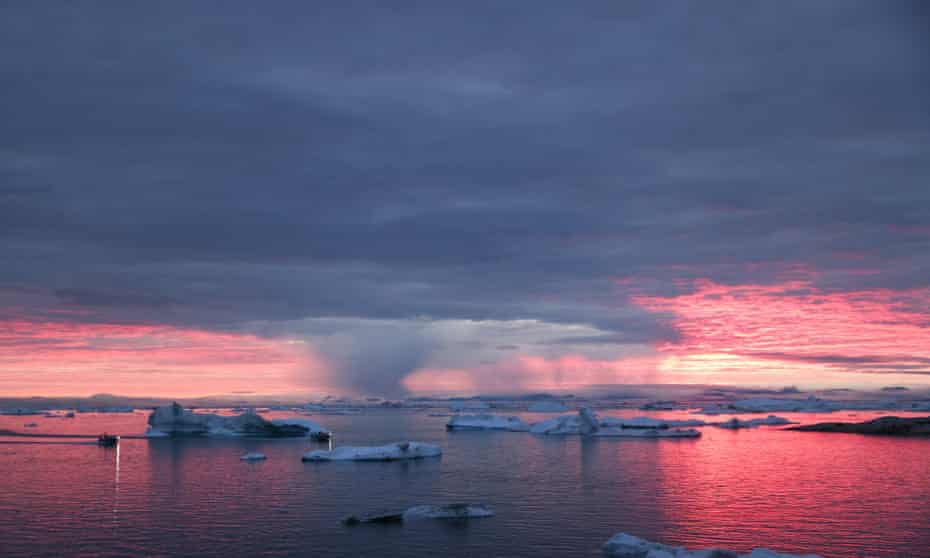
The sun sets as rain falls beyond floating ice and icebergs in Disko Bay, Greenland

The sun sets as rain falls beyond floating ice and icebergs in Disko Bay, Greenland.

Last modified on Wed 1 Dec 2021 03.14 AEDT

Rain will replace snow as the Arctic’s most common precipitation as the climate crisis heats up the planet’s northern ice cap, according to research.

Today, more snow falls in the Arctic than rain. But this will reverse, the study suggests, with all the region’s land and almost all its seas receiving more rain than snow before the end of the century if the world warms by 3C. Pledges made by nations at the recent Cop26 summit could keep the temperature rise to a still disastrous 2.4C, but only if these promises are met.

Even if the global temperature rise is kept to 1.5C or 2C, the Greenland and Norwegian Sea areas will still become rain dominated. Scientists were shocked in August when rain fell on the summit of Greenland’s huge ice cap for the first time on record.

The research used the latest climate models, which showed the switch from snow to rain will happen decades faster than previously estimated, with autumn showing the most dramatic seasonal changes. For example, it found the central Arctic will become rain dominated in autumn by 2060 or 2070 if carbon emissions are not cut, instead of by 2090 as predicted by earlier models.

The implications of a switchover were “profound”, the researchers said, from accelerating global heating and sea level rise to melting permafrost, sinking roads, and mass starvation of reindeer and caribou in the region. Scientists think the rapid heating in the Arctic may also be increasing extreme weather events such as floods and heatwaves in Europe, Asia and North America by changing the jet stream.

“In the central Arctic, where you would imagine there should be snowfall in the whole of the autumn period, we’re actually seeing an earlier transition to rainfall. That will have huge implications. The Arctic having very strong snowfall is really important for everything in that region and also for the global climate, because it reflects a lot of sunlight.”

Prof James Screen of the University of Exeter in the UK, who was part of the research team, said: “The new models couldn’t be clearer that unless global warming is stopped, the future Arctic will be wetter, once-frozen seas will be open water, rain will replace snow.”

Scientists already agree that precipitation will increase significantly in the Arctic in future, as more water evaporates from increasingly warmer and ice-free seas. But the research, published in the journal Nature Communications, found this would be hugely dominated by rain, which will more than treble in autumn by 2100 if emissions are not cut.

The scientists concluded: “The transition from a snow- to rain-dominated Arctic in the summer and autumn is projected to occur decades earlier and at a lower level of global warming, potentially under 1.5C, with profound climatic, ecosystem and socioeconomic impacts.”

Snow is important in producing sea ice each winter, so less snow means less ice and more heat absorbed by open oceans. The research shows rain increasing on the southern coast of Greenland. This could further accelerate the sliding of glaciers into the ocean and the consequent rise in sea levels that threatens many coastal areas.

Much of the land in the Arctic is tundra, where the soil has been permanently frozen, but more rain would change that. “You are putting warm water into the ground that might melt the permafrost and that will have global implications, because as we know, permafrost is a really great sink of carbon and of methane,” said McCrystall.

The impacts in the region include the melting of vital ice roads, more floods, and starvation for herds of animals. When rain falls on snow and then freezes, it stops the animals feeding. “The reindeer, caribou and musk oxen can’t break through the layer of ice, so they can’t get to the grass they need to survive and suffer huge die-offs,” she said.

Prof Richard Allan, at the University of Reading in the UK, who was not involved in the research, said: “Exploiting a state-of-the-art set of complex computer simulations, this new study paints a worrying picture of future Arctic climate change that is more rapid and substantial than previously thought. This research rings alarm bells for the Arctic and beyond.”

However, Gavin Schmidt of the Nasa Goddard Institute for Space Studies in the US said the claim of more rapid change was “unsupported”, because some of the new climate models forecast warmer than expected future temperatures.

‘Kill the viability’: big batteries to lose out from electricity grid rule change.

Extract from The Guardian

Australian Energy Market Commission rule changes for batteries, pumped hydro and other storage may increase ‘risk perception’ for potential investors

South Australia’s giant battery
South Australia’s giant battery at Hornsdale Power Reserve in Adelaide. Tesla argues any new charges on storage providers for drawing power from the grid would lead to consumers paying more for electricity.

The Australian Energy Market Commission (AEMC) will release its final decision this Thursday on new rules for integrating batteries, pumped hydro and other forms of storage.

The AEMC’s draft decision, released in July, angered many firms because it proposed charging storage providers for drawing power, ignoring a recommendation by the Australian Electricity Market Operator (AEMO) that they be exempt.

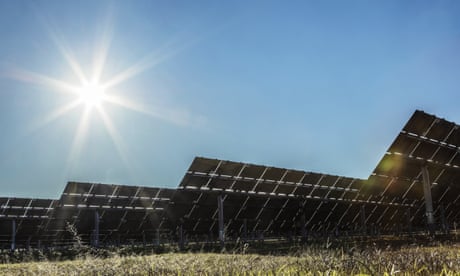
Solar panels at a solar farm in Australia

Battery maker Tesla, which has supplied some of the largest storage to the National Electricity Market, said in a submission that the charges would “kill the commercial viability of all grid storage projects, causing inefficient investment in alternative network”, with consumers paying higher costs.

“This is a major policy change, amounting to a tax on infrastructure critical to achieving a renewable future,” Snowy Hydro said.

AEMO itself argued it was important storage providers were not “disincentivised from connecting to the transmission network, as they generally provide a net benefit to the power system by charging at periods of low demand”.

Australia’s electricity grid faces economic and engineering challenges as it adjusts to the arrival of lower cost and also lower carbon alternatives to fossil fuels.

While rule changes are necessary to account for operators that can both draw from and supply power, how they are implemented can have long-lasting effects on the technologies that get encouraged or repelled, independent experts say.

“It doesn’t have to be this way,” said Bruce Mountain, director of the Victoria Energy Policy Centre. “In Britain, the regulator dealing with the same issues has said that storage devices don’t pay the system charges when they withdraw electricity from the grid,” he said.

The prospect that storage operators will have to pay transmission charges could “drastically” affect their profitability since their business models rely on the difference between the price their pay for power and how much they can sell it for. Gas generators and network monopolies would benefit from the change, Mountain said.

Sign up to receive the top stories from Guardian Australia every morning

An AEMC spokesperson said the commission had consulted widely, including from those who objected to the payment for transmission access.

“The market is moving towards a future that will be increasingly reliant on energy storage to firm up the growing volume of renewable energy and deliver on the increasing need for critical system security services as the ageing fleet of thermal generators retire,” the spokesperson said, declining to elaborate on the final ruling before it is published.

“The regulatory framework needs to facilitate this transition as the energy sector continues to decarbonise,” the official said.

AusNet, which operates the Victorian energy transmission grid, said that while “technological neutrality is paramount for battery and hybrid unit connections to both the distribution and transmission networks,” it did not back charging storage access to networks in all cases.

“[Ausnet] supports a clear exemptions framework for energy storage providers,” a spokesperson said. “We recommend that batteries and other hybrid facilities should have transmission use of system charges waived if they provide a net benefit to network customers.”

We are not aware of anyone that supports the charging storage access to networks in all circumstances.

“Batteries and hybrid facilities that consume energy from the network should be provided no preferential treatment relative to other customers and generators.”

Jonathan Upson, a principal at Strategic Renewable Consulting, though, said the AEMC wants electricity flowing through batteries to be taxed twice to pay network charges – once when the electricity charges the battery and then again when the same electricity is sent out by the battery an hour or two later but this time with customers paying.

“The AEMC’s draft decision has the identical rationale for eliminating franking credits on all dividends, resulting in double taxing of company profits,” he said.

Christiaan Zuur, director of energy transformation at the Clean Energy Council, said that while much of AEMC’s draft proposal was constructive, “those benefits are either nullified or maybe even outweighed” by uncertainty over charges.

“Risk perception” will be important since potential newcomers won’t be sure of what charges they will pay to connect to the grid and existing operators could have their connection agreements reopened, Zuur said.

“Investors focus on the potential risk. It does factor through to the integral costs for projects,” he said.

The outcome of new charges may prompt more people to put batteries on their premises and draw power from their own solar panels, Mountain said, cutting their reliance on a centralised network.

“Ironically, it encourages customers to depend less and less on the grid,” he said. “It’s almost like the capture of the dominant interests playing out over time at their own expense.”

renewable energy technology

Separately, the latest edition of the Clean Energy Council Confidence Index shows leadership by state governments is helping to shore up investor appetite for investing in renewable energy even with higher 2030 emissions reduction goals from the federal government.

Overall, investor confidence increased by a point in the last six months – from 6.3 to 7.3 out of 10 – following strong commitments and policy development from state governments, particularly on the east coast, the council said.

“The results of this latest survey illustrate the economic value in policy that lowers the emissions footprint of our electricity generation, supporting regional centres and creating jobs. Investors recognise the opportunities created by limiting global temperature rise to 1.5 degrees,” said council chief executive Kane Thornton.

Among the states, NSW, Victoria and Queensland led in terms of positive investor sentiment.

Correction: this article was amended on 30 November. An earlier version stated Ausnet supported charging storage for network access. A spokesperson said it backed a waiver on charges if certain conditions are met.

The Australian parliament, the whole arse-covering and ego-driven apparatus, should be paralysed by shame and remorse.

Extract from The Guardian


The Jenkins review into parliament’s culture should make everyone, not just women, weep. But Scott Morrison is responsible for making change – this reckoning presented on his watch.
Australian prime minister Scott Morrison
Scott Morrison presents the Jenkins report into workplace culture in Parliament House at a press conference in Canberra.

“The MP sitting beside me leaned over. Also thinking he wanted to tell me something, I leaned in. He grabbed me and stuck his tongue down my throat. The others all laughed. It was revolting and humiliating.”

Another person said there were aspiring male politicians “who thought nothing of, in one case, picking you up, kissing you on the lips, lifting you up, touching you, pats on the bottom, comments about appearance, you know, the usual. The point I make with that … was the culture allowed it, encouraged it.”

Another: “Frequently, like at least every week, the advice was go and cry in the toilet so that nobody can see you, because that’s what it’s like up here.”

Australia’s sex discrimination commissioner Kate Jenkins

Parliament is not the only Australian workplace where women, and some men, feel unsafe. There are plenty of toxic places, plenty of terrible stories.

But there are distinctive characteristics of political life that supercharge some of the risks. The Jenkins review lists them. The role of power, gender inequality, a lack of accountability, a culture of entitlement and exclusion.

I sit on the edge of this world. I have for more than two decades. Political reporters are in it, and out of it. The hours are long. We all work under high pressure. The occupational requirements are unforgiving. Perfection is a high bar, and I certainly don’t claim to clear it.

But if any external agency assessed my own news bureau in the terms in which the sex discrimination commission has just reviewed the parliament, I would dig a large hole, clamber inside, and never get out again.

I would be paralysed by shame and remorse. I would feel the clinical rebuke in my marrow. There would not be enough ways of saying sorry.

A review like the one tabled on Tuesday should trigger deep institutional atonement (which was actually recommendation one of the Jenkins report: stop, take a beat, acknowledge the wrong).

Sign up to receive the top stories from Guardian Australia every morning

The Australian parliament, the political class, the whole arse-covering, ego-driven apparatus, should care enough to grieve.

It should care enough to want to be better.

But almost immediately after the Jenkins review was made public, someone in the Senate made a noise that sounded for all the world like a dog growling when the Tasmanian independent Jacqui Lambie was on her feet asking a question.

The growl (or growl-adjacent sound – the Liberal senator who made it later contested it was a growl while apologising “unreservedly” to Lambie for the interjection) wasn’t audible on the internal broadcast.

'Dog noises', 'growling', 'boofhead': bad behaviour in parliament as Jenkins review launched – video

But the Greens senator Sarah Hanson-Young and Labor’s Senate leader, Penny Wong, heard it clearly, and said it came from the government side of the chamber. Both objected in the strongest possible terms.

As the Jenkins review notes, politicians don’t have conventional employers to account to. They can growl while a woman is talking without being reported to the nonexistent human resources department, and later contest the precise nature of the sound while promising to be better. Tomorrow obviously. Being better always happens tomorrow, or possibly the next day.

The house was also in a mood. The testosterone was so thick and so noxious the new Speaker, Andrew Wallace, must have felt at risk of choking.

After an extended rhetorical maul – hackles raised, chests out, voices raised, like unruly teenagers on the verge of a schoolyard brawl, man toddlers separated by Perspex screens – Anthony Albanese branded Peter Dutton a “boofhead” and shouted at him to sit down while Dutton accused the Labor leader of having a “glass jaw”.

Shortly after this inspiring interlude, Wallace reminded MPs the just-released Jenkins review had called for “respect”.

“As I said in my first speech as Speaker, I don’t expect this place to be a monastical library, but the Australian public does not want to see this place descend into a political colosseum,” Wallace counselled. “There will be a lot of discussion over the next days and weeks over respect in this place and I would ask members, all members, to show that level of respect in this chamber as well.”

Morrison didn’t say anything terrible. It wasn’t like those excruciating weeks after the former Liberal staffer Brittany Higgins came forward with her allegation of sexual assault – an allegation that blew the lid right off the often dysfunctional and sometimes cruel enterprise of working in the belly of the political beast. Back then, every word the prime minister uttered was wrong.

Tuesday’s words were better, but just like with the Higgins matter, Morrison was also flat out managing, massaging, shaping.

Sex discrimination commissioner Kate Jenkins

The prime minister’s very obvious objective immediately on receipt of the report was to make sure that nobody concludes this grossness is a Coalition problem, or a government problem.

This muck was everybody’s problem. Liberals, Nationals, Labor, Greens, journalists. The prime minister thought this crook culture had been around for a long time – certainly longer than he’d been in the parliament. Everyone had a role in the clean-up.

Morrison is correct to say everyone has a role in the clean-up. We are all culpable in our own spheres for knowing about these things, or a version of these things, but moving too quickly past them.

But the problem with everybody being responsible is it is too easy for no one to be responsible, particularly when the reform options get hard, and some of the proposed changes will be contentious.

Jenkins has given the parliament a structure to work with when it comes to attacking the root causes of some of the problems.

But the measure of success will be action – and prompt action. This review is a landmark, but plenty of landmarks gather dust.

Going forward, Morrison needs to understand two things.

The first is he is responsible for making this change. He is the prime minister who has to build the necessary consensus to get this done. This moment of reckoning has presented on his watch.

The other thing Morrison needs to understand is we are watching. We owe it to the victims of this crook culture to go on watching. The prime minister will be judged by what he delivers.