Friday, 3 December 2021

Solar power prices are falling. What does this mean for our household electricity bills?

Extract from ABC News

By technology reporter James Purtill
Posted 
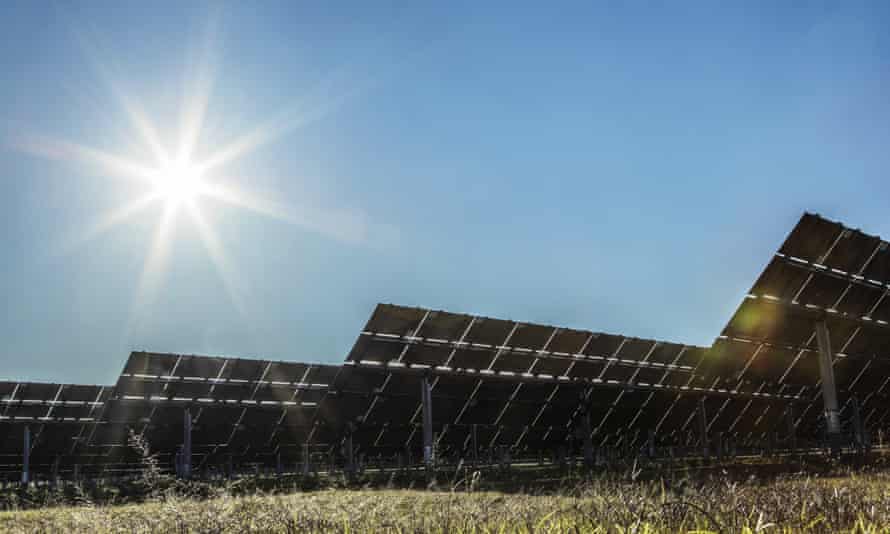
Solar panels extend to the horizon
The cost of solar has dropped 90 per cent in 10 years, and it's expected to keep going down.(Getty: Alfredo Estrella)
Help keep family & friends informed by sharing this article

After a long decade of year-on-year increases in power prices throughout the country, the cost of electricity is forecast to fall in most places.

How far it falls — and how quickly — depends on lots of factors, but there's clear consensus that Australia is entering a new era in which power will be cheaper than it has ever been before.

In two years, renewables have gone from economic "wrecking ball" to the technology that will unlock future green industries, with the Prime Minister recently setting a target of "ultra-low cost solar" by 2035.

Numurkah solar farm aerial shot July 2019

The government hopes cheap solar will make viable new low-carbon energy-intensive industries such as green hydrogen and green steel.(Supplied: Neoen )

There's even talk in some quarters that solar could one day fulfil the unrealised promise of nuclear power to generate electricity so abundant that it would be "too cheap to meter".

So how cheap can solar get? And will you — the energy consumer — still have a power bill?

'Glimpse of the future' as power prices go negative

This future of cheap power is already here — at least sometimes.

Last Saturday in South Australia, renewables accounted for a staggering 135 per cent of total demand, breaking the world record for the proportion of solar and wind supplied to a large grid.

As a result of all this excess generation, the spot price of power fell to minus $35.95 per megawatt hour.

Energy generation was curtailed, batteries charged up, and the excess exported to Victoria, which is connected to the SA grid.

"It's a glimpse of the future," says Frank Jotzo, a professor of climate change economics at Australian National University (ANU).

The decline in electricity prices is largely thanks to new solar, wind and battery projects coming online, according to the Australian Energy Market Commission (AEMC) in a recent report.

Among renewables, solar dominates, and it's expected this trend will continue over the next decade, with solar (including rooftop PV) to account for more than half of generation by 2030.

The price of solar has fallen faster than expectations

In May this year, the University of New South Wales's (UNSW) Martin Green, a legendary figure in the development of low-cost solar, made a startling prediction: the cents-per-watt price of solar modules will halve by 2023.

"One of my colleagues has called it 'insanely cheap electricity'," he said at the time.

He predicted this would result in power purchase agreements (PPAs, or the price at which a supplier agrees to sell electricity over a fixed period of time) of $10 per megawatt hour (MWh).

A man with grey hair and wearing a blue suit jacket on a rooftop with solar panels

Professor Green co-developed the technology that's used in most solar cells around the world.(Supplied: UNSW)

To put this in context, the average wholesale price of electricity in NSW in 2021-22 was $72/MWh, with PPAs for solar at about $40-$50/MWh.

Professor Green's forecast even outpaces the Prime Minister's target for "ultra-low cost solar" of $15/MWh by 2035.

So it's a bold claim, but the price of solar has consistently fallen faster than expectations, due largely to three factors:

  • Improvements in the efficiency with which modules convert sunlight to electricity
  • Cheaper manufacturing processes
  • Lower "cost of capital" — the cost of raising funds to build solar farms has gone down as renewables have become a less risky proposition for investors.

Since May, Professor Green has had to revise his forecast because supply-chain disruptions due to COVID and a string of explosions at factories in China have led to unexpected cost increases.

"We're now looking like we'll reach those prices towards the end of the decade, instead of the middle of the decade," he said.

With solar this cheap, what will my power bills be?

This is where it gets a bit more complicated.

There's a big difference between the wholesale price of power, which is the price the retailers pay the suppliers, and the retail price.

It takes time for the benefit of low wholesale prices to flow through to consumers, says Renate Egan, a professor at UNSW and head of the Australian Centre for Advanced Photovoltaics.

"But it does flow through.

One reason cheaper generation doesn't entirely flow through to consumers is the cost of building transmission links to new renewables projects, as well as adding storage (big batteries or pumped hydro).

The storage is necessary to "firm" the grid, so that stored energy can be used when renewables cannot meet demand.

This cost will increase as renewables contribute a greater share to total generation.

High voltage powerlines outside Melbourne

The influx of renewables is stretching the country's outdated network of transmission lines(ABC News: Michael Barnett)

A 2020 CSIRO analysis estimated transmission and storage would add $23/MWh to the cost of solar and wind, in a scenario where renewables accounted for 90 per cent of generation by 2030.

If that's the case, transmitting and storing electrons across the grid could soon cost more than generating them from solar panels.

Household energy consumers would still be paying for mains electricity (the equation changes if you have your own solar panels), but probably less than before — at least in the short term.

The AEMC's recent report forecast a modest $77 average national drop in annual bills by 2024.

That's not much, but at least they're going down.

"We expect the fall in price to follow a sawtooth pattern," Professor Jotzo said.

Could savvy households end up paying nothing for mains power?

In the longer term, it might be possible for households to effectively pay nothing to import power from the grid.

Denis Scanlon's energy set-up is an example of the ways households may consume, generate and trade electricity in the future.

His rural property outside Adelaide has solar panels, a storage battery, and a "smart inverter" that's remotely controlled by his electricity retailer.

A single-story home with solar panels on the roof

Smart inverters mean the vast and disorganised network of rooftop solar panels can be operated like one solar farm.(Supplied: Denis Scanlon)

Most homes have a "smart meter" that tracks the amount of electricity the home consumes; a smart inverter is a step beyond that.

When power prices went negative in South Australia last Saturday, Mr Scanlon's retailer used the smart inverter to stop his panels exporting power to avoid overloading the grid, which can cause rolling blackouts.

"They don't want every rooftop to be exporting," Mr Scanlon said.

"The smart inverter allows them to isolate and take generation out of the system."The green line showing solar production plummets just before midday

This graph shows solar production (green) plunging just before midday, when Mr Scanlon's rooftop panels were switched off.

Mr Scanlon also has a new kind of electricity contract where he pays the wholesale price, rather than the retail one. 

The wholesale price fluctuates in response to cloud cover or wind speed, or gas generators coming online, and he tracks prices, generation, storage, and consumption from his phone.

As you might guess, it's easy to lose yourself in watching the market.

If Mr Scanlon allowed it to, the retailer could also use the smart inverter to turn off his energy-intensive appliances, like the air conditioner or the pool pump, in response to increases in the price of electricity.

All these gizmos add up to a new kind of relationship between the energy consumers, retailers, the grid, and the generators.

Instead of paying a standard monthly bill for access to electricity generated at a central power station, households will have the opportunity to be minor electricity moguls, taking advantage of negative price events, such as the one in South Australia last Saturday.

A fully charged electrical vehicle battery can power a standard home for three days, so with the right charging infrastructure, households could conceivably scoop up vast amounts of free power a few times a week and get away with paying nothing the rest of the time.

"I'm happy to keep refining our energy consumption," Mr Scanlon said.

I don't own a house: what do I do?

But what about everyone who doesn't own their own house, or can't afford a battery?

In this brave new world, many people won't have the capital or the technical knowledge to take advantage of low power prices, says Declan Kuch, a researcher at Western Sydney University who has been looking into the social impact of cheaper electricity.

"There are very clear equity issues coming up," he says.

He's wary of a utopian narrative of "magical tech" coordinating batteries, panels and appliances across a decentralised grid.

"That's a bit of a furphy," he said.

"Centralised agencies will be needed to maintain the system and have the energy reliability that we take for granted."

Instead, he foresees the "remunicipalisation" of energy, meaning that local councils and community groups will increasingly offer energy retail services (there are already some examples of this).

"We're seeing new kinds of collective action that are not motivated by getting the lowest price, but motivated by coming together and often solving climate change issues," he said.

"They have a very different vision to, 'Let's try and make as much money as possible.''

Play Video. Duration: 1 minute 35 seconds

Household power bills expected to fall in coming years

How cheap could solar get longer term?

If wholesale electricity prices could go as low as $10/MWh by 2030 or 2035, what's the forecast for beyond that?

This is partly a question of solar module efficiency, UNSW's Professor Green says.

The standard silicon solar cell converts about 18-22 per cent of incoming solar energy into electricity.

Solar panels of 40 per cent efficiency can be reached by stacking cells of different materials on top of each other; the composite cell can convert different wavelengths of light more efficiently.

A semi-transparent square of glass held in front of a glass building

Solar panels made from substances other than silicon could one day be cheaper, lighter and more efficient.(Supplied: Monash University)

For the moment, however, cells made this way are wildly expensive.

"That's what lies further down the track — stacking cells on top of each other," Professor Green said.

How satellites are challenging Australia's official greenhouse gas emission figures.

 Extract from ABC News

By Europe bureau chief Steve Cannane
Posted 
Coal is stockpiled at the Blair Athol mine
Queensland's Bowen Basin has a similar carbon footprint to countries like Austria, new research has shown.(Reuters: James Regan)
Help keep family & friends informed by sharing this article

Inside a shared workspace for technology start-ups in south-west London, Christian Lelong has a bird's-eye view of some of the dirtiest secrets of Australia's mining industry.

Using satellite imagery from the European Space Agency combined with meteorological data and atmospheric models, Mr Lelong, the director of natural resources at geospatial analytics firm Kayrros, has been able to measure methane leaks from the fossil fuel industry around the world.

What he has found above Queensland's coal-rich Bowen Basin raises serious questions about whether Australia has been accurately reporting its greenhouse gas emissions to international bodies.

"We found that emissions for all the 50-odd mines in that basin in total add up to about 1.5 million tonnes of methane per year," Mr Lelong told the ABC.

According to federal government figures for the same period, only a third of that amount of methane was reported in the area.

If accurate, Kayrros's data portrays an extraordinary picture of the potential impact Australia's coal industry is having on the earth's atmosphere.

A dark coloured map of Australia showing methane hotspots in Queensland and NSW.

A map provided by Kayrros shows the distribution of methane hotspots detected in Australia since 2019 and associated with coal mining.(Supplied: Kayrros/Sentinel-5P data)

In the fight to keep global warming under 1.5 degrees, methane matters. It is far more potent than carbon dioxide (CO2) and is responsible for around 30 per cent of global warming to date.

Typically, methane leaks occur from coal mines, oil and gas wells and natural gas pipelines.

Reducing these leaks helps buy the planet time to get other greenhouse gas emissions under control and is one of the easiest ways to reduce emissions.

At the global climate change summit COP26, over 100 nations signed a pledge to reduce methane levels by 30 per cent by 2030. 

Australia's government did not sign the agreement, and the opposition Labor party has no plans to sign up to the pledge if it wins at the next election. 

The Australian government doesn't want Christian Lelong's help

Mr Lelong knows the Australian mining industry well

He worked for BHP for seven years before joining Goldman Sachs as a commodities analyst. Now he wants to help the Australian energy sector reduce its methane emissions.

A bald man with glasses and some facial hair poses for the camera.

Christian Lelong is the director of natural resources at geospatial analytics firm Kayrros.(ABC News: Dan Loh)

He has approached the federal government through the Department of Energy and offered to share his company's knowledge and expertise. That offer has not been taken up.

Greens environment spokeswoman Sarah Hanson-Young met with Mr Lelong at COP26 in Glasgow and cannot understand why Australian officials are not jumping at the chance to use the technology.

"The prime minister says that they want a technology solution to climate change," Senator Hanson-Young said.

"Well, here we have incredible data satellite technology.

When the ABC approached Energy Minister Angus Taylor for comment, his office referred the matter to the Department of Industry, Science, Energy and Resources.

A spokesperson for the department said: "The Department of Industry, Science, Energy and Resources is developing a National Greenhouse Account Methane Monitoring System using Sentinel data to assess the implications of methane releases for the preparation of Australia's next National Greenhouse Accounts and is not looking for data analytic services from London."

The spokesperson also said that "the department believes, like the IPCC [Intergovernmental Panel on Climate Change], that it is premature to use the satellite data to quantify emissions directly".

Mr Lelong disputed that and said that view was expressed in the IPCC's 2019 report before it had evaluated modern satellites.

"Now we have a new generation of satellites, it changes everything," he said.

"They are much more accurate and precise."

However, the Department of Energy insists the Kayrros data "has not yet been well-verified by ground stations or more targeted studies" and that its approach "lacks transparency ... and would not be acceptable under the Paris Agreement".

That has not stopped the UN's new International Methane Emissions Observatory from working with Kayrros.

It told the ABC it is collaborating with the company and plans to use its tools and analytics in the coming months.

Dutch scientists raise further doubts about Australian emissions reporting 

A peer-reviewed paper published this week by a group of Dutch scientists raises similar concerns about Australia's publicly released greenhouse gas figures.

It analysed data from satellite imagery of six coal mines in the Bowen Basin and found they were emitting much more methane than would be expected from what Australia is reporting.

Ilse Aben, who was the lead researcher on the paper, told the ABC that by studying emissions from the Hail Creek mine, run by Glencore, you could see that the figures did not add up.

Hail Creek coal mine near Mackay.

Hail Creek coal mine lies in the heart of coal country in Queensland's Bowen Basin, 125 kilometres south-west of Mackay.(ABC News: Louisa Rebgetz)

"For Hail Creek, which is a surface mine, we found that it's actually responsible for roughly 20 per cent of the methane emissions, as reported by Australia for the total of all coal mines," she said.

"It is one surface mine and there are 73 surface mines in Australia.

A spokesperson for Glencore said in a statement: "It is not credible that a single open cut coal operation is responsible for 20 per cent of the industry's total annual methane emissions."

"Glencore reports emissions in accordance with the Australian National Greenhouse and Energy Reporting (NGERS) regulatory measurement criteria. 

"The emissions from our Bowen Basin operations are accounted for in Glencore’s robust climate change targets. These targets include a 15 per cent reduction in total (including Scope 3) emissions by 2026; a 50 per cent reduction in total emissions by 2035 and an ambition to be a net zero total emissions company by 2050."

An image showing methane plumes above coal mines in the Bowen Basin.

A satellite measure of methane concentrations in the Bowen Basin, with three identifiable plumes and a zoom in (right) on coal mines located upwind of these plumes.(Supplied: Kayrros/Sentinel-5P data)

Bryce Kelly from the University of NSW, who has led research teams mapping emissions from coal mines, said the Dutch study has undergone extensive peer review.

"There is merit in the results," Dr Kelly said.

"Kayrros's independent studies further support that there are methane anomalies above what would be expected for the region based on reported emissions.

"We now need ground and airborne studies to verify the satellite observations." 

Professor Aben said that while she had not seen Kayrros's results, they had found the emissions from six mines in the area were two times higher than was reported by the mining companies.

"So I'm not totally surprised … it's certainly not contradicting each other," she said.

Industry-supplied figures questioned

Currently, the data relied on by the federal government for its Greenhouse Gas Inventory is provided by mining companies which can then be subject to auditing and review.

The ABC asked BHP and Anglo American, two of the largest coal miners in the area, how they measured methane levels in the Bowen Basin. Neither company provided details.

In a statement, a spokesperson for Anglo American said: "We have invested significantly in methane capture infrastructure, generating enough electricity to power 90,000 Queensland homes every year, and reducing our emissions by about 5 million tonnes of CO2 equivalent per annum."

A spokesperson for BHP said: "BHP Mitsubishi Alliance estimates and publicly reports emissions from its Australian operations in accordance with the rigorous requirements of the National Greenhouse and Energy Act."

Senator Sarah Hanson-Young poses in front of the Houses of Parliament in London.

Greens senator Sarah Hanson-Young said the government should be doing more to measure methane emissions in Australia.(ABC News: Dan Loh)

Senator Hanson-Young questioned whether industry figures supplied to the government were accurate.

"This is just more of how the Morrison government behaves with the fossil fuel industry, hand-in-glove dismiss the independent advice, dismiss the independent data and take the data and the word of the fossil fuel industry," she said.

"I know who I believe."

Thursday, 2 December 2021

Australia’s biggest privately funded battery under construction at Hazelwood power station site.

Extract from The Guardian

Engie closed the coal-fired plant in 2017 and expects its new $150m battery to be operating by November 2022.

The demolition of the Hazelwood smokestacks.

The 150MW battery will use existing infrastructure at the Hazelwood site to connect to the electricity grid, the companies said in a statement.

Engie shut down Hazelwood, which was Australia’s dirtiest coal-fired power plant, in 2017 and demolished its chimneys using explosives last year.

South Australia’s giant battery

The battery, which is already under construction at an estimated cost of $150m, is due to be up and running by November 2022.

It will be smaller than the 350MW battery planned for the nearby Yallourn coal-fired power station when it shuts down in mid-2028.

Macquarie and Engie said that in addition to storing electricity during off-peak times and delivering it back into the grid when demand is highest, the battery will help stabilise supply by helping to control the frequency at which it is delivered – something that is expected to become increasingly important as the amount of renewable energy in the system increases.

The battery will be built, operated and maintained by Fluence, a joint venture between German electronics group Siemens and American power generator AES, under a 20-year contract.

It will support the transition to green energy and help “ensure that electricity networks are resilient, reliable and flexible”, Greg Callman, the global head of energy technology at Macquarie’s Green Investment Group, said.

Engie shuttered Hazelwood with just five months’ notice in 2017 – a scenario that the Victorian government has avoided with Yallourn by arranging with its owner to close the plant, which delivers about 20% of Victoria’s electricity, in 2028, four years earlier than planned.

Before Engie closed it, Hazelwood produced about 25% of Victoria’s electricity and was responsible for about 14% of the state’s emissions.

The nearby open-cut mine from which it sourced brown coal also burned out of control for 45 weeks in 2014 after a bushfire spread into it.

Engie’s chief executive for Australia and New Zealand, Augustin Honorat, said the company had a “long-term commitment” to Hazelwood and the Latrobe valley that included remediating the site and acting as “the builder and owner of a new energy asset that helps with the decarbonisation of the energy system”.

One in six Australian birds are now threatened, landmark action plan finds.

 Extract from The Guardian

Once-in-a-decade study finds 216 out of 1,299 species are in danger – up from 195 in 2011.

A golden bowerbird in the Atherton Tablelands of far north Queensland
A golden bowerbird in the Atherton Tablelands of far north Queensland. The bird species is now considered near-threatened.

The action plan for birds is a major scientific study led by Stephen Garnett of Charles Darwin University, with input from more than 300 bird experts.

It finds 216 out of 1,299 species are threatened – up from 195 in 2011 – with the climate crisis pushing more birds on to the list or increasing the threat status of those in danger.

Among them are 17 birds found in cooler, high-elevation rainforests in Queensland that either appear on the list for the first time or are now more threatened than they were a decade ago.

A male gang-gang cockatoo

They include the fernwren, a little brown bird with a loud voice, whose numbers have declined by 57% since 2000, pushing the species from near-threatened status to endangered.

Sean Dooley, of BirdLife Australia, said it was estimated there were 6 million fewer individuals across those 17 species than there were in 2011 and “that is almost unequivocally due to climate change”.

“What really stands out from the action plan is how quickly climate change is impacting our birds,” he said.

In New South Wales, eight birds were found to have become more threatened as a result of the 2019-20 bushfires, including the rufous scrub-bird and the south-eastern glossy black-cockatoo.

The action plan examines the state of Australia’s birdlife, how individual species are faring, what actions can be taken to halt and reverse declines and where there have been conservation successes.

The plan considered 1,299 bird species and found the Mukarrthippi grasswren, a subspecies of striated grasswren that lives in the central west of NSW, had the lowest population numbers of any Australian bird. The subspecies was only formally declared last year and the plan estimates there are as few as three pairs remaining.

Another bird, the grey range thick-billed grasswren found in western NSW, was found to have greater numbers as a result of increased monitoring effort sparked by the previous action plan, but its population is still estimated to be only 50 to 60 individuals.

Of the 216 in-danger species, two are possibly extinct, 21 are critically endangered, 74 are endangered, 87 are vulnerable and 32 are near-threatened.

The report finds 96 species are faring worse than a decade ago and require listing in a higher threat category. There were 23 birds whose conservation status was found to have improved and could be downlisted.

Garnett said the report could be summarised as “mixture of concern we’re going to lose some animals” but it also showed “we don’t have to give up, there’s a lot we can do to make difference”.

Sign up to receive an email with the top stories from Guardian Australia every morning

He said the independent threatened species scientific committee, which advises the federal government, was already assessing some of the birds the plan recommended for a threatened listing and the Mukarrthippi grasswren had been recommended for a critically endangered listing under NSW laws.

The plan lays out actions – such as improved fire management and removal of predators – that can be taken to improve the trajectory for different species.

Garnett said there were several birds on King Island off Tasmania, including the King Island brown thornbill and the King Island scrubtit, whose numbers would improve if land clearing ceased on the island.

The report highlights species where focused conservation measures have led to improved population numbers, including for the Norfolk Island green parrot, which moved from critically endangered down to vulnerable as a result of work to protect their nests.

“The results tell us clearly that without changes, many species will continue to decline or to be lost altogether,” said.

“However, within our report we also have some clear instructions on how to avoid these outcomes. The 2020 report also illustrates how conservation action can turn things around when well-resourced and implemented.”

Pulling the switch: how to find a new clean energy provider in Australia.

Extract from The Guardian 

With the sale of electricity provider Powershop to Shell, many customers drawn to good climate credentials are pondering their options.

Wind turbines on a wind farm in Albany, Western Australia
Turbines on a wind farm in Albany, Western Australia. Australians wishing to switch energy providers in search of greener offerings have a few things to consider.

Since multinational energy giant Royal Dutch Shell expanded into Australia’s residential electricity market by purchasing our greenest power company, Powershop Australia, many of Powershop’s 185,000 customers have apparently considered jumping ship.

Kane Parlby, 22, is among them.

“I feel kind of betrayed,” Parlby tells Guardian Australia. “Customers decided to pay more for Powershop, to ensure we get greener electricity. To then be bought by one of the biggest fossil fuel polluters on the planet is … munted.”

Dr Nikola Casule, head of Greenpeace research and investigations, says the customer disappointment comes down to a “real disconnect” between Powershop’s image and “where customers’ money will now end up”.

Powershop ranked first in the most recent Greenpeace Green Electricity Guide, published in 2018. “It is determined by various factors, including emissions intensity and support for progressive climate change policy,” Casule said.

“That led to a lot of people, who wanted to go with renewable providers, choosing Powershop for their green credentials.”

Climate activists are seen during a Cop26 protest march in Hyde Park on 6 November  in Sydney

Climate activists protest in Hyde Park on 6 November. Many customers chose Powershop because of its green credentials. Photograph: Don Arnold/Getty Images

“It is these companies that we need to see taking action, because their action is what will drive change across the industry,” Lawson says.

A charging station at Bondi Beach, NSW

A charging station at Bondi Beach, NSW. Photograph: The Guardian

Customers like Parlby have a lot to weigh up.

“As a young person I also need to consider my budget, but I don’t want to worry about compromising my morals. I want to keep making climate conscious decisions.”

In the wake of Powershop’s acquisition, finding another clean power company that checks all the boxes may seem an overwhelming feat.

Casule says there are “a few different things” Australians should consider if making the switch to a new clean energy provider.

Understand the options

Casule outlines the three types of electricity retailers we have to choose from.

“You have Gentailers (a combination of generators and retailers), that include giants like AGL, Shell and Origin.” Casule says these energy giants are generally “bad with climate”.

“Then you have many retailers who source from as close to 100% renewable sources. And you have companies in the middle, that are usually profit-driven retailers.”

Looking into each option involves comparing your budget with your climate priorities, and learning whether a retailer’s parent company engages in fossil fuel extraction. “I would imagine Powershop would score worse on that criteria now,” Casule says.

Solar panels catch the sunlight at an experimental solar farm at the University of Queensland in Gatton

Solar panels catch the sunlight at an experimental solar farm at the University of Queensland in Gatton. Photograph: David Trood/Getty Images

It’s not easy to see the full picture

Next, Casule reminds us that “unfortunately, the way our electricity system works is actually quite opaque”.

Australia’s electricity system was previously nationalised. “The government built the powerplants, ran the powerplants, and sold electricity to consumers,” Casule says.

Over the last 30 years, however, public electricity utilities have been sold to private owners at various rates across each state. This introduced an additional step that wasn’t there before. Now, generators sell electricity into a wholesale market, and retailers buy from that market to sell on to consumers, at a mark-up.

“Anybody with an internet connection and a laptop can set up an energy retailer,” Casule says. “You don’t need big steam boilers. You just need a retail licence.”

Steam rising from cooling towers of the power generating plants in the town of Singleton, 70km from Newcastle, the world’s largest coal exporting port

Steam rising from cooling towers of the power generating plants in Singleton. Ultimately, price is the biggest factor for a lot of consumers. Photograph: Saeed Khan/AFP/Getty Images

Compare rates and renewable promises

But those prices can creep up. Casule explains most energy companies “make money off inertia”.

“They attract people with a deal. And after a year, rates go back to the normal expense. It is made intentionally difficult to switch once that happens.

“And that’s part of why it is difficult to figure out what you’re getting, for how much you’re paying.”

Casule says to “learn how much you would be paying per kilowatt hour of electricity with one retailer, and compare to rates across other retailers”.

At the same time, he urges consumers “look as close to 100% renewable retailers as possible”.

When wanting to confirm a retailer’s carbon offset is legitimate, Lawson points to schemes like Climate Active and Green Power. “These are government-mandated partnerships with businesses, mandating that they do the right thing in their carbon offset efforts.” Lawson suggests “looking out for those logos on a retailer’s site when researching and comparing”.

Where to start

With more than 80 retailers to choose from, and differing climate schemes per state, weighing up your options may get complicated. An updated Green Energy Guide will be published by Greenpeace early next year, which may make the process easier. You can sign up to be notified when the new guide is released.

In the meantime, here are a few providers to kickstart your perusal of clean energy options, though not every provider will be available to every Australian.

Diamond Energy own only renewable assets, with zero emissions intensity, and present a strong public position against fossil fuels investment. The Melbourne-based private retailer came in second in Greenpeace’s 2018 Green Electricity Guide with a five out of five stars.

Amber Electric entered the market in 2017, promising to provide electricity that is both “cheaper and greener”. Offering customers direct access to wholesale electricity prices – which drop when more solar and wind power is produced – Amber state they aim to support renewables, and the shift away from fossil fuels.

Cows are seen near a wind farm near Bungendore, 40km East of Canberra

Cows are seen near a wind farm near Bungendore, 40km east of Canberra. With many retailers to choose from, weighing up your options regarding energy and climate can get complicated. Photograph: Mick Tsikas/AAP

Enova is a smaller community owned retailer based in the Northers Rivers of New South Wales, with a goal to support communities self-powering with local renewable energy. With over 5000 customers in rural and regional NSW, Enova invests half of its profits back into community-run energy projects and education.

Though Momentum Energy doesn’t rank as high as Powershop on the 2018 Green Electricity Guide, they do offer the convenience of both electricity and gas in one place. The Tasmanian government-owned provider owns mostly renewable assets, with close to zero emissions intensity, and presents a strong public position against fossil fuel investment.

Fran Kelly bids a ‘bittersweet’ farewell to ABC’s Radio National Breakfast after 17 years.

Extract from The Guardian 

Veteran broadcaster will take long break over summer and return to ABC in yet to be announced role.

Fran Kelly

Fran Kelly is leaving ABC’s Radio National Breakfast program after 17 years as host.

“Sometimes I feel like every hour of my day is mapped out by what I need to achieve in that hour in order to be able to deliver the show the next morning, so it will be nice to breathe out a little,” Kelly told Guardian Australia ahead of her final show.

Kelly, 63, says she is giving up a job that still “thrills” her because she wants a little less adrenaline in her day, a bit more balance and more time to spend with her family, which now includes grandchildren.

As well as getting up at 3.30am for a gruelling two hours of presenting live radio, Kelly has spent most evenings studying briefs. There is nowhere to hide when you conduct high-stakes, live interviews on a national program.

Goodbye to Fran Kelly: the voice that sets up the day for millions of Australians
Paul Daley
Paul Daley

“I was just watching the news last night and something came up and I went to make dinner or something and stopped. I thought ‘I had better watch that because at some point you’re going to have to learn about the story’.”

But giving up what she loves is “bittersweet” for a journalist who came to her craft relatively late – she was 29 when she got her first job on triple J’s The Drum – but has set the standard for passionate professionalism and integrity.

“And being on the crest of a big story is really like riding a wave. It’s very compelling and it drives you along. That’s where I think one of my strengths is. I can write a story really well. And I can get across the story very quickly. Because I’ve had, you know, 30 years of journalism now.”

Since 2005 Kelly has been keeping her audience entertained and informed with all the “stored facts and memories I can bring to bear”.

Kelly has been at the Breakfast mic calmly but firmly questioning no fewer than six prime ministers – John Howard, Kevin Rudd, Julia Gillard, Tony Abbott, Malcolm Turnbull and Scott Morrison.

She admits to being a political animal – “it’s my bailiwick” – who loves leadership challenges. On occasion, she hasn’t even had to decamp quickly to Canberra to cover the event because her “instinct” told her it would happen and she was there already.

“Every day I’ve worked in that building – 10 years solid in Canberra – I never lost that thrill of walking around those corridors,” she says.

What she won’t miss is the frequent accusation from right-wing commentators Gerard Henderson and Chris Kenny that she is an “activist”.

Sign up to receive the top stories from Guardian Australia every morning

This week Kenny referred to Kelly as “a left-of-centre activist who has hosted RN” and someone who is “really Green-left”.

He’s borrowed the phrase from Henderson who has repeatedly claimed over the years that Kelly “once proudly boasted that she is an ‘activist’”.

But Kelly says her comment has been misconstrued, and while she was active in the social justice and feminist movements at university in the 1970s, she is diligent about her craft and its need to be balanced and fair.

“What I said was in my youth, I was an activist,” Kelly says.

“From my family upbringing, because my parents were active around some issues in terms of Catholic education, state aid and all that. And I just learned growing up to get involved.

“When I decided, I was almost 30, to go into journalism, I knew the rules were different. You have to bring balance and represent balance in your work. I have never gone to a protest march since.”

Kelly says she worked with Kenny, now an associate editor at the Australian and a Sky News presenter, in the press gallery when he was a Liberal staffer and he “is familiar with my journalism” and is being “mischievous ”.

She’s aware of the feedback from listeners via the text line and also of the accusations that she favours one side or the other on Twitter. But she rarely engages.

After 17 years hosting RN's Breakfast program, Fran Kelly is leaving the breakfast radio program.

“It’s not that I don’t accept criticism,” she says. “And I do get it every morning live as I’m going through. And I take note of it and sometimes I take some of the criticism on because my audience is really well informed and know a lot more about certain issues than I do. So I’m happy to wear that. But I really don’t care to be diverted by the personal sledges that are stupid, you know, ‘She’s a right-wing stooge’, ‘She’s a member of shadow cabinet’. It’s nonsense.”

Kelly will take a long break over summer and return to the ABC in a yet to be announced role and RN Drive presenter Patricia Karvelas will take over in January. You can see her chatting to Barrie Cassidy on ABC TVs One Plus One on Thursday at 8pm.

“I have listened to Fran the entire time she has been on it,” Karvelas told Guardian Australia.

“It set my day as a political reporter and then political correspondent for the Australian. So it’s been a part of my daily diet of news and current affairs for years. And, and as everyone has pointed out, and I’m no different, I too found her personable and I found that show relatable, and I always was attracted to its national focus, because national affairs is what I’m most passionate about.”

Kelly and Karvelas are close and have presented a political podcast the Party Room together for five years.

“It’s been thrilling,” Kelly says. “It’s still thrilling. Every morning this week is thrilling. I sometimes think what am I doing? I love this. But it’s best to go before the job takes you.”