Wednesday, 2 March 2022

Sanctions sink Russia's rouble and could leave its economy in rubble and Vladimir Putin out of a job.

Extract from ABC News 

Analysis

By business editor Ian Verrender
Posted 
Pedestrians walk past an money exchange displaying very high US Dollar buy and sell rates versus the Rouble.
Russians are now prohibited from taking foreign currency out of the country as the rouble plunges.(AP Photo: Pavel Golovkin)
Help keep family & friends informed by sharing this article

The war in Ukraine suddenly has shifted from the battleground to the boardroom, the bourse and banks as Russian consumers prepare to enter their very own world of pain.

As the death toll mounts and the military onslaught continues with renewed vigour, Russia's central bank on Monday night was forced to hike interest rates from an already punishing 9.5 per cent to 20 per cent in a desperate bid to stabilise a shaky rouble.

Russia's currency, having continually plumbed new lows for most of the past three decades, slumped a further 30 per cent on Monday, adding to domestic inflationary pressure that could ultimately undermine support for Vladimir Putin, particularly among pensioners.

After suffering horrendous losses last week, financial authorities opted for safety overnight and kept the Moscow Stock Exchange shut, but this only created further angst for local investors unable to trade their holdings.

While Putin has long harboured an ambition to return Russia to the global superpower status it enjoyed before the Soviet Union was dismantled, he would do well to remember that its demise was brought about not by weapons and war, but through economic mismanagement and decay which ultimately led to a seething discontent across the Soviet empire.

The sanctions imposed over the weekend, limiting Russia's ability to control its economy and targeting specific banks, have been on the drawing boards for years, and have been formulated to create similar pressures.

The impact has been almost immediate. There has been a run on the banking system as households, fearing a banking collapse, scramble to secure funds.

Play Video. Duration: 4 minutes 2 seconds

What effect will sanctions against Russia have on the global economy?

But like all sanctions, their effectiveness will take time and will be determined by how united the West remains and the success of Mr Putin's attempts to navigate his way around them.

They haven't come as a shock. The Russian President has been preparing for many of these very sanctions for years and it is unlikely they will force his hand.

How do these sanctions work?

There are four main financial sanctions that have now been introduced by the West (the US, EU and their allies) against Russia.

  • Removal from the SWIFT global payments system, the Belgian-based financial messaging system that allows more than 11,000 global banks to rapidly transfer cash between them.
  • Preventing Russia's central bank from using its reserves of foreign currency, much of it parked offshore, to stabilise the rouble.
  • Targeting wealthy Russians, particularly the oligarchs, and hindering their ability to access and shift their wealth.
  • Freezing the foreign held assets of the political power elite right up to, and including, Putin.

The first two measures are the most important.

Under ordinary circumstances, removal of sanctioned banks from the SWIFT system has the potential to wreak havoc on the Russian economy.

Combine that with the hobbling of the central bank and there is a danger the Russian economy could endure intense pain, or even total collapse.

After decades of globalisation, even Russia is hooked into the global economy. While it is a major exporter of raw materials – minerals, energy and food – it requires large imports of high-tech componentry, even for some of its weapons.

If the rouble is worthless, that becomes difficult and, in the past few days, some companies have had difficulty arranging letters of credit, vital for trade.

Many large Western banks and corporations have already ceased dealing with Russia since the latest sanctions were announced, for both political and financial reasons.

Can Putin navigate around them?

In recent times, Putin has forged close links with China's President Xi Jinping and, clearly in anticipation of the past week's events, has hooked Russia's financial system up to a Chinese version of the SWIFT payments system.

Vladimir Putin (left) looks down as a Xi Jinping smiles at him.

Russian President Vladimir Putin has built a closer relationship with Chinese President Xi Jinping.(AP: Dmitri Lovetsky, Pool)

Ever since 2014, when Russia took control of Crimea, he has been preparing defences against these kinds of sanctions.

He closed off access to foreign capital, imposed trade barriers and even developed Russia's own version of the internet.

Russia also ran a tight monetary policy, pushing interest rates higher than warranted, and crimped spending, which helped it build up a $US640 billion foreign reserve war chest.

But not all of this has gone to plan.

Thanks to the move to freeze Russian central bank assets, at least half of its foreign reserves now are inaccessible.

Despite its best efforts to cut itself adrift from America, it has large foreign currency investments held by central banks around the world which have agreed to the sanctions.

And while China's payments system will give it a backdoor to global finance transfers, roubles first will have to be converted to yuan which then will need to go through the torturous process of ultimately converting to US dollars.

That will be slow, inefficient and knock further value from the rouble. Plus, China's system connects just 1,200 financial institutions globally.

Inflation and shortages, an unhappy history

As anyone with some sense of Russian history knows, revolutions usually begin at the base.

The Soviet era may have ended when oil prices collapsed, taking Russian foreign revenue with it. But the rot was underway well before.

Externally, the edifice of power was maintained by huge military spending even after the failed Afghanistan adventure. But, internally, consumer shortages, hoarding and wage hikes stripped away by runaway inflation eroded confidence among workers, and support for the regime failed.

Mikhail Gorbachev's successor, Boris Yeltsin, ran into similar problems in 1998 after the war in Chechnya drained the nation's coffers and saw Russia default on its debts, sparking a financial crisis.

Back then, a rouble was worth US22c. Today, it fetches less than a cent.

Graph showing the rouble's fall over recent times.

The rouble has plunged since the war began, and is now worth less than 1 US cent.(Supplied: xe.com)

The disquiet among Russians wasn't confined this week to those at the growing ATM queues or younger protesters storming the streets.

Two major Russian oligarchs, financier Mikhail Fridman and industrialist Oleg Deripaska, broke ranks with the Kremlin and voiced their concerns at the Ukraine invasion, suggesting differences are best sorted out through diplomatic and peaceful measures.

The founder of aluminium giant Rusal, Deripaska, in particular, has long been considered a key supporter of Putin.

For now, the Russian President remains supported by surging energy prices and his tight grip on internal security.

But his ability to maintain support and his position will hinge on whether those export earnings can be maintained and whether he can reverse the country's rapidly deteriorating economic fortunes.

Consumer shortages and rampant inflation. It's never ended well in Moscow.

Mass walkout at UN for Lavrov's speech as major Ukrainian city's remain under heavy attack: As it happened.

 Extract from ABC News


Posted , updated 

Russian strike takes out TV tower in Kyiv next to Holocaust memorial, while its forces relentlessly shell Mariupol.

Extract from ABC News

Posted 
Another angle of Kyiv TV tower destroyed
A blast is seen in the TV tower in Kyiv.(Reuters: Carlos Barria)
Help keep family & friends informed by sharing this article

The Ukrainian foreign ministry has called Russia barbaric for launching a missile strike on a TV tower in Kyiv, that is next to the Holocaust memorial commemorating the victims of Babyn Yar – one of the biggest single massacres of Jews by Nazi Germany.

Emergency services in Ukraine said five people were killed in the strike and that many more were injured.

"Russian troops fired on the TV tower, near the Memorial complex #BabynYar," Ukraine's Foreign Ministry said. 

Foreign Minister Dmytro Kuleba tweeted calling the move "evil" and condemned Russia for its actions.

As did Ukrainian President Volodymyr Zelenskyy, who said history was repeating as he shared news of the attack at the Holocaust site where over 30,000 Jews were killed.

The strike on the TV tower comes despite the United States saying Russia's advance on Kyiv has stalled.

A senior US defence official said on Tuesday the Russians are facing logistical challenges, with some Russian units in Ukraine running out of food.

The close proximity of the Kyiv TV Tower and Babyn Yar Holocaust memorial.

Earlier a 64-kilometre convoy of Russian tanks and other vehicles had been seen just 25km from the city centre, according to satellite imagery from the Maxar company.

Mariupol under relentless shelling

There has been constant shelling in Ukraine's Mariupol port, and civilian targets in the country's second-largest city continued to be hit, as Russia started day six of its invasion.

The mayor of Mariupol said five days of strikes had killed civilians and damaged infrastructure.

A Russian-backed separatist leader in eastern Ukraine said the task for the day was to "directly encircle" the city of 150,000 in south-eastern Ukraine. 

Residential areas are being increasingly targeted across the country, with an advisor to Ukraine's president saying that Russia was deliberately shelling cities to spread panic among Ukrainians.Civilian targets in Ukraine's second-largest city of Kharkiv were struck again on Tuesday, local time.

A long line of Russian vehicles on a road surrounded by forrest.

The convoy near Ivankiv, north-west of Kyiv. This image shows at least 90 trucks in a small section of road.(Satellite image ©2022 Maxar Technologies via AP)

Zelenskyy calls Kharkiv attacks acts of 'terror' 

In Kharkiv, an eastern city with a population of about 1.5 million, videos posted online showed explosions hitting the region's Soviet-era administrative building.

Images posted online showed the building's facade and interior badly damaged by a powerful explosion that also blew up part of its roof.

The state emergencies agency said that attack wounded six people, including a child.

Regional administration chief Oleh Sinehubov said that least 11 people were killed and scores of others were wounded in overnight shelling of the city.

Play Video. Duration: 31 seconds

Video emerges of the city administration building in Kharkiv being hit in an attack as shelling intensifies across Ukraine.

Ukrainian President Volodymyr Zelenskyy said that Russian artillery attacks on Kharkiv amounted to state terrorism and called on the international community to recognise it as such.

"The terror aims to break us, to break our resistance," he said in a video address shared on social media describing Kyiv and Kharkiv as Russia's main targets.

Meanwhile, more than 70 Ukrainian soldiers were killed after Russian troops shelled a military base in the town of Okhtyrka, a city between Kharkiv and Kyiv, according to the regional governor.

Nearly a week since Moscow unleashed its war on its neighbour, its troops have failed to capture a single major Ukrainian city after running into fierce resistance.

But it still has more forces to throw into the fight even though Russian President Vladimir Putin faces worldwide condemnation and international sanctions for his actions.

Diplomats boycott Russian foreign minister at UN

Dozens of diplomats from the European Union (EU), United States and Britain walked out of a speech by Russian Foreign Minister Sergei Lavrov to the top UN human rights forum on Tuesday, according to a Reuters witness. 

Mr Lavrov was addressing the UN Human Rights Council remotely, having cancelled his attendance earlier due to what the Russian mission in Geneva said on Monday were EU states blocking his flight path.

Oil company Shell became the latest Western firm to announce it was pulling out of Russia.

The sanctions and global financial isolation have already had a devastating impact on Russia's economy, with the rouble in freefall and queues outside banks as Russians rush to salvage their savings.

Former ABC Russia correspondent Michael Brissenden said the Ukrainian resistance was settling in for the long haul.

He said the Ukrainians were "out-classed and out-numbered" but even if the Russian forces took the capital, the resistance would not stop.

Rescuers search through rubble after a shelling attack in Kharkiv.(Reuters/Ukrainian State Emergency Service)

"We are seeing a lot of interest from veterans all over the world who are interested in going to help with the fight, but a lot of expatriates will be interested to sign up to this sort of 'foreign legion' idea which has been floated by [Ukraine President] Zelenskyy."

Russia accused of using banned cluster munitions

Human rights groups and Ukraine's ambassador to the United States have accused Russia of using cluster bombs and vacuum bombs, weapons that have been condemned by many organisations.

Kremlin spokesman Dmitry Peskov rejected the accusations and insisted on Tuesday that "the Russian troops don't conduct any strikes against civilian infrastructure and residential areas".

The UN human rights office said it had recorded the deaths of 136 civilians, including 13 children, in Ukraine since the start of Russia's invasion, but warned the toll may be far higher.

It has also recorded 400 civilians injured in the conflict, among them 26 children.

"Most of these casualties were caused by the use of explosive weapons with a wide impact area, including shelling from heavy artillery and multiple launch rocket systems, and air strikes," it said.

Ukraine's general staff said Russian losses included 5,710 personnel, 29 destroyed and damaged aircraft and 198 tanks, all figures that could not be verified.

A map of Ukraine with shaded areas on the edges

A map of Ukraine, showing areas currently held by Russian forces.(Supplied: New York Times, Institute for the Study of War)

Russia has not given a full account of its battlefield losses, but pictures from Ukraine have shown burnt-out Russian tanks and bodies on the road where they have been attacked by Ukrainian defenders.

Talks held on Monday at the Belarus border failed to reach a breakthrough.

Negotiators have not said when a new round will take place.

Public health experts have warned that Ukraine is already running low on critical medical supplies and fears of a wider public health crisis are growing as people flee their homes and health services and supplies are interrupted.

More than 500,000 people have fled Ukraine, according to the UN refugee agency, setting off a refugee crisis as thousands await passage at European border crossings.

At the United Nations, the General Assembly met ahead of a vote to isolate Russia, deploring Moscow's "aggression against Ukraine" and demanding its troops stop fighting and withdraw.

UN Secretary-General Antonio Guterres described Mr Putin's decision on Sunday to put Russia's nuclear deterrent on high alert as a "chilling development", telling the General Assembly that nuclear conflict was "inconceivable".

Youtube Russian forces face tough resistance from Ukrainians.

Wires/ABC

Channelling fear, hope, and anger into action

 Extract from Climate Council


When the rain finally eased in Brisbane, the silence was eerie.

It came after days of constant, noisy downpour. At times, the rain was so loud I struggled to hear the emergency warnings on the radio. Between Friday and Sunday, our city experienced its wettest three-day period in records dating back to 1840 (1).

I started getting worried on Friday. A day later, water was gushing through my bedroom wall, and I put the call out for help from our neighbours, who showed up with buckets, brooms and towels and worked like mad to help us.

The last thing any of us need is more bad news. But today’s report from the United Nations’ Intergovernmental Panel on Climate Change (IPCC) explains in detail how climate impacts – such as floods, bushfires and heatwaves – are coming faster, hitting harder, and will be felt more widely, especially in the world’s most vulnerable communities (3). Read more in our explainer: Breaking down the latest IPCC report.
Read the explainer: Breaking down the latest IPCC report

These floods show how we’re already living with the consequences of climate inaction. But the IPCC's message is clear: the faster we cut emissions, the more climate damage we can avoid

I’m one of the lucky ones. There’s so many people across Queensland and New South Wales whose homes and businesses have been inundated. People have lost their lives. Others have lost their livelihoods. Our communities will be living with the consequences of this flooding event long after the waters recede.

Tuesday, 1 March 2022

Deforestation emissions far higher than previously thought, study finds.

 Extract from The Guardian

Carbon emissions from felling of tropical forest doubled in just two decades and are accelerating, research says.

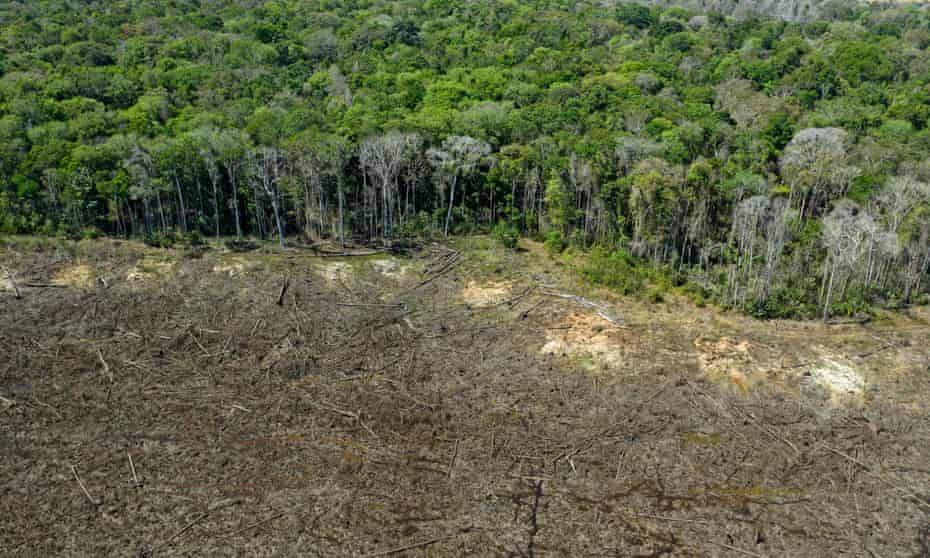
A deforested area close to Sinop, in Mato Grosso state, Brazil.

A deforested area close to Sinop, in Mato Grosso state, Brazil. Cattle farming, palm oil, soy, cocoa, rubber and coffee are all leading causes of tropical forest loss.

Last modified on Tue 1 Mar 2022 03.33 AEDT

Carbon emissions from tropical deforestation this century are far higher than previously thought, doubling in just two decades and continuing to accelerate, according to a study.

The world’s forests form an enormous carbon store, holding an estimated 861 gigatons of carbon – equivalent to nearly a century’s worth of annual fossil fuel emissions at the current rate. When trees are cut down, they release the carbon they store into the atmosphere. Since 2000, the world has lost about 10% of its tree cover, becoming a major driver of global heating.

Yet, despite being the second largest human source of greenhouse gases after fossil fuels, the carbon accounting behind emissions from land still contains significant uncertainties, often relying on limited data that poses difficulties for researchers tracking progress towards meeting the goals of the Paris agreement.

A study published on Monday in Nature Sustainability shows that carbon loss from tropical deforestation in the last two decades has doubled and continues to rise, driven largely by the expansion of agricultural frontiers. The findings contrast with previous assessments, such as the Global Carbon Budget 2021, which had suggested a slight decline in carbon loss from deforestation.

Monteverde Cloud Forest in Costa Rica.

Using high-resolution satellite data, researchers found that the Democratic Republic of the Congo, Indonesia and Brazil recorded the largest acceleration in forest loss from 2001 to 2020, with the South American country responsible for the largest total emissions from clearing in the Amazon and other forest ecosystems. The analysis found that about a fifth of land clearing in the tropics took place in mountainous regions, which are home to relatively high carbon stocks, especially in Asia.

The increase took place despite commitments to slow deforestation, such as the New York Declaration on Forests in 2014, which aimed to halve deforestation rates by 2020. At Cop26 in Glasgow, a coalition of 142 countries – accounting for more than 90% of the world’s forests – committed to halting and reversing forest loss and land degradation by 2030.

“The standard methods used by the IPCC are not spotting some of the things we’ve seen in this paper, such as small-scale deforestation and the movement of land-clearing into mountains. They aren’t really capturing the trend that we’ve seen in the last two decades,” Spracklen added.

The research was led by Yu Feng, a PhD candidate at the Southern University of Science and Technology (SUSTech), and Zhenzhong Zeng, associate professor at SUSTech.

“Tropical forests are huge stores of carbon. We must reduce deforestation to slow global warming,” said Yu Feng.

Cattle farming, palm oil, soy, cocoa, rubber and coffee are all leading causes of tropical forest loss, destroying some of the most biodiverse places on Earth, home to species including jaguars, sloths, orang-utans, toucans and lemurs. On Monday, an IPCC report warned climate breakdown was accelerating rapidly and said many of the impacts would be more severe than predicted, with only a narrow chance left of avoiding its worst ravages.

Satellite monitoring is playing an increasingly important role in tracking greenhouse gases on Earth, such as those monitoring methane emissions. For forests, Global Forest Watch hosts satellite data tracking forest loss, and projects such as Nasa’s Gedi mission, which uses lasers to analyse the biomass of trees, is helping provide a more accurate map of the world’s forests and carbon stores.

Find more age of extinction coverage here, and follow biodiversity reporters Phoebe Weston and Patrick Greenfield on Twitter for all the latest news and features.

Why Vladimir Putin has already lost this war.

 Extract from The Guardian

The Russians may yet conquer Ukraine. But Ukrainians have shown in the past few days that they will not let them hold it.

Weapons training near Kharkiv on Sunday

Weapons training near Kharkiv on Sunday: ‘The last few days have proved that Ukrainians definitely don’t want to live under a new Russian empire.’

Less than a week into the war, it seems increasingly likely that Vladimir Putin is heading towards a historic defeat. He may win all the battles but still lose the war. Putin’s dream of rebuilding the Russian empire has always rested on the lie that Ukraine isn’t a real nation, that Ukrainians aren’t a real people, and that the inhabitants of Kyiv, Kharkiv and Lviv yearn for Moscow’s rule. That’s a complete lie – Ukraine is a nation with more than a thousand years of history, and Kyiv was already a major metropolis when Moscow was not even a village. But the Russian despot has told his lie so many times that he apparently believes it himself.

When planning his invasion of Ukraine, Putin could count on many known facts. He knew that militarily Russia dwarfs Ukraine. He knew that Nato would not send troops to help Ukraine. He knew that European dependence on Russian oil and gas would make countries like Germany hesitate about imposing stiff sanctions. Based on these known facts, his plan was to hit Ukraine hard and fast, decapitate its government, establish a puppet regime in Kyiv, and ride out the western sanctions.

But there was one big unknown about this plan. As the Americans learned in Iraq and the Soviets learned in Afghanistan, it is much easier to conquer a country than to hold it. Putin knew he had the power to conquer Ukraine. But would the Ukrainian people just accept Moscow’s puppet regime? Putin gambled that they would. After all, as he repeatedly explained to anyone willing to listen, Ukraine isn’t a real nation, and the Ukrainians aren’t a real people. In 2014, people in Crimea hardly resisted the Russian invaders. Why should 2022 be any different?

With each passing day, it is becoming clearer that Putin’s gamble is failing. The Ukrainian people are resisting with all their heart, winning the admiration of the entire world – and winning the war. Many dark days lie ahead. The Russians may still conquer the whole of Ukraine. But to win the war, the Russians would have to hold Ukraine, and they can do that only if the Ukrainian people let them. This seems increasingly unlikely to happen.

Each Russian tank destroyed and each Russian soldier killed increases the Ukrainians’ courage to resist. And each Ukrainian killed deepens the Ukrainians’ hatred of the invaders. Hatred is the ugliest of emotions. But for oppressed nations, hatred is a hidden treasure. Buried deep in the heart, it can sustain resistance for generations. To reestablish the Russian empire, Putin needs a relatively bloodless victory that will lead to a relatively hateless occupation. By spilling more and more Ukrainian blood, Putin is making sure his dream will never be realised. It won’t be Mikhail Gorbachev’s name written on the death certificate of the Russian empire: it will be Putin’s. Gorbachev left Russians and Ukrainians feeling like siblings; Putin has turned them into enemies, and has ensured that the Ukrainian nation will henceforth define itself in opposition to Russia.

Nations are ultimately built on stories. Each passing day adds more stories that Ukrainians will tell not only in the dark days ahead, but in the decades and generations to come. The president who refused to flee the capital, telling the US that he needs ammunition, not a ride; the soldiers from Snake Island who told a Russian warship to “go fuck yourself”; the civilians who tried to stop Russian tanks by sitting in their path. This is the stuff nations are built from. In the long run, these stories count for more than tanks.

The Russian despot should know this as well as anyone. As a child, he grew up on a diet of stories about German atrocities and Russian bravery in the siege of Leningrad. He is now producing similar stories, but casting himself in the role of Hitler.

We can all be inspired to dare to do something, whether it is make a donation, welcome refugees, or help with the struggle online. The war in Ukraine will shape the future of the entire world. If tyranny and aggression are allowed to win, we will all suffer the consequences. There is no point to remain just observers. It’s time to stand up and be counted.

Unfortunately, this war is likely to be long-lasting. Taking different forms, it may well continue for years. But the most important issue has already been decided. The last few days have proved to the entire world that Ukraine is a very real nation, that Ukrainians are a very real people, and that they definitely don’t want to live under a new Russian empire. The main question left open is how long it will take for this message to penetrate the Kremlin’s thick walls.

  • Yuval Noah Harari is a historian and author of Sapiens: A Brief History of Humankind

The rightwing US supreme court has climate protection in its sights.

Extract from The Guardian

Opinion

US supreme court

and Jeremy Lewin

The court is breaking with precedent, procedure and prudence to achieve the ultra-conservative majority’s policy preferences

‘The planet’s future hangs in the balance.’

The stakes are higher still: by ruling on the case at all, the court usurps power constitutionally entrusted to government’s politically accountable branches. Article 3 of the constitution limits federal courts to deciding concrete “cases and controversies” about the rights of individual parties. Yet this “case” involves neither a concrete dispute nor the specific rights of any of the challengers. Instead, it’s akin to an exam question about the options theoretically available to a federal agency to address a grave problem. In answering that hypothetical question, the court will have arrogated to itself an unprecedented, open-ended power to reshape the nation’s social and economic landscape – far in excess of its legitimate authority, as the foundational case Marbury v. Madison put it, to “declare what the law is”.

The court has avoided such a wide-ranging role ever since our founding, when Chief Justice Jay refused President George Washington’s 1793 request for legal advice about America’s obligations under treaties with France and Britain, concluding that issuing such an “advisory opinion” to guide the nation’s foreign policy would exceed the court’s constitutionally assigned power. The underlying axiom is neither liberal nor conservative but universal. As Justice Brett Kavanaugh wrote for the court just last term, “federal courts decide only ‘the rights of individuals’ [and] do not possess a roving commission to publicly opine on every legal question.”

The role the court is poised to play in West Virginia v. EPA is more breathtaking still. It stands ready not just to “publicly opine” on a broad legal question but to bind the entire federal government to its answer, restricting the range of policies the EPA –under President Joe Biden and future presidents – can even consider to reduce carbon dioxide emissions and tackle climate change.

Issuing any such “super advisory opinion” would seize the power to set regulatory policy itself – a perversion of separation of powers unthinkable just a few years ago. Yet, as its recent onrush of breaks with precedent, procedure and prudence to achieve the ultra-conservative majority’s policy preferences on abortion, public health and voting rights demonstrate, today’s court flouts all institutional bounds. As it charges ahead, what remains of the court’s legitimacy, the constitution’s allocation of decision-making authority, and the planet’s future all hang in the balance.

How did we get here?

In 1970, Congress passed the Clean Air Act, empowering the new EPA to regulate dangerous pollutants like carbon dioxide to make our air safer; indeed, after the supreme court’s 2007 decision in Massachusetts v. EPA, the act requires EPA to seek lower CO2 emissions. One section tasks EPA with identifying the “best system of emissions reduction” that’s feasible to reduce CO2 from existing power plants, the largest category of stationary emitters.

In 2015, to meet American commitments under the Paris Climate Accords, President Barack Obama’s EPA promulgated the Clean Power Plan – an ambitious plan to shrink power sector emissions by more than 30%. It hinged on a central notion: the CAA’s “best system” language didn’t contemplate only reductions individual plants could achieve by themselves, but authorized EPA to consider reductions the entire electrical grid might achieve by working as an integrated whole. Thus, EPA could design, as its “best system”, a scheme in which power companies reduced emissions by substituting cleaner energy like renewables and natural gas for dirtier coal – a tactic known as “generation shifting”.

The plan was challenged on numerous legal grounds. Some insisted EPA could not so broadly construe the statutory word “system”, a claim difficult to square with the foundational doctrine of “Chevron deference,” under which courts defer to any “reasonable” agency interpretation of an “ambiguous” term like “system”. The senior author of this column challenged EPA’s plan on the narrower basis that EPA had rested its legislative authority on nonexistent power to choose which of two versions of the CAA Congress had enacted. In any event, the supreme court stayed the plan’s implementation in 2016 while the DC circuit sorted out its legality.

When Donald Trump was elected president months later, he sought to repeal the CPP. His EPA could have done so by just changing its preferred policy or legal interpretation, as supreme court doctrine readily permits agencies to do. But the Trump administration wanted more: to permanently foreclose any remotely similar plan. So it based its repeal on the mind-boggling theory that CAA’s text unambiguously barred not only CPP, but any system of emissions reduction that couldn’t be entirely effectuated within the “fence-lines” of stand-alone power plants. That interpretation barred not only generation shifting, but also far less controversial techniques like biomass co-firing (mixing biological material into portions of what coal plants burn for energy). This extreme reading was belied both by the basic functioning of our integrated, unitary power grid, and by previous EPA and supreme court interpretations of all relevant language. If the increasingly reactionary federal judiciary upheld that strained construction as mandatory, it would be locked in until Congress enacted a new regulatory framework. Realistically, that might mean forever.

Buttressing its twisted textual reading, Trump’s EPA invoked the “major questions doctrine” – an altogether amorphous weapon the court recently invented to strike the Center for Disease Control’s eviction moratorium and the Occupational Safety and Health Administration’s workplace vaccine-or-test mandate. Its premise is radical: wherever a court deems an agency’s policy choice to have resolved a “major question”, it must nullify that choice unless Congress, in enacting the relevant statute, anticipated the precise question and unmistakably authorized the agency’s precise answer.

That doctrine licenses judges to strike down whatever policy they disfavor – and invites agencies to opportunistically disclaim any regulatory authority they’d prefer not to exercise. It’s also inconsistent with the fact that contemporary social problems are too complex and interwoven with changing circumstances for Congress to predict every policy answer with technical precision, requiring that it legislate in broad terms and task expert agencies with filling in the details. Routinely applying the “major questions doctrine” might thus nihalistically nuke federal power to solve nearly any important problem.

Trump’s EPA did just that in repealing CPP, proclaiming itself categorically powerless to consider any “beyond the fence-line” emissions reduction systems because CAA either unambiguously precluded such consideration or failed unambiguously to empower such consideration, as the “major question” doctrine supposedly demanded.

Dozens of environmental groups and blue states challenged the repeal in court, and a day before Biden assumed office, the DC circuit held Trump’s interpretation not the only permissible reading of the text and struck down the repeal as legally flawed. Although CPP might have “snapped back” into force, the DC circuit stayed its judgment until Biden’s EPA could formulate a new rule. Given intervening legal developments – and years of rapid change in the power sector that achieved CPP’s emissions targets through free-market behavior – the agency had prudently asked for time to promulgate an entirely new rule.

This was a big win for the coal companies and CPP’s red-state opponents; with both the rule and its replacement stayed, no applicable regulation exists. None. When Biden’s EPA suggests a new rule, it will be immediately reviewable in federal court. Until then, CPP’s opponents have their wish: less federal CO2 regulation – in fact, none at all. In every sense, the dispute has become moot until EPA proposes a new rule imposing actual obligations on the states and companies.

Unsatisfied with that temporary victory, the states and coal companies filed several petitions asking the supreme court to hear the case and permanently lock in Trump’s defenestration of EPA’s authority – lest they be injured by what Biden’s EPA might someday propose if the court doesn’t proactively clip the agency’s wings. Given that no regulations currently apply, no clever framing can disguise the obvious: they’re asking the court for a “super advisory opinion”, prematurely answering an abstract question to preemptively bind an ideologically opposite administration before it has a chance to govern.

Equally worrying, several of the briefs urge the court to adopt extraordinarily broad understandings of when and how the “major questions” doctrine applies; to entirely overturn Chevron, one of the court’s most deeply entrenched precedents; and to gut nearly the entire CAA by reviving the long-dormant “non-delegation doctrine” – last employed by the ultra-conservative Lochner-era court to frustrate the New Deal in the 1930s. A super advisory opinion in this case has the potential not only to gut EPA’s power to regulate pollution and climate, but also to severely blunt the regulatory authority of nearly the entire federal government.

As one of us has written elsewhere, “law’s constraints are no match for power’s voracious appetite.” To an unaccountable tribunal of life-tenured, ideologically inclined justices, no doctrine presents an enforceable barrier to impulses of the most blatantly partisan variety. But hope is not yet lost. As the conservative Justice Antonin Scalia often emphasized, the ourt retains a “special obligation” to re-evaluate its own authority and to dismiss cases whenever jurisdictional defects are discovered. To hear this case, four justices sufficed; perhaps five others will recognize what centuries of precedent make clear: the court should dismiss the case and wait until an actual EPA regulation creates a concrete, live dispute. We can still urge and cautiously hope for that prudent approach; all the justices “are, in the end, masters of their craft and know that their power requires them to act as lawyers”.

  • Laurence H Tribe is the Carl M Loeb University professor and professor of constitutional law emeritus at Harvard Law School. His many books include American Constitutional Law, the most frequently cited treatise on the US constitution. You can follow him on Twitter @Tribelaw. Jeremy Lewin will receive his JD degree from Harvard Law School in Spring 2022