Saturday, 30 March 2019

The obvious flaw in the Coalition's position on Pauline Hanson

    Extract from ABC News

    Analysis

    Updated about 3 hours ago


    Kenny Craig was the stage hypnotist in the television series Little Britain who was not as good as he thought he was.
    "Look into my eyes, look into my eyes, the eyes, the eyes, not around the eyes, don't look around my eyes, look into my eyes … you're under!"
    Because he wasn't very good, some of his audience in the early days used to pretend they were hypnotised, just to keep him happy.
    There seems to have been a lot of Kenny Craig going on in Australian politics this week, except for the bit where the audience pretends to be hypnotised to keep Kenny happy.
    From Pauline Hanson and her lieutenants' dalliances with the National Rifle Association to the Prime Minister and his strong stand on preferences, we have been asked to indulge an unpersuasive bunch of hypnotists to disbelieve what is in plain sight.
    There are usually quite a lot of demands on voters at budget time, and election time, to look into the eyes of politicians. But even if both these events are imminent, we seem to have reached a new obligation to suspend disbelief in the last couple of weeks.

    A sting that won't change minds

    Speculating about what sort of money One Nation may be able to gain from the NRA, One Nation Senate candidate Steve Dickson ponders, in the Al-Jazeera documentary How To Sell A Massacre, what could be done with millions of dollars of NRA support.
    "If we could get that sort of money, imagine, we could change Australia," he muses.

    Ms Hanson's chief of staff, James Ashby, observes that if One Nation was able to pick up $10 million of funding "you would pick up eight Senate seats."
    "I mean, that guarantees you the balance of power, you'd have the whole Government by the balls," Mr Dickson says, a sentiment he repeats when he says in a meeting with the NRA that if "we get the balance of power, very simply that means that we have the testicles of the Government in our hand at every given stage.
    "And guns, in the scheme of things, are still going to be the be-all and end-all."


    Whatever the circumstances in which these observations were recorded, the intent of the two men seemed clear.
    Yet Senator Hanson — who was not involved in the NRA meetings themselves — told voters on Thursday this was all an elaborate sting by a foreign influence, the Qatari Government, while failing to see the irony that this sting exposed operatives of her own party working out whether they could exploit another foreign influence for the party's gain.
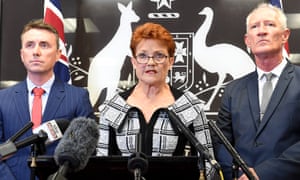
    Her statement to the media in Brisbane on Thursday was a masterful performance in playing to her base, making herself the victim and keeping a firm distance from the actions of Mr Ashby and Mr Dickson.


    For the rusted-on Pauline supporters, the whole affair will have only reinforced their support for the One Nation leader. For the less firm One Nation voters, who have moved their votes from the major parties in disillusion, it is more likely to send them in search of other minor parties or independents, rather than back to the major parties.

    Budget gamble for Morrison

    Scott Morrison said this week he didn't want One Nation's preferences, he wanted the primary votes that had shifted from the Coalition to the minor party.


    That might be a noble political aim. But such a shift, against a tide of disillusion has to occur because the government of the day has come to represent something to people.
    Sadly for the Coalition, it is instead apparently on a constant path of not standing for much at all.
    It has left much hanging on Tuesday's budget, with its declaration that the Government's books will finally be back in the black, and with tax cuts and cash payments to address the sluggish wage growth that has caused such discontent among voters.
    Such handouts can work as hip pocket bribes in their own right, or as mechanisms to create a point of difference with your opponent in the day to day slug of an election campaign.
    But you have to be sure that your opponents can't simply match your moves, or, in the case of Bill Shorten last year, actually virtually double some tax cuts.

    Election eve appeasement also only works if voters are of a view to be wavering about a government, not deeply disillusioned with one.
    Once again, that requires a clearer sense of purpose to drag voters back.
    Even on the question of One Nation preferences, the Prime Minister wanted to look like he was taking a strong position — by saying the Liberal Party would preference Labor ahead of One Nation. But he waited too long to do it and the obvious flaw in the Coalition's position — and in the strength of his authority — lay in the fact that the Nationals did not follow.
    The gesture ended up being a naked exercise in damage control in the south rather than a position of principle.

    The power of preferences


    Why do One Nation's preferences matter?

    In last year's Super Saturday by-election, the seat of Longman fell to Labor after the LNP candidate was revealed to have misrepresented his military record.
    Angry voters saw the number of One Nation votes rise from 9.42 per cent of the primary vote at the 2016 general election to 15.91 per cent.
    And at the by-election, 67.74 per cent of One Nation's preferences went to the Coalition.
    This was not enough to stop the Coalition suffering a 3.66 per cent swing against it. But if One Nation preferences flowed at the lower rate seen in the 2016 election — 43.51 per cent — then the swing at the by-election would have been 7.52 per cent.
    This is only indicative, since the primary votes were different. But it gives you an idea what an impact higher preference flows can have.

    How will One Nation retaliate?

    The question remains, however, what One Nation will do in its preference decisions, as opposed to what the Coalition does.
    At the 2016 election, One Nation in Queensland adopted different "how to vote" cards in different electorates, sometimes suggesting split tickets to its voters, depending on whether they were disgruntled Labor or Liberal voters, or whether, as in the case of Wyatt Roy, there were scores to settle.
    In response to Scott Morrison's declaration on preferences, Senator Hanson said on Thursday that "you, Prime Minister have just handed the keys to The Lodge to Bill Shorten, Di Natale and the CFMEU. You're a fool".
    This sits rather uneasily with the fact that what she is suggesting is that her party's own preference decisions might not achieve exactly that result.
    Senator Hanson's ultimate interest, however, rests not in who wins control of the House of Representatives but whether she gains another seat in the Senate and, with it, a balance of power position akin to the one that her colleagues were discussing so lustily in America.
    This is the real election that voters in Queensland will be determining when they look into the eyes of One Nation on polling day.

    Laura Tingle is 7.30's chief political correspondent.

    Friday, 29 March 2019

    Pauline Hanson says One Nation victim of 'political attack' by al-Jazeera and ABC

    Extract from The Guardian

    Hanson says she is standing by senior party officials James Ashby and Steve Dickson, who were secretly filmed trying to solicit millions from the NRA
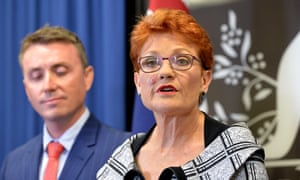
    Pauline Hanson has claimed One Nation is the victim of selective editing, entrapment and a “political attack” by al-Jazeera in co-ordination with the ABC, in her first public appearance since an explosive secretly filmed documentary was revealed.
    Flanked by her chief of staff James Ashby and Queensland state leader Steve Dickson, Hanson told a press conference in Brisbane she was standing by both men, who were filmed meeting with the US gun lobby and discussing millions of dollars of potential political donations in a bid to seize the balance of power in the Australian federal parliament.
    The first part of the documentary aired on the ABC on Tuesday and the second half is due to air on Thursday night.
    “This is a political attack by al-Jazeera in cooperation with the ABC. If the ABC had any ethical bone in their body, they would refuse to put this unfair and unbalanced story to air tonight,” Hanson said, before directly addressing the new chairwoman of the ABC.
    “Ita Buttrose, you need to ask the question of your organisation as the chairwoman, is this the unethical behaviour you support or do you truly believe it should be aired before a full investigation by Asio and the federal police.”
    In a lengthy preprepared speech, Hanson blamed one of the journalists involved, Rodger Muller, who posed as a gun campaigner, for setting up all the meetings with the US National Rifle Association and multinational energy giant Koch Industries.
    “If it wasn’t for Rodger Muller and the Islamist al-Jazeera network, One Nation would never, never have had any association with the NRA, Koch industries or the congressional sportsmen’s dinner. They would never have gone to the United States,” she said.
    Both al-Jazeera and the ABC have stood by the report and its content as being in the public interest.
    Hanson did not take any questions from journalists during the press conference, walking out immediately after reading her preprepared remarks.
    The second part of the documentary also shows Hanson appearing to question the veracity of the 1996 Port Arthur massacre in Tasmania.
    “An MP said it would actually take a massacre in Tasmania to change the gun laws in Australia,” Hanson was shown saying to Muller over dinner.
    “Haven’t you heard that? Have a look at it. It was said on the floor of parliament. I’ve read a lot and I have read the book on it, Port Arthur. A lot of questions there.”
    On Thursday Hanson said her comments had been “heavily edited” and did not “reflect how I feel about those tragedies that occurred in 1996”.
    “There is no question in my mind, that Martin Bryant was the only person responsible for the murders of 35 innocent lives. My belief stands today that he should have faced the death penalty.”
    Hanson’s original filmed comments caused deep distress to the families of Port Arthur victims on Thursday, according to the chief executive of the Alannah and Madeline Foundation, which was named after two children, Alannah and Madeline Mikac, killed in the Tasmanian massacre.
    “Walter Mikac said today it felt like a dagger going through his heart,” said Lesley Podesta.
    “It’s just the most irresponsible, insensitive response that we’ve seen to a human tragedy.”
    In the second part of the documentary, Dickson is filmed in a gun shop talking about the period after the Port Arthur massacre, when Australian gun owners were forced to hand over huge numbers of firearms as part of a mandatory buyback scheme.
    “I lost all my guns,” Dickson says. “Terrible, that was a bad time for us ... it was like hell on earth.”
    The documentary also sparked widespread outrage from politicians across the political spectrum this week and added to the pressure on prime minister Scott Morrison to preference One Nation last at the upcoming federal election. Morrison announced on Thursday that Liberals would place the party after Labor on their how-to-votes cards.
    Hanson characterised One Nation as a victim of the media’s “hate and bias”, but in a long interlude, singled out some prominent Australian conservative hosts and other journalists for praise.
    “I must congratulate Andrew Bolt for seeing through the spin and propaganda al- Jazeera and the ABC have aired,” she said.
    “Alan Jones, who stood by me when I was imprisoned in 2003 and has, to this day, continued to give me a fair go. Paul Murray has always been there to offer me a platform, unlike so many others.”
    Jones and his production company donated $10, 000 to One Nation in the lead-up to the New South Wales election, in which the party’s state leader Mark Latham secured a spot in the upper house.
    The ABC stood by its decision to broadcast the documentary on Tuesday, saying in a statement it judged it was “clearly in the public interest that Australians had the opportunity to see this material for themselves.”

    Al-Jazeera, which is owned by the Qatari government, also stood by its reporting, saying their investigations are “conducted solely where wrongdoing or deception is brought to light and where the public interest is served”.
    “The suggestion that our staff is involved in espionage is both unfounded and, quite frankly, farcical,” the international network said in a statement.
    “We provided One Nation, Ms Hanson, Mr Dickson and Mr Ashby with an opportunity to comment on our evidence prior to broadcast but they declined to do so.”
    In an interview earlier this week former al-Jazeera journalist Peter Greste, who is also Unesco chair in journalism and communications at the University of Queensland, said the documentary “crossed an ethical line” by brokering meetings between One Nation and the gun lobby.
    “Journalistic ethics require journalists to be open and transparent where possible and it’s understandable and acceptable to have undercover investigations,” Greste said.

    “What concerns me is crossing the line into actually creating a story and not simply reporting it.”

    On Thursday, Hanson said Ashby would retain his role as her chief of staff and Dickson would remain on One Nation’s Queensland Senate ticket for the upcoming election.

    Fact or fiction? Pauline Hanson's defence of the One Nation scandal

    Even for Pauline Hanson, Thursday afternoon’s press conference– her first since One Nation became embroiled in a guns and donations scandal – raised eyebrows.
    Apparently recovered from a debilitating tick bite, the One Nation leader delivered an 18-minute diatribe.There were stumbles over words, including a perplexing reference to the NRMA motoring group (she meant to say the NRA or National Rifle Association), and a name check on someone called Jacinda Ahern, which should have been the New Zealand prime minister, Jacinda Ardern.
    Hanson read out a laundry list of the journalists/news organisations she liked or who were friendly to her party. She told some Rupert Murdoch anecdotes, denied she had speculated about Port Arthur conspiracies, complained about “Islamist” plots to undermine One Nation.
    Flanked by her chief of staff, James Ashby, and the Queensland leader of her party, Steve Dickson – both of whom appeared in al-Jazeera’s How to Sell a Massacre documentary – Hanson defended her party’s conduct. But how much of what she said was fact and how much was fiction?

    One Nation doesn’t get money from big business

    Except they do, as a cursory look at One Nation’s donation disclosures reveals.
    One of the most recent donations listed on the federal register is from the coalmining giant Adani. It gave the party $15,000 in May last year.
    Four weeks ago, One Nation in Queensland took a $10,000 donation from big business lobbyists Strategic Political Counsel, which represents British American Tobacco, Adani and the Australian Lotteries and Newsagents Association, among others.
    The Queensland branch has also accepted the generosity of Clubs Australia and the Tatts Group.
    The hotels lobby – a prohibited donor in New South Wales – is a frequent donor to the federal One Nation branch.
    Even the Sydney shock jock Alan Jones has been a generous friend of the party. Coincidentally, he’s on Hanson’s nice media list.

    The media hates us and should be ashamed

    Hanson split the Australian media into two camps. Those who were nice to her, and those who weren’t.
    It went something like this: Alan Jones is good, Andrew Bolt is better, and Sky News’s Paul Murray is solid for “offering me a platform”. A couple of News Corp journos got the nod too.
    Everyone else: evil. Especially al-Jazeera, whose employees she said were spies for the Qatari government, which has attempted to subvert Australian democracy via a global blockbuster media story.
    The ABC is also on the media naughty list for showing the How to Sell A Massacre documentary before Australia’s spy agency, Asio, finished an investigation into al-Jazeera.
    “This is a political attack by al-Jazeera in cooperation with the ABC,” Hanson said. “If the ABC had any ethical bone in their body, they would refuse to put this unfair and unbalanced story to air tonight.”
    An unnamed journalist fairly summed up the position of the media attending the press conference, as he pleaded with Hanson to answer questions as she left the room. “No one’s baying for your blood. We just want some answers, senator.”
    “Can we get some answers of what actually happened in that documentary, rather than your spin and shooting the messenger?” the journalist asked.

    It was a set-up

    There is a genuine debate to be had about the ethics of undercover media stings. Would the meetings between One Nation and the NRA have taken place if not for the al-Jazeera team?
    Hanson says no, and there may well be some substance to her argument. But to suggest in some way that this indemnifies Ashby and Dickson from their actions on the US trip is questionable, at least.
    Consider this excerpt, captured on al-Jazeera’s hidden cameras, from Ashby and Dickson, strategising the softly-softly approach that would be needed to change Australia’s gun laws.
    “It’s like Vegemite. You don’t put a f***ing bundle of the s*** on the toast. A light smear first. Get them used to the flavour,” Ashby said. “Then we can get another piece of bread and end up with the whole loaf,” Dickson said.

    The Port Arthur massacre was real, actually

    Al-Jazeera’s report shows Hanson openly canvassing a conspiracy theory about the Port Arthur massacre.
    However, in her news conference Hanson said she did in fact believe Martin Bryant was responsible.
    “There are comments that have been aired in relation to Port Arthur that are obviously heavily edited and do not reflect how I feel about those tragedies that occurred in 1996. There is no question in my mind that Martin Bryant was the only person responsible for the murders of 35 innocent lives.”

    She went on to imply that Bryant should have been put to death for the crime. Asizeable leap from the conspiratorial views expressed to alJazeera’s hidden cameras, for which there was no explanation, because Hanson refused to take questions.

    Penny Wong warns racism and hate speech in parliament threaten democracy

    Labor senator says those who ‘see political or commercial advantage in heightening cynicism’ are diminishing civic life
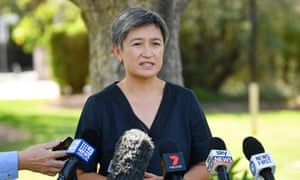
    Penny Wong will say that “racism is a threat to our democracy” in a speech taking aim at those who see “political or commercial advantage” in increased cynicism towards public institutions.
    The Labor senator is set to warn that hate speech and extremist views in parliament and a “lack of unity in response to these” have harmed democracy, pointing the finger in part at the Coalition for its tardy response to condemn One Nation in the 45th parliament.
    The intervention comes as Scott Morrison finally agreed on Thursday to the Liberals preferencing Pauline Hanson’s party below Labor, after weeks of mounting pressure relating to One Nation’s rhetoric about migration in the wake of the Christchurch attacks and an al-Jazeera investigation revealing the party sought donations from the National Rifle Association to water down Australia’s gun laws.
    Wong makes the comments in speech extracts, seen by Guardian Australia, for the McKinnon oration in Melbourne on Friday. Wong is accepting the McKinnon award naming her political leader of the year alongside Greens senator Jordon Steele-John, who is designated the emerging political leader of the year.
    “Racism is not only unethical, it is antithetical to the values which underpin democracy,” Wong says.
    “That is why our rejection of racism, of prejudice, of discrimination and of hate speech must be uncompromising.”
    Wong argues that hate speech “cannot be defended on grounds of freedom of speech because it inflicts real and direct harm”, citing the way it works to dehumanise outsiders as “second-class citizens, not deserving the protections and dignity afforded to full members of the community”.
    “This is what makes hate speech so dangerous; it is what links hatred in speech to hatred in deed.”
    Wong said the “electoral isolation” of Pauline Hanson when she first entered parliament in the 1990s had been a bipartisan effort, as was the “refusal to weaponise community concerns” around the arrival of Indochinese asylum seekers.
    “I fear we have done less well this last decade or more,” she says. “The nation is poorer for it and our democracy more fragile.”
    Wong says a “good starting point” would be for the Liberal party to commit to preference “extremists like One Nation below the other party of government”.
    Wong argues that while “adversarialism and competition of ideas” is intrinsic to democratic politics it cannot be allowed to “mutate” into “hyper-partisanship” which erodes “the social cohesion and mutual respect needed for a tolerant, pluralist democracy”.
    Polarisation is driven “in part” by political leaders but is also contributed to by “the fragmentation of the news media; the rise of social media; the echo chamber quality of much of our debate; and a failure by many to ground debate within a factual framework”.
    Wong says Australia must “face unflinchingly the threat of racism and prejudice, honestly recognise trends towards the normalisation of prejudice and hate speech, and work together to see off these risks”.
    “And we must tackle its various drivers – inequality, disrespect, disengagement.”
    Wong says the responsibility is “on all leaders, religious, community and political, to stand against those who seek to spread intolerance and hate”.
    And she says those who “see political or commercial advantage in heightening cynicism” should consider consequences including degrading the quality of political debate and diminishing civic life.
    In the 45th parliament the Coalition has had a patchy record on confronting white nationalism, after government senators voted for a motion that it is “OK to be white” in October only to later claim this was an “administrative error”.
    The prime minister, Scott Morrison, himself as shadow immigration minister, reportedly told shadow cabinet in 2011 the Coalition should do more to capitalise on concerns about Muslim immigration, comments which he now denies, claiming he wanted to address rather than exploit those fears.
    Since the Christchurch terrorism attacks, Morrison has repositioned the government by warning against “mindless tribalism” and joining Labor in bipartisan condemnation of senator Fraser Anning, who blamed the massacre on concerns about Muslim migration.
    Earlier in March, Morrison called on Australians to “disagree better” just hours after the home affairs minister, Peter Dutton, accused Greens politicians of being just as bad as Anning.
    He said Australians should “reject the thinking that one person’s gain is another’s loss” after stating earlier this month it was “simple math” that medically transferred asylum seekers would take the place of Australian citizen patients in hospitals.
    In August the outgoing racial discrimination commissioner Tim Soutphommasane warned that “race politics is back” and criticised Turnbull government ministers for their rhetoric on African gangs and ethnic separatism.

    Soutphommasane cited Dutton’s calls for “special attention” for white South African farmers, then citizenship minister Alan Tudge’s claim that Australia is veering towards a “European separatist multicultural model”, and Dutton’s suggestion Melburnians are afraid to go out to dinner due to African youth crime.

    Labor to end negative gearing concessions for new investors on January 1

    Updated about 5 hours ago


    A Labor Government would scrap negative gearing concessions for new investors on January 1 next year, earlier than many analysts and commentators predicted.

    Key points:

    • Federal Labor argues negative gearing concessions are too generous
    • The change would stop new investors from deducting rental losses from their income tax
    • It would raise an estimated $2.9 billion over four years

    Shadow Treasurer Chris Bowen said the long-awaited start date would still provide enough time for scrutiny of the legislation and more industry consultation.
    He again dismissed calls to delay or phase in the change, which is a key point of difference between Labor and the Coalition before a May election.
    "This allows it to come in at a quieter time in the property cycle — obviously Christmas and New Year being a quieter time — a good smooth time for implementation," Mr Bowen said.
    "This strikes the right balance."
    The change would stop new investors from deducting rental losses from their income tax bill, raising an estimated $2.9 billion over four years.

    Federal Labor has argued this concession is too generous and is unfair because it makes it harder for younger Australians and first home buyers to enter the market.
    Ending the tax concession on January 1, rather than July 1 as many expected, would mean a Labor Government begins to collect a share of that $2.9 billion earlier in its first term.
    Mr Bowen also argued that delaying the change until property prices recovered from a recent downturn in capital cities would only increase market uncertainty.
    "At the last election we said it would come into force 12 months after the election, this time we are saying seven months and they are roughly comparable timeframes," Mr Bowen said.
    "This enables proper legislative processes, draft legislation, proper consultation about how the legislation should be framed."

    Labor eyes crossbench amid Coalition criticism

    The Coalition has argued that ending negative gearing concessions will only add to a reduction in property prices recorded over the past few months, particularly in Melbourne and Sydney.
    "The Labor Party have come up with a policy when the property market was going up — now the property market is coming down," Treasurer Josh Frydenberg said earlier this month.

    "At a time when we're seeing 10 per cent falls in key markets like Sydney and Melbourne, the Labor Party is promising to put in place a $32 billion [over the medium term] housing tax which will abolish negative gearing as we know it.
    "It will ultimately increase rents for millions of Australians, and decrease construction in the housing sector, costing jobs and lowering economic growth."
    If Labor wins the election, it may still need to negotiate with a Senate crossbench that will still include Pauline Hanson and Cory Bernardi.
    "I do have some confidence, of course anyone who predicts the result of the Senate is a very brave person," Mr Bowen said.
    "I will be making the case directly and personally to the senate that we have taken this to not only one, but two elections.
    "We have been upfront about these discussions."


    Labor to boost tax concessions for institutional investors

    The Federal Opposition has also announced it will reduce taxes for institutional investors that build rental properties.
    Labor would cut the managed investment trust withholding rate in half, on tax distributions attributable to investments in build-to-rent housing.
    "This means that eligible build-to-rent investments will pay a 15 per cent tax rate, not the 30 per cent rate proposed by Scott Morrison, which would be double the rate paid for investments in shopping centres and office buildings," Mr Bowen will tell a Sydney audience today.
    "It will make a build-to-rent [project] viable in Australia and provide a tax rate in keeping with the treatment in other countries."

    Thursday, 28 March 2019

    Scott Morrison says Liberals will preference One Nation below Labor

    Extract from The Guardian

    Prime minister responds to pressure following revelations One Nation had sought donations from US gun lobby
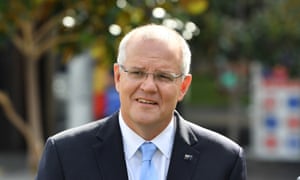
    Scott Morrison says One Nation will be put below the Labor party at the coming federal election by the Liberal party on its how-to-vote cards, a concession following mounting controversy about his uncomfortable fence-sitting on the question.
    The prime minister’s statement to journalists on Thursday morning follows rising internal pressure to distance the Liberals from One Nation in the wake of the Christchurch tragedy and the extraordinary revelations this week about the far-right party’s pursuit of foreign donations in exchange for efforts to water down Australia’s gun laws.
    But Morrison refused to clarify the government’s position until he had the support of key organisational figures, which he finally secured on Thursday.
    “I have been in touch directly with them today and overnight, because ultimately this is a decision for the party organisation, but my recommendation to them, which they’re accepting, is that One Nation will be put below the Labor party at the next election by the Liberal party,” the prime minister said.
    Morrison’s decision covers Liberals, but not Nationals, many of whom are signalling they will do what they believe is in their electoral interests when it comes to preferences. The New South Wales election result suggests there is a strong protest vote gathering in regional Australia, with Queensland the epicentre of One Nation support.
    The prime minister said his decision was “based on our strong view about the sanctity of Australia’s gun laws and to ensure that at no stage that those things should ever be put at risk”.
    The prime minister said the Liberals, under John Howard, had introduced tough gun regulations and there could be no compromise “or any trading on the issue of those gun laws”.
    Morrison said he had not rushed into the decision on preferences “in the same way that John Howard, who I have been consulting closely on this matter, in the same way that he, indeed, did not rush into this decision when he took it 20 years ago – I followed a similar considered process”.
    The prime minister said he found the response of One Nation to the controversies of the week underwhelming. “I found the behaviour of those officials particularly appalling and I left it for a few days to see what the response of the One Nation leadership would be to those events and sadly I’m disappointed, and I find the response to the action of those One Nation officials unsatisfactory”.
    Pauline Hanson declared on Wednesday she intended to take “all appropriate action” after her One Nation associates James Ashby and Steve Dickson were caught on video seeking a $20m donation from the National Rifle Association by al-Jazeera, but said she wanted to wait until all the material had been screened.
    The second episode of the al-Jazeera documentary, which will screen on the ABC on Thursday night, contains footage in which Hanson implies that the 1996 Port Arthur massacre was a government conspiracy.
    “An MP said it would actually take a massacre in Tasmania to change the gun laws in Australia,” Hanson told the al-Jazeera reporter Rodger Muller.
    “Haven’t you heard that? Have a look at it. It was said on the floor of parliament. I’ve read a lot and I have read the book on it, Port Arthur. A lot of questions there”.
    Morrison said the behaviour was unacceptable. “The linkages to Port Arthur, I’m sure all Australians would be shocked about”.
    “I was shocked by them and, you know, these gun laws have kept Australia safe for 20 years and had led the world and it’s one of the Liberal party’s most proud achievements together with the National party and when it comes to this issue, we cannot allow it to be compromised or sliced away”.

    “That’s not something we can have”.

    The story of how Scott Morrison finally got off the fence over One Nation scandal

    Scott Morrison has been astride the barbed-wire fence for days, refusing to say what he’ll do about One Nation preferences, despite the moral imperative being absolutely clear to anyone watching.
    The reasons for this are obvious. Morrison, given everything that has led him to this moment – to being prime minister, heading a political movement barely holding it together – does not feel secure enough in his position to be able to issue forceful public demands and assume his backroom organisation, or even senior colleagues, will meekly follow him.
    If Morrison had gone out ahead, demanding that One Nation be put below Labor, he would have risked his own people, both parliamentary, and organisational, standing him up, and doing it in highly public fashion.
    A Queensland rebellion – and that was the significant risk – would have projected further disunity and a corrosive lack of prime ministerial authority, which is not something the prime minister believes he can afford.
    To put it simply, he believed he had no good choices.
    Morrison had a huddle about what to do earlier this week. After Tuesday’s cabinet meeting, the prime minister asked Liberals to stay behind after the regular discussion had concluded to discuss One Nation preferences.
    Mathias Cormann suggested the Liberals keep One Nation off their how-to-vote cards in the Senate, but that did not resolve the issue of the lower house. Josh Frydenberg issued something of a general rebuke. He expressed a view that colleagues should not be freelancing in public about this issue.
    Kelly O’Dwyer, who had argued publicly before the cabinet meeting that One Nation should be put last, spoke up then, and advocated urgent action. The Liberals needed to spurn One Nation. She said the party had the same opportunity now that John Howard had in the late 1990s. Capping off her contribution, O’Dwyer said the government should not be bullied by the Liberal National party.
    Simon Birmingham then backed O’Dwyer’s argument according to people present, arguing forcefully that action was required immediately, in both houses, otherwise the government would be kicked to death in the court of public opinion.
    But while the view of moderates from the southern states was clear, Peter Dutton, Michaelia Cash and Angus Taylor took a different position.
    They wanted options. They advocated holding on to Morrison’s meaningless “no deals” locution (which was the official holding position) and wait until the nominations closed before making a decision.
    Dutton was worried about the electoral fallout for MPs in Queensland if the Liberals forcefully shunned One Nation. He thought the government would lose seats if One Nation retaliated by preferencing against the Liberals, given the protest vote is likely to be high in the coming contest.
    There was also a message for Morrison in Dutton’s contribution.
    Dutton told colleagues if a general directive was issued, he didn’t know what the LNP would do in response. The implication was the Queensland organisation could easily go rogue.
    At the end of the discussion, Morrison told his colleagues the government should only act once in relation to the issue, and that wouldn’t be happening on Tuesday. In the end, he waited until Thursday.
    Following the soundings on Tuesday, Morrison has been working with key organisational figures to get to Thursday’s hedged position: One Nation will be put below the Labor party on the Liberal party’s how-to-vote cards.
    But Nationals in Queensland will be able to do as they will, and Queensland Nationals have already made their views clear: they will do what they believe is in their electoral interests.
    Tuesday’s cabinet discussion provides a window on the internal crosscurrents Morrison is attempting to manage as the electoral clock ticks down.
    The bottom line is the prime minister should have done the right thing, and done it days ago, just because it was right.

    But Morrison didn’t have the luxury of overestimating his authority, doing something just because it was the right thing to do, because doing the right thing could carry a cost – both personally for him and, potentially, for the government which is now so close to D-day the collective anxiety is palpable.