Friday, 30 July 2021

Albert Einstein was right (again): Astronomers have detected light from behind a supermassive black hole.

Extract from ABC News

Science

By science reporter Gemma Conroy

Posted , updated 
Artist's impression of black hole
Scientists confirm another one of Albert Einstein's predictions about gravity and light.
(Supplied: Dan Wilkins)

Over a century ago, Albert Einstein predicted that the gravitational pull of black holes were so strong that they should bend light right around them.

Black holes don't emit light, they trap it; and ordinarily, you can't see anything behind a black hole.

But it seems Einstein's theory was right.

For the first time, astronomers have caught a glimpse of light being reflected — or "echoing" — from behind a supermassive black hole, 800 million light years away from Earth.

These "echoes" were in the form of X-ray flashes, according to a study published on Thursday in Nature.

While scientists have seen light bending around a black hole before, this is the first time they have been able to see the phenomenon happening from the other side.

"Any light that goes into that black hole doesn't come out, so we shouldn't be able to see anything that's behind the black hole,” said study co-author Dan Wilkins, an astrophysicist at Stanford University. 

The anatomy of a cosmic beast

With their enormous gravitational pull, black holes chew up anything that comes too close to their event horizon, the region where not even light can escape their clutches.

Surrounding these cosmic beasts is the accretion disk, where gas and dust spiral towards oblivion.

As material gets sucked into the black hole, it releases a plume of super-hot particles called the corona, which emits X-ray flares.

Diagram of black hole

Light in the form of X-rays bounces off the back of the black hole's hot accretion disk, producing reflections called "echoes".
(Supplied: ESA)

"Supermassive black holes are objects of extreme density up to billions of times more massive than our own sun," said Michael Cowley, an astrophysicist at the Queensland University of Technology, who was not involved in the study.

The X-ray flares are generated when the black hole's giant magnetic field gets tangled up in its spin.

"This magnetic field getting tied up and then snapping close to the black hole heats everything around it and produces these high energy electrons, that then go on to produce the X-rays," Dr Wilkins said.

Catching hidden light

Dr Wilkins and his team were studying these X-ray flares spewing out from the supermassive black hole at the centre of a galaxy called I Zwicky 1.Using NASA's Nuclear Spectroscopic Telescope Array and the European Space Agency's XMM-Newton telescope, they saw the expected bright X-ray flashes — but there was also something strange going on.

The team detected fainter bursts of X-rays that had different wavelengths to the larger ones, indicating that they had bounced off the accretion disk from behind the black hole. 

This occurs when some X-rays manage to slip past the black hole's massive gravitational pull, only to get sucked back in.

Some of these escapee X-rays reflect off the back of the accretion disk and are bent around the black hole by its formidable gravity.

It's this phenomenon that allowed Dr Wilkins and his team to detect these X-ray '"echoes" from the other side. 

"I've been building theoretical predictions of how these echoes appear to us for a few years," Dr Wilkins said.

Discovery provides insight into supermassive black holes

In addition to proving Einstein's theory of relativity is right once again, the discovery could also help astronomers better understand supermassive black holes, Dr Cowley said. 

"Their result provides further support for Albert Einstein's general theory of relativity, which continues to hold up well after more than 100 years since publication," Dr Cowley said.

Tamara Davis, an astrophysicist at the University of Queensland, added that while we've seen gravity bending starlight around the sun during an eclipse, it's exciting to see it happening around a black hole. 

"It is very impressive that they have managed to interpret the flares they’ve seen as light that has lapped the black hole," said Professor Davis, who was not involved in the study.

"The exciting thing about this observation is that it is light bent around a black hole.

"It tells us what the material around the black hole is doing, at a resolution we couldn't ever hope to achieve with conventional telescopes."

Sydney's COVID outbreak means more people are getting AstraZeneca's vaccine — here's how it can help against Delta.

Extract from ABC News

By the Specialist Reporting Team's Penny Timms, Leonie Thorne, and national medical reporter Sophie Scott

Posted 
A vial of AstraZeneca vaccine is held up.
Recent data shows AstraZeneca's vaccine is effective at reducing death and hospitalisations from the Delta variant.
(Reuters: Gareth Fuller)

Back in April, the Prime Minister stood up at a late-night press conference and announced the Pfizer vaccine would be preferred over AstraZeneca for most people under 50.

The advice has changed a few times since then, and now everyone over the age of 18 in Greater Sydney is being encouraged to get vaccinated with any available vaccine, including AstraZeneca, to help bring the current outbreak under control.

But even though demand for the vaccine has "gone through the roof" in recent days, according to NSW Premier Gladys Berejiklian, many people are still hesitant about AstraZeneca.

With months of changing advice and reports about extremely rare cases of the blood clotting condition TTS, it's easy to see why confidence in the vaccine plummeted.

But if you're still on the fence about whether or not to get the vaccine, here is what the latest data says.

AstraZeneca does protect against severe illness and death from Delta

The initial trials of various COVID-19 vaccines were large, but they took place before the Delta variant had emerged.

Now that millions of people globally have been vaccinated, we have learned about how AstraZeneca's jab performs in a world where Delta is the predominant strain, Nick Wood from the National Centre for Immunisation Research and Surveillance said.

"What we know now is that … two doses of the AstraZeneca or the Pfizer vaccine will give you very good protection against the severe disease, like hospitalisation or even death," Dr Wood said.

"Even a single dose would give you some good protection against the Delta strain."

This understanding of how the vaccines perform is mostly based on data that has recently come from the UK and Canada.

Two doses of the AstraZeneca vaccine was about 92 per cent effective against hospitalisation from the Delta variant, a Public Health England analysis of about 14,000 cases found.

That's comparable with the 96 per cent effectiveness against hospitalisation offered by the Pfizer jab.

A recent study from Canada, which is yet to be peer-reviewed, found even just one dose of AstraZeneca's vaccine was about 88 per cent effective against hospitalisation or death from the Delta variant.

Comparing vaccines can be difficult because each outbreak is unique and variants are still emerging.

That means data about each vaccine's efficacy is also changing, epidemiologist Nancy Baxter says — but the evidence on the AstraZeneca jab is promising.

"The key thing is that we want this vaccine to stop you getting hospitalised or dying, and one dose of either vaccine really does give you a very good protection against that severe outcome," she said.

AstraZeneca's jab does help reduce the risk of transmission

Neither the AstraZeneca nor Pfizer vaccines totally eliminated the risk of catching COVID, passing it on, or developing mild illness — but they do reduce the risk, Professor Baxter said.

The current situation in England is a good example of this. Cases have gone up, even among people who have been vaccinated, but hospitalisation rates are nowhere near the levels seen pre-vaccination.

That's also a point made by Tony Kelleher, a clinician scientist and director of the medical research organisation The Kirby Institute.

He said while AstraZeneca's jab was not as effective as other vaccines, like Pfizer, when it came to a person's chance of contracting the illness, AstraZeneca was always known to be good at preventing severe illness from COVID-19. 

"If you define its efficacy against preventing people getting sick enough to go to hospital, it is as effective as any of the other vaccines," Professor Kelleher said.A woman is flanked by two men in a queue outside the entry to a vaccination centre at a pavilion at Claremont Showground.

Anyone over the age of 18 in the Greater Sydney area has been encouraged to get vaccinated.
(ABC News: Kenith Png, File photo)

Why were there reports of AstraZeneca's jab being 'less effective'?

There are different ways of measuring vaccine effectiveness. Some measures involve looking at your immune system's response, while others involve measuring the rate at which people who are vaccinated get sick, go to hospital, or die.

Professor Baxter pointed out a lot of that initial understanding of AstraZeneca and its efficacy related to how it responded to the original strain of COVID-19 and preventing any infection.

That all changed when the Delta variant came along.

At our current pace of roughly 1,140,671 doses a week, we can expect to reach the 40 million doses needed to fully vaccinate Australia’s adult population in mid January 2022.

"When we were thinking that we could kind of block transmission — so block anyone from getting COVID and passing it on — then I think there was this narrative that Pfizer was the preferred vaccine," she said.

"Now Delta's kind of changed that equation because what we've seen in other countries is that Pfizer [and] all of the vaccines seem to be less effective in terms of preventing any infection."

With so much of the world yet to be vaccinated, Professor Kelleher said success would no longer be about eliminating COVID-19 but reducing its harmful impact.

"If we can change this into the common cold … then that's a real win, right?" he said.

"If the worst that anyone gets is [having] a couple of days off work, I think that's golden."

The recommendations are based on risk by age

The reason Pfizer was the preferred vaccine for people under 60 was because the risk of developing TTS after an AstraZeneca vaccine in that age group was higher than for older age groups.

The Australian Technical Advisory Group on Immunisation (ATAGI), the group of experts that gives the government advice on vaccines, decided the benefits of AstraZeneca outweighed the rare risks in older age groups.

For people under 60, the estimated risk is about 2.6 in 100,000, and for older people it is roughly 1.7 in 100,000, a recent update from ATAGI said.

But the risk of having severe outcomes from COVID climbs steeply as you age.

Compared with 18-29-year-olds, the risk of dying from COVID is 35 times higher in 50 to 64-year-olds, 95 times higher in 65 to 75-year-olds, and 600 times higher in those who are 85 years and older, a dataset from the United States' national public health agency showed.

In Greater Sydney, the growing likelihood of catching COVID has changed the risk-benefit equation, and that's why everyone is being urged to consider getting vaccinated with AstraZeneca, even if they're under 60.

A recent pre-print study from Europe that looked at data from more than 1 million people vaccinated against COVID in Spain found the risk of blood clots after getting COVID was higher than the risk of getting them after AstraZeneca's vaccine.

But if you're worried, talk to your GP

Thousands of people under 60 have had the AstraZeneca jab already, citing a desire to get vaccinated as soon as possible with whatever they can get access to, rather than waiting for Pfizer.

But there are also many people who are hesitant.A woman in a white coat and blue face mask vaccinates a teenage girl, who appear to be smiling under her mask.

An expert says turning COVID into something like the common cold would be a win.
(Shutterstock: Cute_photos)

In a recent ABS survey, an estimated 35 per cent of unvaccinated people aged 50-69 said wanting a different vaccine was a factor in their decision not to get vaccinated.

It's important to talk to a doctor if you have any concerns about the vaccine or your personal situation.

But Professor Kelleher said data showed AstraZeneca was just as good as other vaccines when it came to what mattered most — preventing hospitalisation and severe disease.

"After all, that's what this is all about," he said.

"We want to stop people getting sick. We want to stop them dying. We don't want them suffering the morbidities that are associated with going to ICU and we don't want these people clogging up and overwhelming the hospital system.

"So that, to me personally, is the gold standard measure of efficacy."

Thursday, 29 July 2021

Climate crisis cuts Australian farm profits by a quarter over past 20 years.

Extract from The Guardian

Reports finds profits could fall by up to 50% within three decades if global emissions are not significantly reduced and farmers don’t adapt to changing climate

A farm in southern New South Wales
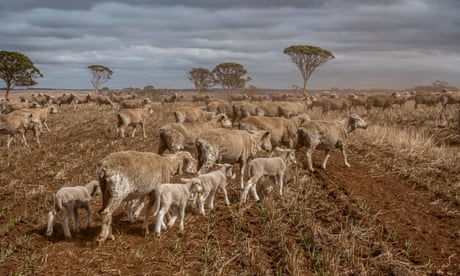
A farm in New South Wales. The new report says the impact of future declines in winter rainfall are
expected to be most severe in the state’s west and central Queensland.
and AAP

Last modified on Thu 29 Jul 2021 14.30 AEST

Seasonal changes linked to the climate crisis have reduced annual average farm profits by 23% - or about $29,000 per farm - over the past 20 years, according to the federal government’s agricultural research agency.

The drop in average profitably over 2001 to 2020, compared to the period between 1950 and 2000, came as Australia’s climate warmed and winter rainfall declined in the continent’s south-west and south-east.

A new report by the Australian Bureau of Agricultural and Resource Economics and Sciences found farm profits could fall by up to 50% over the next three decades if global greenhouse gas emissions were not significantly reduced and producers did not adapt to the changing climate.

Scenarios under which emissions were cut more significantly were projected to lead to smaller reductions in farming profitability.

The bureau’s executive director, Dr Jared Greenville, said the report – based on projections by the Bureau of Meteorology and CSIRO – showed seasonal conditions over the past two decades had been “pretty rough for Australian farmers”.

Greenville said that after accounting for climate impacts, productivity growth in broadacre farming had increased by 28% since 1989.

“The cropping sector has seen a huge gain of 68%,” he said. “New technologies and practices mean that farmers are able to grow crops under lower rainfall conditions than they could in the past.”

The bureau report suggested Western Australian cropping farmers could face more pressure than those in eastern states under most scenarios as they were expected to face more substantial declines in winter rainfall. It said the impact on inland livestock farmers was expected to be most severe in central Queensland and parts of western New South Wales.

It said the average farm size was likely to increase as smaller farmers would face greater pressure from climate change. Greenville said investing in research, development and climate data would be crucial in preparing for what lay ahead.

He said future climate projections of the extent to which rising temperatures would reduce rainfall varied markedly – from 3% to up 30% by 2050 compared with pre-2000 levels.

“This uncertainty over future rainfall is itself an important constraint on farmer adaptation,” he said. “While farmers have made significant progress to date, further adaptation will be required to maintain our competitiveness, particularly if other nations are not impacted to the same extent.”

Simon Wallwork and Cindy Stevens’ 3600 Hectare Farm in Corrigin, Great Southern district of Western Australia.

The report lands amid debate within the Morrison government over how agriculture is treated under a potential 2050 net-zero emissions target. Some Nationals opposed to the target have suggested they could be swayed if farming was heavily subsidised.

While Australia continues to resist, more than 120 countries and most major business and industry lobby groups including the National Farmers Federation say they support the 2050 goal. The G7 group of major developed countries have pledged to reach net zero by 2050 at the latest and turned their attention to plans to make much deeper cuts by 2030.

The governor of the Reserve Bank, Philip Lowe, last month told the Australian Farm Institute conference that reducing emissions would be important for Australia’s agricultural sector as up to 70% of its output was exported and international investors were highly focused on decarbonisation.

“Agriculture has tremendous opportunities here, but we need to find ways to disclose to global investors and global customers the decarbonisation strategy and how successfully we are doing that,” he said.

“It is a really important issue and it’s going to become more important.”

Washington state county is first in US to ban new fossil fuel infrastructure.

 Extract from The Guardian

Last modified on Thu 29 Jul 2021 01.53 AEST

A county in Washington state has become the first such jurisdiction in the US to ban new fossil fuel infrastructure, following a lengthy battle over the impact of oil refineries on the local community.

In a vote on Tuesday night, Whatcom county’s council unanimously passed a measure that bans the construction of new refineries, coal-fired power plants and other fossil fuel-related infrastructure. The ordinance also places new restrictions on existing fossil fuel facilities, such as a requirement that any extra planet-heating gases emitted from any expansion be offset.

Wind turbines in Wyoming

Whatcom county is located in the far north-west corner of Washington state, next to the Canadian border and abutting the Salish sea. The county hosts two of the state’s five oil refineries, with BP and Phillips 66 overseeing facilities at the Cherry Point complex that refines much of the oil from Canada and Alaska that is then distributed along the US west coast.

The ban is the culmination of a years-long fight to curb fossil fuel activity in the county to help address the climate crisis and reduce air pollution. A huge coal export facility, which would have moved 50m tons of coal a year, was proposed for Cherry Point but was eventually blocked in 2016 following fears raised by the local Lummi Nation that it would have destroyed fisheries.

Donovan said that people in the county had become increasingly alarmed about the environmental fallout of fossil fuel activity, including impacts upon fisheries and local orca whales.

“We just had our hottest day on record a few days ago, the salmon are disappearing, the glaciers are melting so much that you look at Mount Baker near here and you see bare rock where there used to be ice,” he said. “With all the fires and the heat, people are connecting the dots that this is climate change caused by fossil fuels. It has galvanized them.”

The fossil fuel industry previously attempted to block any new restriction upon its activity in Whatcom county, pouring money into local elections and claiming that the move would cost several thousand jobs. More recently, however, the industry entered into talks over how the new restrictions would work.

“Washington’s energy industry believes that ongoing capital investment into existing refinery operations is necessary to ensure the safe, state-of-the-art, clean production of transportation fuels,” Holli Johnson, manager of north-west external affairs for the Western States Petroleum Association. Johnson added that the association’s members were a “primary driver of economic growth and prosperity” and help fund local schools and healthcare facilities through tax revenues.

This relatively liberal enclave on Washington coast may be the first to call time on the fossil fuel industry but environmentalists hope it will spur other jurisdictions to do the same, then pushing the federal government to rapidly phase out oil, coal and gas in order to avoid worsening the ravages of the climate crisis, which is fueling huge heatwaves, drought and fire across the US west, along with flooding from Germany to China.

To date, Joe Biden’s administration has paused new oil and gas drilling on public land and attempted to accelerate the growth of renewable energy but has declined to set an end point for fossil fuels. Republicans, meanwhile, remain staunch defenders of the industry.

“This is a huge moment, it challenges the narrative that has been the default of the past century that new fossil fuel infrastructure is inevitable and will always be built,” said Matt Krogh, a campaigner at the environmental group Stand.earth who lives in Whatcom county. “There is a tipping point where if enough communities take action we will see Washington DC take notice.”

How many years until we must act on climate? Zero, say these climate thinkers.

Extract from The Guardian

Opinion

Climate change

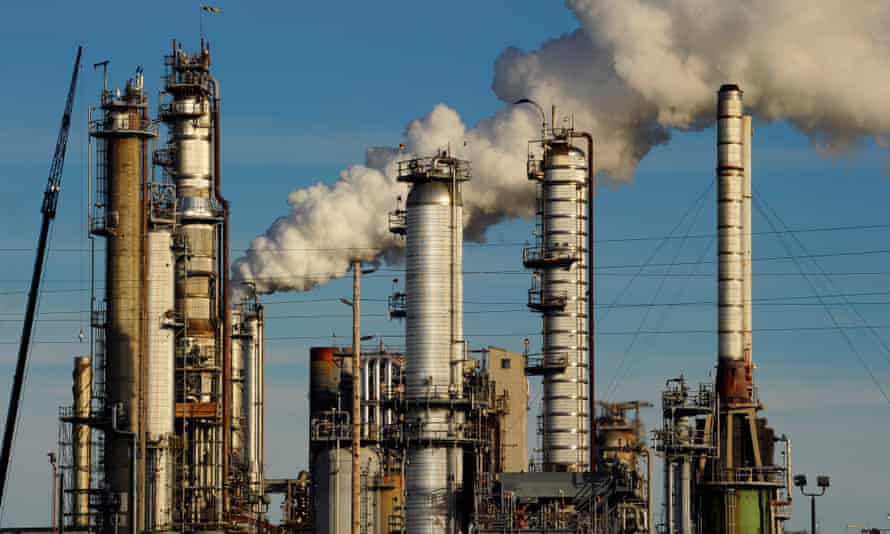
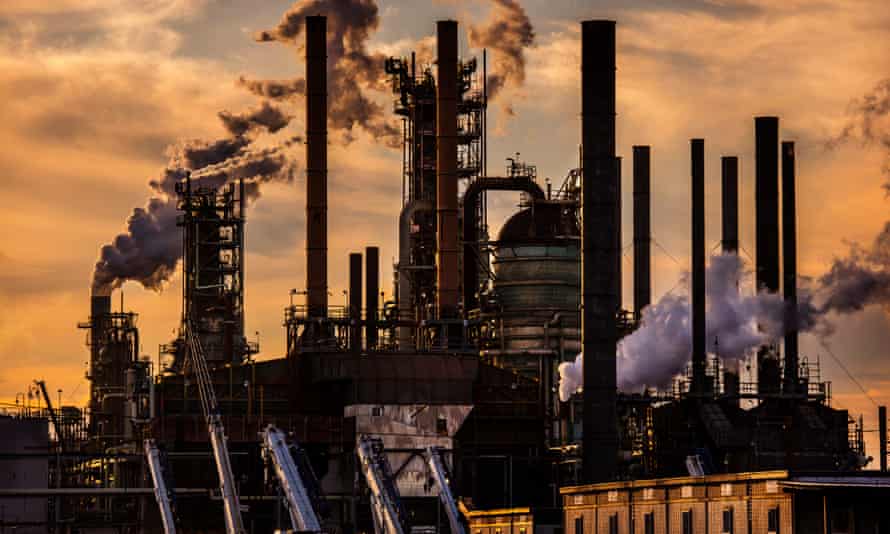
We asked a panelist of experts on when we need to start changing our economies and ways of consuming and producing. Their answer: now.Exxon Mobil Oil Refinery Baton Rouge<br>Oil refinery, owned by Exxon Mobil, is the second largest in the country on 28th February 2020 in Baton Rouge, Louisiana, United States. Tens of thousands of people live within 2 miles of the complex, which produces gasoline for much of the East Coast. The petrochemical plants inside the complex make materials used in products such as diapers, chewing gum, tires and makeup. The state government gives Exxon permission to pump out millions of pounds of air pollution each year from its Baton Rouge complex. But because of accidents and leaks, from 2008 to 2011 the Exxon Mobil Baton Rouge complex put out nearly 4 million pounds of volatile organic compounds, or VOCs, without the government’s approval. (photo by Barry Lewis/InPictures via Getty Images)

‘Phasing out fossil fuels, and supporting other countries in exiting fossil fuels, is the best bet for a peaceful future.’

Last modified on Thu 29 Jul 2021 02.36 AEST

Peter Kalmus: ‘Zero years’

We have zero years before climate and ecological breakdown, because it’s already here. We have zero years left to procrastinate. The longer we wait to act, the worse the floods, fires, droughts, famines and heatwaves will get.

Don’t blame men for the climate crisis – we should point the finger at corporations
Arwa Mahdawi
Arwa Mahdawi

The primary cause of these catastrophes is burning fossil fuel. Therefore, we must shut down the fossil fuel industry as quickly as we can. Fossil fuel subsidies must end today. New fracking wells, pipelines and other fossil fuel infrastructure can no longer be built; that we continue on this path is collective insanity. Fossil fuel must be capped and rationed, and diverted to necessities as we transition to a zero-carbon civilization. If we fail, the planet will continue to heat up, creeping past 1.5C, then 2C, then 3C of global heating as we keep squandering precious time. With every fraction of a degree, the floods and fires and heat will get worse. Coastal cities will be abandoned. Ocean currents will shift. Crops will fail. Ecosystems will collapse. Hundreds of millions will flee regions with humid heat too high for the human body. Geopolitics will break down. No place will be safe. These disasters are like gut punches to our civilization.

There are tipping points lurking in our future, but it’s impossible to know when they will be triggered. What’s certain is that every day we fail to act brings us closer. Some, like the loss of the Amazon rainforest, may already have been passed.

Jennifer Francis: ‘We cannot wait’

We need to immediately stop subsidizing all aspects of the fossil fuel industry. According to this report, the fossil fuel industry received $66bn in 2016, while renewables (excluding nuclear) only received $9.5bn. We should instead use those billions of subsidy dollars to ramp up the renewable energy industry: generation (wind, solar, nuclear), distribution (smarter grid), storage and electric transportation.

If we do not succeed in changing our destructive behavior, the increasing trends in extreme weather, sea levels, government destabilization and human misery will continue and worsen.

Extreme heatwaves, drought, wildfires and flooding events like those we’ve seen in recent summers will become commonplace. Many coastal cities and communities around the globe will be increasingly inundated by high tides and storm surges. Longer, more intense droughts will destroy cropland and force agricultural communities to uproot their families in search of a better life. The devastation of coral reefs around the world will worsen, wiping out fisheries that provide staple protein for millions of people. All of these impacts are happening now. If we don’t act fast, many communities, cultures and species will cease to exist.

  • Jennifer Francis is senior scientist at the Woodwell Climate Research Center

Michael Mann: ‘Strictly speaking, zero’

How many years do we have to act? Strictly speaking, zero – which is to say, that we must act, in earnest, now. We have a decade within which we must halve global carbon emissions. As I argue in The New Climate War, this requires dramatic systemic change: no new fossil fuel infrastructure, massive subsidies for renewables, carbon pricing and deploying other policy tools to accelerate the clean energy transition already under way.

We are seeing unprecedented public awareness, renewed leadership from the US and diplomatic progress with China, the other of the world’s two largest carbon polluters. There is reason for cautious optimism that we can rise to the challenge. But there is much work to do, and precious little time now to do it. We must now choose between two paths as we face our future. One leads to massive suffering and collapse of our civilizational infrastructure. The other leads to a prosperous future for us, our children and grandchildren. But it requires that we leave fossil fuels behind. The choice is ours.

  • Michael E Mann is distinguished professor of atmospheric science and director of the Earth System Science Center at Penn State University. He is author of the recent book, The New Climate War: The Fight to Take Back our Planet

Holly Jean Buck: ‘We need action now’

We need to ramp up action now in order to transform all of our major systems by 2050: energy, transportation, industry, agriculture, waste management. We’ll need to eat less meat, farm in ways that store more carbon in the soils, reforest degraded or abandoned land and restore wetlands.

We need to force companies to outfit cement plants and other industrial facilities with carbon capture technologies. When it comes to energy, we need to electrify everything. This means replacing gas-fired heating systems with an electric heat pump in your home and swapping out gas-fired stoves. It means inventing new types of energy storage for those times when the wind isn’t blowing and the sun isn’t shining, and getting used to responding to the grid – for example, turning down your air conditioning when the power company says there isn’t enough power (or letting them control your thermostat).

It means shutting down fossil fuel power plants and ramping up wind, solar, geothermal and probably nuclear, as well as building new transmission lines. Our targets should be 60% renewable electricity by 2030, and 90% by 2050. This means tripling renewable installations by 2030, or installing the equivalent of the world’s largest solar farm every day. If those power lines and solar panels look like they are industrializing the landscape, just think about the less visible but deadly costs of the old infrastructure. Fossil fuel combustion was responsible for 8.7m deaths in 2018.

Fossil fuels need to be phased out around the globe. What will people in those industries do? We will need entire new industries in hydrogen and carbon management, industries that turn captured carbon dioxide into fuels and other products as well as store it underground. We can’t just let fossil fuel companies pivot to becoming petrochemical companies, and find ourselves awash in more plastic. We can recycle, use products made from carbon, and innovate new bioproducts. It’s not just an energy transition, it’s a materials transition.

And it needs to be global. If we don’t succeed in transitioning away from fossil fuels globally, we could face an uneven world where a few rich countries congratulate themselves for going green, and a few oil producer nations are supplying the rest of the world with dirty fuel, which they use because they don’t have alternatives. In that world, greenhouse gas concentrations keep rising. Climate change exacerbates the risk of war and conflict. It’s hard to measure or model this for exact quantitative projections, but it’s a serious concern. Phasing out fossil fuels, and supporting other countries in exiting fossil fuels, is the best bet for a peaceful future.

Renewables industry blasts ‘unacceptable’ Australian energy market rules it says will prolong coal plants.

Extract from The Guardian

But federal energy minister Angus Taylor says proposed rules needed to ‘protect consumers from high prices and reliability risks’

Coal being processed
The Energy Security Board’s proposed market changes are the ‘last gasp of keeping coal-fired power stations open’, the Smart Energy Council says.

Last modified on Wed 28 Jul 2021 21.01 AEST

New energy market rules intended to ensure the lights remain on while ageing coal generators exit the market have triggered a backlash from Australia’s renewables sector.

Guardian Australia has seen a draft of new rules that have been proposed to federal and state energy ministers by the Energy Security Board (ESB). The overhaul includes imposing a strategic reserve across the national energy market as well as a beefed-up retailer reliability obligation.

Consultations about the shift have been underway for some time and there has been concern in the renewables sector that a more onerous reliability obligation could provide an incentive to keep coal plants operating for longer – concerns the chair of the ESB, Kerry Schott, has flatly dismissed.

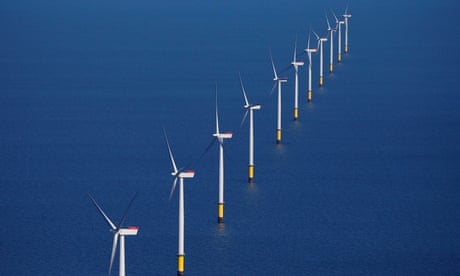
offshore wind farm

The ESB is also proposing a capacity mechanism for the energy market. The draft advice recommends that energy ministers give in-principle support to that proposal, with detailed design to follow over the next 12 to 18 months.

In capacity markets, power generators are paid when they can guarantee they can dispatch power at specific times.

The ESB’s advice was circulating widely among stakeholders on Wednesday night. The federal energy minister, Angus Taylor, issued a statement saying the capacity mechanism was “crucial to ensuring we can absorb renewables into the grid without threatening reliability and affordability”.

Taylor said the pace and scale of changes under way in the electricity system was “unprecedented” and the rules needed to remain fit-for-purpose “to protect consumers from high prices and reliability risks as technologies in the energy sector change”.

Schott also issued a statement, arguing the new rules were designed to “successfully integrate the transition to renewable generation already under way” and ensure the entry of the new generation lined up with the exit of old coal generators.

She said the proposal that had been handed to ministers for a deliberation in a sub-committee of the national cabinet was not “just a tweak around the edges – it’s about a whole redesign of the national electricity market”.

“We all know reform isn’t optional,” Schott said.

“It is not something we can choose to do; it’s something we have to do to confidently embrace Australia’s energy future while reducing the risk of price shocks and blackouts.

“The clearer and more coordinated the path, and the smoother the transition, the more confidence consumers, industry, investors and governments will have.”

But John Grimes, chief executive of the Smart Energy Council, which represents a number of Australia’s largest renewable energy proponents and developers, said the proposed capacity markets were the “last gasp of keeping coal-fired power stations open in Australia” as it would “give them payments just for being there”.

“What this will do is drive up the price of electricity for consumers and slow down the transition to renewables,” he said. “It will transfer wealth from electricity consumers to coal-fired power stations. It’s blatant and completely unacceptable.”

The Australian trade minister, Dan Tehan

He said the problems identified by the ESB were a result of insufficient energy infrastructure to connect renewable energy developments to the grid, not lack of capacity. He said plans by states such as New South Wales, Victoria and Queensland for designated renewable energy zones were a better way forward.

“You address this by investing in transmission infrastructure,” he said. “This is the wrong prescription at the wrong time for the wrong technology.”

Earlier in the year, with concerns mounting in the renewables sector about the impact of the reforms, Schott told Guardian Australia additional regulation aimed at keeping the lights on during the transition would not impact the coal retirement trajectory significantly because “commercial viability” was driving the change.

Schott was blunt about the inexorable direction of the transition. “Coal companies are going broke and they are likely to retire before their technical lives end,” she said.

Given the economics of energy generation, she said, it was now likely coal plants in Australia would be shuttered four or five years earlier than expected only a couple of years ago.

Australia's lithium miners powering the global electric vehicle charge.

Extract from ABC News

By business reporter Rachel Pupazzoni

Posted 
lithium mine man
A Pilbara Minerals geologist inspects the Pilgan open-cut mine pit.
(ABC News: Rachel Pupazzoni)

Australian miners are in the driver's seat to take advantage of the surge in demand for electric vehicles.

Australia is the world's biggest producer and exporter of lithium, a key component in batteries.

It is particularly favoured by electric vehicle (EV) manufacturers because it is lightweight.

With the biggest car maker in the world, Volkswagen, committing to half its cars being electric by 2030, demand for lithium is set to continue soaring.

"The EV demand growth this year has been really strong," Hayden Bairstow, division director of resources equity research at Macquarie Capital, said.Hayden Bairstow

Macquarie Capital's Hayden Bairstow says matching lithium demand with supply will be challenging for at least the rest of this decade.
(ABC News: Rachel Pupazzoni)

That is welcome news for Pilbara Minerals, a lithium miner in Western Australia's north that until recently had dropped its operation down to 30 per cent production after lithium prices began falling in 2018 before bottoming out last year.

It is now back at 100 per cent capacity, with expansion work underway. And it had access to enough capital to buy the lithium mine next door when the market tanked.

"We now refer to those facilities as the Ngungaju plant and we've just announced that we're going to restart those facilities later this year and ramp them up over the first half of 2022," Pilbara Minerals chief executive Ken Brinsden said.

Combined with its Pilgan open-cut mine, the whole operation will be exporting 580,000 tonnes of spodumene concentrate annually by the end of this year.Pilbara minerals pit

Workers operate around the clock at Pilbara Minerals' Pilgan open-cut lithium mine.
(ABC News: Rachel Pupazzoni)

"The scale at Pilgangoora is really incredible," Mr Brinsden told The Business.

The miner hopes to double that export capacity within years.

What is lithium?

Lithium, a soft, very light, white metal, is found in spodumene rock formations, and Australia has some of the best-known deposits in the world.

Pilbara Minerals spodumene rock

Lithium is highly prized by battery manufacturers for its light weight.
(ABC News: Rachel Pupazzoni)

Getting it out of spodumene requires a lot of crushing, then chemical processing and using water to float the light metal where it can be retrieved from the surface.

Australian miners currently export spodumene concentrate, which undergoes even more processing before it can be made into batteries.

The biggest export competitors are Chile and Argentina, but analysts say demand for lithium, particularly from Australia, is not going to wane in the near future.

"As the penetration rates on electric vehicle demand start to rise, we do sort of struggle to find enough lithium to balance the market, particularly towards the end of the decade," Mr Bairstow said.

That lack of supply is helping push prices higher, but not for the first time.lithium processing plant

Workers assess operations at Pilbara Minerals' Pilgangoora processing plant as it prepares to ramp up production.(ABC News: Rachel Pupazzoni)

We've been here before

"We saw a very quick demand growth in 2017/18 but it was probably more expectation than actual vehicle sales numbers," Mr Bairstow told The Business.

Asian prices peaked at more than $US21,000 ($28,583) a tonne for lithium carbonate in April 2017, according to Macquarie Research.

"But supply of lithium probably arrived quicker than what was anticipated and that was probably the biggest driver initially as to why prices then corrected back the other way from the peaks that we saw."

Lithium carbonate prices bottomed to a low of about $US7,950 in December last year.

But a price recovery is now well underway.

"We're still sort of $US11,000, $US12,000 a tonne now," Mr Bairstow said.

"So there has been a recovery but we're nowhere near the peak pricing we saw a few years ago."

Ken Brinsden

Pilbara Minerals CEO Ken Brinsden hopes to bring more of the lithium downstream processing onshore.(ABC News: Rachel Pupazzoni)

Mr Brinsden is confident prices will not crash again.

Lithium 2.0

The largest known hard-rock lithium reserve in the world is found just a couple of hours' drive south of Perth, at Greenbushes.

It is owned and run by Talison Lithium, which is itself owned by US miner Albemarle and the Chinese owned Tianqi.

The newest co-owner is IGO, which has just signed a deal with Tianqi to take some of its share of the mine and a processing facility in Kwinana on the southern outskirts of Perth.

Once a gold miner, IGO is repositioning itself as a batteries metals producer.

"In late 2017 we recreated our focus and our purpose, and our purpose is making a difference, and that helped us to totally focus on metals critical to enabling clean energy," IGO chief executive Peter Bradford told The Business.

Peter Bradford

IGO CEO Peter Bradford is reinventing the miner as a critical battery minerals supplier.
(ABC News: Rachel Pupazzoni)

Australia has historically been a nation that exports raw minerals, rather than turning those materials into physical objects, like iron ore which is made into steel in China.

Exporting lithium in the form of spodumene concentrate for overseas processing has so far been a similar story, but that is about to change.

Later this year, the IGO Tianqi joint venture will become the first operation to export lithium hydroxide, a compound created out of the spodumene, from Australia.

"For too long we have relied on resources, digging dirt out of the ground, putting it on boats, sending it to another country for downstream processing. And as we've done that, we've really narrowed the industrial base of our country," Mr Bradford said.

"For Australia to survive in the future, we need to be thinking now to make sure that in generations to come we have a broad-based society that comprises downstream, comprises manufacturing and we can continue to live the lifestyle we do, as the resources are depleted in the future."

Pilbara Minerals agrees.

About 95 per cent of the spodumene concentrate it produces is exported to China, but it is also working to bring part of the downstream processing onshore.

"By value adding to spodumene locally, there's a really strong opportunity for us to become a materially lower carbon footprint supply base in the lithium raw material supply chain," Mr Brinsden.

Benefits beyond batteries

lithium mine pit

Unlike the rich red colour of iron ore, which is synonymous with the Pilbara region of WA, lithium mines reveal white rock formations.(ABC News: Rachel Pupazzoni)

While the lithium sector is growing, no-one expects it to budge iron ore off the top spot as Australia's key commodity.

"Not with the iron ore the size it is," Mr Bairstow said. "I mean, we're producing a billion tonnes a year effectively out of Western Australia."

He predicts lithium demand globally will peak at just 0.1 per cent of that, forecasting about 1 million tonnes a year will be needed to sustain the EV market.

But adding another burgeoning industry to Australia's mining export dominance is also good news for communities in mining and port regions.

"You want the extra work to come," said Daniel Scott, the owner of North West Brewing Co in Karratha and local government councillor.

Dan Scott

North West Brewing Co. owner and local councillor Dan Scott hopes a growing lithium industry will help the Karratha economy.(ABC News: Rachel Pupazzoni)

During the mining construction boom a decade ago, Karratha was one of the towns to experience the best, and worst, of it.

It brought thousands more people to town, creating jobs and boosting the local economy.

It also created issues such as soaring house prices, housing shortages and difficulty accessing critical services such as health care.

Mr Scott hopes the growth in lithium can help bring more development to his town again, but also in a more sustained way.

"What did make the town busier from the last boom, where there was a construction boom, [is that it] became a maintenance boom because now there's all that extra infrastructure to maintain," he said.

He hopes, like many in the sector, that lithium can become not only a commodity that is exported after it has undergone some of the downstream processing here, but also one day can be manufactured into batteries right here in Australia.