Sunday, 28 November 2021

Australia’s spy agency predicted the climate crisis 40 years ago – and fretted about coal exports.

Extract from The Guardian

A composite image showing former Australian PM Malcolm Fraser and pioneering scientist Graeme Pearman

In a taste of things to come, a secret Office of National Assessment report worried the ‘carbon dioxide problem’ would hurt the nation’s coal industry

Last modified on Sun 28 Nov 2021 06.02 AEDT

The report was stamped CONFIDENTIAL twice on each page, with the customary warning it should “not be released to any other government except Britain, Canada, NZ and US”.

About 40 years ago this week, the spooks at Australia’s intelligence agency, the Office of National Assessments (ONA), delivered the 17-page report to prime minister Malcolm Fraser.

The subject? “Fossil Fuels and the Greenhouse Effect”.

Michael Cook, the agency’s director general, wrote in an introduction how his team had looked at the implications of rising levels of carbon dioxide in the atmosphere “with special reference to Australia as a producer and exporter of coal”.

Cook wrote: “Scientists now agree that if such emissions continue it will some time in the next century lead to a discernible ‘greenhouse effect’ whereby the Earth’s atmosphere becomes measurably warmer with related climatic changes.”

Graeme Pearman, a former CSIRO scientist who was doing work to measure CO2 in the early 1970s. Photograph: Supplied

The agency had several warnings for the Fraser government, but central to the concerns was the potential for the country’s coal exports to be affected.

Those concerns from high levels of government show that from the beginning, the country was seeing the climate change issue through the prism of its fossil fuels.

There were “potentially adverse implications” for the “security of Australia’s export markets for coal beyond the end of the century”.
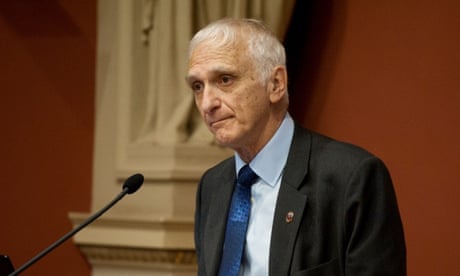
Dr Tom Beer speaks at the Hungarian academy of sciences in 2017

About 16 years after the ONA report, the Howard government signed the Kyoto protocol to limit greenhouse gas emissions.

John Howard, who was treasurer when the ONA report was released, later refused to ratify that Kyoto deal, saying it would damage the country’s industries, including coal.

If there wasn’t cost-effective technology “to reduce the carbon dioxide problem” by the end of that century, then concerns could “culminate in pressure for action to restrict fossil fuel usage”.

There was no “anti-fossil fuel lobby” yet that could be compared to “anti-nuclear groups” but some environmental organisations were starting to express concern.

Public attention was only going to increase as more scientific results were published “and are sensationalised by the press and others”.

But in a concluding sentence that could be commenting on the Morrison government’s current defence of fossil fuels from a distance of four decades, the report says: “Australia could well find its export market particularly vulnerable to international policies aimed at limiting the use of coal.”

Dr Robert Glasser, head of the climate and security policy centre at the Australian Strategic Policy Institute, said: “It’s the job of intelligence agencies to anticipate these long-term threats and then alert the government.

“In that respect, they were doing their job.”
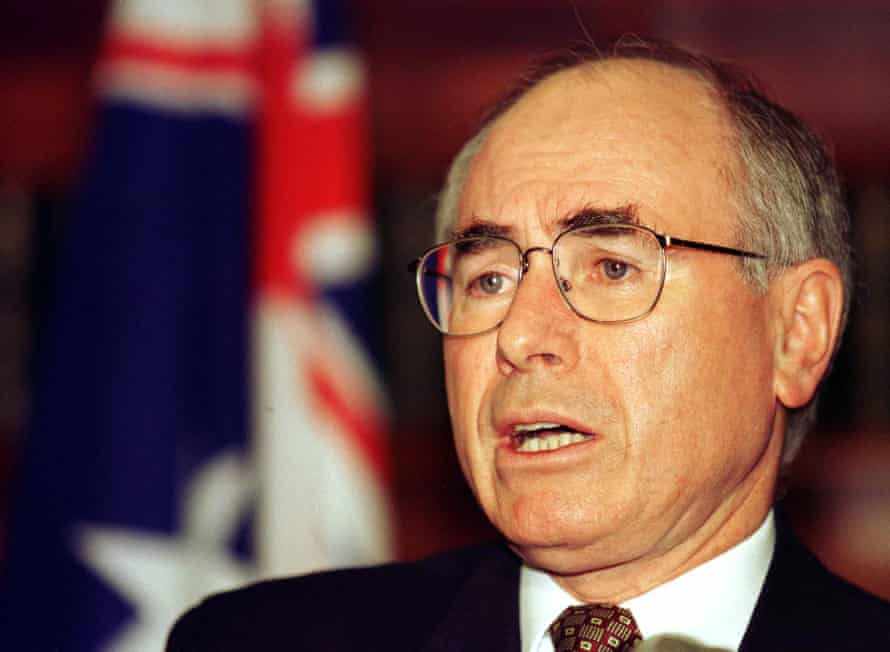
Former Australian prime minister John Howard.

Former Australian prime minister John Howard refused to ratify the Kyoto deal. Photograph: Mark Baker/REUTERS

The existence of the ONA report – sent to Fraser on 25 November 1981 – is still not widely known.

Scientists working on the issue at the time said they had never seen it until the Guardian sent them a copy. Australia’s longest-serving science minister, Barry Jones, who took up his ministerial role in 1983, also said he had no recall of it.

Glasser says those who have followed the science over decades might not be surprised that Australia’s intelligence was exercised by climate change 40 years ago.

“The science has been clear in terms of a general direction ever since the 1970s – a decade before this report. But we now know the impacts.”

But he says despite the country’s intelligence agency first engaging with the issue 40 years ago, Australia is still “way behind” on the security risks being posed by climate change.

“We are failing to assess the climate and security risks generally, not just in Australia where we can see these simultaneous record-setting compounding events, but even in the region it’s a major security issue.”

Download original document

“The document was amazingly prescient and remains accurate in its essentials,” said Hamilton

“It was one of those extraordinary things a researcher occasionally stumbles upon. Almost no one seemed aware of the report. It was just gathering dust on a shelf somewhere.”

As well as forecasting problems for the country’s coal industry, the ONA report included qualified forecasts of the potential impacts on the climate.
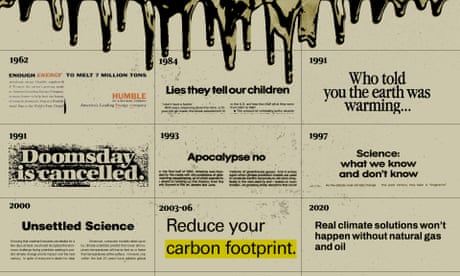
Composite illustration of oil ads from 1962 to 2020

The area where cyclones could hit could extend as the tropics expand. Sea levels could rise, plants might grow quicker and the polar regions would warm much faster.

There would be global winners and losers, the report said. Canada’s wheat-growing belt could grow, gaining area from the USA as the climate shifted. A loss of permafrost in the USSR and Canada could deliver more agricultural land (permafrost is now melting, with concerns about the release of large amounts of greenhouse gases that could further raise temperatures).

If CO2 levels doubled in the atmosphere, then the ONA thought this could cause between 2C and 3C of warming. That estimate – from 40 years ago – is within the range of the UN’s latest assessment.

Emerging science

But the science and the concerns among Australia’s top scientists had been building well before the ONA report dropped on Fraser’s desk.

Some of the data in the report was drawn from the work of Dr Graeme Pearman and colleagues at CSIRO. Pearman is a pioneering climate scientist who started working on the issue in the early 70s and remembers speaking to ONA staff at the time.
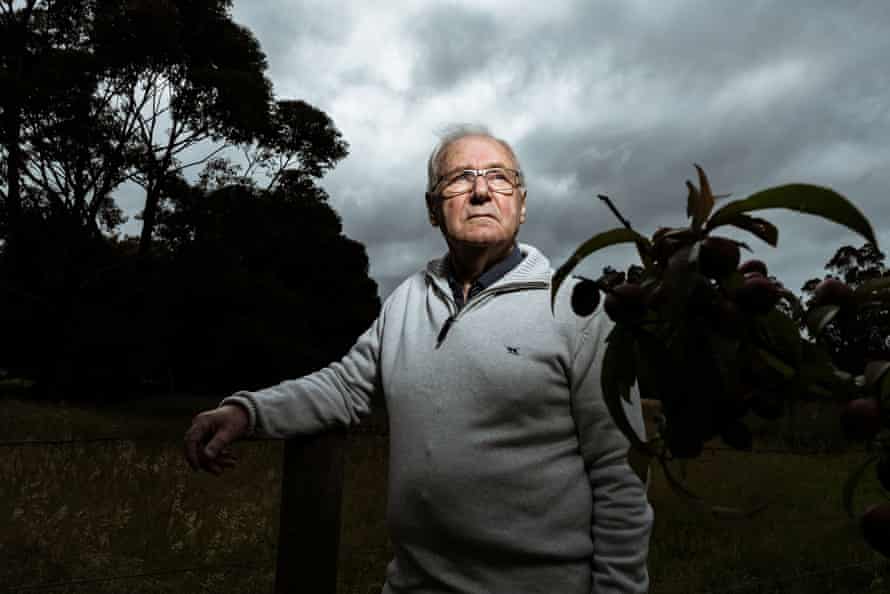
Graeme Pearman in Melbourne last week

‘I knew they were aware of the issues’: Graeme Pearman in Melbourne last week. Photograph: Darrian Traynor

“The report does reflect pretty well the state of our scientific understanding at that time. Where it perhaps falls down is that there seems to be no real attempt to evaluate the risks associated with what may unfold.”

The CSIRO had started measuring CO2 levels in the air using instruments in a wheat field in Rutherglen, Victoria, in 1971.

The following year, Pearman and colleagues had put air-sampling equipment on planes – some commercial and some government-owned. More than 3,500 samples were taken.

Pearman was curious about CO2 measurements that had been taken continually since 1958 in Hawaii by pioneering climate scientist Charles David Keeling, of the Scripps Institution of Oceanography in California.

To Pearman’s amazement, the amounts of CO2 in the air above the wheat field and from the aircraft instruments were almost identical to Keeling’s findings from Hawaii

In 1974, Pearman took the Australian air samples in six steel flasks across the world, visiting Keeling’s laboratory in California as well as other scientists doing CO2 measurements in Sweden, Canada, American Samoa and New Zealand.

In 1976, the Australian Academy of Science published a Report of a Committee on Climatic Change that mostly dealt with natural variations in the climate.

But that report included a chapter on “man’s impact on climate”. All past climate changes had been due to natural events “on an astronomic or global scale,” the report said. But then came this sentence: “Human activities are now developing in ways that could have an appreciable effect on the climate within decades.”
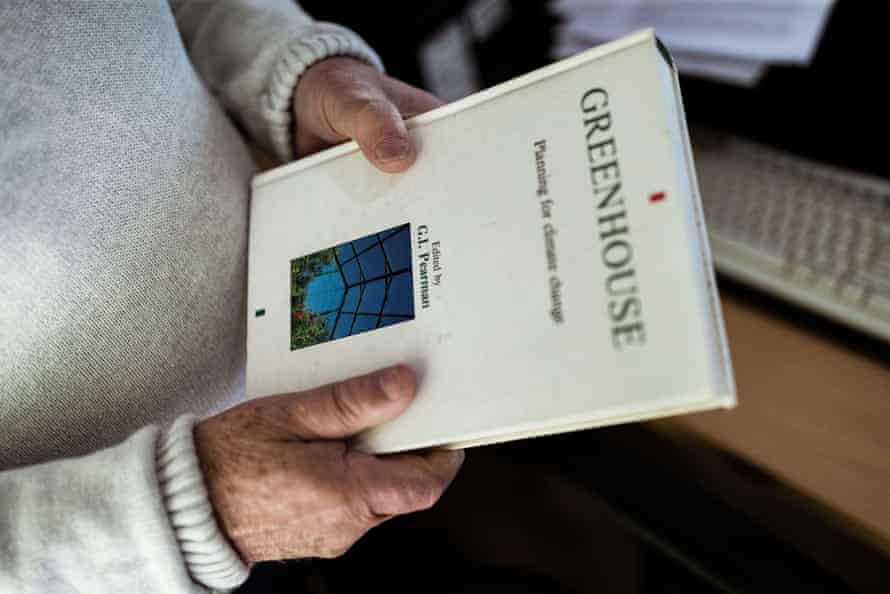
Graeme Pearman with a book about climate change that he edited in 1988.

Graeme Pearman with a book about climate change that he edited in 1988. Photograph: Darrian Traynor

“The potential significance of a CO2-induced climatic change is large,” wrote Pearman, but so too were the uncertainties. A lot more work needed to be done.

Pretty ordinary or prescient?

“It is fascinating and remarkable to read how this was being viewed [by the intelligence agency] only 10 years after we started our CO2 and climate work at CSIRO,” says Pearman.

Australia’s longest-serving science minister from 1983 to 1990, Barry Jones, could not recall ever seeing the ONA report, but he wasn’t particularly impressed.

Australian Prime Minister John Howard and media tycoon Rupert Murdoch. Both figures helped to hold back climate action in Australia in the 90s and beyond, according to a new book by author Maria Taylor.

“I think it’s pretty ordinary,” says Jones, whose latest book is called What Is to be Done: Political Engagement and Saving the Planet.

“They imposed on themselves a very narrow terms of reference,” he said, and was puzzled why the report mentions other greenhouse gases but ignored methane.

Prof Ian Lowe was lecturing students on the future of energy supply at Griffith University in the early 1980s. He also hadn’t seen the ONA report before.
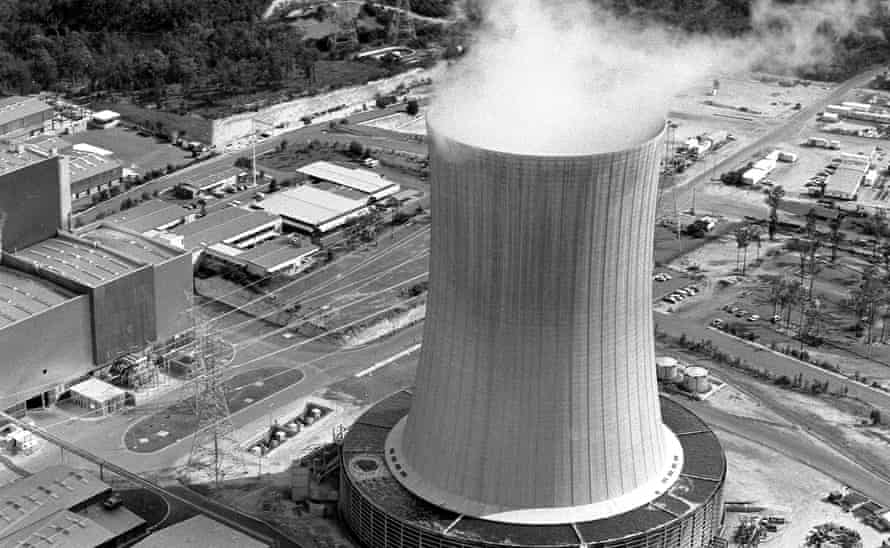
A Queensland coal-fired power station during construction, circa 1980

A Queensland coal-fired power station during construction, circa 1980. Australia has been worried about climate change’s implications for fossil fuels for decades. Photograph: Peter Righteous/Alamy

“The spy agency thought it was important enough to draw it to the attention of our political leadership largely because of what they saw as the commerce implications for the Australian export markets for coal.

“But what’s politically interesting is there was absolutely no response to this warning, even though the expansion of fossil fuels was tragically compromised.”

Author and academic Dr Jeremy Walker, of UTS in Sydney, is researching the history of climate science and energy policy. He’s been reviewing the ONA report as part of a wider project.

“What’s interesting to me is that this was being considered at the highest levels of government, but the security issue is being interpreted in terms of the profitability of the fossil fuel industry. The fossil fuel industry is central to the government’s response – then and now.”

Saturday, 27 November 2021

‘Reaching back to the horse and cart’: Morrison government’s gas plan panned.

Extract from The Guardian  

Plan to ‘unlock basins’ for domestic and export criticised as ‘out of sync’ with global trends and climate action.

Angus Taylor
Energy minister Angus Taylor released Australia’s national gas infrastructure plan on Friday, sparking criticism from climate and policy experts.

The national gas infrastructure plan, released on Friday, calls for the development of at least one major new gas basin before 2030 to meet projected domestic and export needs. Opening up new gas fields, though, will also require additional pipelines.

“Unlocking basins and getting gas to where it is needed will support our job-creating industries,” Angus Taylor, the federal energy minister, said.

“The Morrison government is serious about gas and acknowledges the important role it plays supporting jobs, food production, manufacturing, industry, exports and energy supply.”

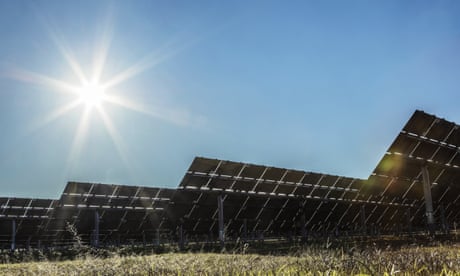
Solar panels at a solar farm in Australia

Taylor said industry would be asked to join a new expression of interest process to identify “critical projects that require support to accelerate delivery”. The government committed $38.7m in the 2021-22 budget to speed up such ventures.

New sources of supply that may require such aid include NSW’s Narrabri coal seam gas project, possibly on stream by 2026, the Northern Territory’s Beetaloo Basin by 2025, and Queensland’s Galilee and North Bowen basins by 2028 or sooner.

Kevin Gallagher, chief executive of Santos, which owns the Narrabri project and has an interest in Beetaloo, welcomed the plan.

“The scarcity of new developments on the east coast is frightening,” he said. “If Australia does not continue to develop its oil and gas resources, then supply will simply come from places like Russia and the Middle East, and Australian workers and Australian living standards will be the poorer for it.”

He said the $3bn-plus Narrabri plan offered “the lowest cost gas available to New South Wales customers” and would be 100% committed to the local market.

‘Throwing away money’

But critics said the plan was out of step with market sentiment towards new fossil fuel projects and noted it avoided any mention of climate change. They pointed to the falling share of gas in the National Electricity Market even as renewable supplies increased as a key trend.

“Gas in electricity production is ancient history. It really is throwing away money [to support new gas infrastructure],” said Bruce Mountain, director of the Victoria Energy Policy Centre.

“It’s reaching back to the horse and cart.”

Suzanne Harter, a climate change campaigner at the Australian Conservation Foundation, said the 34-page plan directly contradicted commitments to keep global warming to less than 1.5C that the Morrison government signed up to in Glasgow at Cop26 earlier this month.

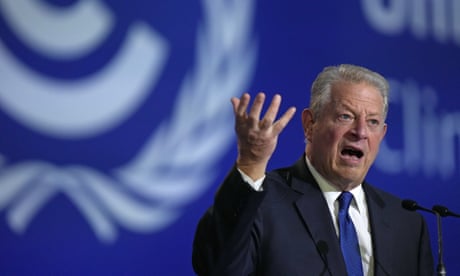
Al Gore, former Vice President of the United States

Harter noted “the government stands ready” to fill gaps “where private sector investment is not available in time to ensure priority infrastructure projects”, according to the report.

“It is completely out of sync with global market trends which are to get out of fossil fuels,” she said, adding that Beetaloo and Narrabri were “climate bombs” in terms of their potential emissions.

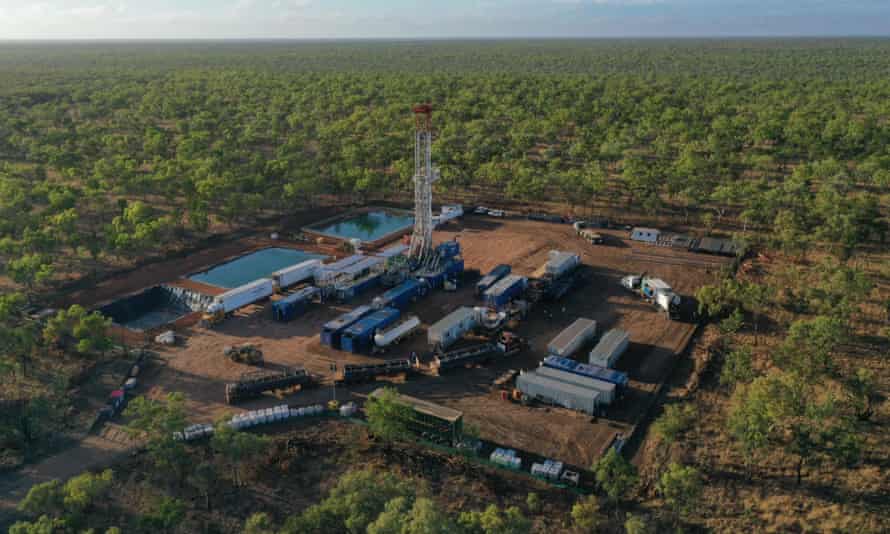
Empire Energy’s Carpentaria-1 exploration well at its Beetaloo Basin gas site.

Empire Energy’s Carpentaria-1 exploration well at its Beetaloo Basin gas site in the NT. Photograph: Department of Industry, Science, Energy and Resources

Federal Greens leader Adam Bandt said the plan was proof “Australia has no pathway to net zero, even by too-late 2050”. The Greens want net zero emissions to be reached by 2035.

“If Labor are serious about climate action, they’ll join the Greens next week in the Senate to block fracking the NT at Beetaloo and Santos’ rorting of carbon capture and storage,” Bandt said.

Guardian Australia approached Labor for comment.

While the report emphasised that state and territory governments had a role in “encouraging the timely development of gas reserves” to head off shortages, coordination appears to be limited.

NSW government officials, for instance, say they have not been approached for assistance to help develop the Narrabri gas field.

Predicting gas demand is also challenging. Explosives maker Orica accounts for as much as 15% of demand in the state and whether it cut usage or switched to hydrogen in the future could play a swing role in the future gas market.

Jim Chalmers on Labor’s plan for Australia’s economy.

Extract from The Guardian

Katharine Murphy speaks to the federal shadow treasurer about the ALP’s economic and climate policy ahead of an election year.

https://www.theguardian.com/australia-news/audio/2021/nov/27/jim-chalmers-on-labors-plan-for-australias-economy

How to listen to podcasts: everything you need to know

Photograph: Mike Bowers/The Guardian

It was hard to keep up during Scott Morrison’s horror week. It would help if he could get his story straight.

 Extract from The Guardian

‘Scott Morrison is the most powerful parliamentarian in the country … But by all means, collect the salary and disdain a goodly part of the job description.’

It certainly was vibrant. Morrison’s horror week included two government senators on strike until he did something about mandatory vaccinations; George Christensen sanctioning civil disobedience and Russell Broadbent likening vaccine compulsion to criminality; Christensen crossing the floor on a government bill to vote with Labor; Bridget Archer teaming up with Helen Haines to bring on debate about an integrity commission; moderate Liberals digging in their heels on the religious discrimination bill, blunting Morrison’s options to weaponise the proposal against Labor; Liberal China hawks blasting a “retrograde” move by the environment minister to scrap a proposal for a 2.7km concrete runway at Australia’s Davis research station in Antarctica; and peak farce: Morrison at war with Morrison over whether he told Anthony Albanese he was off to Hawaii in 2019.

Final sitting weeks are often chaotic, but the dissonance hit new heights. After “shut up or we’ll lose the election” failed, and “we’re not drones” became the new reality sanctioned by the talking points pack, Morrison dug into the back catalogue to minimise political peril.

This noise was all Canberra bubble stuff. Out in the real world, nobody cares about what happens in the parliament apart from that parliamentary obsessive Albanese, who eats parliament for breakfast and bores the pants off everyone with his arcane procedure. Nothing to see here. All games and theatre.

What have parliaments done for us lately? Hmm, yes, inspiring stuff. Never mind the inconvenience that Morrison is paid by the taxpayer to be (wait for it) a parliamentarian. He’s in fact the most powerful parliamentarian in the country. Fun fact. Democratic institutions, and core conventions like resolving conflict through deliberation, are what stands between us and autocracy or chaos. But by all means, collect the salary and disdain a goodly part of the job description.

In any case, it would be helpful if the prime minister could get his story straight. In Morrison’s other improvised flourish of the week, posturing bubble-dwellers were cast as the heroes of the side. The prime minister felt voters would be deeply distressed if federal Liberal politicians were humiliated by a nasty boyfriend surveilling anti-corruption body. Morrison felt public representatives were people of standing who did not deserve being done over by a kangaroo court (although it seemed to be OK for Icac-style bodies to do over Labor politicians because they had it coming).

It really was hard to keep up. In any case: here’s my statement of the obvious. Morrison’s shapeshifting and sandbagging is gratuitously self-serving.

But that doesn’t make his diagnostics wrong.

Scott Morrison roared like a caged beast and lunged for a human shield in the form of Gladys Berejiklian
Katharine Murphy

Morrison is correct to note that much of the intrigues and embarrassments of the week won’t have registered at a granular level. Only highly engaged voters monitor events in the parliament closely, and most of them have already picked a side.

Some in the government think they need another budget to turbo-charge the re-election pitch. But this reasoning is odd at a few levels: real people (if readership numbers are a reliable guide) don’t care about budgets as much as they once did. They aren’t really a focal point.

Waiting for a budget also pushes the election closer to winter. Morrison wants to run on how good is freedom. Let’s get government out of people’s faces. That’s a summer campaign, not a winter one given what’s happening in the northern hemisphere – Australia’s higher vaccination rates notwithstanding.

Labor thinks it is in this political contest. The polls bear this out. But Morrison, despite all his current problems, has a structural advantage. Labor lost badly in 2019, and in the absence of a 2007-style ‘vote the bastards out’ groundswell, it will be hard to win enough seats to win outright.

Things are promising for Labor in the west. People say things aren’t toxic in Queensland, but the legacy of 2019 is big buffers in Coalition-held seats. New South Wales could be patchy. Palmer’s United Australia party is making inroads in the state after the long lockdown, according to our Guardian Essential poll, and Nationals are hunting in the Hunter.

Tasmania will be important. Archer crossing the floor this week suggests she’s more worried about her constituents than Morrison’s desire for tranquility. She holds the marginal Tasmanian seat of Bass. Jacqui Lambie declared at one point during the week the Coalition was in deep trouble in Tasmania, but it’s hard to know which way the wind is blowing, given those marginal seats flip from election to election.

Both sides think a hung parliament is a genuine possibility, hence all the oversized focus on independents targeting government-held seats, even though this insurgency is a handful of seats phenomenon.

While the focus has been on Morrison’s travails, the coming few weeks are also very important for Labor. Albanese has worked hard for months to persuade voters to question Morrison’s character. But as the election creeps closer, Labor needs to flesh out its own policy agenda.

Either next week or early the week after, Labor will resolve a critical element of its climate policy – a new medium-term emissions reduction target.

Labor’s progressive base will want an ambitious commitment. But climate policy ambition isn’t an electoral plus in all parts of the country. The Coalition is still actively recruiting votes from workers in traditional carbon-intensive industries. The government will weaponise an ambitious medium-term target in regional Queensland and NSW.

The Coalition’s target is a cut of 26-28% by 2030. Labor is considering a target somewhere between 35% and 45%. The most recent government emissions projections forecast overachievement on the Abbott-era target, with a likely reduction of 35%.

The projections give Labor political cover to promise a cut of 35%. But the science would say go harder. So the shadow cabinet will mull options up to 45%, which could involve Labor engaging the Coalition’s own safeguards mechanism to drive lower abatement during the transition to the new energy economy.

People shop for fruit and vegetables at a market

The shadow treasurer, Jim Chalmers, is from Queensland, the state that swung heavily against Labor in 2019. On my podcast this weekend, Chalmers says Queensland has been typecast unfairly as knuckle draggers in the climate wars.

Chalmers says people in regional Queensland remain anxious about the transition so they won’t cop significant ambition without concrete assurances about jobs. He says people are also sick of the political divisions about climate policy. Nuanced listeners in the LNP report similar sentiment. Voters see a problem, and they want politicians to shut up and fix it.

Chalmers says the Queensland government has given Labor a working template for linking ambition with long-term job security. Targets need to be accompanied by government investment in “additional jobs, additional industries”.

“If you look at the Palaszczuk government, they’ve made some really quite remarkable investments in Gladstone in hydrogen, in Townsville, in other minerals,” he says.

Imposing ambition and aligning that with investments in new economic opportunity allows people to see “tangible opportunities in regional communities”.

“I think that’s the way through this issue.”

Albanese, who is daring to hope Labor can catch a wave, will be hoping that’s the case.

Historic Southern Cross replica aircraft close to take-off as new engines fitted for Wings Over Illawarra.

 Extract from ABC News

By Justin Huntsdale
Posted 
Play Video. Duration: 2 minutes 49 seconds
Southern Cross replica almost ready to fly(ABC Illawarra: Justin Huntsdale)
Help keep family & friends informed by sharing this article

The Southern Cross is arguably Australia's most famous aircraft, and its exact replica is nearly ready to take to the skies again.

Painstakingly restored by volunteers at the Historical Aircraft Restoration Society (HARS) over more than 10 years, the 1980s-built plane needed major repairs to fix a wing broken after an emergency landing in 2002.

"The wing was by far the major focus for us because it has the original wooden wing, and wooden wings are a thing of the past," Southern Cross replica engineer Jim Thurstan said.

The original Southern Cross was flown by Charles Kingsford Smith on the first transpacific flight from the United States to Australia in 1928.

The plane's replica was the project of South Australian flying instructor John Pope, who created the plane as a travelling history lesson that would fly around the country.

Jim stands in a dark jumper and jeans in front of the front of the Southern Cross replica with exposed engines and props.

Volunteer Jim Thurstan has been overseeing the Southern Cross replica's restoration for more than ten years.(ABC Illawarra: Justin Huntsdale)

Plane to fly next year

With three new engines freshly fitted and tested, the replica aircraft is expected to take off in 2022.

"It'll be very satisfying indeed, just getting it out to run the engines is a big step forward," Mr Thurstan said.

He said once the plane was airworthy again, it would hopefully resume its original purpose, travelling the country and teaching people about the early days of aviation.

"John Pope, who conceived it in the beginning, that's what he dreamed of doing and it was very successful.

"It flew in the Bicentennial celebrations and to New Zealand, but it flew around Australia, going to country towns where school children came out and a got a history of aviation in general."

A light plane rests on Seven Mile Beach

The original Southern Cross aircraft once took off from Seven Mile Beach at Gerroa.(Supplied: Gerringong Historical Museum)

A primitive way to fly

The original Fokker aircraft was flown by Sir Charles Kingsford Smith, Charles Ulm, Harry Lyon and James Warner from the United States to Australia in a 11,670-kilometre journey.

That plane provided none of the comforts of modern aviation, and Jim Thurstan said the replica would be the same.

"Compared to modern planes, this is very primitive, but back in 1928 it's as good as it got — these were the jumbos of the day," he said.

Two wooden steering wheels in front of a board of gauges and levers inside the cockpit of the Southern Cross replica.

The cockpit of the Southern Cross replica contains modern aviation instruments.(ABC Illawarra: Justin Huntsdale)

"There were about 170 of them built in England, Holland and America and to fly in them would be noisy.

The aircraft with its new engines will be on display as part of Wings Over Illawarra this weekend – Australia's biggest air show.

"We've had people from all walks of life [work on the plane], and we did have pilots from Qantas help out when they were out of a job recently," Mr Thurstan said.

"Some will probably get to fly this aircraft, which a lot of pilots would like to do."

Communities 'rooted in this soil' face a managed retreat from climate change and rising waters.

Extract from ABC News

Posted 
Abandoned houses on a beach in America.
Four homes on Harbor Island, South Carolina, were abandoned after years of beach erosion and hurricane damage.(AP: Rebecca Blackwell)
Help keep family & friends informed by sharing this article

Ricky Wright points to the bank of a creek to show one way his hometown has been affected by climate change.

Many banks have eroded or collapsed and now some favourite fishing spots that were once on solid ground are reachable only by boat.

Wright is part of the Gullah Geechee, a group of Black Americans who descended from slaves and live off the coasts of North Carolina, South Carolina, Georgia and Florida.

The community has endured for centuries but is now imperilled by a combination of rising seas devouring their land, higher temperatures changing how they farm and fish, and destructive storms threatening their way of life.

Man fishing for bass in South Carolina.

Ricky Wright fishes for bass in a marsh waterway with eroded banks on Saint Helena Island, South Carolina.(AP: Rebecca Blackwell)

"I would say [it's] depressing to lose places like that, especially if you grew up there," said the 65-year-old fisherman, who noted other changes such as the great white shark migrating to waters off Saint Helena Island.

"It's scary."

The risks to the Gullah Geechee and other communities have intensified enough to raise a startling question: Should some populated places simply be abandoned to nature?

Planned or chaotic retreat?

One strategy gaining traction is the so-called managed retreat, which is the planned relocation of vulnerable people.

Stephen F Eisenman, director of strategy for environmental group Anthropocene Alliance, said this was a "huge issue".

The biggest question is whether the retreats are planned and methodical or unplanned and chaotic.

The issue also raises concerns about economic fairness in this landscape that is home to Hilton Head Island, a popular destination for well-heeled tourists visiting its many resorts.

While the Gullah Geechee are told to think about moving, the hotels stay open and industry gets new permits, said Harriet Festing, co-founder of the alliance.

"So there's a lot of distrust of government intention and the messages that are coming to them," she said.

Cottage where American civil rights leader Martin Luther King, Jr stayed.

Gantt Cottage, where Martin Luther King, Jr stayed during his visits, sits tucked back on Saint Helena Island, South Carolina.(AP: Rebecca Blackwell)

Forms of managed retreat have existed in the US since at least 1989, when the Federal Emergency Management Agency (FEMA) began buying properties in flood-prone areas.

Parts of Louisiana, Wisconsin and Illinois have used planned relocation to try to save communities from flooding and rising seas.

Strategies to save communities

With help from government buyouts, some communities simply move to nearby areas that are less prone to disaster.

Others migrate to different parts of the country or different countries altogether.

But buyouts aren't the only component.

Other strategies include restoring habitats, replacing concrete-laden areas with green space and using zoning laws to limit development in troubled places.

Parts of Florida, California and New York could need to use the same strategy at some point.

AR Siders, an assistant professor at the University of Delaware's Disaster Research Centre, said, "imagine New York City over the next hundred years shifting its density north. It could happen".

One reason why the idea is met with resistance is because of its name.

"Managed retreat" is too technical for some and too defeatist for others.

Proponents are starting to adopt other descriptions, including planned relocation and climate migration.

Regardless of what it's called, Dr Siders said more and more communities have considered some version of the idea, especially in the aftermath of major disasters such as Hurricane Sandy in 2012, which claimed 147 lives and left an estimated damage bill of more than $US70 billion ($98 billion).

The concept "pushes us to do better adaptation," she said.

"But it's also a challenge because it scares people.

"They get scared that they're going to be forced out of their home."

Woman throws flower into the ocean to honour her African ancestors.

Gullah Geechee community elder Sandra Boyd, also known as "Mama Sasa," honours African ancestors on Hunting Island, South Carolina. (AP: Rebecca Blackwell)

In a study published in Science Advances in 2019, Dr Siders and other researchers found FEMA's buyout program was more likely to help wealthier, more densely populated counties.

But even within those communities, FEMA buyouts were concentrated in less affluent, less densely populated areas with lower English proficiency and more racial diversity.

Devastated town

Environmental activist Hilton Kelley has been trying for years to get federal assistance to relocate himself and members of his community from Port Arthur, Texas.

Port Arthur is closer to the Gulf Coast than much of Houston, and both communities have been ravaged by hurricanes over the past 20 years.

But Houston had received more attention and more money for relocations because of its vastly larger population, he said.

"This town has been devastated," he said.

Mr Kelley said many people in Port Arthur were ready to relocate if help was available and they could take the lead in planning the move.

But that's not the case in other cities.

Tiny DeSoto, Missouri, has been hit with destructive flash floods four times in the last eight years.

After a particularly bad flood in 2016, Susan Sherrow Lilley started organising her neighbours to accept buyouts.

But they only seemed interested in the immediate aftermath of a flood.

"It hasn't flooded in five years and people are very comfortable now thinking that it's not going to again. But it will," she said.

Ms Lilley and other concerned residents have organised 22 homes and one business to apply for FEMA money but that's only about a third of the structures that were recommended for buyouts by the Army Corps of Engineers.

She said they need buyouts for everyone because even when people move to higher ground, their abandoned homes often get bought, fixed up and put back on the market.

Water laps around a picnic table.

Water laps around a low-lying picnic table in Hunting Island State Park, South Carolina.(AP: Rebecca Blackwell)

"And then the people go through a flood, and it's just this vicious cycle over and over again," she said.

A recent World Bank report predicts 200 million people around the globe will be forced to move because of climate change by 2050.

Other countries have already begun planning massive relocations, including Indonesia and the Marshall Islands.

The process was "extremely complex, and there is a high risk that it leaves communities even worse off than they were before," said Ezekiel Simperingham, global migration lead for the International Federation of the Red Cross and Red Crescent Societies.

'It doesn't get cold anymore'

Among the Gullah Geechee, big storms have become familiar.

At least seven named storms have struck the region of the south-east US where they live, including Hurricane Matthew in 2016, Irma in 2017 and Dorian in 2019.

Man holds a blue crab.

Thomas Mitchel shows off a blue crab from that morning's catch off Saint Helena Island.(AP: Rebecca Blackwell)

Thomas Mitchell, a crabber who lives on Saint Helena Island, comes from a family that catches fish, shrimp and oysters.

But oysters have been hard to come by because they need cold weather to survive, and the warm seasons have become longer.

"The oysters don't come until it's cold, and it doesn't get cold anymore," he said.

But the idea of abandoning their historical home is a nonstarter for many of the Gullah Geechee.

"The only way I'm going to relocate is when I meet my demise," Mr Wright said.

'We are rooted in this soil'

Marquetta Goodwine, a community leader on the island known as "Queen Quet," said the Gullah Geechee was inextricably linked to the land.

Woman who is a community leader in South Carolina.

Marquetta Goodwine, a community leader who is also known as "Queen Quet", vows to fight.(AP: Rebecca Blackwell)

"I'm not running. I don't come from the stock of people who run," she said.

"I come from the stock of people who fight, people who hold on, people who stand for what they believe in.

"And we are rooted in this soil."

As he waited for a fish to tug on his bait at the creek, Mr Wright echoed those sentiments.

"When we [were] kids, our parents taught us … if you ever have to run anywhere, don't run away from home," he said.

"Make sure you run and come home.

"And so that's instilled in me, and this is home."

AP