Contemporary politics,local and international current affairs, science, music and extracts from the Queensland Newspaper "THE WORKER" documenting the proud history of the Labour Movement.
MAHATMA GANDHI ~ Truth never damages a cause that is just.
The arrival of the Boeing 787 at JFK airport in New York completes the first 100 per cent SAF transatlantic flight. (Reuters: Brendan McDermid )
Link copied
The
first commercial fossil fuel-free airliner to cross the Atlantic on
purely high-fat, low-emissions fuel has flown from London to New York in
a step toward achieving what supporters called "jet zero."
Key points:
The Virgin Atlantic Boeing 787 flight relied on tallow and waste fat
It was the first trans-Atlantic commercial fossil fuel-free flight
Large hurdles in cost and availability make it difficult to roll out the fuel use more widely
The Virgin Atlantic Boeing 787 flight relied on Sustainable Aviation Fuel made up largely of tallow and other waste fats.
"The world will always assume something can't be done, until you do it," said Virgin founder Richard Branson.
Mr Branson was joined on the flight by corporate and government officials, engineers and journalists.
The UK Transport Department provided 1 million pounds ($1.9 million) to plan and operate the flight.
The department called the test a "huge step towards jet zero" to make air travel more environmentally friendly.
Richard Branson marks the completion of the flight. (Reuters: Shannon Stapleton)
But large hurdles remain in making the fuel widely available.
High cost and tight supply remains a barrier
The high cost and tight supply of materials needed to make Sustainable Aviation Fuel make large-scale production difficult.
SAF
accounts for less than 0.1 per cent of total global jet fuel in use
today and costs three to five times as much as regular jet fuel.
SAF
reduces greenhouse gas emissions by about 70 per cent and is the best
near-term way for the international aviation industry to achieve its net
zero target by 2050, the US Energy Department said, though it called
the goal aspirational.
There is
a goal of producing 1 billion gallons (approximately 3 billion litres) a
year set in 2018 by the Federal Aviation Administration.
The
White House, meanwhile, set a goal two years ago to produce 3 billion
gallons (approximately 6 billion litres) of sustainable aviation fuel
per year by 2030.
The UK has set a goal that 10 per cent of jet fuel will come from sustainable sources by 2030.
"It's
going to take a while before we can get enough fuel where everybody's
going to be able to fly. But you've got to start somewhere," Mr Branson
said.
Holly Boyd-Boland, vice
president of corporate development at Virgin Atlantic, said the flight
shows that the fuel can power existing aircraft.
The
challenge she said, is ramping up production to "get to enough volume
so that we're flying more sustainable aviation fuel every day."
"If you hadn't known it was a 100 per cent SAF flight, no one would have noticed," UK Transport Minister Mark Harper said.
He
and US Transportation Secretary Polly Trottenberg plan to meet on
Wednesday with the investor community in New York "about what they look
for when they invest in SAF production are there any barriers, are
there any market failures, are there things governments need to do to
help get this stuff over the line."
'Misleading claims'
The
group Aviation Environment Federation said the aviation industry was
making misleading claims about the impact of sustainable fuel on carbon
emissions.
"The idea that this flight somehow gets us closer to guilt-free flying is a joke," said policy director Cait Hewitt.
She said sustainable aviation fuel "will be very hard to scale up sustainably."
While
this is the first jetliner to make the trans-Atlantic journey using
only the sustainable fuel, it was not a commercial flight and not the
first jet to do so.
Gulfstream Aerospace was the first to make the crossing earlier this month with a business jet powered only by the eco-fuel.
Air
France-KLM flew from Paris to Montreal two years ago using a mix of
petroleum-based jet fuel and a synthetic derived from waste cooking
oils.
Labor
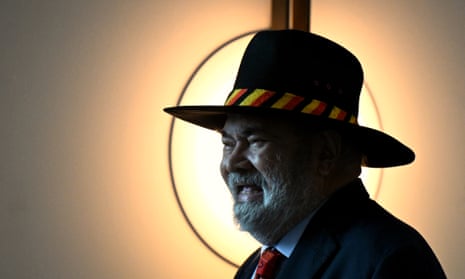
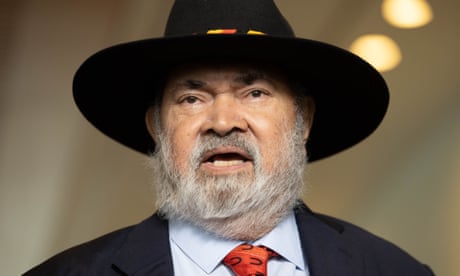
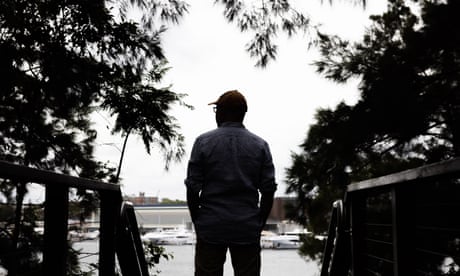
senator Pat Dodson at Parliament House on Tuesday. He said the lesson
from the defeat of the voice to parliament was non-Indigenous
Australians needed to come on board with the project of reconciliation.
The
WA senator known as the father of reconciliation departs parliamentary
life with a ‘sense of sorrow’ at the failure of voice to parliament
referendum
Dodson
has been treated for cancer, treatment which required him to visit
Noongar lands. In an essay he wrote for The Monthly earlier this year,
Dodson explained he shaved off his beard – the facial hair he’d grown
since 1967 – to show respect as a senior man visiting other country. As
is common with people who have experienced life-threatening illness,
Dodson is now physically altered by his experience. He walks more
lightly on the earth.
Anthony Albanese said on Tuesday there were
few more reassuring sights than seeing Pat and his hat coming down a
corridor towards you. There is something solid and enduring about
Dodson’s physicality and gait that invites that reaction. The signature
hat abides and the beard is coming back, but one of the more important
protagonists in the story of reconciliation in this country is now
frailer. History seems to flow through him.
Dodson
is leaving politics because he can no longer discharge his duties as a
Western Australian senator. Representation is a demanding business and
his energy is ebbing. When he fronted journalists to say farewell,
Dodson was supported by Indigenous colleagues from the Labor caucus:
Linda Burney, the portfolio minister; Malarndirri McCarthy; Marion
Scrymgour; and Jana Stewart. Burney thought she might cry, and did,
briefly, before gathering herself in front of the cameras.
Dodson
was back home in Broome when a majority of Australians rejected the
voice to parliament; the no flowed west from the eastern states. He
hadn’t started out as a supporter of the voice, but he became one.
Dodson said he was leaving politics with “some sense of sorrow that, as
a nation, we were not able to respond positively to the referendum”.
His final day in politics will be Australia Day – an emphatic gesture,
delivered entirely deadpan. Dodson practices that vanishing art of less
being more.
Dodson didn’t pepper his farewell
with the reminiscences politicians generally indulge in as they pack
their bags for life beyond Canberra. There were no legacy lists unfurled
or visceral scores settled. Dodson’s frustrations – and there have been
many – were not measured out in soundbites to feed the circus of public
life. A professional life spent in pursuit of justice was reduced to
(as he put it) to some good decisions and some bad ones.
Dodson
was razor-focused on what ailed his country. After the defeat of the
voice, it was important to consider how to move a polity past a period
of deep division and rancour to a zone of humble persuasion, because
without persuasion, there is no progress. “I am concerned that the
nation has to now reconsider its integrity and its honour, and how it
approaches … not only the Australian problem we’ve now inherited from
the no campaign, but we’ve got to resolve lingering problems that we
still have with the first people. That has to continue.”
Pat Dodson at Parliament House flanked by (L-R) senators Marion Scrymgour, Malarndiri McCarthy, Linda Burney and Jana Stewart. Photograph: Mike Bowers/The Guardian
Asked
how he felt about the prospects of next steps from the Uluru statement –
truth telling and treaty – Dodson said the lesson from the defeat of
the voice to parliament was non-Indigenous Australians needed to come on
board with the project of reconciliation. “You can’t have a treaty with
yourself,” Dodson said. “You can’t have truth-telling on your own in
some little secret room. It’s going to involve all of us … we should
learn to deliver a dialogue between ourselves about those critical
issues for the purposes of healing.”
Was there a
way to revive momentum for constitutional recognition of the original
inhabitants of the continent? Dodson was blunt. He referenced his life’s
work.
“If you simply operated on momentum,
you’d never go anywhere. You’d watch the polls, and go back to bed. But
if you are about justice, and you are about dignity and you are about
honour, and you are about integrity in this country, then you work
towards to achievement of those things, and you work towards assisting
the population to understand the necessity of these things. Why wouldn’t
we as Australians want to embrace that and work in a positive way
towards those positive outcomes, instead of wallowing in disagreement
and division and discord and hatred and delivering nothing?”
Dodson’s
final observations were directed at politics – the theatre he’d been
conscripted to by Bill Shorten. The indictment was gracious, yet at the
same time, utterly damning. Dodson said he trusted the Labor party to
keep trying to right foundational wrongs. But it was abundantly clear he
didn’t trust the polarised, winner-takes-all politics he was leaving to
deliver any kind of breakthrough. The contemporary Punch and Judy show
was taxpayer-funded circling of the drain.
The
moral clarity of Dodson’s warning was clear to anyone listening. “We as
a nation, and the political structures we have, have got to give us the
leadership, the political leadership,” he said.
“We
can’t do anything without people in this place collaborating together
in a positive way with the same objective or similar objectives. Because
if you don’t have that, you will continue to have this division and
discord and we’ll all be diminished as a consequence, because this rubs
off on all of us.
“We will wear the costs of this if we don’t come to grips with it.”
Whether anyone will heed this warning remains anyone’s guess.
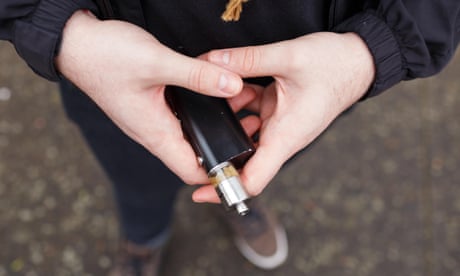
Many
so-called non-nicotine vapes contain the addictive substance, and
children often have no trouble buying them, prompting a government vape
ban from March, next year.
Exclusive:
Imports by retailers of nicotine and non-nicotine vapes will soon be
banned but new data reveals drastic increase in shops selling the
products.
Wed 29 Nov 2023 01.00 AEDTLast modified on Wed 29 Nov 2023 01.03 AEDTMore
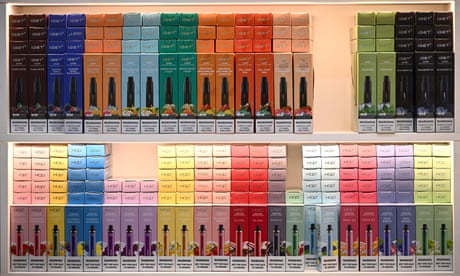
than 600 additional shops began selling vape products in New South
Wales in the first half of 2023, a drastic increase that occurred
despite the federal government announcing tough reforms that will ban
sales from convenience stores.
The sharp rise
comes despite laws that dictate that the only legal way to buy
nicotine-containing vapes is from a pharmacist with a prescription from a
doctor.
People
aged 18 and over can buy vapes from retailers if the products don’t
contain nicotine. And retailers that sell non-nicotine vapes and related
products in NSW must register their business details with the state
health department.
For this reason the importation of nicotine and non-nicotine vapes will be banned from March 2024as
part of a suite of reforms first announced in 2022 by the federal
government. The importation of single-use disposable vapes will be
banned from January 2024, subject to legislative and administrative
approvals. The reforms will force vape retailers to close or get rid of
their vape stock.
From March only pharmacies with a license will be able to import and supply nicotine vapes to people with a prescription.
Despite
the impending crackdown, data obtained by Guardian Australia shows that
between 1 January 2023 and 30 June 2023, 633 retailers notified NSW Health
that they were selling e-cigarette products. In the same period last
year, 326 retailers notified NSW Health that they were selling the
products.
The NSW chief health officer Dr Kerry Chant
told Guardian Australia that “clearly, the majority” of vapes being sold
by retailers contained nicotine, and as a result the public health unit
had significantly increased compliance activity. Officers target stores
selling to children and selling vapes that contain nicotine.
Between
1 April 2022 and 30 September 2023, NSW Health seized more than 485,000
e-cigarettes and e-liquids containing nicotine worth an estimated
street value of more than $15.5m, Chant said.
She did not speculate on why stores continued to open in the face of reforms, but said “it clearly has some profitability”.
“We
are doing as much compliance activity as we possibly can, seizing
products, taking court action, and implementing on-the-spot fines,” she
said.
Chant said she had written to retailers
“highlighting that they should not rely on the label on products that
they don’t contain nicotine”.
“Some premises
have adopted a view that this [selling vapes] is not aligned with their
values. So I think that’s really positive.”
She
said the commonwealth reforms would eventually significantly limit
supply. However, she added that “supply is so widespread … our
compliance officers can only do a component of the work.”
A
NSW health department spokesperson said the sale of liquid nicotine
products was one of the most common types of complaints received by the
department.
The number of tobacco and
e-cigarette complaints increased from 909 in 2020 to 2,407 in 2022.
Between 1 January 2023 and 30 June 2023, there were 1,654 reports of
non-compliance, she said.
There was an
“alarming” number of stores still selling vapes, said University of
Sydney tobacco control expert Prof Becky Freeman.
“While
I agree profit is the primary driver here, I also think that these
retailers may also believe that the intense lobbying by the vape and
tobacco industry will be successful, and that Australian vape laws will
be weakened,” Freeman said.
“And these are
just the retailers who are supposedly following the rules and actually
notifying NSW Health that they sell e-cigarettes. Given that the
majority of vaping products being sold are illicit products that contain
nicotine, these figures are likely to be a conservative estimate of the
actual numbers of retailers selling vapes.”
“The
industry, including retailers, has deliberately created a highly
profitable illicit market, and now they say the only solution is to
allow these very same retailers to legally sell nicotine vapes,” Freeman
said. “The bald-faced self-interest is truly something to behold.”
In
Victoria, retailers are not required to notify the health department of
their intention to sell tobacco products, including e-cigarettes.
The
secretary of Victoria’s health department, Euan Wallace, told
parliament’s public accounts and estimates committee on Friday that
Victoria was the only state that didn’t have a licensing scheme for
e-cigarettes, with no register of vendors.
Wallace
said in the 2021-22 financial year authorised officers made 6,952
monitoring visits to tobacco and e-cigarette stores – well above the
department’s target of 3,500. But there was only one prosecution, with
44 fines issued and 566 businesses given a verbal warning.
However,
Victorian councils maintain a database of businesses that sell
e-cigarette products. The City of Melbourne alone, which includes the
central city and Melbourne’s innermost suburbs, said it had about 250
tobacco and e-cigarette retailers.
Artificial intelligence platforms have been trained on copyrighted material. Should artists be paid for their contributions?(Getty Images: Olemedia)
Link copied
Toby
Walsh, one of Australia's most recognisable experts in artificial
intelligence, has been thinking about the future of AI for a long time.
He's even written books about it.
So
it wasn't exactly a surprise when Professor Walsh, also chief scientist
at UNSW's AI institute, discovered several AI models had been trained
using a dataset of pirated books — including one of his own.
"The irony is not lost on me," he said.
The database of 190,000 titles, called "Books3", included works by authors such as Stephen King and Margaret Atwood, as well as many Australian authors, including Geraldine Brooks, Liane Moriarty and Tim Winton.
Books3
is just one example of human-created copyrighted materials Big Tech has
taken — without permission — to train algorithms called large language
models.
Large language models underpin generativeAI tools such as ChatGPT.
Professor Toby Walsh found one of his books in a dataset used to train generative AI models.(Supplied)
Some
AI training sources are known and in the public domain. Wikipedia, for
instance, has been used to train AI. But for the most part, these
training datasets are a tightly guarded secret.
"There
was a time where the people making these models will tell you what they
were trained on," Professor Walsh, also the chief scientist at UNSW's
AI institute, said.
"Now, they won't tell you anything."
There has been some insight, however. In August, an expose by US publication The Atlantic revealed Books3 wasused to train Meta's LLaMA, a version of Bloomberg's AI and several other generative AI programs.
The AI training genie is out of the bottle. Can we jam it back in and "retrain" AI on non-copyrighted materials?
Or is it already too late?
Visiting the AI 'library'
No
analogy adequately captures the complexity underpinning generative AI
models such as ChatGPT, but you can think about these services like a
library — albeit a very strange one.
In
this library, an abundance of human knowledge has accumulated. But it's
not stacked neatly on the shelves, arranged in alphabetical order or
using the Dewey decimal system.
Instead, everything — books, articles, patents, webpages, recipes, the entirety of Wikipedia — is jumbled together in asingle book.
Only the generative AI, our "librarian" of sorts,can access that information and use it to respond to questions we ask.
Generative AI models are trained on billions of data points -- but that data isn't arranged neatly, like in a library.(Gabriel Sollmann/Unsplash)
You
might ask "Who built the Roman Empire?" or "Can you write me a short
story in the style of Tim Winton?" and the librarian will answer.
But it won't provide a response by retrieving a single book on Roman history or by copying passages from Winton's novels.
Instead,
it merely remembers patterns in this one giant book. It computes which
words are most likely to follow other words in a sentence. Then it
strings those words together based on probabilities.
"How
the next word is suggested comes from a vast mathematical computation,"
said Simon Angus, a computer scientist at Monash University.
Dr
Angus says there's no one location where, for instance, Winton's work
is stored. Even the creators of generative AI models would not be able
to find and pull out his works.
Yet,
those works are arguably crucial for AI tools to function as
successfully as they do — but creators and authors were never asked for
permission to use them.
Law and order: AI
Since
July, a handful of lawsuits have taken aim at some of the biggest
players in generative AI, including ChatGPT creator OpenAI, Meta and
Microsoft.
They mostly revolve around one major question: Should AI companies be allowed to train their models on copyrighted works?
One of the first to make headlines featured US comedian Sarah Silverman and two other authors.
The trio launched a lawsuit against Meta for its use of the Books3 dataset, which contained their published works.
Meta CEO Mark Zuckerberg recently showed off the company's AI tools, including celebrity chatbots. (Reuters: Carlos Barria)
The
lawsuit argued that Meta infringed on the authors' copyrights by
training its generative AI model, LLaMA, using their books without
consent.
It also argued that
any time a model responds to a user query, it's infringing on the
author's copyright, even if that question is unrelated to the author's
work.
Meta and OpenAI did not respond to requests for comment.
A
recent judgement hints that creators face an uphill battle convincing
the court on at least some of the copyright infringement allegations.
He was particularly unfavourable to the authors' claims that LLaMA, the tool itself, infringed on copyright.
"That makes my head explode when I try to understand that," he said.
The
major pain point — the use of copyrighted works to train AI — is still
to be tested in the Silverman case, and a number of others.
This,
Professor Walsh says, will mostly revolve around "fair use" — the
ability to use copyrighted material for specific purposes.
But experts like Professor Walsh worry current copyright laws may not be fit for purpose when it comes to generative AI.
Moreover, the legal system just isn't built to move as quickly as AI development, according to Dr Angus.
"The law is not miles behind, it's light-years behind," he said.
If
the law comes down on the side of the AI companies and gives the green
light to training on copyrighted work, what recourse will creators have?
Realignment is a potential solution
The
question around training AI on copyrighted works will likely be
resolved in court, but what of the current AI models being used by
millions of people each day?
It's impossible to remove copyrighted works, but it's not impossible to stop those works from being regurgitated by an AI tool.
Remember
the library? Training AI models on a huge swath of human knowledge
means they're also exposed to sexist, racist, ethically dubious content
found on the internet.
To
combat this, AI companies have trained their models with human
feedback, getting real people to rank an AI's output so it provides more
acceptable, ethical answers to user queries.
Dr Angus suggests this process, known as "alignment", could also be used to block models regurgitating copyrighted material.
Essentially,
an author might request their works not be used or reproduced by an AI
tool. Then, human feedback could train AI models to stop them from
spitting out summaries of work in their style.
Today's
AI models don't quite have the capability to reproduce entire books
word-for-word but Dr Angus notes that it's quite possible they will in
the future.
"The models will probably get better and better at doing that."
He
also notes this would be quite a large undertaking for AI developers
and creators and, even doing so, it might not prevent workarounds.
Users will still seek out specific prompts to get AI tools to spit out exactly what they want.
"The internet will be full of people to trying to jailbreak the model," he said.
The best of both worlds
AI companies have plenty of arguments against paying creators.
Reporting by US tech website The Verge lists a variety of reasons developers like Google, Microsoft and Meta used to justify not paying for copyrighted work using in training AI.
Meta,
for instance, argues copyright holders compensation "would be
incredibly small in light of the insignificance of any one work among an
Al training set" and Google suggests "any prohibition or imitation on
the use of copyrighted materials for purposes of Al training would ...
undermine the purpose of copyright and foreclose the many opportunities
that come with this technology".
The opportunity cost is something Dr Angus also pointed out.
He
agreed artists and creators should be compensated for their work but
preventing AI from ingesting particular material might also hamper the
tools'usefulness.
For
instance, he proposed that not including Margaret Atwood's novels in
training means that it won't necessarily be exposed to her worldview.
"That's potentially a loss," Dr Angus said.
Ultimately, the experts the ABC spoke with agreed that we've passed the point of no return. The genie is out of the bottle and there's no way to jam it back in.
Save
for total annihilation of the AI tools, Big Tech and the creative
industry must chart a course that's mutually beneficial, respecting
copyright holders and ensuring AI innovation and development can
continue — in the right way.
"We
might be able to get the best of both worlds, where creatives are
rewarded for their art and at the same time, these models have the rich
knowledge and understanding that artists bring to the world," Dr Angus
said.