Extract from The Guardian
Observers say the formal ratification sends a positive signal at the
start of the two week climate talks in Paris, but will make little
practical difference
Malcolm Turnbull
has pledged Australia will ratify the second stage of the Kyoto
protocol – a move that underlines Australia’s change in attitude towards
international climate talks but is unlikely to make any practical
difference to reductions in emissions.
Experts said formal ratification of Kyoto 2 – which includes Australia’s minimum target to reduce emissions by 5% by 2020 that the government says it is already on track to meet – would have a limited real world impact.
But officials and long-term observers of the talks said the announcement sent a positive signal at the start of two weeks of talks in Paris that aim to clinch the next international climate deal, for reductions out to 2030. It was met with some applause from the conference floor.
In a day of promises designed, in the words of the French president, François Hollande, to give the conference “a drive and ambition commensurate to the challenge” Turnbull also joined at the last minute a US initiative to double public and private research and development spending on clean energy technology, which in Australia’s case means an additional $100m in government spending over five years.
And he announced that $1bn from Australia’s existing aid budget would be directed towards projects that reduce emissions or help countries adapt, including the $200m already committed by the Abbott government to the Green Climate Fund.
The environment minister, Greg Hunt, said ratifying Kyoto 2 sent a “very, very powerful symbol to the world” and also helped Australia meet its minimum 5% target by “carrying over” the amount by which it exceeded a very lenient target under the first Kyoto agreement.
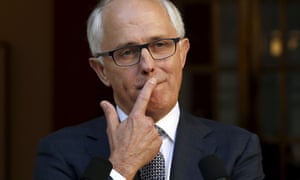
Turnbull, speaking to the media after a sidelines meeting with Bill Gates, said he came to Paris “in a spirit of realistic optimism” and believed the meeting would result in a successful deal.
But he also said the government had no plans to increase its minimum 2020 target, even though it has inscribed tougher targets into the UN agreement under specific conditions that the independent Climate Change Authority says have been met.
Turnbull was also equivocal about whether he would have to increase the longer term Abbott government target for the agreement being negotiated in Paris – to reduce emissions by between 26% and 28% compared with 2005 levels by 2030, saying that would depend on the ambition of the global community.
Labor leader Bill Shorten, who is also in Paris, accused the government of coming with a message of hope but Tony Abbott’s old policies.
“Ratifying Kyoto 2 is fine as far as it goes ... but it’s not exactly setting the world on fire,” he said. Labor has promised to consider a reduction of 45% by 2030, based on 2005 levels.
He accused the government of “playing accounting games” by using existing aid funding for its $1bn climate financing promise.
Bill Hare, chief executive of Climate Analytics, said Australia’s promise to ratify Kyoto 2 was “largely incidental to this meeting, which is all about the next step after 2020”.
But the veteran observer of international climate talks said it would underline what negotiators had already noticed – “a quite noticeable change in attitude and demeanour from Australia” in international climate talks.
Erwin Jackson, the deputy chief executive of the Climate Institute, said the promise could have some tangible effects, including making it easier for Australian businesses to access international climate markets if Australia tightens the requirements of its Direct Action policy, and opening Australia to world pressure to move to the higher Kyoto 2 targets it had promised if other countries also acted – up to a 25% cut in emissions.
In his allotted speaking slot Turnbull delivered an international version of his domestic message of optimism and faith in innovation and technological advances.
“From Australia we come with confidence and optimism,” he said, adding that Australia was confident the conference would “secure our future” because of our “great optimism and faith in humanity’s genius for invention”.
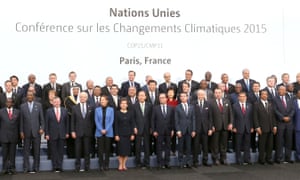
World leaders brought both specific promises and persuasive rhetoric to the day of speed-speeches in two simultaneous sessions – with leaders’ attendance scheduled at the start of the conference to “turbocharge” talks, rather than at the end, as it was in the disastrous Copenhagen meeting in 2009.
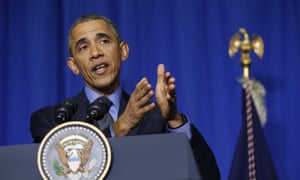
The recent Paris terrorist attacks were used by many as a rallying point – with the US president, Barack Obama, saying the meeting was an “act of defiance” and the attendance of so many leaders a “rejection of those who would tear down our world”.
Obama cited his new research and development initiative – “Mission Innovation” –and foreshadowed a new spending promise for least developed nations including low-lying Pacific Islands.
He told the meeting it could be the “turning point” in the world’s response to a threat that “could define the contours of this century more than any other”.
Experts said formal ratification of Kyoto 2 – which includes Australia’s minimum target to reduce emissions by 5% by 2020 that the government says it is already on track to meet – would have a limited real world impact.
But officials and long-term observers of the talks said the announcement sent a positive signal at the start of two weeks of talks in Paris that aim to clinch the next international climate deal, for reductions out to 2030. It was met with some applause from the conference floor.
In a day of promises designed, in the words of the French president, François Hollande, to give the conference “a drive and ambition commensurate to the challenge” Turnbull also joined at the last minute a US initiative to double public and private research and development spending on clean energy technology, which in Australia’s case means an additional $100m in government spending over five years.
And he announced that $1bn from Australia’s existing aid budget would be directed towards projects that reduce emissions or help countries adapt, including the $200m already committed by the Abbott government to the Green Climate Fund.
The environment minister, Greg Hunt, said ratifying Kyoto 2 sent a “very, very powerful symbol to the world” and also helped Australia meet its minimum 5% target by “carrying over” the amount by which it exceeded a very lenient target under the first Kyoto agreement.
Turnbull, speaking to the media after a sidelines meeting with Bill Gates, said he came to Paris “in a spirit of realistic optimism” and believed the meeting would result in a successful deal.
But he also said the government had no plans to increase its minimum 2020 target, even though it has inscribed tougher targets into the UN agreement under specific conditions that the independent Climate Change Authority says have been met.
Turnbull was also equivocal about whether he would have to increase the longer term Abbott government target for the agreement being negotiated in Paris – to reduce emissions by between 26% and 28% compared with 2005 levels by 2030, saying that would depend on the ambition of the global community.
Labor leader Bill Shorten, who is also in Paris, accused the government of coming with a message of hope but Tony Abbott’s old policies.
“Ratifying Kyoto 2 is fine as far as it goes ... but it’s not exactly setting the world on fire,” he said. Labor has promised to consider a reduction of 45% by 2030, based on 2005 levels.
He accused the government of “playing accounting games” by using existing aid funding for its $1bn climate financing promise.
Bill Hare, chief executive of Climate Analytics, said Australia’s promise to ratify Kyoto 2 was “largely incidental to this meeting, which is all about the next step after 2020”.
But the veteran observer of international climate talks said it would underline what negotiators had already noticed – “a quite noticeable change in attitude and demeanour from Australia” in international climate talks.
Erwin Jackson, the deputy chief executive of the Climate Institute, said the promise could have some tangible effects, including making it easier for Australian businesses to access international climate markets if Australia tightens the requirements of its Direct Action policy, and opening Australia to world pressure to move to the higher Kyoto 2 targets it had promised if other countries also acted – up to a 25% cut in emissions.
In his allotted speaking slot Turnbull delivered an international version of his domestic message of optimism and faith in innovation and technological advances.
“From Australia we come with confidence and optimism,” he said, adding that Australia was confident the conference would “secure our future” because of our “great optimism and faith in humanity’s genius for invention”.
World leaders brought both specific promises and persuasive rhetoric to the day of speed-speeches in two simultaneous sessions – with leaders’ attendance scheduled at the start of the conference to “turbocharge” talks, rather than at the end, as it was in the disastrous Copenhagen meeting in 2009.
The recent Paris terrorist attacks were used by many as a rallying point – with the US president, Barack Obama, saying the meeting was an “act of defiance” and the attendance of so many leaders a “rejection of those who would tear down our world”.
Obama cited his new research and development initiative – “Mission Innovation” –and foreshadowed a new spending promise for least developed nations including low-lying Pacific Islands.
He told the meeting it could be the “turning point” in the world’s response to a threat that “could define the contours of this century more than any other”.

The big question after any leadership change is always whether or not the various protagonists can control themselves.
Labor proved comprehensively during the Kevin/Julia saga that internecine personality conflict was actually more important than being in government.
The rank self-indulgence of that collective judgment seems incomprehensible, but there it was. We all saw it. It’s hard to expunge it from the memory bank.
Now, 11 weeks on from the change in the Liberal leadership, it’s becoming the Coalition’s turn to decide whether staging a gory revenge tragedy is more important than being in government.
Turnbull is riding high in the opinion polls, but in the toxic little half-deranged world that is Australian politics, the new prime minister has Tony Abbott rampaging around like a wounded bull, defending his legacy, obsessively taking traitors to task.
Abbott has in an interview with Fairfax unleashed a fresh tirade about Julie Bishop, accusing her of peddling falsehoods about the events leading up to Turnbull’s ascension.
Turnbull also has conservatives spoiling for odd little proxy fights on the breadth of the government’s climate change commitments or how we talk about violent extremism.
Why? Just because.
There’s been so much combat in Australian politics in recent times the whole super structure actually seems profoundly disconcerted by the prospect of peace.
Animus, once unleashed, can be very hard to contain. Everybody seems to need the last word.
Adding to the basket of welcome-home presents, Turnbull will have to make a call about his special minister of state, Mal Brough.
Turnbull can’t ultimately control Abbott and the rusted-on haters – unless Abbott ultimately wants to sue for peace. A grand bargain between the two combatants is, actually, possible, but on current indications, fraught, particularly while both are so fully intent on their respective product differentiation.
But Brough is all Turnbull’s doing, and entirely within his control.
The special minister of state is in the ministry now not because of his soaring political talents but because he helped Turnbull blast Abbott out of the prime ministerial suite.
We are now in the second week of Labor’s persistent and forensic questioning of Brough about his conduct during the James Ashby/Peter Slipper affair – which serves to remind the public that the minister Turnbull appointed to a portfolio safeguarding the integrity of the parliament is facing an Australian federal police investigation.
Tuesday wasn’t a great day for Brough.
In attempting to fortify his defences, he bought himself a fight with the 60 Minutes program, and in the process, opened himself to fresh arguments that he had misled the parliament.
Courtesy of some fresh Ashby reflections in the Australian, curious eyes also drifted in the direction of another Turnbull loyalist – fellow Queenslander Wyatt Roy.
Federal parliament sits for two more days before Turnbull attempts to launch himself into summer with an innovation statement and the release of the new economic forecasts.
This Brough choice is squarely on the prime minister.
These are supposed to be exciting and realistically optimistic times, after all.
Best mind the clutter.