Sunday, 2 June 2019

Australia's homeless crisis: chance encounter highlights bugs in the system

Extract from The Guardian

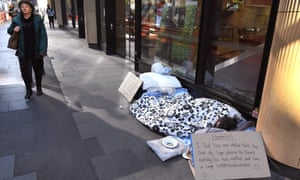
A homeless man lies on the ground in Sydney
Demand for emergency housing far outstrips supply, a fact regularly lamented by service agencies. Photograph: William West/AFP/Getty Images

Ahmed Yussuf was walking to catch a train at Melbourne Central station when a man approached him.
“He said, ‘Hey are you Somali?’” Yussuf, an African-Australian author, told Guardian Australia this week. “I said, ‘Yeah.’ Then he said he wanted to have a chat with me.”
The man told Yussuf he had recently arrived in Melbourne from Western Australia, though he did not say how or why. He did not have a phone, and so used a pen and paper for addresses and numbers he needed to remember.
“He was telling me that he has been sleeping rough and he was basically asking for some help,” Yussuf said.
The encounter that followed, which Yussuf went on to outline in a series of Twitter posts, showed how and why people “slip through the cracks”, he said.


This is a story about how our social services fail people.

I am walking down Swanston St toward Melbourne Central. A Somali guy stops me to greet me, and ask for help. He tells me he’s just come from WA, and is sleeping rough. He is without access to a phone.

The man asked to borrow Yussuf’s phone. Yussuf called a crisis hotline on his behalf, and was told to contact Launch Housing, a service in inner Melbourne.
On calling them, he was told the man was ineligible for a bed because he was already registered to receive services in WA.
“They said he had housing in WA ‘so we can’t help you even though you’re in Melbourne,’” Yussuf said. “They were like, ‘sorry we can’t help you’, which I just found very strange.
“He’s been sleeping rough since last Friday and if he doesn’t find any housing he’ll be rough sleeping until Friday week.”
Demand for emergency housing far outstrips supply, a fact regularly lamented by service agencies, which say they are “chronically underfunded”.
About 235 people are turned away from agencies across Australia each day, figures show. On average, about 90 are from Victoria. In inner Melbourne alone, there are about 300 people sleeping on the streets each night.
“The heartbreaking reality is that Victoria is in a housing crisis, and it’s only getting worse,” said Andrew D’Arcy, a general manager at Launch Housing.
He said the organisation was forced to prioritise “people with the highest level of need, because there is not enough accommodation to meet demand”.
“We believe that everyone deserves a safe, secure, affordable home, so it’s incredibly challenging to have to turn so many people away,” he said.
The plight of people experiencing homelessness has been highlighted after the death of 25-year-old Courtney Herron, who was sleeping rough when she was allegedly killed. Henry Richard Hammond, 27, has been charged with her murder.
This week, a report from housing thinktank Ahuri showed that homelessness was increasingly concentrated in the capital cities, particularly Melbourne and Sydney.
After the man was rejected by the shelter, Yussuf helped him call his Centrelink social worker. He was told he would not be able to access an emergency crisis payment until the following week.
There are strict rules around crisis payments, including that a person can receive a maximum of two over 12 months.
Yussuf said the social worker did organise for the man to find a bed at another service in inner Melbourne, although he would have to wait another 24 hours.
“He was sleeping in some park,” he said. “Even if he got the emergency crisis payment he could have at least gone for some short-time housing through a motel or something like that.
“Because he couldn’t, he had to find somewhere else to go, through this whole confusing wormhole.”

Communities around Australia are taking clean energy into their own hands, the Indi win built on that

Back to back independents have never been elected in Australia, until now
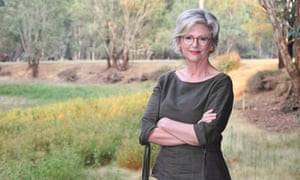
The rural electorate of Indi will make history next week when Independent Dr Helen Haines is officially elected to replace fellow independent Cathy McGowan. Part of the reason she won was a climate platform founded on energy democracy.
Indi is a regional electorate in Victoria. It stretches all the way from the peri urban fringes of Melbourne to the Murray River. It is an electorate of mountains, valleys and plains. Until Cathy McGowan won in 2013, Indi had been a safe Liberal seat, delivering some of the largest margins in the country for conservative members.
Back to back independents have never been elected in Australian history. Popular independent MPs, like Tony Windsor or Rob Oakeshott have both seen their seats revert back to the Coalition.
There is a good reason for that. Once elected, independent members are popular, but most are elected on a protest vote from the former sitting member. It is very hard to run as an independent and win against a popular or at least “not-unpopular” major party candidate.
Indi is home to Australia’s most vibrant community energy network and this built the foundation for Helen Haines’ victory. The network includes 13 groups across the electorate, from the major population centres of Wodonga and Wangaratta in the north all the way to the smaller towns of Euroa and Alexandra in the south.
This has changed the politics of this regional seat and allowed a candidate like Helen to put forward a winning bold vision for tackling climate change.
Community energy is a powerful way for regional communities to take control of their energy future. It also helps revitalise regional communities by ensuring that the energy dollars spent in the region stay in the region. Of course, community energy is not unique to Indi.
Across Australia there are now more than 100 communities developing community-owned clean energy projects and working to transition their communities to 100% renewables. About 80% of these groups are located across regional Australia.
Helen’s success can be attributed to working with these groups and putting communities at the front of climate solutions. The strong community energy movement in Indi, meant people were already seeing and feeling the local benefits of clean energy.
At the forefront of this transition in Indi is the town of Yackandandah, which is committed to being powered by 100% renewable energy by 2022. Thanks to the work of community group Totally Renewable Yackandandah (TRY), 55% of all households already have solar on their roofs, way above the Victorian average.
TRY assisted the local hospital to install solar – with money saved on electricity redirected to employ more doctors and nurses. The town’s next target is to have solar panels on all community buildings. This year TRY has installed solar panels and a battery on the local CFA shed, ensuring that during bushfires or natural disasters it will still have power.
Yackandandah is also leading the country with new energy solutions, including “micro-grids”, which allow householders with solar panels to share electricity with other households. Yackandandah is not alone, with 12 other groups also working on climate solutions in their respective communities.
Because community energy groups work in their local communities, their solutions are targeted to deal with on the ground issues. In Wodonga, which has the highest electricity disconnection rate in the state due to rising power prices, the local community energy group is installing solar on low-income households to help with power prices.
To help these communities reach their renewable energy goals and keep money circling locally, a locally owned community energy retailer called Indigo Power has recently been set up.
Indigo Power will work with the local community energy groups – like TRY – to help them reach their 100% renewable energy targets. Helen Haines was a founding board member of Indigo Power and brought her knowledge of community energy to her successful election campaign.
From Tallangatta to Tunamah and Yackandandah to Yea, community energy groups are part of the fabric of the electorate. It can work in other electorates.
Projects such as a community-owned solar or wind farm activates latent support for the broader transition to clean energy and, in-turn, for those parties putting forward policies for ambitious climate action.
There is also a growing recognition that renewable energy can bring significant economic benefits.
From generating jobs on community-owned wind or solar farms to saving money on electricity prices. Modelling shows that for every government dollar spent in community energy, it unlocks $15 of local investment.
Renewables are booming across Australia, including in Queensland. That means much-needed money and jobs flowing to the regions. Community energy projects, rooted in local action, show that regions can take action on climate change and see real benefits at the same time.
Across Indi our focus has been on energy democracy. This means people coming together to use new energy technology, like solar panels, to build stronger communities and create tangible benefits.
We can do the same across the country and create mass grassroots support for locally-driven climate solutions that put people front and centre.

  • Cam Klose is a co-founder of Indigo Power, former staffer to Cathy McGowan and an Indi resident

Ocasio-Cortez: $2.13 tipped minimum wage is 'indentured servitude'

The New York congresswoman returned to a restaurant in Queens on Friday, seeking to highlight the plight of workers she knows
As she returned to New York to waitress and bartend for the first time since being elected to Congress, Alexandria Ocasio-Cortez said the federal tipped minimum wage was tantamount to “indentured servitude”.
Before she rose to national fame as the representative for New York’s 14th congressional district, the 29-year-old from the Bronx worked at a Mexican restaurant in Manhattan. On Friday she went back to waiting tables and mixing drinks, in support of One Fair Wage, a policy that would entitle tipped workers to a minimum wage of $15 an hour plus tips.
The federal minimum wage for restaurant and bar workers and other tip-reliant jobs such as nail salon workers is just $2.13 an hour. Although the minimum wage in New York is $15 an hour, this does not apply to tipped workers, who can be paid as little as $7.50.
Dressed in an apron and standing behind the bar of The Queensboro restaurant in Jackson Heights, Ocasio-Cortez told cheering workers and small business owners the current rate was “unacceptable”.

"The way that we give labour dignity is by paying people the respect and the value that they are worth at minimum"
“Any job that pays $2.13 an hour is not a job, it’s indentured servitude,” she said, to loud applause. “All labour has dignity. And the way that we give labour dignity is by paying people the respect and the value that they are worth at minimum. We have to make one fair wage and we have to raise the national minimum wage to $15 an hour, nothing less.”
In cities such as New York, San Francisco and Chicago, she said, the minimum wage should be higher, to support the “runaway costs” of living.
“Because when our rents are running away, when our food costs are running away, in dense cities like New York, Chicago, San Francisco, we need to make sure that people are paid enough to live, period,” she said.
Ocasio-Cortez also described how working in the industry for four years, first as a hostess at an Irish pub while in high school and working at restaurants after college, left her dependent on tips and forced to make compromises.
“I remember working in restaurants,” she said, “and, you know, you would have someone say something extremely inappropriate to you, or you’d have someone touch you, and the thing is it would be the 28th of the month, the 29th of the month. And the first of the next month was rolling right around and you have a rent cheque to pay.

"You are more likely to stand up for yourself and to reject sexual harassment on the 15th of the month"

“And so you are more likely to stand up for yourself and to reject sexual harassment on the 15th of the month, or maybe the 10th of the month, when you could pick up an extra shift to make up for telling that guy to go buzz off.”

She said women are particularly vulnerable: “As a woman you allow yourself, we allow ourselves, to be more vulnerable than any person should ever be in the United States of America because of economic desperation.”

I was nervous that I may have lost my touch - still got it! That muscle memory doesn’t quit 😉

Now let’s pass and get $15 an hour minimum for every worker in America.

Before her speech she took orders from excited guests, speaking English and Spanish, and served pizzas before going behind a bar for the first time since she took office. After successfully making her first margarita – her vigorous shaking was met with cheers – she proclaimed: “I’ve still got it! I was scared.”
Larry Obregon, a bartender at the restaurant, sang Ocasio-Cortez’s praises.
“She’s great, she’s amazing at the bar,” he said. “She made a margarita, she did a couple of mixed drinks with vodka and other spirits. Obviously, it backs up her background, she used to be in the service industry as well, so she knows exactly what she’s talking about.”
Bartenders Serena Thomas, 27, and Nikolas Vagenas, 24, who were served eggplant and mushroom pizzas by Ocasio-Cortez, rated the congresswoman’s customer service.
Thomas said: “It was great, she still knows how to do it.”
Vagenas: “Yeah she’s still got it, 100%”

Saturday, 1 June 2019

Regional Queensland worst in Australia for rental stress, report finds

Updated about an hour ago


Regional Queensland is the worst area in the country for rental stress, according to the latest housing data that shows a growing number of Australians are battling tighter household budgets.

Key Points:

  • Mt Isa, Cairns, Brisbane's south and north, and a handful of Gold Coast suburbs are listed as the worst for rental stress
  • Queensland's public housing waiting list is on the rise, currently sitting at 20,000
  • 64 per cent of households are under financial stress, Queensland Council of Social Services estimates

The Getting Our House in Order report, released through Curtin University's Economics Centre this week, compared figures from WA, NSW and Queensland and found 52 per cent of all renters were regularly struggling to meet housing costs.
In Queensland, 32 per cent of low-income households are suffering rental stress.
Households are generally regarded as being in housing stress if they spend more than 30 per cent of their income to keep a roof over their heads.
Key author Professor Alan Duncan said regions in Queensland were doing it tough because of a drop in incomes from a lack of full-time work and the high cost of living.

"Regional Queensland ranks the highest across all regional jurisdictions across all states and territories in terms of the level of both mortgage and rental cost burdens," he said.
Queensland Statewide Tenant Advice and Referral Service (QSTARS) chief executive Penny Carr said low-income tenants were also in crisis in city centres.

Rental stress hotspots

  • Regional: Mt Isa and Cairns (QCOSS Feb, 2019)
  • Brisbane South: Durack, Inala, Richlands, Carindale and Mount Gravatt (ABS, 2016)
  • Brisbane North: Aspley, Boondall, Carseldine, Geebung and Everton Hills (ABS, 2016)
  • Gold Coast: Labrador, Southport, Coomera, Pimpama and Carrara (ABS, 2016)

The organisation has broken down the latest Australian Bureau of Statistics census data, from 2016, to reveal nearly 16 per cent of renters on the Gold Coast were struggling to pay their leases, with 12.71 per cent of tenants in Brisbane's north and 12.55 per cent in Brisbane's south also under pressure.
Anne Margaret O'Connor, 62, became one of those statistics after battling breast and ovarian cancer and struggling to work full time.
The former welfare officer and foster carer lived on her savings, but when the money dried up she could not afford to pay rent, so she lived in her van.

Last February, with no public housing available, the disability pensioner got moved into an old run-down home in East Brisbane.
The home is a private rental organised through the Queensland Housing Department, where Ms O'Connor pays $100 a week and the State Government subsidises the remaining $350.
Her bedroom is also the loungeroom, and the unit has no security.

She currently has $27 in the bank to get her through to next Thursday.
"I'm broken, I am humiliated. What else do you do? Just feel this utter despair?" she said.
"I Imagine I am not living here.
"I pretend I am in my nice apartment when I was working. I don't see the tarp on the window I see the nice curtains I used to have."

'There is something wrong' in Queensland

Queensland Council of Social Service (QCOSS) chief executive Mark Henley said living affordability was the biggest issue his agency was seeing, particularly in regional Queensland.
Data from last year showed 64 per cent of all Queensland households faced some form of financial stress in that year, he said.

"It is at crisis level," he said.
"Most of the money for a lot of people is going to rent, incomes are too low or they can't get jobs.
"And if that is not a message to Government that they need to do something — there is something wrong."

Jayasree Parthasarathy struggled to pay rent in Mt Isa for six years, with 60 per cent of the family income going towards it.
The mother-of-two runs a local program for migrant women and her husband works in the mines.
Ms Parthasarathy said over the six years, $82,000 went towards their rental.
She said they eventually saved up to buy a house when the market had a downturn, and are paying half in mortgage costs of what their rent was.
Council AreaNumber of people in rental stressPercentage of population
Gold Coast68,54415.41%
Brisbane North56,51312.71%
Brisbane South55,80512.55%
Redland, Logan42,5139.56%
Gympie, Sunshine Coast41,6259.36%
Moreton Bay33,6707.57%
Ipswich, Lockyer, Scenic Rim, Somerset30,6836.90%

Cairns, cassowary Coast, Far Northern LGA's,
Tablelands, Torres and Torres Strait
24,7435.56%

Supplied: QSTARS

In Brisbane, 51-year-old "Mel" is an unemployed teacher who has rented most of her life. She has been forced onto a Newstart allowance while she hunts for work.
She has applied for jobs but one recently said she was one of 620 applicants.
The single mum has two children still at home and pays 70 per cent of her allowance on rent for a small unit at West End.
She pays $350 a week on rent and is left with $150 for everything else.
"It's impossible," she said.
"Initially I had a little bit of savings from my last job, the contract ended at Christmas last year. It was a buffer but it was whittled away very quickly.
"It is a terrible situation to be in. I feel ashamed I suppose and humiliated and on top of that I am feeling quite angry about it."

'Entering a crisis situation'

The latest figures showed there are currently 20,000 people on the public housing waiting list, now called a "Registry of Need" in Queensland, up nearly 3,300 on the year before.
The Brisbane Renters Alliance are organising a "People's Sleepout" at Post Office Square on June 21 to put the spotlight on the lack of affordable housing.
Alliance spokesman Greens councillor Jonathan Sri said people under rental stress went without food, health care and often had to move out of a suburb they've lived in for years, forced out by landlords jacking up the rent.

"The solution is simple, the problem is here in Australia we have treated housing as a commodity when it should be a basic human right," he said.

It's dangerous for journalists to say this, but we can be wrong

Everything pointed to a Labor win in the 2019 election. But it is only a pretence that we are in the certainty business
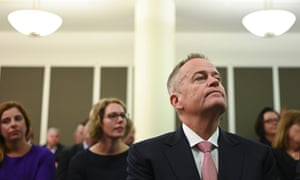
Bill Shorten
‘There was a perception frame so rigid that senior people inside the Labor campaign did not know they were losing.’ Photograph: Lukas Coch/AAP

The federal election wash-up is a quaint sort of ritual. There are, inevitably, explosions of feelpinion about why one side won and the other side lost. The victors rush to write the first draft of history, and on the losing side there is a frenzy of backside covering and jostling for future advancement, masquerading as deep insights about who failed to do what and when.
All of it, the initial download – masters of the universe versus the vanquished – is inherently unreliable because the protagonists are unreliable. They are still processing what has happened and they are positioning for the next thing, because that’s how the psychology of politics works. Everything is refracted through post-campaign decompression and self-interest.
In the category of much more worthy than playing stenographer to a group of people suspended after a visceral experience, in states of ebullience, depression or internecine scheming, are the efforts to find some kind of factual underpinning for post-election analysis. Sadly though these undertakings, while earnest, also have their limits.
We can look at what the data tells us, and Guardian Australia’s terrifyingly clever Nick Evershed did just that. Nick’s big data crunch showed electorates that swung harder to the Liberal and National parties were more likely to have higher unemployment, lower income, lower levels of education and fewer migrants, and the electorates that swung to Labor were more likely to have higher levels of education, more young people, more people in work or study, and more people over the age of 80.
This is all pretty interesting, but fortunately for all of us, Nick is the sort of practitioner both brainy enough and respectful enough of his audience to own and telegraph the limits of this reportage. He told readers very clearly we don’t yet know why more people voted for the Coalition over Labor – that being the truth. A subsequent piece from Shaun Ratcliff, a lecturer in political science at the United States Studies Centre at the University of Sydney, picked up Nick’s theme, pointing out that we cannot make inferences about individuals from aggregate, electorate-level data. We’ve got to look a bit deeper.
So where I am going with all this? It’s a preamble to expressing one of the most dangerous thoughts in political journalism – a thought we don’t express often enough between ourselves as professionals, and almost never in public.
Here’s the thought: we don’t know, with perfect certainty, what is happening and why.
I’ll say it again. We don’t know.
This is not me saying we political reporters, as a cadre, lack expertise. The tenacious souls amongst us hang in there for decades, studying our ecosystem with great diligence and care. We learn about the politicians we report on, observe their habits and rituals, building up a level of insight that informs our reporting and commentary – this vocation being a life’s work for most of us rather than a diversion on the road to somewhere else.
But we don’t have a crystal ball and we don’t have perfect wisdom.
It’s funny. I had high hopes when we reached the end of the “voice of God” era in journalism, the era when the great men of newspapers delivered righteous pronouncements and the mortals nodded, absorbing their stupendous wisdom, at the time when the disruption of the internet and the rise of the reader exposed that whole Ponzi scheme for the self-absorbed pomposity that it was – I hoped we’d be liberated from the tedious tyranny of being self-appointed sages.
But the occupational requirement to be predictive has simply morphed into a new phase. Now the 24/7 environment has spawned the flourishing chat shows on the rolling news channels that require everyone to keep talking, preferably in definitive terms rather than boring people with grey area.
So much talking, filling up the dead air that swells dangerously when the drama of politics is insufficient to sustain the next 10 minutes. Because of that relentless requirement to be predictive, journalism has resumed the collective pretence post-disruption that we are in the certainty business, when the business we are actually in is the uncertainty business.
This most recent election campaign is an obvious case in point. Three years’ worth of opinion polls, seemingly the most solid of trends, pointed to a Labor victory on 18 May. That evidence base, coupled with Labor victories during the byelection season triggered by the section 44 fiasco, shaped everyone’s perceptions of the contest – both the protagonists and the chroniclers. That, and suboptimal private polling, created a perception frame so rigid that senior people inside the Labor campaign did not know they were losing, a development both extraordinary and true.
There are a couple of potential explanations for what happened. Perhaps the evidence base was right within the margin of error over the past three years but wrong in the campaign, failing to detect a late swing to the Coalition. That’s possible.
Or perhaps this was the campaign where two significant things happened: where fake news became a serious feature of an electoral contest for the first time (this subject is worth a whole other column or piece of reportage), and underlying problems with polling surfaced in a way that’s now impossible to ignore – problems such as the difficulty of getting representative samples now people routinely screen calls to their landlines, which Peter Lewis from Essential has alluded to.
It’s not just the fact that a number of polls were clearly problematic, either for a long time or a short time. The way polls are reported also plays into the over-egged predictive imperative I’m decrying this weekend, with margin-of-error movements dressed up as profound developments directly connected to the intrigues in Canberra, rather than blips or noise.
In this spirit, it has been funny to watch some of the post-election journalistic castigation of the Labor campaign on the basis that it failed to grasp the zeitgeist, as if this was some localised or situational form of idiocy, when the truth is the great bulk of us failed to see it coming.
On the afternoon of the election, in preparation for the night’s coverage, I spoke to a couple of government players who reported to me that Scott Morrison was really upbeat, and “Hirsty” (the Liberal campaign director Andrew Hirst) was similarly pumped – but the people I spoke to didn’t really believe it. They had no idea how the night would end – and both feared not well for the Coalition.

The good news is there are lessons to be learned from 2019 if we are humble enough to learn them. The principal lesson is whatever the ubiquity of the apparently objective pseudo science, don’t fall into a perception trap so profound that it becomes an implicit prediction. The secondary lesson is embrace the fact that politics and journalism are the most human of businesses, and where there are humans, unpredictability and uncertainty is always part of the deal.

Environment leaders reflect on their role in the 'climate election'

Posted about 2 hours ago


Like many Australians, green groups were surprised by the federal election result.
The Climate Council, Greenpeace, the Australian Conservation Foundation and the Wilderness Society all invested significant resources in the weeks leading up to the May 18 poll.
Underlying much of their campaigning was the belief that the majority of voters wanted stronger climate action.

But the results did not seem to bear that out.
Did environmental groups fail to read public sentiment? And did they, in fact, help the Coalition to victory?

'Lecturing people in the community'

Former Greens leader Bob Brown led the now-infamous Stop Adani Convoy from Hobart, through Melbourne and Sydney, right into Central Queensland.
It was the epitome of what some describe as trying to "drive change from out of town".
One of Australia's leading social researchers, Rebecca Huntley, said the Stop Adani Convoy strategy was bound to fail.
"People from outside the area coming in — that just pisses people off," said Dr Huntley, who heads up Vox Populi Research.
"Lecturing people in the community, I don't think it's ever going to work."
Paul Williams is a senior lecturer in politics at Griffith University in Queensland and is one of the country's foremost experts on elections in that state.
He said the Stop Adani Convoy probably cost Labor at least "tens of thousands of votes" in Queensland, if not "hundreds of thousands".
"That doesn't mean the Queenslanders are in love with Adani — they're not," said Dr Williams.
"Adani became totemic — it was a totem for development and for blue-collar job creation."
Verity Morgan-Schmidt is opposed to Adani's Carmichael mine.

The chief of Farmers for Climate Action grew up farming in Western Australia and now spends her time campaigning and organising all around the country, including in rural Queensland.
But she agreed the convoy was counterproductive.
"I think the polls would reflect how successful that strategy was," she said. "It's very hard to drive change from out of town."
Many in the Coalition have also credited the Stop Adani Convoy for helping them win seats in Queensland.
Dr Brown remained confident the strategy was the right one.
Ms Morgan-Schmidt said the strength of any social movement "comes from within and from being part of that community".
"We need to really talk and connect with people where they are," she said.
Kelly O'Shanassy, chief of the Australian Conservation Foundation, agreed one lesson from the election was that environmental groups needed to do more local organising.
"I think that change — when you're talking about change in a specific community — needs to be done within that community," said Ms O'Shanassy.
The Climate Council's Amanda McKenzie said the Stop Adani Convoy was a mistake, and her movement needed to convince people that their community could benefit from the change they were calling for.
"We are advocating for substantive changes across the economy in all sectors. So you need to do a lot of work in bringing people along," she said.

Green movement criticising Labor policy

Throughout the campaign, Labor walked an uncomfortable line on Adani. It tried not to openly support its proposed coal mine but also insisted it would not stand in its way.
But on many other issues, the environmental movement did not entirely embrace Labor's plans either.
Less than two weeks from polling day, Labor announced a radical plan to establish a new Environmental Protection Authority and rewrite federal environment laws.
These were in addition to its detailed climate policies and targets the party had already released, as well as the country's first federal land-clearing laws.

The reaction was mixed, with Greenpeace the least enthusiastic.
"While Scott Morrison and Bill Shorten lock horns over their policies, both are failing to address the climate emergency with credible plans," said the environmental group's media release on May 4.
This division was further exacerbated when Labor announced plans to subsidise the expansion of the gas industry in Queensland and the Northern Territory.
The move dismayed most in the environmental movement and led to a spray of media releases and news stories about the greenhouse gas emissions that expansion would inevitably create.
Dr Williams said Labor was trying to have it both ways on some environmental issues, and that meant they lost votes in regional Queensland without picking up as many as they could have in Brisbane, Melbourne and Sydney.

Chief of Greenpeace Australia David Ritter said if Labor had strengthened its environmental policies, the environmental movement would have been fully behind the party — a sentiment more-or-less echoed by all the environmental groups the ABC spoke to.
"I think it was open for the Labor Party to be more ambitious," said Mr Ritter.
"That would have enabled even greater energy from the community to get behind their campaign."
Mr Ritter said that like everyone involved in campaigning, their strategy was informed by the available data — and they thought Labor would win.
In that context, he said they figured it was important to strongly criticise the Coalition's policy, "and similarly to seek to encourage the Labor Party to have a more ambitious climate policy".

'Letting the perfect get in the way of the good'

There are those who believe the environmental movement did little to help the ALP's chances.
The ABC has been told senior figures within the party are angry at what they see as campaigning against Labor.
Although Ms McKenzie said the primary responsibility for success or failure lay with the parties themselves, she did lay some blame with environmental groups for expecting a party to be "perfect".
According to her, part of the environmental movement was so focused on Adani that it did not swing behind Labor, even though it was accepted by the movement as the better choice.

"We do need to push Labor on Adani. But also, where there is effective climate policy — and Labor did bring a strong domestic climate change platform — the environment movement could have done more to communicate that to its base."
Ms McKenzie alluded to the history of the Australian climate wars, where relatively ambitious policies — like Kevin Rudd's first emissions trading scheme — were scuttled by the Greens because they were not considered ambitious.
"I think that's the big lesson for the environmental movement is, as we've learned before: letting the perfect get in the way of the good."

Trusting politicians to deliver

But the environmental movement does not accept its actions were a major reason for Labor's loss.
Most people the ABC spoke to pointed to the money spent by coal miner Clive Palmer, utter distrust of mainstream politics and what they described as scare campaigns run by the Coalition.
Wilderness Society campaign director Lyndon Schneiders said trust was a big problem for parties promising anything ambitious, and that would always be an issue when it came to tackling climate change.
Dr Huntley agreed this was a problem for any party proposing something with an upfront cost, and environmental policy was a classic example of that.
"They don't necessarily think that our politicians are very good at thinking long term," she said.
Even if they did think long term, voters did not trust politicians to deliver, Dr Huntley said.
"You're going to get me to pay for this thing now, that you say you're going to do in the future? But you're so bad at even keeping the promises today!"
But Dr Huntley and Dr Williams believe the election was not won or lost on the environment, as other immediate issues like tax reform appeared to be more important in people's minds.
Incoming Environment Minister Sussan Ley said she acknowledged Australians held strong views on caring for the environment, both locally and globally.
"I look forward to listening to the variety of perspectives and ideas that will be put forward, as well as implementing our Government's strong range of policy initiatives in this portfolio," she said.
The new Minister for Energy and Emissions Reduction, Angus Taylor, said the Government had a clear mandate for its climate policies.
"Our national target is achievable, balanced and responsible, and is part of coordinated global action to deliver a healthy environment for future generations, without wrecking our economy."

Some environmentalists still think they got it right

Some in the environmental movement are already working on local organisation and how to embrace policies they find less than perfect.
Despite this, there are some who would not change how they approached the pre-election campaigning.
According to Mr Schneiders, it just was not the right time for change — no matter what the opinion polls seemed to suggest before the election.
For him, the answer is to keep on the same track.
"People get too wrapped up in the tactics of this game, you know? And they play the politics too hard," he said.
"There is a problem and it needs a solution. But all we can do is articulate the problem and provide the solution. If we do that long enough, the community … will respond."
Ms McKenzie recalled her first major sense of defeat — the collapse of talks at the UN's conference on climate change in Copenhagen in 2009.
"After Copenhagen, basically everyone, all activists across the world, gave up and went on holiday."
She said that left a vacuum for those fighting to stall action on climate change to fill.
So Ms McKenzie said she was focusing on what she saw as a positive.
"I think there is a sense that climate change is a bigger issue than it was before.
"I think that the core message of hope from the election is that climate change was a central issue. It hasn't been a central issue to the election since 2007."
Anthony Albanese tries to shift the focus to the Coalition and its unanswered questions

Analysis

Posted about 2 hours ago


Even before he was officially installed as the new Opposition Leader, Anthony Albanese went north this week to perform a ritual mea culpa to Queenslanders in the wake of the federal election campaign.
"We need to acknowledge, firstly, that we lost the election," he said.
"We need to talk to people who have worked hard for us for the cause of Labor. But we also need to talk to people who wanted to vote Labor but who chose not to; particularly those who were thinking very closely of doing it. All the opinion polls showed that people were thinking of voting Labor.
"But of course we know that in the end we simply didn't get enough support. So I'm here; it's no accident I'm here in Queensland as my first stop."
But after several media outings where he was, understandably, peppered with questions about the Adani coal mine (since Labor's position/s on the mine were regarded as so damaging in the campaign), Albo expressed just a teensy bit of frustration.

"Our policies, frankly, are academic at this point in time," he told reporters in Caboolture.
"[The Government's] policies actually matter — they're the Government. They don't have an energy policy. Ask them what their policy is.
"What's their policy on new coal-fired power stations? Some of them say that's what they want here in Queensland. Why aren't they being held to account? Because [it's] not just Scott Morrison — this is what Peter Dutton had to say on March 14, 2018: 'We've got taxpayers' money to spend'.
"The question is whether the Federal Government should be building a coal-fired power station. I don't agree with that. I don't think we should be."
Mr Albanese has a point — not just about Adani, but in general. If Scott Morrison's job in this term of the Parliament is to run a better government, it is Anthony Albanese's job to switch the political focus to the Coalition.


What is the Government actually going to do?

The usual factional what-ho of choosing a new Labor frontbench this week has provided plenty of fodder for a media coming down from an election campaign.
But if you think about a lot of the other reporting this week, it shows a continuing focus on what Labor thinks about policies — for example, what it will do about tax-cut legislation when it comes back to Parliament — and not quite so much on what the Government is actually going to do.
Sure, Labor's position on passing tax cuts for higher income earners — which don't take effect for a couple of years — will be a significant one when the new Parliament meets for the first time next month.
But there are more immediate questions about where government policy goes during the next couple of years, on the economy, on energy, on climate and, now, on religious freedom, for starters.
Mr Morrison acknowledged to the first meeting of his party room this week that, whatever the political hoopla, the numbers in the Parliament remain finely balanced, and not that much altered.
As of Friday afternoon, the AEC currently has the seat count at 77 to the Coalition and 68 to Labor (compared with 76-69 at the last election), with a couple of seats still undecided.
"We shouldn't stop there," he said.
The Prime Minister's message was about acting in a way during this Parliament that would entrench its hold on government next time, noting there were "many other areas of Australia" where "we should be able to build the Coalition vote and secure future victories".


Economy wobbles and expectations

The tricky bits for the Coalition will be the same sort of tricky bits it faced before the election, even without Tony Abbott to warm things up internally.
Chief among them is that the economic outlook is still uncertain — which has ramifications not just for its election pledges of economic feel-good, but also the budget.

On Tuesday we will get a reminder of that when the Reserve Bank considers whether to cut interest rates to historic lows, a decision the markets seem to think is fairly certain.
That will raise obvious questions about how wobbly the economy actually is, and should, more importantly, feed a debate about the weightings being put on fiscal and monetary policy to deal with that.
There is also an issue for the Government about the expectations that may have built up, particularly in Queensland, about its interventions in both the coal mining and energy markets.
Having attacked Labor so hard as being anti-coal and anti-Adani, what are the limits on the Coalition's potential interventions here — both in terms of assistance to new coal mining projects via way of infrastructure investments, and in a new coal-fired power station?
It trailed its coat ambiguously on these issues during the campaign, backing, for example, a feasibility study on a coal-fired power station, but not really making it clear whether it was supporting a government-subsidised — or even built — power station.

A name change isn't a big shake-up

Meanwhile, the Prime Minister was admirably focusing this week on improving the delivery of basic government services when he outlined the restructuring of his ministry.
But just how big a change the Government will actually deliver here is a moot point.

"We will also be establishing a new organisation called Services Australia, built on the Human Services portfolio," the Prime Minister said.
"Services Australia will pick up its lead from a similar organisation established by the NSW Government called Services NSW, which I think has been a very important reform in NSW and made dealing with government much easier."
Great. But a summary of changes to what is known as the Administrative Arrangements Order — which spells out which portfolio has responsibility for what — lists the renaming of five departments.
According to the order, the new title for the Department of Human Services is Services Australia: to date, all that seems to have happened is a name change.
DHS was created in the Howard years as a transaction agency. Departments like Social Services and Health would concentrate on the policy while the DHS ran the interactions between citizens and government.
It does not have a happy record. Other bureaucrats have rather unfortunately been known to refer to it as the Department of Sexy Fingers (as in "they f*** everything they touch").
A child support system, the government online portal myGov, the welfare payment infrastructure payment project, Centrelink telephone services, IT systems for Veterans Affairs and the National Disability Insurance Scheme have all had some unhappy histories, some subject to Audit Office reports.
History suggests that a much more considerable shake-up is required than simply changing an agency's name.
Whether a near-death experience will prompt a government that has overseen some of this unhappy period to address the problems more effectively is the big question.

Laura Tingle is 7.30's chief political correspondent.