Tuesday, 2 June 2020

Covid-19 has given us the chance to build a low-carbon future.

Lockdown won’t save the world from warming, but the pandemic is an opportunity to pursue a green economic recovery
  • Christiana Figueres was head of the UN climate change convention that achieved the Paris agreement in 2015

The air is clean and fresh, fish have reappeared in urban waterways, birds are frequenting uncut gardens, wild mammals are meandering through cities and greenhouse gas emissions will likely drop by an unprecedented 8% this year. Nature has clearly benefited from several months of dramatically reduced economic activity. From a climate crisis perspective, this drop in emissions is astonishingly close to the 7.6% yearly reduction in emissions that scientists have advised will be necessary during the next decade. And yet none of this is cause for celebration.

"Most surprising are the carbon-intensive industries that confirm they are continuing to decarbonise despite the pandemic"

The resilience of nature is temporary, and will last only as long as the lockdown is enforced. More importantly, the reduction in greenhouse gases is not the result of decarbonising the economy, but the unintended consequence of economic paralysis that has come with painful human consequences and huge costs to lives and livelihoods. This is not what addressing the climate crisis looks like. The thoughtful reduction of greenhouse gases has to be intentional not circumstantial, sustained not temporary. Above all, it must lead to improved human wellbeing, not to human or economic suffering.
There is a second inadvertent link between climate crisis and the coronavirus pandemic that is perhaps less examined. The recovery packages designed and implemented by governments to rescue the ailing global economy could rise as high as $20tn over the next 18 months. The scale of this stimulus will shape the contours of the global economy over the next decade, if not longer. This is precisely the decade when climate scientists have warned global emissions will need to be cut by half in order to reach a sustainable trajectory. In the midst of the crisis wreaked by the pandemic is an opportunity: to ensure rescue packages don’t merely recover the high carbon economy of yesterday, but help us build a healthier economy that is low on carbon, high in resilience and centred on human wellbeing.
The case for rebuilding our economies in line with environmental targets has broad public support. A recent poll from Ipsos Mori shows that 71% of the global population understands that climate change is as at least as serious a crisis as Covid-19, and 65% think the former should be prioritised in the economic recovery. This is not only in industrialised countries that can more easily afford to green their economies; 81% of the citizens in India and 80% of people from Mexico were also strongly in favour of a green and healthy economic recovery.
One of the first institutions to call for this dual approach was the International Energy Agency, which will publish a report this month detailing policies that governments could adopt to chart the course of recovery while decarbonising their economies. Meanwhile the International Monetary Fund is not only advising that fiscal stimulus packages should be based on green measures, but going as far as recommending scrapping fossil fuel subsidies and taxing carbon.
A growing number of corporate leaders are also calling for government stimulus packages to have green strings attached. In the UK, the call from a group of major business leaders for the government to embrace a green recovery was answered by the prime minister’s statement that the UK’s commitment to delivering net zero emissions “remains undiminished”. In Europe, 180 business leaders, policymakers and researchers explicitly urged the EU to build the recovery package around the Green Deal. Meanwhile the Spanish government recently released a draft law banning all new coal, oil and gas projects, establishing the direction of the Covid-19 recovery effort. In Canada, more than 320 signatories representing more than 2,100 companies have signed on to support a resilient recovery.
Perhaps most surprising are the carbon-intensive industries that have confirmed they are continuing to decarbonise despite the pandemic, including BP, Shell, Daimler and Rio Tinto. Elsewhere, eight investment groups, including BNP Paribas Asset Management, DWS and Comgest Asset Management, have urged corporates to maintain their focus on decarbonisation while dealing with the consequences of the recession. The Net Zero Asset Owner Alliance, a group of institutional investors representing more than $4.6tn in assets under management (AUM), remains committed to an “irreversible shift to a resilient, net-zero and inclusive economy”. And BlackRock, the world’s largest asset manager, with $7.4 tn AUM, has pledged to punish the directors of companies that fail to manage environmental risks in 2020.
But it’s not all good news. For every corporate actor that has shown a commitment to greening the economy, there are many that haven’t adhered to these values. Some have used the crisis as an opportunity to roll back environmental commitments or push through controversial projects and laws. Plastic companies in the US have lobbied to reverse single-use plastic laws, while three states have criminalised environmental protest. In Europe, car manufacturers are pushing to loosen emissions standards; globally, airlines are lobbying to stop using 2020 as a baseline emissions year, and China has announced it will loosen environmental legislation to boost the post-coronavirus recovery.
This is the moment to raise voices everywhere and remind leaders of their chief responsibility: protecting their citizens and putting human wellbeing at the centre of the decision-making process. Some of this is already happening. Organisations representing more than 40 million health professionals from 90 countries worldwide have just published an open letter to G20 leaders and their chief medical advisers in support of a “healthy recovery” where carbon emissions would be massively reduced.
Crises are a moment of rupture and change. In the midst of the pandemic, we face a choice between recovering the carbon-intensive global economy that has set us on the path towards environmental breakdown, or accelerating the transition towards a future that prioritises the health of people and planet. Today, that future may be closer within our reach than it was at the beginning of 2020.

Christiana Figueres was head of the UN climate change convention that achieved the Paris agreement in 2015, and is co-author of The Future We Choose

Facebook employees hold virtual walkout over Mark Zuckerberg's refusal to act against Trump.

Workers express dissatisfaction with the company’s decision to not remove the president’s post which appeared to incite violence
Facebook employees are staging a rebellion over Mark Zuckerberg’s refusal to act against Donald Trump, expressing their dissatisfaction with their boss on social media in a rare public display of dissent and, in some cases, staging a “virtual” walkout.
Disagreement came from employees at all levels of the company, including some senior staff. Particular criticism was levelled at Zuckerberg’s personal decision to leave up the Facebook version of a tweet sent by Trump in which the president appeared to encourage police to shoot rioters. By contrast, Twitter hid the message behind a warning.
Andrew Crow, the head of design for Facebook’s Portal video-phone, tweeted: “Giving a platform to incite violence and spread disinformation is unacceptable, regardless who you are or if it’s newsworthy. I disagree with Mark’s position and will work to make change happen.”
Jason Stirman, a member of the company’s R&D team and the former chief executive of the “mental training” app Lucid, also posted on Twitter, saying: “I don’t know what to do, but I know doing nothing is not acceptable. I’m a FB employee that completely disagrees with Mark’s decision to do nothing about Trump’s recent posts, which clearly incite violence. I’m not alone inside of FB. There isn’t a neutral position on racism.”
On Friday Zuckerberg said he disagreed with Twitter’s interpretation of Trump’s statement, which included the phrase: “When the looting starts, the shooting starts.” Where Twitter had read the statement as incitement  – encouraging police to shoot at protesters – Zuckerberg said he read it as a warning to protesters that the police would be shooting at them. The distinction meant that the post fell on the right side of Facebook’s rules, Zuckerberg said, and would not be removed.
“Personally, I have a visceral negative reaction to this kind of divisive and inflammatory rhetoric,” Zuckerberg added. “I disagree strongly with how the president spoke about this, but I believe people should be able to see this for themselves, because ultimately accountability for those in positions of power can only happen when their speech is scrutinised out in the open.”
The Facebook founder’s statement galvanised responses from within his organisation. “Mark is wrong, and I will endeavour in the loudest possible way to change his mind,” said Ryan Freitas, the director of product design for Facebook’s News Feed. Others who spoke out included the director of product management, Jason Toff, and the product designer Sara Zhang.
The number of Facebook employees complaining publicly is small in absolute terms – a fraction of the company’s 45,000 or so employees – but is a rare external display of dissatisfaction with the leadership of Zuckerberg, who controls 57.9% of the voting rights on Facebook’s board. The complaints are mirrored in internal discussions, according to reports in the New York Times and the Verge, where workers accused the company of applying its rules unevenly so as to avoid angering Trump.
Late on Sunday night, Zuckerberg committed a $10m donation from Facebook to groups working on racial justice. “It’s clear Facebook also has more work to do to keep people safe and ensure our systems don’t amplify bias,” he said in a post to his Facebook page. “I hope that as a country we can come together to understand all of the work that is still ahead and do what it takes to deliver justice – not just for families and communities that are grieving now, but for everyone who carries the burden of inequality.”
More than a dozen Facebook employees had published messages of dissent on Twitter by Monday morning, with some saying they were participating in a “virtual walkout”. The vast majority of Facebook employees are working from home because of the coronavirus outbreak. Dozens of employees requested the day off in order to support protests against police brutality, according to the New York Times.
A Facebook spokesperson said the company would not require participants in the “walkout” to use paid-time off. “We recognize the pain many of our people are feeling right now, especially our black community,” the spokesperson said in a statement. “We encourage employees to speak openly when they disagree with leadership.”

Waiting for the oversight board

Some appealed to the company’s oversight board, a quasi-independent body that Facebook has funded to act as a “supreme court” capable of ruling on difficult questions around content moderation. But on Saturday, the board said it would not be able to intervene in time, but was “working hard to set the board up to begin operating later this year”.
A co-chair of the nascent body is embroiled in a separate controversy around racist speech. Michael McConnell, a Stanford Law professor recently named one of the four co-chairs of the oversight board, is facing widespread criticism from students and faculty after he used the N-word during a Zoom lecture on Wednesday – two days after the death George Floyd. McConnell stopped the Zoom software from recording before he spoke the word as part of a quotation attributed to Patrick Henry.
The Stanford Black Law Student Association responded with a scathing open letter written as A Guide for White Professors on How to Say ‘[N-word]’ in Class. After satirizing the timeworn arguments of those who defend use of the slur – “After all, we can’t sanitize history” – they added: “If there is one thing black students know, it’s our own history. Ahmaud Arbery is our history. Breonna Taylor is our history. George Floyd is our history. White men refusing to stop saying [N-word] is our history.”
In an email reviewed by the Guardian, McConnell said he “made the pedagogical choice with good will” but understood why students were upset and “will not use the word again in the future”. McConnell has been contacted for comment.
The oversight board provided a statement of support for McConnell from fellow co-chair Jamal Green, a Columbia law school professor who is black. “While I might have made a different choice in this instance, I take professor McConnell at his word that he has learned from his experience, as we all must strive to do as educators.”
The oversight board also issued a statement saying that the board’s “diversity is its core strength”. “We respect the right of the students to speak out about how Michael’s use of this word has impacted them, and appreciate Michael’s explanation of his pedagogic purpose, as well as his commitment not to use the word again.”

  • Do you work for Facebook? Are you unhappy with Zuckerberg’s stance? Contact the writers: julia.carrie.wong@protonmail.com or alex.hern@theguardian.com

Sixth mass extinction of wildlife accelerating, scientists warn.

Sumatran rhino
The Sumatran rhino is on the verge of extinction, with fewer than 1,000 individuals left. Photograph: Rhett Buttler/Mongabay/PA

The sixth mass extinction of wildlife on Earth is accelerating, according to an analysis by scientists who warn it may be a tipping point for the collapse of civilisation.
More than 500 species of land animals were found to be on the brink of extinction and likely to be lost within 20 years. In comparison, the same number were lost over the whole of the last century. Without the human destruction of nature, even this rate of loss would have taken thousands of years, the scientists said.
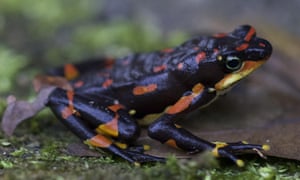
The land vertebrates on the verge of extinction, with fewer than 1,000 individuals left, include the Sumatran rhino, the Clarión wren, the Española giant tortoise and the harlequin frog. Historic data was available for 77 of the species and the scientists found these had lost 94% of their populations.
The researchers also warned of a domino effect, with the loss of one species tipping others that depend on it over the edge. “Extinction breeds extinctions,” they said, noting that unlike other environmental problems extinction is irreversible.
Humanity relies on biodiversity for its health and wellbeing, scientists said, with the coronavirus pandemic an extreme example of the dangers of ravaging the natural world. Rising human population, destruction of habitats, the wildlife trade, pollution and the climate crisis must all be urgently tackled, they said.
“When humanity exterminates other creatures, it is sawing off the limb on which it is sitting, destroying working parts of our own life-support system,” said Prof Paul Ehrlich, of Stanford University in the US, and one of the research team. “The conservation of endangered species should be elevated to a global emergency for governments and institutions, equal to the climate disruption to which it is linked.”

Harlequin frog
Harlequin frog. Photograph: Gerardo Ceballos/University of Mexico/PA
“We are facing our final opportunity to ensure that the many services nature provides us do not get irretrievably sabotaged,” said Prof Gerardo Ceballos of the National Autonomous University of Mexico, who led the research.
The analysis, published in the journal Proceedings of the National Academy of Sciences, examined data on 29,400 land vertebrate species compiled by the IUCN Red List of Threatened Species and BirdLife International. The researchers identified 515 species with populations below 1,000 and about half of these had fewer than 250 remaining. Most of these mammals, birds, reptiles and amphibians were found in tropical and subtropical regions.
Scientists discovered that 388 species of land vertebrate had populations under 5,000, and the vast majority (84%) lived in the same regions as the species with populations under 1,000, creating the conditions for a domino effect.
Known examples of this include the overhunting of sea otters, the main predator of kelp-eating sea urchins. A boom in urchins devastated kelp forests in the Bering Sea, leading to the extinction of the kelp-eating Steller’s sea cow.
The researchers said their findings could aid conservation efforts by highlighting the species and regions requiring the most urgent attention.
Prof Andy Purvis, at the Natural History Museum in London, and not part of the new analysis, said: “This research provides another line of evidence that the biodiversity crisis is accelerating. The hardest problem [the researchers] faced is that we don’t know more about the history of species’ geographic distributions. They only had that information for 77 of the species on the brink, and we can’t know for sure how typical those species are.” 

Española giant tortoise
Española giant tortoise. Photograph: Gerardo Ceballos/University of Mexico/PA
Prof Georgina Mace, of University College London, said: “This new analysis re-emphasises some startling facts about the extent to which vertebrate populations have been reduced worldwide by human activities.” But she said she was not convinced that simply having a population less than 1,000 was the best measure of a species being on the brink. A declining trend for the population is also important and both factors are used in the IUCN Red List, she said.
“Action is important for many reasons, not least of which is that directly and indirectly we rely on the rest of life on Earth for our own health and wellbeing,” she said. “Disrupting nature leads to costly and often hard-to-reverse effects. Covid-19 is an extreme present-day example, but there are many more.”


Mark Wright, the director of science at WWF, said: “The numbers in this research are shocking. However, there is still hope. If we stop the land-grabbing and devastating deforestation in countries such as Brazil, we can start to bend the curve in biodiversity loss and climate change. But we need global ambition to do that.”

Coalition won’t rule out passing new laws to reboot robodebt scheme.

Stuart Robert
Stuart Robert spokesman twice failed to rule out use of legislation to legalise averaging of ATO income data for debt recovery. Photograph: Mick Tsikas/AAP

The federal government will not rule out using new laws to allow a future reboot of the botched robodebt scheme, an option Guardian Australia can reveal was explored in an opinion from its top lawyer last year.
Guardian Australia can reveal the opinion from the solicitor general – referred to in a ministerial submission that has formed the basis for the government’s response to an ongoing class action – was received in September.
It suggests the government was aware of serious legal doubts about the scheme two months prior to settling a federal court challenge and eight months before it announced it would refund 460,000 unlawful debts, worth $720m.
A spokesman for Stuart Robert on Monday declined to discuss “privileged legal advice” and twice failed to rule out the use of legislation to legalise the averaging of tax office income data for future debt recovery.
It is understood this option was discussed by ministers in March and last month, when the government finalised the announcement of 470,000 refunds, but no decision has been made.
In February, ministers were told of the possibility of using legislation in the context of defending the Gordon Legal class action.
“This option was canvassed by the solicitor general in his opinion in September 2019 and could be modelled on taxation legislation,” the ministerial submission said.
“Legislative change could be prospective or retrospective. However, a prospective legislative change may not affect past debts, so may have no impact on the [Gordon Legal] class action.”
The opinion was also delivered well before a 19 November email provided to a Senate committee in which the Australian Tax Office confirmed it had been told by bureaucrats the scheme was unlawful.
It is the latest development in the robodebt scandal, which has forced the government to promise refunds to 330,000 people and face the prospect of further payouts for interest and compensation.
Asked to rule out seeking to legalise income averaging in the enforcement of future Centrelink debts, Robert’s spokesman would only say: “The government announced in November last year that debts would no longer be raised wholly or partially using averaged ATO income data.
“This remains the government’s position.”
He did not respond directly when pressed further to rule out the use of legislation, pointing to general comments from Robert about the future of the scheme made on Friday.
Despite the pledge to not use the averaging of annual pay data to allege welfare recipients misreported fortnightly earnings, the government has not closed the overall income compliance program.
The program is considered “no longer viable” on a large scale by the agency responsible, Services Australia, unless staff can once again raise debts based on averaged ATO annual pay information.
On 17 September, Robert said the government had not received “any comment from the department to say anything otherwise what we are doing is lawful”.
He added that the income averaging of ATO pay data was also used under Labor in comments made at a press conference following the announcement of the class action.
Asked if the comments were made before or after the solicitor general’s opinion was received in September, Robert’s spokesman said: “It is not the government’s practice to discuss privileged legal advice.”
It is likely the opinion was prepared for the successful federal court challenge brought by Victoria Legal Aid, which the government settled in November.
Separately, the opposition’s government services spokesman, Bill Shorten, appeared open to the prospect of a judicial inquiry into the robodebt fiasco on Monday, following calls from law academic and robodebt expert Darren O’Donovan.
“Yes, I think there should be some form of inquiry,” he said. “There has been a human toll.”
But he said the opposition would have to discuss whether that would be a judicial inquiry or other probe.
The prime minister, Scott Morrison, expressed regret about the botched scheme on Monday but stopped short of apologising, citing the class action.
Asked whether he would apologise over the robodebt scheme, Morrison said it was a “difficult issue to manage”.
“And the government has great regret about any issues or pain that has been caused but this is something we’re working through and we’re making it right,” he said.
The prime minister, who announced aspects of the robodebt scheme in 2016 as treasurer, also argued the unlawfulness of using income averaging did not mean “those debts don’t exist”.
“And I think all Australians would agree that it’s important that if there are overpayments of welfare or other things like that, then the government has to be diligent about taxpayers funds and make sure that we recover monies where it’s right to do so,” he said.

“But you’ve got to do it in the lawful way and we will ensure to continue to do that with our projects going forward.”

Monday, 1 June 2020

Fire, pestilence and a country at war with itself: the Trump presidency is over.

You’d be forgiven if you hadn’t noticed. His verbal bombshells are louder than ever, but Donald J Trump is no longer president of the United States.
By having no constructive response to any of the monumental crises now convulsing America, Trump has abdicated his office.
He is not governing. He’s golfing, watching cable TV and tweeting.
How has Trump responded to the widespread unrest following the murder in Minneapolis of George Floyd, a black man who died after a white police officer knelt on his neck for minutes as he was handcuffed on the ground?
Trump called the protesters “thugs” and threatened to have them shot. “When the looting starts, the shooting starts,” he tweeted, parroting a former Miami police chief whose words spurred race riots in the late 1960s.
On Saturday, he gloated about “the most vicious dogs, and most ominous weapons” awaiting protesters outside the White House, should they ever break through Secret Service lines.

"In reality, Donald Trump doesn’t run the government of the United States. He doesn’t manage anything"

Trump’s response to the last three ghastly months of mounting disease and death has been just as heedless. Since claiming Covid-19 was a “Democratic hoax” and muzzling public health officials, he has punted management of the coronavirus to the states.
Governors have had to find ventilators to keep patients alive and protective equipment for hospital and other essential workers who lack it, often bidding against each other. They have had to decide how, when and where to reopen their economies.
Trump has claimed “no responsibility at all” for testing and contact-tracing – the keys to containing the virus. His new “plan” places responsibility on states to do their own testing and contact-tracing.
Trump is also awol in the worst economic crisis since the Great Depression.
More than 41 million Americans are jobless. In the coming weeks temporary eviction moratoriums are set to end in half of the states. One-fifth of Americans missed rent payments this month. Extra unemployment benefits are set to expire at the end of July.
What is Trump’s response? Like Herbert Hoover, who in 1930 said “the worst is behind us” as thousands starved, Trump says the economy will improve and does nothing about the growing hardship. The Democratic-led House passed a $3tn relief package on 15 May. Mitch McConnell has recessed the Senate without taking action and Trump calls the bill dead on arrival.
What about other pressing issues a real president would be addressing? The House has passed nearly 400 bills this term, including measures to reduce climate change, enhance election security, require background checks on gun sales, reauthorize the Violence Against Women Act and reform campaign finance. All are languishing in McConnell’s inbox. Trump doesn’t seem to be aware of any of them.
There is nothing inherently wrong with golfing, watching television and tweeting. But if that’s pretty much all that a president does when the nation is engulfed in crises, he is not a president.
Trump’s tweets are no substitute for governing. They are mostly about getting even.
When he’s not fomenting violence against black protesters, he’s accusing a media personality of committing murder, retweeting slurs about a black female politician’s weight and the House speaker’s looks, conjuring up conspiracies against himself supposedly organized by Hillary Clinton and Barack Obama, and encouraging his followers to “liberate” their states from lockdown restrictions.
He tweets bogus threats that he has no power to carry out – withholding funds from states that expand absentee voting, “overruling” governors who don’t allow places of worship to reopen “right away”, and punishing Twitter for factchecking him.
And he lies incessantly.
In reality, Donald Trump doesn’t run the government of the United States. He doesn’t manage anything. He doesn’t organize anyone. He doesn’t administer or oversee or supervise. He doesn’t read memos. He hates meetings. He has no patience for briefings. His White House is in perpetual chaos.
His advisers aren’t truth-tellers. They’re toadies, lackeys, sycophants and relatives.
Since moving into the Oval Office in January 2017, Trump hasn’t shown an ounce of interest in governing. He obsesses only about himself.
But it has taken the present set of crises to reveal the depths of his self-absorbed abdication – his utter contempt for his job, his total repudiation of his office.
Trump’s nonfeasance goes far beyond an absence of leadership or inattention to traditional norms and roles. In a time of national trauma, he has relinquished the core duties and responsibilities of the presidency.
He is no longer president. The sooner we stop treating him as if he were, the better.

Finally there is real movement on Australia's climate policy but time isn’t on our side.

If speed weren’t a factor, we could rely on the market to incentivise green technology at its own pace – but the clock is ticking
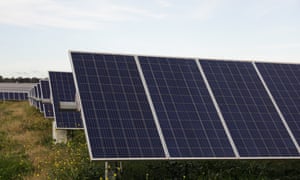
A solar farm
‘Both the response to the King review and the new technology investment roadmap discussion paper provide a better basis for accelerating action than Australia has had for some years.’ Photograph: Carly Earl/The Guardian

“It doesn’t matter whether a cat is black or white so long as it catches mice.”
The maxim attributed to Deng Xiaoping comes to mind in relation to the federal government’s technology investment roadmap discussion paper and its response to the King review.
If we look beyond the headlines, both interventions provide some reason for optimism.
As Frank Jotzo notes, the discussion paper acknowledges that Australia’s future lies with low-carbon energy, industry and transport. That’s a step forward – and it should be acknowledged as such.
Some have complained that, by surveying 140 technologies, the paper takes too broad a view.
Actually, the acknowledgement of a wide array of technologies for carbon abatement methods constitutes positive progress given Australia’s climate policy history.
In a report entitled Decarbonisation Futures, ClimateWorks modelled multiple pathways by which Australia might reach net zero emission by the year 2050, in accordance with the Paris climate agreement goal.
Those models show that decarbonisation won’t be the result of a single technology, but rather that different solutions (from renewable power to sustainable transport to new forms of energy efficiency) will play important roles in particular economic sectors.
Fortunately, the priority technologies identified in Decarbonisation Futures all feature in the roadmap discussion paper.
Much commentary has focused on the government allowing the Australian Renewable Energy Agency and the Clean Energy Finance Corporation to support loans for carbon capture and storage.

"We have entered a crucial decade in the race against climate change"

In the past, that technology was associated with proposals to extend the life of coal-fired power stations. With renewables becoming far cheaper, far more quickly than expected, we now know that CCS is not competitive in the electricity supply.
But that doesn’t mean that it can’t play a role elsewhere.
The Decarbonisation Future modelling identifies CCS as necessary, not in power generation, but in harder-to-abate sectors like heavy industry, where it can help capture non-energy emissions such as fugitive methane from gas extraction and process emissions from cement. That’s a position accepted by both the International Energy Agency and Intergovernmental Panel on Climate Change.
If speed weren’t a factor, we could probably rely on the market to incentivise the uptake of green technology at its own pace. Battery costs per kilowatt hour are now 80% less expensive than in 2010; new renewables generate power more cheaply than fossil fuels, and this year the US will probably produce more electricity from renewable power than from coal for the first time.
But time isn’t on our side. We have entered a crucial decade in the race against climate change, with the UN and scientists declaring that emissions must halve in the next 10 years, and halve again in the 10 after.
That’s why the actions arising from the roadmap need to accelerate the deployment of abatement technologies, stimulating the market so widespread deployment occurs, which both brings down emissions and brings down cost.
In an interview with the ABC’s AM program, Angus Taylor, the energy and emissions reduction minister, explained that the government would “love to achieve net zero by 2050”, before adding that the target will “depend on the pathways of technologies to deliver … without damaging the economy”.
In fact, it’s precisely by setting targets that we can ensure decarbonisation and robust economic growth go hand in hand.
Research by ClimateWorks shows that incentives to use technologies matter as much as initial investment in their development, with deployment spurring improvements in price and performance.
Those incentives can take many different policy forms. Investments of the kind discussed in the government’s technology roadmap paper can foster development and commercialisation of zero-emissions emerging solutions like renewable hydrogen and green steel for harder-to-abate sectors such as heavy industry, agriculture and land.
At the same time, commitments in government procurement might, for instance, scale up the deployment of emerging technologies, as might the establishment of industry standards in particular sectors.
By setting targets immediately, decision makers (in business as well as in government), can support technology development, demonstration and deployment, and capitalise on opportunities for investment.
Innes Willox of the Ai Group is right when he says, in his responses to the King review and to the technology investment roadmap, that we still need “a clear long-term vision and strategy”.
Yet behind the government’s careful rhetoric, we can see the first substantive movement on climate policy for some time.
The recommendations accepted by Taylor aim, for instance, to give industry greater incentive to embrace new climate solutions as they emerge, something demonstrably necessary for decarbonisation to proceed on track. Willox cautions – correctly, I believe – that the government must back its vision with “adequate funding”. But if that funding materialises, along with clear signals of longer term demand for the technologies, it could spur the kind of response that rapidly drives down costs of emissions-saving technology.
In that respect, both the response to the King review and the new technology investment roadmap discussion paper provide a better basis for accelerating action than Australia has had for some years.
With the climate clock ticking, now the focus must be on the accelerant that is applied to these foundations. We can’t afford to debate the colour of the climate cat.
It’s way past time to catch some mice.


Anna Skarbek is the chief executive of ClimateWorks Australia, an independent not-for-profit organisation working within the Monash Sustainable Development Institute

SpaceX's Dragon capsule delivers two astronauts to the ISS with automatic docking.


Extract from ABC News

,
The SpaceX craft is the first privately owned vessel to dock at the International Space Station in its 20-year history.
SpaceX has delivered two astronauts to the International Space Station for NASA, following an historic launch with an equally smooth docking in yet another first for Elon Musk's company.
With test pilots Doug Hurley and Bob Behnken poised to take over manual control if necessary, the SpaceX Dragon capsule pulled up to the station and docked automatically, with no assistance needed.
It was the first time a privately built and owned spacecraft carried astronauts to the orbiting lab in its nearly 20 years. NASA considers this the opening volley in a business revolution encircling Earth and eventually stretching to the moon and Mars.
The docking occurred just 19 hours after a SpaceX Falcon 9 rocket blasted off on Saturday afternoon from Kennedy Space Center, in the first US astronaut launch to orbit from home soil in nearly a decade.
Thousands jammed surrounding beaches, bridges and towns to watch as SpaceX became the world's first private company to send astronauts into orbit and ended a nine-year launch drought for NASA.
SpaceX Falcon 9 launches into the sky leaving a trail of white smoke across the ground.
The astronauts said the launch was bumpy and dynamic.(AP: Chris O'Meara)
A few hours before docking, the Dragon riders reported that the capsule was performing beautifully.
Just in case, they slipped back into their pressurized launch suits and helmets for the rendezvous.
The three space station residents kept cameras trained on the incoming capsule for the benefit of flight controllers at SpaceX headquarters in Hawthorne, California, and NASA's Johnson Space Center in Houston.
Gleaming white in the sunlight, the Dragon was easily visible from a few miles out, its nose cone open and exposing its docking hook as well as a blinking light. The capsule loomed ever larger on live NASA TV as it closed the gap.
Colonel Hurley and Colonel Behnken took over the controls less than a couple of hundred metres out as part of the test flight, before putting it back into automatic for the final approach. Colonel Hurley said the capsule handled "really well, very crisp."
SpaceX and NASA officials had held off on any celebrations until after Sunday morning's docking — and possibly not until the two astronauts are back on Earth sometime this summer.
NASA has yet to decide how long the two astronauts will spend at the space station, somewhere between one and four months.
NASA astronauts walk in front of a white wall with a NASA sign wearing their spacesuits and waving.
When Douglas Hurley and Robert Behnken arrived safely many involved in the mission breathed sighs of relief.(AP: John Raoux)
While they're there, the Dragon test pilots will join the one US and two Russian station residents in performing experiments and possibly spacewalks to install fresh station batteries.
In a show-and-tell earlier on Sunday, the astronauts gave a quick tour of the Dragon's sparkling clean insides, quite spacious for a capsule.
They said the launch was pretty bumpy and dynamic, nothing the simulators could have mimicked.
The blue sequined dinosaur accompanying them — their young sons' toy, named Tremor — was also in good shape, Colonel Behnken assured viewers.
Tremor was going to join Earthy, a plush globe delivered to the space station on last year's test flight of a crew-less crew Dragon.
Behnken said both toys would return to Earth with them at mission's end.
An old-style capsule splashdown is planned.
After launch, Mr Musk told reporters that the capsule's return will be more dangerous in some ways than its departure.
Even so, getting the two astronauts safely into orbit and then to the space station had everyone breathing huge sighs of relief.
As always, Mr Musk was looking ahead.
"This is hopefully the first step on a journey toward a civilization on Mars," he said.
ABC/AP