Friday, 2 October 2020

'It's degrading': Australians on the poverty line brace for pain after jobseeker cuts.

 Extract from The Guardian

As job opportunities vanish and the coronavirus supplement is slashed, single parents face an uncertain future

Mandy Weber
Mandy Weber says the cut to the coronavirus jobseeker supplement will make life harder at a time when there are many fewer jobs available.
Fri 2 Oct 2020 03.30 AEST

“My children will have to cut back on the medication that they need,” Mandy Weber says. The single mother of four had been relying on the government’s jobseeker payments to keep her children fed and healthy, as the coronavirus pandemic condemned her to unemployment.

“I could go to the supermarket, and instead of doing a $30 shop for the week, I could do a $200 shop for the fortnight,” she says.

The extra payment, introduced by the government in the wake of the pandemic, changed Weber’s life, affording her and her family the opportunity to live normal, dignified lives.

“It gave me the dignity to have fresh fruit, like apples and bananas, salads and fresh meat that we wouldn’t normally get,” she says.

But now that the supplement has been reduced, life in Bacchus Marsh, Victoria, has suddenly become very different for Weber and her children.

“It’s going to affect my household hugely; it’s going to affect whether we can pay our bills, maintain power and water, whether we can afford to pay rent, whether we can even afford to eat,” she says.

“There won’t be any birthday presents or Christmas presents, I no longer have enough to even buy them a cake.”

Weber is far from alone. Millions of Australians who have lost work during the pandemic and found themselves dependent on the supplement will find the cuts difficult to stomach.Mandy Weber
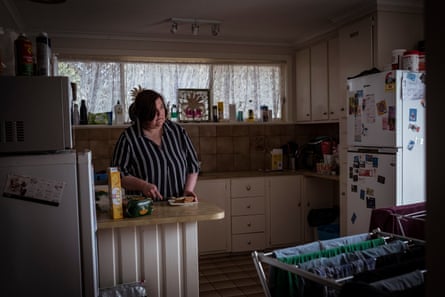
Mandy Weber says she will be unable to buy her children birthday presents as the rate of the jobseeker supplement is cut. Photograph: Christopher Hopkins/The Guardian

The jobseeker program, formerly known as Newstart, included a top-up to unemployment payments. But since 25 September that top-up has been cut by more than half – from $550 a fortnight to $250.

That reduces the fortnightly rate for singles from $1,115 to $815. Singles with children and over 60s will get $862 and couples will receive $760 each.

For many who have seen their livelihoods and opportunities vanish in the nation’s first recession in three decades, the cuts are disastrous.

“I just think it’s horrible and degrading. There are no words to describe it, it should not be cut,” Weber says.

“Now that it’s gone, it’s going to be a lot harder to survive really, and a lot harder to look for work.”

The government has also made it mandatory for recipients to apply for up to eight jobs each month.

Just before the pandemic hit, Weber had accepted a job at a local pub, and looked forward to ending her dependence on government payouts. But the pandemic ruined that plan – the pub was forced to shut its doors due to Covid-19 restrictions.

Since then, job opportunities have been few and far between.

“There’s over 100 people going for the same position, you’ve got a lot of qualified chefs working in childcare at the moment because there’s no work out there,” she says.

Kristin O’Connell of the Australian Unemployed Workers’ Union echoes Weber’s concern, saying people were already struggling as it was.

“People living on the jobseeker payments have been living on the poverty line for a few months, and they’re about to be $150 below it.

“And we know that’s going to cause people to skip meals, skip medical care and to be skipping real essentials that everyone should be able to access,” O’Connell says.

The flow-on effects from losing vital income support are telling – from cutting healthy food and medicine, to the added strain on mental health.

“It really affects your self-esteem. You can’t go into a job interview confident if you’re hungry and you can’t think. You may not even be able to afford toothpaste to brush your teeth,” O’Connell says.

The government’s caveat in cutting the rates to income support was that it extended both jobseeker and jobkeeper for six months.

The idea that people could just go out and get themselves out of poverty by finding a job is ridiculous, because there are no jobs

Both payments were introduced to support people who suddenly found themselves out of a job because of the pandemic, effectively acting as a safety net for millions.

But the pandemic has skewed the job market, making it hard for anyone to find work.

“There are just so few jobs available,” O’Connell says. “Last Tuesday, there were about 113,000 jobs advertised on Seek, and on the same day there were 1.62 million people living on unemployment payments.

“So the idea that people could just go out and get themselves out of poverty by finding a job, even if the system worked, is ridiculous at this time.”

Weber says she had been applying for jobs in the interim, but found it close to impossible to get a look.

“Before Covid-19, I would apply for around four jobs and guaranteed I would get one of them. Now I’ve applied for 100 jobs, and I’ve only managed to get one interview.”

A Deloitte report from earlier this month said reducing the supplements would cost the economy $31.3bn and as many as 145,000 full-time jobs over two years.

Weber says her only choice is to continue applying for jobs in the hope of keeping her children away from poverty.

“I will always apply for work. I am someone who wants to work. I’m not someone who wants to sit at home.”

Thursday, 1 October 2020

Narrabri gas project: do we need it and what's at stake for Australia's environment?


The NSW independent planning commission is due to hand down a decision on the proposed gas development at Narrabri. Here’s what is at play
Santos staff at a coal seam gas well rig in the Pilliga forest
The Narrabri gas field proposal by Santos has been in the works for more than a decade and is a sign of the government’s push to expand gas extraction and use.
Supported by
Limb Family Foundation
About this content
Environment editor

Last modified on Wed 30 Sep 2020 08.18 AEST

The New South Wales independent planning commission is due to make a decision on a proposed new gas development at Narrabri, in northern NSW, on Wednesday. Here is what is at play.

What is the project?

The proposal by Santos to develop a gas field at Narrabri has been in the works for more than a decade, but has become emblematic of something much larger – the Morrison government’s push to significantly expand gas extraction and use.

As proposed, the $3.6bn project would involve up to 850 coal seam gas wells being drilled down on 1,000 hectares across a 95,000 hectare site that includes Pilliga forest and nearby grazing land. The wells would descend more than a kilometre below the surface to draw up to 200 terajoules of gas a day for domestic use for 20 years – equivalent to 50% of NSW demand.

Who supports it?

Santos’ pitch is that it will deliver “more affordable, secure, cleaner energy” for the state, lead to jobs and investment in a regional area and can be developed “safely and sustainably” without harming water resources or the environment.

It is backed by both the federal and state governments, several business groups and gas-reliant manufacturers. It received formal backing from the Berejiklian government in June, when the state Department of Planning, Industry and Environment recommended it be approved with what it described as strict conditions, saying it was critical for energy security in the state and unlikely to result in significant impacts on the community or environment.

In a speech earlier this month, Scott Morrison placed the development at the centre of the government’s proposed “gas-fired recovery” from the coronavirus recession, saying “we need to accelerate development of new basins like the Beetaloo in the Northern Territory and Narrabri in NSW”. It prompted suggestions he was implicitly pressuring the independent commission.

Morrison has listed Narrabri as one of 15 projects of national significance, promising an accelerated assessment under federal environment laws. The energy and emissions reduction minister, Angus Taylor, has backed the suggestion it will reduce energy costs for consumers.

Who is opposed?

While political and business support for the project has been significant, the registered public response has been overwhelmingly against. The department received nearly 23,000 submissions during its deliberations. Nearly 98% were opposed on a range of grounds, including that it could damage groundwater relied on for agriculture, lead to a loss of pressure in the Great Artesian Basin, affect biodiversity in the Pilliga forest and release substantial greenhouse gas emissions.

Opponents include local farmers, scientists, conservationists and those who do not believe the economics stack up. A former national chief scientist Penny Sackett said it was at odds with the Paris agreement and cutting emissions to net zero by 2050 – a target backed by the NSW government and many in business, but not Morrison.

What do we know about what Narrabri would mean for gas prices?

The company changed its evidence in a late submission to the commission, handed in after public hearings were complete, to suggest the gas could be produced at Narrabri for $6.40 a gigajoule – significantly less than the previous estimates of between $7.28 and $9.36 a gigajoule. The new estimate roughly lines up with a federal government goal of the domestic gas price coming down to about $6 a gigajoule. It does not include the cost of transporting the gas.

The company said the lower estimate came from an Australian Energy Market Operator (Aemo) assessment of future gas opportunities published in March. But the Australia Institute pointed out the estimate Aemo used was provided by Santos itself. A separate analysis by Aemo a month earlier suggested Narrabri gas could be more expensive than that from the Cooper Basin in Queensland, which currently provides more than 50% of supply in NSW.

David Kitto, the director of the state department, had earlier told the commission the project was relatively small and bureaucrats had not claimed it would reduce gas prices. He rephrased this at a later appearance to say Narrabri was consistent with the state government’s policy to put downward pressure on prices by increasing supply.

Is the gas needed?

Aemo found southern Australia would need additional supply between mid-2024 and 2036 to meet forecast demand for residential, commercial and industrial customers, electricity generation and liquified natural gas (LNG) exports.

Under a $2bn energy agreement with the federal and NSW governments announced in January, the state agreed to increase supply by 70 petajoules a year. But the premier, Gladys Berejiklian, said Narrabri was one of “two or three options” that could do it. Others on the table included import terminals at Port Kembla and possibly Newcastle.

Aemo’s assessment, and the federal government’s plan, do not consider whether gas is the cheapest way to meet additional energy demand, or factor in the cost of the emissions associated with new gas developments.

In his energy speech this month, Morrison quoted a gas industry estimate that 225,000 manufacturing jobs were in industries that relied on gas and need a cheap, reliable supply. But an upcoming report by the Grattan Institute challenges this, finding there were only between 4,000 and 5,000 manufacturing jobs heavily reliant on gas on the east coast.

Several studies during the push for a green economic recovery from Covid-19 have argued that while Australia will rely on gas for some time to come, it does not need new gas fields – that an energy efficiency and electrification drive for households and business could reduce fossil fuel reliance while creating jobs, lowering costs and setting up the country for an inevitable low emissions future.

What are the environmental concerns?

Several have been raised, including the loss of parts of the Pilliga forest, the potential for contamination of aquifers connected to the coal seams in the area and concerns that Santos has not yet had to finalise a plan to dispose of the estimated 33,600 tonnes a year of salt waste the project will produce.

The company says it has signed a memorandum of understanding with Natural Soda to take salt. Scientists have argued this should not be seen as enough to assuage concerns that the salt could lead to dangerous contamination of ground and surface water.

The climate impact is likely to be significant. Gas is often described as having half the emissions of coal, but recent studies have suggested it could be more. A recent analysis suggested Australia’s emissions accounting underestimates national emissions by about 10%, largely due to a failure to properly recognise the impact of methane – a particularly potent greenhouse gas – released during gas production.

What does the commission need to consider when making its decision?

Criteria include the likely environmental, social and economic impact of the project, the suitability of the site, submissions received and the public interest.

Is the decision of the commission final?

Close to it. The substance of the decision cannot be appealed, but a judicial review can be requested by the proponent or opponents if they believe the commissioners have used their powers incorrectly.

If Santos is successful, the final regulatory hurdle will be federal environmental approval – a step the prime minister has said would be fast-tracked.

Attention would then turn to whether the company believes the project is a sound financial investment. Not everyone is convinced it would be.

America's year of fire and tempests means climate crisis just got very real.

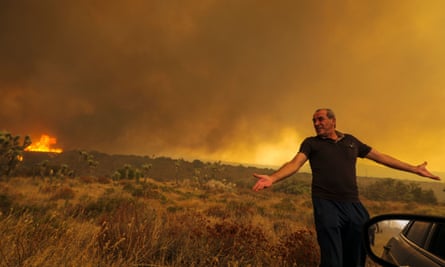
A frustrated Mike Gregoryan is asked to leave his home as Bobcat fire rages in Juniper Hills, Little Rock, California, earlier this month.

Record-breaking wildfires and hurricanes were just the most high-profile effects of global heating – and this is only the start

Last modified on Wed 30 Sep 2020 23.59 AEST

In a flurry of recent fires and storms, the climate crisis has left unmistakable wounds on America. Even in a tumultuous year not short of anguish elsewhere, scientists warn the climate-fueled disasters of 2020’s summer point to major shifts that will upend Americans’ lives like no other threat.

The American west has experienced its biggest year of fire on record, with blazes the collective size of Connecticut roaring across a tinderbox-dry landscape, consuming thousands of buildings, claiming several dozen lives and turning the Bay Area’s sky an eerie orange.

Meanwhile, the Atlantic has been so festooned with hurricanes – at one stage this month five storms were strung out across the ocean at once – that meteorologists exceeded their 21 English-language names for major storms and for only the second time had to turn to the Greek alphabet. Appropriately, the two phenomena met on 15 September, when wildfire smoke pouring across the country wafted into Paulette, yet another tropical storm, off the eastern seaboard.

Such events are consistent with a heating-up planet, according to scientists, with studies showing that hurricanes are becoming stronger as ocean waters warm up and the atmosphere holds more water vapor. In the west, prolonged, intense heat – perhaps the hottest atmospheric temperature ever recorded on Earth occurred in California in August – has dried out forests and soils, making them more susceptible to huge conflagrations.

Add in the floods that have soaked swaths of the midwest and the Arctic sea ice that just shrank to its second lowest extent on record and it’s clear climate impacts are now piling upon America in multiples.

“The changes from greenhouse gas emissions on the Earth’s climate system ain’t pretty and they do not come alone,” said Camilo Mora, an environmental scientist at the University of Hawaii and lead author of research that found climatic extremes are causing 400 different types of impacts upon humanity.

These threats are making people “unhealthy, thirsty, poor and homeless”, Mora said. “Climate change is like a horror movie with 400 endings to choose from.”

The different consequences of global heating, through the burning of fossil fuels, can overlap and trigger further damage. For instance, researchers have found that the combination of severe heatwaves and drought, once a rare amalgam, is becoming increasingly common in the US west, escalating the risk of wildfire and water shortages.

These connected threats will stress all aspects of US society, from transport to healthcare to community livability, researchers say. If emissions aren’t tamed, 13 million Americans face being displaced by sea level rise, US economy activity could plunge by half a trillion dollars a year and scorching heatwaves could make parts of the US south-west barely livable without day-long air conditioning.

“All of the systems that society depends on were designed to function in the climate of the past,” said Amy Snover, a climate scientist at the University of Washington who recently sealed herself inside her Seattle home for 11 days because the wildfire smoke outside was too toxic to breathe.

Snover added: “But we no longer live in the climate of the past. The climate disruption brought by warming, changes in precipitation, changes in storms and changes in sea level is destabilizing the foundation of all these systems at once.”

Millions of Americans are now being affected, to some degree, by climate breakdown but the consequences are landing most heavily upon people of color and those without the means to easily recover from losses.

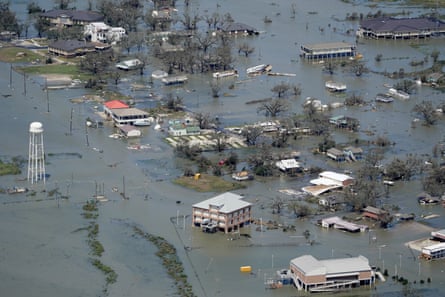
In August, when Hurricane Laura became the strongest storm to ever crunch into Louisiana, Rebekah Winstead quickly threw some mementoes and documents into a duffel bag and fled her trailer park home in Lake Charles with her three-year-old son.

Terrified, Winstead drove for 10 hours overnight to stay with her sister-in-law’s parents in Atlanta, where she “stayed up watching the storm camera, seeing the whole city of Lake Charles being destroyed”. A few days after the storm passed, Winstead and her husband surveyed their ruined trailer, wrenched from its foundations. Debris has since been washed down the street from floods caused by another storm, called Beta – the ninth storm to make landfall in the US this year.

“We lost most of our things, the windows were smashed, there was mold inside,” Winstead said. “It’s not livable, which is devastating. My son keeps asking to go home but we can’t. It’s heartbreaking to see your town completely demolished.”

Buildings and homes are flooded in the aftermath of Hurricane Laura near Lake Charles, Louisiana.

Buildings and homes are flooded in the aftermath of Hurricane Laura near Lake Charles, Louisiana. Photograph: David J Phillip/AP

Winstead’s home wasn’t insured but she hopes the family will be able to save enough for a new place further north, beyond the reach of hurricanes. “We’ve talked a lot about moving out of Louisiana completely because I don’t want to ever do this again,” she said. “I never thought at 27 I’d be married with a three-year-old and homeless. But there are a lot of people in our position, wanting to up and leave.”

The wildfires have also sent people reeling, leaving them unsure as to how they will piece their lives back together. In southern Oregon, fires burned down more than 2,500 housing units in the cities of Talent and Phoenix, many of them in trailer parks, causing concerns over a housing crisis for those displaced.

“The level of destruction in our small towns is devastating. People had to flee their homes with little to no notice,” said Sarah Westover, a Phoenix city councilor. “This is what climate disaster looks like and we are not prepared for the fallout.”

Americans will have to absorb heavier and heavier blows as the climate crisis intensifies. Rather than a new but stable normal, the disasters of 2020 are merely a rung on a climatic ladder that hasn’t been fully climbed yet. “Don’t think of it as the warmest month of August in California in the last century,” said Cristi Proistosescu, an atmospheric scientist at the University of Illinois. “Think of it as one of the coolest months of August in California in the next century.”

The dawdling response to the climate crisis means cascading changes are now baked into the system. The wildfire smoke that has blanketed the west is set to become a norm that may require mask-wearing outdoors long after the Covid-19 pandemic while, as researchers reported last week, 2.5 metres of global sea level rise from the melting of the Antarctic is now virtually guaranteed even if emissions are rapidly cut. “We will be renowned in future as the people who flooded New York City,” said Anders Levermann, co-author of the paper.

“What we see today is nothing by comparison to what is coming our way,” said Mora. “Basically, take what we see today and multiply it by two or three. I wish I could be more positive, but the evidence is overwhelming that nothing good can come from us producing more CO2.”

Australian government cites 'chilling effect' on cabinet in bid to block release of papers in Timor-Leste spy case.

Extract from The Guardian

Australian Capital Territory

Attorney general’s lawyers say they should not have to provide the documents, including briefing for prime minister, because it is not in public interest.

Bernard Collaery outside the ACT supreme court last year
Bernard Collaery outside the ACT supreme court last year. Protesters gathered outside the court on Wednesday in support of Collaery and Witness K in the Timor-Leste spying case.

Last modified on Wed 30 Sep 2020 16.57 AEST

Government lawyers have invoked cabinet confidence in an attempt to stop Bernard Collaery and his team from viewing a briefing to the prime minister relevant to the Timor-Leste spying case.

Collaery, a barrister and former ACT attorney general, has been charged over his role in exposing details of a 2004 Australian intelligence operation to bug the Timor-Leste government during commercial negotiations to carve up oil and gas resources in the Timor Sea.

It is alleged that Collaery, while representing intelligence whistleblower Witness K, illegally shared protected information about the operation.

Collaery faces jail time if found guilty. The case, still in its pre-trial stages, continues to wind its way through the ACT supreme court.

Protesters gathered outside the court on Wednesday in support of Collaery and Witness K. They were singing and brandishing placards praising the pair as whistleblowers and heroes.

Inside, an argument was heard over Collaery’s attempt to obtain five documents – all briefings to departmental secretaries and ministers – from the Australian government. Little detail was given in open court about the nature of the internal government briefings Collaery is seeking including when they were written.

One of the documents is a briefing to the prime minister ahead of a meeting of the powerful national security committee of cabinet.

Another was a briefing prepared for the head of the attorney general’s department ahead of a meeting of a group of other departmental secretaries involved in national security, known as the secretaries committee on national security

Lawyers acting for the attorney general, Christian Porter, argued they should be immune from providing the documents because it was not in the public interest for them to be produced. Producing the documents would breach cabinet confidence and compromise future deliberations, the government argued.

Anna Mitchelmore SC said handing over the documents would have a “particularly chilling effect” on cabinet deliberations, given the nature of the case and the fact that future cabinet deliberations may take place on related issues.

The government’s public interest immunity claim put Collaery and his team in a difficult position, the court heard. It requires them to demonstrate the documents are highly relevant to the case without having ever seen them.

But Collaery’s barrister, Christopher Ward SC, said the documents were clearly removed from cabinet deliberations and were needed for the proper administration of justice. “They are a very long way removed … from the deliberations of cabinet,” he said.

Some were merely background briefings for departmental secretaries ahead of meetings with other departmental secretaries, Ward argued.

The fact that similar issues were later discussed in cabinet meetings did not mean the briefings suddenly revealed cabinet deliberations.

“Nothing that is sought is a declaration that does directly reveal cabinet deliberations,” Collaery’s barrister said. “Not one of these documents are cabinet documents in the classic sense of the word.”

Ward said parts of the documents could be redacted, if necessary, and urged justice David Mossop to view the briefings himself.

Part of the proceedings were closed to the public to allow Ward to further argue his case. Mossop reserved his decision.

Wednesday, 30 September 2020

Global poll of views on environment and science finds sharpest divide in US.

Extract from The Guardian

Environment

Only one in five Americans with right-wing outlook said they had a lot of trust in scientists.Oil refinery smoke stacks

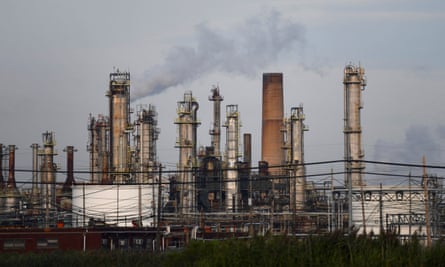
Oil refinery stacks in Philadelphia, Pennsylvania. Nearly two thirds of US participants in the Pew Research Center poll said the government was doing too little to address the climate crisis.

Environment correspondent

Last modified on Wed 30 Sep 2020 04.21 AEST

People in the US are more sharply divided along political lines when it comes to science and environmental issues than in other parts of the world, new research shows.

Globally, people who see themselves on the left side of politics are more likely to be concerned about the environment than those who see themselves as being on the right or in the centre ground.

But in the US, that divide is much sharper, according to an international survey by the Pew Research Center. About four in 10 US citizens who are on the right politically would prioritise protecting the environment, even if it caused slower economic growth and some loss of jobs, compared with 87% of those on the left.

In Europe, Australia, Canada, Brazil and South Korea, the divide was much less marked. Of those on the right in the UK, 68% would prioritise the environment, similar to the numbers in Italy, Sweden, Poland, Spain and France. On the left in the UK, 84% would prioritise environmental protection, similar to the proportion in other European countries.

The polls, published on Tuesday, were undertaken earlier this year, before the coronavirus outbreak reached pandemic proportions.

Overall, there was still a clear majority who supported protecting the environment in the US, at nearly two-thirds (64%) of the population, with a similar number (63%) saying the government was doing too little to address the climate crisis. About half of respondents said climate change was a very serious problem, and that human activity contributed a great deal to climate change.

Only one in five people with right-wing political views said they had a lot of trust in scientists, compared with more than six in 10 people on the left, in the US.

The Pew results show that people in 20 nations around the world have a strong regard for scientists generally, with about eight in 10 globally saying government investment in scientific research was worthwhile.

Cary Funk, the director of science and society research at Pew, said: “These findings showcase the generally positive views that publics around the world hold for scientists and their work, as well as ideological fault lines in many places over how much to trust scientists.”

Although the questions were asked before the effects of coronavirus became apparent, they could indicate difficulties for governments in deploying vaccines.

Respondents were asked about the preventive health benefits of childhood vaccines, such as those for measles, mumps and rubella. In Sweden, a majority (84%) said the benefits were high, but only 49% said the same in Russia. In the US, one in 10 people said there were no preventive health benefits from such vaccines, and 37% said there was a high or medium risk of side-effects.

In the UK, about six in 10 people said they thought the country’s achievements in science were above average, or the best in the world. Nearly seven in 10 said the UK government was not taking enough action on the climate crisis.

Stephen Colbert on Trump's hair: 'He spent $70,000 on that? He should've paid more'

Extract from The Guardian 

Late-night TV roundup

Late-night hosts react to the Trump tax revelations, from the $750 he paid in 2017 to the $421m he personally owes.

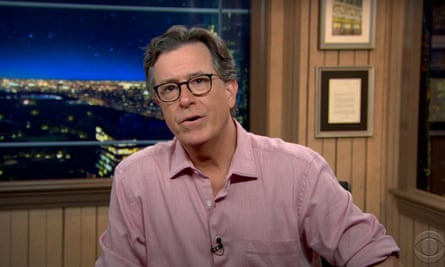
Stephen Colbert: ‘Normally you don’t find someone who owes that kind of cash in the Oval Office. You find them washed up on the banks of a river.’

Stephen Colbert: ‘Normally you don’t find someone who owes that kind of cash in the Oval Office. You find them washed up on the banks of a river.’

Last modified on Wed 30 Sep 2020 02.53 AEST

Stephen Colbert

The fallout from the New York Times bombshell investigation into two decades of Trump’s tax returns filtered through Monday’s late-night shows, as hosts reacted to the revelation that Trump paid merely $750 in taxes in 2016 and 2017. “Seven hundred and fifty dollars!” Stephen Colbert exclaimed on The Late Show. “Trump paid Stormy Daniels $130,000 and he screwed the country way more.”

The Times also found that Trump paid no income taxes at all in 10 of the previous 15 years, partly because of questionable “business expenses” including more than $70,000 to style his hair when he hosted The Apprentice. “He spent $70,000 on … that?” Colbert deadpanned. “I can’t believe I’m going to say this, but he should’ve paid more.”

Additionally, in 2010, Trump claimed and received a tax refund of $72.9m – a refund the IRS has not confirmed is legal, and whose penalties would cost Trump $100m. And “there’s a good ole chance that good ole fake billionaire President Trump wouldn’t be able to pay that bill,” Colbert added, as the New York Times revealed his businesses have accrued chronic losses over the years.

Trump’s golf courses, for example, have reported losses of $315.6m since 2000. “Someone really needs to explain to him that in golf, you want a low score. In golf business, you really don’t want to finish 315 million under par,” Colbert joked.

On top of the business losses, the Times also found that Trump is personally responsible for loans and other debt totaling $421m. “To put that in layman’s terms – I can’t,” said Colbert. “It’s 421 million dollars.”

“Normally you don’t find someone who owes that kind of cash in the Oval Office,” he added. “You find them washed up on the banks of a river. And Trump only looks like he washed up on the banks of a river.”

Trump’s golf courses, for example, have reported losses of $315.6m since 2000. “Someone really needs to explain to him that in Trevor Noah

On the Daily Show, Trevor Noah was especially shocked by Trump’s $70,000 “business expense” deduction for his hair on The Apprentice. “Now it looks like two crimes have been committed here: one is Trump’s tax evasion, and two is whoever swindled Trump into paying $70,000 for what they did to him.”

In all seriousness, Noah added, “the worst part of this story for Donald Trump isn’t that he got out of paying taxes. Because I mean, let’s be honest, lots of billionaires do that. Billionaires paying their fair share of taxes is like someone going to a pumpkin patch and not Instagramming it – it doesn’t happen.

“But what this story exposes isn’t just that Trump is bad at paying taxes. It’s that he’s even worse at business.” The New York Times investigation laid bare Trump’s flailing business empire, in which his core operations – golf courses and name-brand hotels – reported millions or tens of millions in losses year after year. In 2018 alone, Trump businesses reported $47.4m in losses. And Trump personally owes a debt of $421m – one that could come due during his second term in office if he’s re-elected.

“Can I just say, if you decided to lend $420m to Donald Trump, that’s on you,” Noah said. “I hope he doesn’t pay you back, because you are the one person on earth worse with money than he is.”

In sum, reading the New York Times report, and learning the size and scope of Trump’s business debts, means “everything makes so much sense now,” Noah concluded. “This tax story is the Rosetta Stone that helps us figure everything out. Trump doesn’t want to be president – he just really needs that Secret Service protection. Shit, if I had $421m in loans coming due, I’d also be trying to cancel the election.”

Seth Meyers

“So Trump paid virtually nothing in taxes in 2016 and 2017,” said Seth Meyers on Late Night, which is one thing if you’re “just a New York real estate grifter” but “it’s especially brazen to do it while you’re a sitting president.

“That means he was in the Oval Office on the phone with his accountant saying, ‘What? ‘Eight hundred ninety bucks seems like a lot. Can we get it down to seven-fifty?’”

Allegations of Trump’s illegal financial dealings is old news, Meyers continued – Trump’s former personal lawyer Michael Cohen alleged Trump illegally deflated the value of his New York real estate holdings, and Trump is currently under investigation by the Manhattan district attorney and New York’s state attorney general. “But to my mind, what’s legal is just as much of a scandal here,” Meyers said. “Trump took advantage of a labyrinthine tax system designed to protect his wealth and shield him from consequences.

“In fact, he and his allies have long argued that rather than be ashamed of this behavior. He should be proud of it.” Meyers cut to clips in which Trump bragged about avoiding taxes, claiming the loopholes made him “smart”.

“It doesn’t make you smart. It makes you powerful,” Meyers corrected. “There are plenty of smart people who pay their taxes in full every year because they don’t have the army of accountants and vampire lawyers that rich people like Trump or companies like Amazon have.

“If the IRS found out you did what Trump is accused of,” Meyers added, “your response would be,” to quote Trump’s press conference from Sunday, “Oh, shit.”

Narrabri gas project: environment group says new groundwater evidence not considered.

Extract from The Guardian 

Energy

The NSW independent planning commission says Lock the Gate’s evidence arrived too late to meet its strict approval timeframe.

Demonstrators hold placards to protest against Santos’s plans for a major coal seam gas field near Narrabri, Australia
Lock the Gate tried to submit fresh evidence to authorities considering the Narrabri coal seam gas development about the cumulative effects of multiple mining projects on groundwater in the region.

Last modified on Tue 29 Sep 2020 18.17 AEST

Evidence suggesting the proposed Narrabri coal seam gas development could have a greater impact on groundwater than previously believed has not been considered by authorities due to a strict approval timeframe imposed by the New South Wales government, activists say.

The state’s independent planning commission is due to announce on Wednesday its decision on the controversial gas project in northern NSW following a 16-week assessment period in which opponents have raised concerns about implied political pressure on the commission to approve the development.

It included the prime minister, Scott Morrison, saying developments such as Narrabri needed to be accelerated to help drive a “gas-fired recovery” from the coronavirus recession.

Lock the Gate, an environment group opposed to coal and coal seam gas projects, tried to submit fresh evidence about what it said was the cumulative effects of multiple mining projects on groundwater in the region on 14 September, a little over two weeks before a decision was due.

The commission replied that it would not consider the evidence as it had to meet a state-government imposed deadline to make a decision about the project by 30 September, and there had been more than eight weeks in which submissions could be made.

Georgina Woods, Lock the Gate’s NSW coordinator, said recent changes introduced by the state planning minister, Rob Stokes, had imposed new time limits on the commission in making assessments. She said it had a “chilling effect” on the commission’s independence.

“I’m quite concerned … There’s all these political players running around confidently declaring that the project is going to be approved. That’s not an atmosphere that instils trust and confidence in the public that the process is objective,” she told Guardian Australia.

Woods said Lock the Gate’s new evidence showed the project proponent, oil and gas company Santos, had used outdated models in assessing how its project and nearby resources developments would affect groundwater levels.

She said the company relied on models previously used in assessing Whitehaven’s Narrabri underground coal mine, but that Whitehaven had subsequently updated its data when planning an extension. Using the latest models showed the cumulative impact of the developments would be “far greater” than Santos or the NSW planning department contended.

“This is not last-minute stuff. This is an impact assessment that Whitehaven submitted last year. It’s not like Santos and the department didn’t have time to include this in their impact assessment,” Woods said.

Both Santos and Stokes’ office declined to comment. A spokesperson for the commission referred to a written response to Lock the Gate by the commissioner, Dianne Leeson, on 18 September, in which she said the minister’s direction about timing was binding on the commission.

She said it was initially given 12 weeks, extended to 16 weeks after Santos made a late submission and additional information was sought from the department. It meant there had been more than eight weeks in which submissions could be lodged.

She said Lock the Gate had reiterated the new evidence it provided should not be considered submissions, making it unclear how the correspondence should be treated, and the act made clear the commission was not required to consider communication from the public outside the stipulated time.

The commission heard evidence from hundreds of people and groups, most of them opposed. Objections included that it would damage the local environment and groundwater and lead to substantial greenhouse gas emissions at odds with Australia’s commitment to the Paris climate agreement.

But the project has strong government backing including the formal support of the NSW Coalition. The prime minister, Scott Morrison, listed it as one of 15 projects of national significance, promising an accelerated assessment under federal environment laws, and the energy and emissions reduction minister, Angus Taylor, has suggested it will reduce energy costs for consumers. This has been contested.

Stokes introduced changes to how the commission operates, including new timeframes in which decisions needed to be made, earlier this year. It followed a review in response to a backlash from mining groups to recent decisions, including the rejection of a coalmine in the NSW Bylong Valley.

Lock the Gate said the commission had accepted new information after submission deadlines on other proposals, including Bylong.