Contemporary politics,local and international current affairs, science, music and extracts from the Queensland Newspaper "THE WORKER" documenting the proud history of the Labour Movement.
MAHATMA GANDHI ~ Truth never damages a cause that is just.
Julie Ann and Ron say having pets has made it hard to find a house.(ABC Wide Bay: Brad Marsellos)
As
the sun sets in a small park on the outskirts of Bundaberg, a young
mother says goodbye to her two children and heads off to work as their
father reads them a bedtime book in a tent.
Nearby, an elderly man starts a generator to run a nebuliser that "keeps me alive" before the cool night air torments his lungs.
Cars roll in, and young couples unpack their swags for the night.
Ron Hughes hopes to help other homeless people in the Bundaberg park.(ABC Wide Bay: Brad Marsellos)
Hinkler
Lions Park isn't a campsite for paying visitors but the last refuge for
the changing face of homelessness caught in the crossfire of
Australia's housing crisis.
Nine young children are among the residents who live day-to-day, unsure about where they will go next.
Jackson Walters bought a caravan from another resident in the park for $500, but it leaks.(ABC Wide Bay: Brad Marsellos)
Julie
Ann Tucker, 68, and her partner Ron Hughes, 71, have called this park
home for several months, but they say the worst part is knowing they're
better off than others living there.
"The toughest thing about living like this is watching women and children homeless and struggling," Mr Hughes said.
"Believe me, it's very hard being homeless. I rode rodeo in my younger life, and it was nowhere near as hard as this now."
Ron Hughes starts a generator every evening to run a nebuliser.(ABC Wide Bay: Brad Marsellos)
The
couple became homeless after falling behind in their rent and started
sleeping in their swags in parks before being gifted a caravan from a
local community fundraising effort.
Mr Hughes, who
relies on a nebuliser for his lung condition, said he and his partner
were still shocked to see the new arrivals to the park each afternoon.
Julie Ann Tucker says they can't afford the rent on their pension.(ABC Wide Bay: Brad Marsellos)
"I always thought Australia was the lucky country, and I was proud to be an Australian," he said.
"But I put my head down in shame.
"I'm ashamed to call myself an Australian. That's how bad it's got."
Jackson Walters and Shyanne Hennessy, and their dogs, have been unable to find a place to live.(ABC Wide Bay: Brad Marsellos)
Life seems to pass by these temporary residents of Hinkler Lions Park with a considered glance.
Visitors
are only supposed to stay 24 hours in the free camp rest site, but
those staying longer live in fear of being removed every time council
workers turn up.
So far, they've been left alone.
The park on the outskirts of Bundaberg is designed as a 24-hour rest site for campers.(ABC Wide Bay: Brad Marsellos)
Planes
come and go from the neighbouring airport, while holiday-makers and
businesspeople look down on the camp from their windows.
Commuters pass on the busy Childers Road, and young would-be professionals study at the university just across the road.
Michael
Johnson said he moved into the park a month ago, straight from having
surgery to implant heart stents at the Bundaberg Hospital.
Michael Johnson is living in a tent while he waits for a heart operation.(ABC Wide Bay: Brad Marsellos)
"There's no accommodation. You got a waiting list as long as a toilet roll," Mr Johnson said.
"There's nowhere to go, so I'm stuck here waiting for another heart operation.
"I had to pay medical bills, and I ended up staying here to save a bit of money because I can't afford accommodation."
The park has a toilet block, but no showers.(ABC Wide Bay: Brad Marsellos)
Like Mr Hughes and Ms Tucker, Mr Johnson said his main concern was for those surrounding him.
"I've given up," Mr Johnson said.
"There's families, children, oldies, disability — we need someone to speak up."
Some of the families have pets living with them.(ABC Wide Bay: Brad Marsellos)
Community offers hope
For
these neighbours, the discussion often turns to possible solutions to
fix their problems, but no one has any realistic answers.
In the meantime, commuters sometimes pull in with blankets and food or other offers of assistance.
A team of volunteers rocks up weekly with a trailer barbecue to start preparing meals as the last of the daylight fades.
Matt A'Bell (front) says they want the people to feel human.(ABC Wide Bay: Brad Marsellos)
Matt A'Bell from the Christian-led Restoration Centre sees a lot of new faces each week.
He also doesn't know how to fix the homelessness crisis. All he can do is offer hope.
"A meal is one part of it, but the other part is people feel seen," Mr A'Bell said.
"We just want to make them feel human and seen and loved.
"We
just want to give some hope. It's happening in other places, but we are
just here to help in our little part of the country."
Years on the waiting list
For Storm Brydon, who has been living in parks across Queensland for "12 months or so", hope is in short supply.
The mother-of-nine said she had been on the public housing waitlist for four years, trying to be reunited with her family.
Storm Brydon and Jason Bossom have been on the public housing waiting list for more than three years.(ABC Wide Bay: Brad Marsellos)
"I
need a place to live. I'm trying to get my kids back, and housing has
been one of the major issues in trying to get them back," Ms Brydon
said.
"I've applied in all different places up and down Queensland between Brisbane and Bundaberg.
Ms Brydon shares a campsite with Jason Bossom, who said he had been on the public housing list for three years.
Jason Bossom enjoys a meal provided by the community as food storage is a problem.(ABC Wide Bay: Brad Marsellos)
"The toilets are here, but there's no shower, and the weather," he said.
"And food, we don't have a fridge, places we camp there is no power.
"We have to buy food every day, you can't buy milk or frozen food."
Still, the pair is making do with the little they have.
"I don't know what's next, but hopefully, it's a house," Ms Brydon said.
Many of the homeless return as the sun sets and leave at first light to meet the 24-hour rest site rules.(ABC Wide Bay: Brad Marsellos)
French President Emmanuel Macron delivers a speech during the French
ambassadors' conference at the Elysee Palace in Paris on Thursday. (Reuters: Mohammed Badra)
Planning
is underway for French President Emmanuel Macron to visit Australia in
November, as both nations steadily repair diplomatic relations following
the cancellation of a lucrative attack-class submarine project last
year.
Key points:
Officials with knowledge of the proposed trip have confirmed the November timing, but said details are not ready to be announced
In 2018, Mr Macron became only the second French president to visit Australia
G20 leaders are scheduled to meet in Bali on November 15 and 16
The
ABC has learnt officials have begun preparing for a visit scheduled to
occur after Mr Macron and Prime Minister Anthony Albanese join world
leaders at the G20 summit in Bali.
"Discussion on
the French VVIP visit has been going on for a while. It's getting close
to formally confirmed," one figure familiar with the preliminary
planning told the ABC.
Several other officials with
knowledge of the proposed trip have confirmed the November timing, but
said details are not ready to be publicly announced by both governments.
News
of Mr Macron's scheduled visit emerged as Deputy Prime Minister Richard
Marles visited the French city of Brest to inspect a warship and hold
talks with the French Minister of the Armed Forces, Sébastien Lecornu.
G20
leaders including Chinese President Xi Jinping and Russian President
Vladimir Putin are scheduled to meet in Bali on November 15 and 16.
Officials
say there is also a possibility the new British prime minister could
also visit Australia following the G20 summit in Bali, although
uncertainty over who will replace Boris Johnson means planning a visit
is more difficult.
In 2018 Mr Macron became only
the second French president to visit Australia. It came two years after
the Turnbull government selected France's Naval Group to design and
build Australia's future fleet of submarines.
Are the empty houses scattered around our cities the solution to the housing problem?(ABC News: Gian De Poloni)
The recent release of 2021 Census data revealed a shocking "one million homes were unoccupied".
This
statistic sent housing commentators, government agencies and
policymakers into a spin. At a time of significant housing shortages,
this extra million homes would surely make a big difference. They could
provide housing for some homeless, ease the rental affordability crisis,
and get first-home owners into their first home.
There
has been a great deal of speculation about how this has happened. Has
it been caused by overseas millionaires buying up housing and leaving it
as an empty investment? Is it Airbnb taking up homes that could be used
for families? Or are cashed-up Gen-Xers double-consuming by living in
one house while renovating another?
So, why were 1,043,776 dwellings empty on census night?
In fact, we've got a pretty good idea of what's going on.
First,
it's not a new phenomenon. When we compare 2021 with previous censuses,
a slightly smaller percentage of our private dwelling stock was
classified as unoccupied — just under 10 per cent, compared with nearly
11 per cent at the previous census in 2016.
Since
the release of the data, many journalists have pointed to this
startling number of empty homes, portraying them as abandoned or left
empty. There is almost certainly a much more ordinary and less startling
story to tell. We suspect there are three main explanations.
A
big part of the story is how the Australian Bureau of Statistics (ABS)
determines whether a dwelling is occupied or not. In short, it does its
best by using a variety of methods, but, for the majority of dwellings,
occupancy "is determined by the returned census form". If a form was not
returned, and the ABS had no further information, the dwelling was
often deemed to be unoccupied.
This is important to
our interpretation of the empty homes story. At any one time, lots of
things are going on in the housing market, and most of it is a long way
from abandoned or empty.
For example, 647,000 dwellings
were sold in 2021. This means many thousands of dwellings were
unoccupied on census night because they were up for sale or awaiting
transfer.
The second and perhaps most important contributor to the empty homes story is holiday homes. Estimates vary, but we know 2 million Australians own one or more properties other than their own home. It's estimated up to 346,581 of these properties may be listed on just one rental platform, Airbnb.
It's
part of the census design to pick a night of the year when the most
Australians are at home. If you think back to Tuesday, August 10 2021,
it was a Tuesday night in mid-winter, so many of Australia's holiday
homes would have been empty — and counted as unoccupied.
Where are these unoccupied dwellings located?
If we map the distribution of unoccupied dwellings across Australia, two things stand out.
Firstly,
unoccupied dwellings tend to be concentrated in sea-change and
inner-city holiday spots, such as Victor Harbor in South Australia (as
the map below shows) , Lorne in Victoria and Batemans Bay in New South
Wales. This reinforces the holiday homes explanation.
Coastal holiday spots in SA have more unoccupied housing. Note: Local
areas correspond to the Australian Bureau of Statistics’ SA1
geographical areas with populations of 200-800 people. (Supplied: Authors)
It's
also striking how few unoccupied homes are in our major cities. Sydney
is a great example. The map below shows a very uniform absence of unused
housing across the whole metropolitan area.
Sydney has comparatively few unoccupied dwellings. Note: Local areas
correspond to the Australian Bureau of Statistics’ SA1 geographical
areas with populations of 200-800 people. Author provided(Supplied: Authors)
You can search an the interactive map here to see how many homes were classified as unoccupied in your local area.
So should we worry about the 'million unoccupied homes'?
Yes
and no. An unknown proportion in that million are not empty, just
assumed to be vacant because a census form wasn't returned. We should
regard this as a systematic error in the counting process. No doubt the
ABS will be aiming to reduce this in future censuses.
Some
of that million are genuinely vacant due to the way the housing market
works. This includes, for example, the sales process and the need for
vacant possession.
Yet, even if there are
substantially fewer than a million vacant dwellings, the reality is that
there are too many ways homes in Australia can be left unoccupied for
weeks, months, years — and it's costing all of us. Those who are
homeless are paying the highest price. But the rest of us feel the pain
through higher rents, increased rates to pay for infrastructure
constructed for housing that isn't occupied, and greater difficulties in
getting into the housing market.
We need to find
ways to ensure houses are full of people, not left empty as owners wait
for investment opportunities to mature, or for absentee owners to go on
holiday.
We know there are solutions out there.
Removing caps on council rates and treating short-term rentals as
commercial properties essential to the tourism industry are just two
ways we can get better occupancy of our stock. We just need to find the
will to implement them.
Emma Baker is
Professor of Housing Research, University of Adelaide; Andrew Beer is
Executive Dean, UniSA Business, University of South Australia and Marcus
Blake is Senior Data Scientist and Manager, Australian Geospatial
Health Laboratory, University of Canberra. This piece first appeared on The Conversation.
The Jobs and Skills Summit
is an important first step in a long-term process of reconfiguration of
work and economic activity in a world that has radically changed since
many of the settings were put in place.
Treasury’s Issues Paper, indicates that the Summit will cover five broad themes: Maintaining full employment and growing productivity; Boosting job security and wages; Lifting participation and reducing barriers to employment; Delivering a high-quality labour force through skills, training and migration and Maximising opportunities in the industries of the future.
The paper also notes that throughout the Summit, ‘there
will be a strong overarching focus on women’s experiences of the labour
market and ensuring women have equal opportunities and equal pay.’
Treasury will also invite submissions and engage the wider community over the next 12 months.
While the Summit does not signal the end of neoliberalism, with
its crushing of spirits and destruction of lives, it does signal a
political willingness by the Albanese government to begin an inclusive,
deliberative process for healing our society of some of the wounds that
have been inflicted on ordinary people through the almost unfettered
accumulation of superprofits on the one hand and cuts to real wages and
the dismantling of social infrastructure on the other.
'We need to bite the
bullet and introduce, where appropriate, multi-employer bargaining in
the light of the fragmentation of the labour market, especially in the
burgeoning services sector.'
At a time when workers are currently experiencing the biggest
fall in real wages and the lowest share of the national income on
record, it is the dizziest height of entitlement to claim that it is
wages, rather than profits, that need to be restrained in order to rein
in inflation!
So what are some of the concrete steps we can take to begin to
undo the damage wrought by governments that have been in the thrall of
the neoliberal lie that the wealth would eventually trickle down?
First, we need to rethink the purpose of economic activity. We
have grown used to the fetishisation of ‘the economy’ as a kind of deity
before which working people are required to sacrifice their lives.
Especially as we look down the barrel of a climate emergency that
threatens not only jobs but life itself, it is well beyond time for us
to reimagine our relationship with the environment and with each other.
Building an economy that works for people would be a massive departure
from the practice of constructing a people whose chief function in life
is to work for the economy. An economy that works for people would, for
example, accommodate the idea of price controls for essential goods and
services such as energy, which is heavily prone to price gouging.
Second, we need a full employment framework, ensuring that
people who are able to work have the opportunity to do so, in a secure
job with good pay and safe and respectful conditions. It means restoring
the central role of education and training. It means regulating, and in
some cases reversing, the gig work trajectory, where workers have lost
security, safety, paid leave, fair pay and, in some cases, even their lives.
This trend has extended well beyond transport into sections of
the care economy such as aged care and the NDIS. As Employment and
Workplace Relations Minister, Tony Burke has astutely observed: ‘Gig
work drives down wages and it has been spreading like a cancer through
the economy…. 21st century technology must not mean 19th century working
conditions.’
Another essential feature of a full employment framework is a reconfiguration of the social security system,
a system which currently punishes workers for being unemployed,
condemning them to a life on $46 a day, a factor that cannot be seen in
isolation from the rest of the neoliberal agenda, intent as it is on
disciplining the working class through the threat of deeper poverty and
paternalistic policies such as compulsory income management, which has
especially been used as an instrument of colonising control over First
Nations communities. Unconscionably low social security payments were
structured to abet wages suppression, supposedly encouraging workers to
accept appalling wages and conditions, resulting in a growing cohort of
American-style ‘working poor,’ some even unable to afford rental
accommodation and forced to sleep in cars or tents.
Third, we need to address the chronic suppression of wages. Key
to this is building the architecture for workers to be able to
collectively bargain. With some exceptions, corporations large and small
have kept wages obscenely low for one chief reason: because they can.
We need to create the conditions where they cannot. We need to bite the
bullet and introduce, where appropriate, multi-employer bargaining in
the light of the fragmentation of the labour market, especially in the
burgeoning services sector.
As ACTU Secretary, Sally McManus, explained on the ABC’s 7.30:
‘the
main reason why wages have collapsed is because collective bargaining
has collapsed, and now only covers one in seven workers, that’s about
14% of the workforce, and the people that are missing out are in
feminised industries, so aged care, child care, but also people in small
workplaces…. If we do not give workers the abilities to be able to win
pay rises, we're not going to turn around this terrible situation we're
in. And we shouldn't underestimate how bad it is.’
In his magnum opus The Principle of Hope, German philosopher Ernst Bloch wrote: ‘The
most tragic form of loss isn’t the loss of security; it’s the loss of
the capacity to imagine that things could be different.’ The Jobs Summit is an affirmation that, in the face of multiple and cumulative forms of social and economic insecurity, things can be different.
Dr John Falzon is a poet and sociologist living on unceded Ngunnawal land. He is the author of The language of the unheard (2012) and Communists like us (2017). He is currently Senior Fellow, Inequality and Social Justice at Per Capita. He was national CEO of the St Vincent de Paul Society from 2006 to 2018. He is a member of the Australian Services Union.
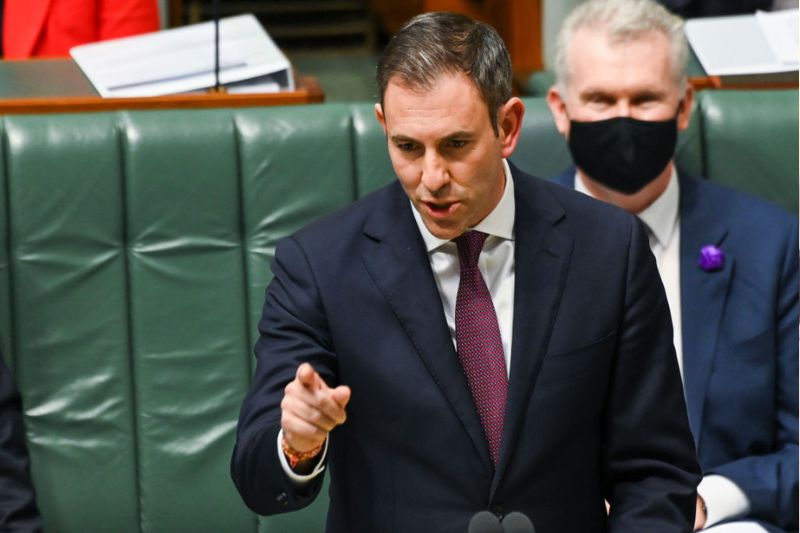
Main image: Australian Federal Treasurer Jim Chalmers MP. (Martin Ollman/Getty Images)
Given the passage of 92 pieces of national security legislation since September 11, 2001, the allowance of secret trials,
the permissibility of indefinite detention, mandatory metadata
retention for up to two years, and raids on journalists, prompting the New York Times to call Australia one of the world’s most secretive liberal democracies, the shadow government revelations of former Prime Minister Scott Morrison are troubling but consistent.
After losing office, Morrison did not shy away
from his belief that governments and institutions were imperfect and,
for all their intentions, untrustworthy. His own conduct has indicated
that very fact: government is not to be trusted. His own effort to
acquire control, via stealth, of a number of ministerial portfolios
spoke of an acute mistrust of his colleagues and human nature. He was,
he claimed in justification, responsible for ‘every drop of rain’.
The most striking note in the tempestuous outrage regarding
Morrison’s self-appointment (technically, appointment with the
Governor-General’s approval) to five ministerial portfolios other than
his own, is the search for the illegal. Such a search is fruitless in a
system that thrives on the principle of convention, perennially
uncodified and therefore susceptible to breach. It may explain why the
criticism has tended to focus on disappointment and outrage: that
Morrison’s conduct was ‘sinister’, as former Prime Minister Malcolm Turnbull put it; or ‘bizarre’, as many have termed it.
A glance at the Australian Constitution
reveals a paucity of substance regarding accountable, transparent
government. That accountability resides in an understanding about how
government and parliament ought to behave, a musty chivalric
understanding about good conduct and decency. But there is no mention of
the office of prime minister, and no mention of a cabinet, omissions
that might encourage the republican sentiments in even the most
indifferent of voters. Mention is made of a ‘Federal Executive Office’
that holds office ‘during the pleasure of the Governor-General’, which,
in of itself, gives away little.
This spectral form of governance would be considered absurd. And it
is. Cobbled together from British and Dominion practice, the term
‘responsible government’ was developed to supplement constitutional
documents silent on political practice. From that, such quaint notions
as ‘individual ministerial responsibility’ and ‘collective ministerial
responsibility’ grew. It was all based on a normative assumption of
political conduct, and, for that reason, bound to fail.
'The Morrison affair
should do much to invigorate the debate about a republic and the need
for clearly stipulated forms of ministerial practice. Prime Minister
Albanese has told
the Department of Prime Minister and Cabinet, and the
Governor-General’s secretary to work together to ensure all ministerial
appointments are published in the Commonwealth of Australia Gazette.'
The Westminster model, broadly speaking, vests enormous powers in a
fused body. It does not adhere to the strict separation of powers that
the Founding Fathers of the United States thought essential: a division
of all the essential arms of government. Those slave-owning propertied
types were suspicious of human nature and thought better than entrusting
overwhelming powers in one arm of government over another. The result
was the Republic, a remarkable if flawed creation.
In the case of the Westminster system, such balancing out between factions of government — the judiciary, the executive and the legislature — is
frowned upon. The executive and legislature are to be seen as one, in
‘close union, the nearly complete fusion’, as Walter Bagehot famously
described it in his The English Constitution (1867). The result is an enormous amount of power concentrated in an executive that is invisible, of which no mention is made.
This power has, over the years, been understated through hopeful
assessments that rely on a vigilant legislature in a permanent conflict
of interest with the executive. Given that the Prime Minister and
cabinet are drawn from the same body, it cannot be anything else. As
High Court Justices Gaudron, Gummow and Hayne explained in Egan v Willis,
the ‘task of the legislature [is] “to watch and control the government:
to throw light of publicity on its acts… “[T]o secure accountability of
government activity is the very essence of responsible government”.’
Governor General David Hurley confirmed
that he signed the relevant documents enabling Morrison to assume
control over other portfolios ‘consistent with section 64 of the
constitution.’ This was, he suggested, not remarkable. ‘The
Governor-General signs an administrative instrument on the advice of the
prime minister.’ The issue of publicising the matter was not one for
him to make: the government of the day had its own priorities on the
issue.
The Solicitor-General’s advice
of August 22 did little to dispel the limitations of the convention
system. While the romance of convention clung stubbornly, the legal
reality was different. Morrison’s conduct, in advising the
Governor-General to appoint him to ‘administer multiple departments is
not unlawful’ but constituted ‘a clear breach of the applicable
conventions for the Governor-General to decline to accept and act upon
the Prime Minister’s advice.’
Stephen O’Donaghue QC’s advice also noted that the Governor-General
had ‘no discretion to refuse to accept the Prime Minister’s advice in
relation’ to such appointments. Nor was ‘there any constitutional or
legislative requirement for notification of such an appointment as a
condition of its validity, or for the Minister to subscribe to another
oath or affirmation following such an appointment.’
The Morrison affair should do much to invigorate the debate about a
republic and the need for clearly stipulated forms of ministerial
practice. Prime Minister Albanese has told
the Department of Prime Minister and Cabinet, and the
Governor-General’s secretary to work together to ensure all ministerial
appointments are published in the Commonwealth of Australia Gazette.
Other possible future reforms go to mandatory disclosure provisions
regarding ministerial appointments. These do not get away from the
fundamental point about the Westminster system as it has morphed in
Australian soil: the practice of such government is, paradoxically,
un-inked and assumed. Any deviation from that might be criticised but
remains legal. At the heart of such a political system lies, in other
words, the seed for potential, secret despotism.
Dr Binoy Kampmark is a former Commonwealth Scholar who lectures at RMIT University, Melbourne.
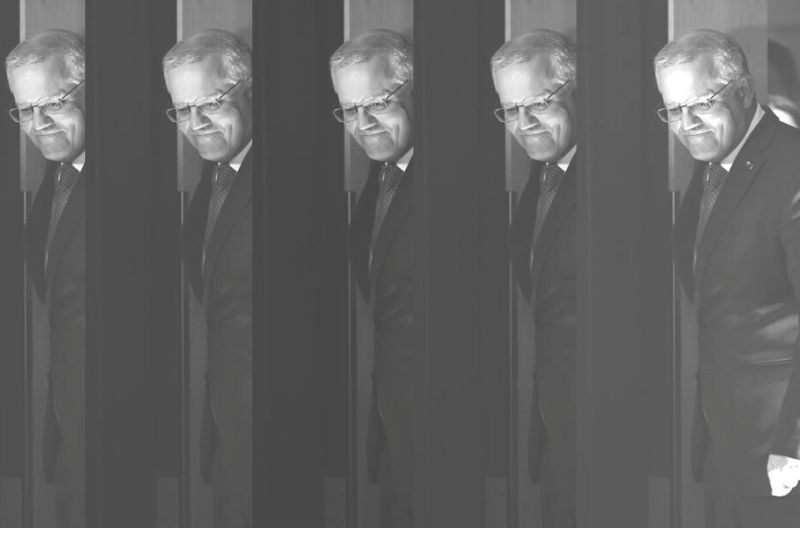
Main image: (EDITORS NOTE: Image has been
edited, and converted to black and white.) Prime Minister of Australia
Scott Morrison arrives after conceding defeat following the results of
the Federal Election on May 21, 2022 in Sydney, Australia. (Asanka
Ratnayake/Getty Images)
As tributed poured in for Mikhail Gorbachev, Vladimir Putin said he had "rightfully earned great prestige and recognition".(Reuters: ITAR-TASS/Kremlin Press Service)
He
was the last leader of the Soviet Union, the man who helped end the
Cold War, and the president who tried to turn Russia into a functioning
democracy.
But when Mikhail Gorbachev's death was announced, his successor Vladimir Putin issued a curiously short and muted statement.
Via
a Kremlin spokesman, the Russian leader expressed "his deepest
condolences" over Gorbachev's death, and promised to send a telegram to
his family.
The reaction within Russia to the passing of one of the nation's most important figures was similarly austere.
But Gorbachev would likely have expected nothing more than a half-hearted farewell.
After
once being perhaps the most important man on Earth, Gorbachev spent his
final years alone in a mansion in suburban Moscow with only bodyguards
and a chef to keep him company.
When Vladimir Putin became president in 2000, he had no greater champion than Mikhail Gorbachev.
Ever
the optimist, he believed the young leader would continue his life's
work of ushering in democratic reforms in a nation that had evolved from
a monarchy to an empire to a communist state.
But as Putin slowly transformed Russia into an imperial presidency, the two men turned against each other.
In Putin's hyper-masculine autocracy, Gorbachev was a soft touch who had sold out to the West for campaigns with Pizza Hut and Louis Vuitton.
With a stellar reputation abroad, Gorbachev gradually settled into a second career after he resigned from office.(Reuters: Masaharu Hatano)
"They
act in an indecent way. As if there was no society, as there was no
constitution, no election system … they believe they are the saviours of
the motherland," he said.
As Gorbachev's
health declined this year and he was largely tethered to dialysis
machines, he watched on in horror as Putin launched his invasion of
Ukraine.
It was a move he reportedly saw as the final nail in the coffin of his vision for Russia.
"All the Gorbachev reforms reduced to zero, dust, smoke."
Gorbachev's legacy is a source of bitterness for Putin
Born
amid the violent upheavals of the October Revolution in 1917, the
Soviet Union's seven decades were marked by achievement, the butchering
of millions, and then a slow decline.
By the 1980s, years of scientific and military advancement had given way to social and economic stagnation.
Mikhail Gorbachev brought about a process of social transformation when he rose to power in 1985.(AP: Boris Yurchenko)
Debate over
its causes vary, with theories ranging from flaws in the union's
command structure to a lack of crucial reforms and exorbitant military
spending.
When
the youngest leader since Joseph Stalin rose to power in 1985, he
swiftly put together a plan of "glasnost," or openness. It was a breath
of fresh air to a rotting empire.
"Gorbachev was
still a man of the Communist Party, but he saw that there were
deficiencies in the system, the kind of scleroticism of the system that
needed to be dealt with," says Gorana Grgic, an expert in the Soviet
Union's collapse from the University of Sydney's US Studies Centre.
The
series of reforms electrified the country, challenging the iron fist of
Soviet propaganda by opening the bloc up to dissenting voices and
social transformation.
These changes were also accompanied by perestroika, which meant "restructuring", of the communist economy and political system.
The
speedy reforms — from opening to trade to privatising many state-owned
enterprises — were designed to bring the Soviet Union's command and
control economy closer to a regulated market economy.
"Little
did he know that by doing this, by essentially instituting these
reforms, he would release the genie out of the proverbial bottle," Dr
Grgic said.
While there was popular support for
Gorbachev's initial measures, within a few years he faced heavy
criticism from conservatives and liberals alike over the speed and scale
of the changes.
Meanwhile, glasnost had also encouraged a wave of democracy protests throughout the Soviet Union.
Gorbachev
refrained from using force in 1989 — a decision that saw him awarded a
Nobel Prize — as these movements broke out across the eastern bloc,
paving the way for republics to break away and become autonomous states.
It
spurred on the collapse of the Soviet Union, which ultimately came with
the resignation of Mikhail Gorbachev on Christmas Day 1991.
Gorbachev resigned on Christmas Day 1991 after almost seven years as leader of the Soviet Union.(Reuters: Gannady Galparin GG)
In
the West, the last Soviet leader was revered and celebrated, having
freed Russia from the chains of communism and ushered in democracy.
This
was the man who had allowed the once glorious Soviet empire to be
carved up into pieces, in what Putin believed was the "greatest
catastrophe of the 20th century".
The moment relations soured between Gorbachev and Putin
While
they could not have been more different men, the relationship between
Gorbachev and Putin started on a largely positive note.
Gorbachev,
an intellectual who loved a well-cut designer suit, wholeheartedly
supported the former KGB officer with a mysterious past.
Mikhail Gorbachev championed Russian President Vladimir Putin when he first came to power but that relationship soon soured.(Reuters: Alex Grimm)
He
welcomed Putin's leadership after years of what he described as chaos
and disorder under former Russian president Boris Yeltsin, and regularly
sprang to his defence when allegations of corruption were floated.
In
2006, LA Times writer Matt Welch recalled an interview where
"Gorbachev's smile disappeared, his eyes narrowed to lumps of burning
coal" at the suggestion Putin was departing from democracy.
"For
the next 10 minutes or so he barked out an angry lecture defending
Putin and savaging the United States for working actively to humiliate
Russia and make her experiments with democracy and capitalism fail," Welch wrote.
But
things shifted as Gorbachev realised that this young new leader would
not be the kind of great reformer that he had envisaged in his mission
to liberalise modern Russia.
"It became quite clear that the two men saw the world and Russia's place in it quite differently," Dr Grgic said.
She
says the pivotal moment came about a decade ago, when Putin returned
for a third presidential term following an election marred by
allegations of fraud and the largest protests in post-Soviet history.
While he was celebrated abroad, Mikhail Gorbachev was often criticised within Russia. (Reuters: Sergei Karpukhin)
Gorbachev
grew frustrated with Putin's apparent obsession with power at all
costs, declaring him "an obstacle to progress" in Russia.
"Since
then, [we've seen] the stripping of constraints on executive power that
Vladimir Putin wields, and … [Russia] by some standards, looking more
like a dictatorial regime with the most power reserved for the top
level, for one person," Dr Grgic said.
"We
need strong presidential authority. In Russia, it is crucial that
people should trust the president and be able to believe him," he wrote in 2016.
"Yes, Russia needs a strong leader, but not a Führer, not a Stalin."
In
later years, there were some aspects of Putin's approach that Gorbachev
supported — he was banned from Ukraine over his support for the 2014
annexation of the Crimean Peninsula.
But the mission to expand into the rest of Ukraine appeared to be a bridge too far.
A confidant reportedly told Swiss newspaper Blick
that Gorbachev "strongly condemned the war in Ukraine from the very
beginning", and had made several attempts over the years to contact
Putin directly.
"But he never called back. He didn't even pick up the phone," he said.
Revered by the West, but scorned at home
While his death was met with a tepid response in Russia, Gorbachev was hailed as a hero by foreign leaders.
Space to play or pause, M to mute, left and right arrows to seek, up and down arrows for volume.
Mikhail Gorbachev: celebrated in the West, controversial at home.
It was a dichotomy he experienced throughout his life: Revered in the West, and reviled at home.
"That difference in perceptions couldn't be starker and more diametrically opposite," Dr Grgic said.
"Putin
sees Gorbachev as the architect of Soviet demise and undoing. A lot of
people actually pin the blame of the lost decade of the 90s … directly
on Gorbachev.
"On the other hand, in the West,
everyone thinks of Gorbachev as the leader that the West could finally
deal with and see eye-to-eye."
The chasm between his image at home and abroad was perhaps best captured in his 1998 appearance in a Pizza Hut commercial.
YouTube Filmed in 1997 on Red Square and in a Pizza Hut restaurant in Moscow, the ad aired internationally in 1998, but not in Russia.
As
he serves up a slice of American fast food to his granddaughter in the
newly opened store in Moscow's Red Square, a Russian family debates his
legacy.
"Because of him we have economic confusion," the father says.
"Because of him, we have opportunity," the son retorts.
Gorbachev appears to have occasionally expressed nostalgia for Russia's past dominion over Europe.
He mourned the loss of Crimea and celebrated its annexation by Putin.
And
he complained bitterly about America's "arrogant and self-confident"
three-decade-long victory lap after the end of the Cold War.
But unlike many of his comrades, he was seemingly immune to the deep-rooted Russian fear of the West.
He modelled in a cheeky ad campaign for Louis Vuitton in 2007 and struck up a friendship with Barack Obama.
The former US president wrote
in his memoir that the once towering figure of the 20th century was "a
strangely tragic figure" discarded by his own nation.
"I could tell he was disappointed — a reminder for both of us of the fleeting, fickle nature of public life," Obama wrote.
Russia
is now led by a man who believes his destiny is to counter Western
decadence and build a Eurasian empire with Moscow at its core.
In Putin's Russia, there was simply no place left for Mikhail Gorbachev.
Former Soviet president Mikhail Gorbachev has a mixed legacy in Russia and the West.(Reuters: Denis Sinyakov)