Friday, 30 October 2015

Bill Shorten, Subjects: Labor’s plan for a National Redress Scheme; Newspoll; coal exports; nuclear energy; Labor’s plan for 50 per cent renewable energy by 2030.

E&OE TRANSCRIPT

DOORSTOP
MELBOURNE
TUESDAY, 27 OCTOBER 2015


BILL SHORTEN, LEADER OF THE OPPOSITION: Good afternoon everyone and might I welcome in particular to this press conference representatives of Care Leavers Australia and other groups who’ve been on a tough journey for many, many years. I’m here today with Jenny Macklin and Claire Moore in absentia to provide Labor’s response to the Royal Commission findings.

I’m pleased to say that a Shorten Labor Government will introduce a National Redress Scheme as soon as we are elected. And we hope that with today’s announcement Malcolm Turnbull’s Liberals might see it in their heart to take up our ideas straight away. I’m here with some remarkable Australians, they’re without a doubt some of the loveliest protesters you’re ever going meet. For days and weeks and months and years, the people with me and many thousands like them have not stopped in their pursuit of justice.

Australia in the past, its institutions, religious, private and indeed government failed tens of thousands of the most vulnerable in their care. Australia in the past has tragically let down tens of thousands of children and they have been the victims of evil crimes. It was Labor back in 2013 who set up a Royal Commission, looking at institutional responses to child abuse and now that Royal Commission last month, whilst it hasn’t concluded the whole Royal Commission, came down with a final view there should be a national redress scheme.

So today Labor’s saying we agree with that recommendation, we’ll implement it. Specifically, we will set up a national redress agency to work with State Governments and Territory Governments to work with non-government institutions about formulating the response. Specifically we will set up a national council so that survivors and those experts at the healing process and those institutions who will required to be part of the redress can come together to make sure that a National Redress Scheme genuinely works.

We will work with the States and Territories and institutions to provide long-term support for healing.

I understand that part of that process will involve apologies, it will involve more than that. It will involve counselling, psychological support, expert support to help survivors, and it will involve monetary compensation. This country owes the survivors, the care leavers, nothing less.

I understand today that this announcement already comes too late for many thousands of people. The consequences of abuse have reverberated and ricocheted around families in and the community for decades. The people around me, modest heroes that they are, have stood up and dealt with issues which frankly should never have occurred. Labor will be part of the pursuit of justice for this people. I’m conscious though that today’s announcement comes too late for too many, and we shouldn’t waste a minute longer getting on with a national redress scheme, I’d like Jenny Macklin to say some further words then we’d be happy to take questions. Jenny?

JENNY MACKLIN, SHADOW MINISTER FOR FAMILIES & PAYMENTS: Thanks very much, Bill. And I’m so pleased to be able to be here today, particularly with all of these care leavers, members of the alliance of forgotten Australians, all of the people who have suffered so much at the hands of perpetrators of abuse of children. We know as a result of this Royal Commission just how extensive this abuse has been throughout too many institutions in Australia.

I just want to say a very big thank you to Bill Shorten today. It takes leadership to stand up and say that in Opposition, from Opposition, we will make a commitment to establish a national redress scheme. Many of the people who are standing with us today have been calling for such a redress scheme for a very, very long time. They want justice, they deserve justice, they deserve to be believed and they now deserve to get the redress that they have fought so hard for. And I just want to really say to you Bill, publicly, that the sort of leadership you’re showing today is going to mean so much to hundreds of thousands of Australians who put up with this abuse throughout their lives and I hope this will make a little bit of difference to what they have suffered. Thank you.

SHORTEN: Thank you. Are there any questions?

JOURNALIST: The Commissioner has recommended funder of last resource of $613 million, you spoke about compensation, do you have a figure on what you think the Federal Government should provide?

SHORTEN: First of all, a lot of the responsibility will rely in very large non-government institutions. I acknowledge that some of those institutions have disappeared or become bankrupt but many of the institutions to which these perpetrators hid and used their bogus authority to commit crimes are still in existence. We will work with those institutions. There’s a big job here for State Governments. The Commonwealth will work with – if Labor is elected -will work with the States and these institutions to work through these issues and there’ll be a council, a council including the voices of survivors most crucially to keep going through these issues.

I have no doubt that once Australia makes a decision to do the right thing, we will do the right thing. The Royal Commission’s estimated 60,000 people affected, it’s estimated $4 billion. Now, I’m sure that that estimate of 60,000 captures everyone to be honest but I do know is when you look at it, and we’ve got our proposals of this response to national redress, costed independently by the Parliamentary Budget Office, that together Government and non-government institutions will find the resource, I look and I use the word before ricochet, the consequences of these children being abused, vulnerable children, and people in a position of authority, the consequences has reverberated and ricocheted across generations, as I said before, there are some people who will never be able to avail redress because they’ve already taken their own life. The loneliness, the depression, the mental illness, the drugs, the abuse. We’ve seen that the cost of not dealing with redress frankly is far greater than what is being proposed. Any other questions?

JOURNALIST: Do you have number that you’re willing to put forward at this point?

SHORTEN: We’ve said that initially $33 million will get the Agency going. I’m optimistic actually that once – I hope, I really hope this fundamentally that this issue is above politics. I hope that when Malcolm Turnbull hears this announcement, he will join with us. We’ll work this out, we shouldn’t waste a minute longer in terms of redress, we know the issues, we should just get on with it. Are there other questions?
JOURNALIST: Have you had any indications you’ll receive bipartisan support for this?

SHORTEN: Well, there’s been a lot of work and it’s one of the things which doesn’t get a lot of coverage in politics but Jenny Macklin has been pretty modest. She’s been a long-term traveller on this journey with survivors. There’s been others: Jason Clare, Richard Marles, Steve Irons from the Liberals. I have no doubt, I have no doubt because of – and I have faith that because of what we’re saying today, because of the efforts of these people here, the Liberal Party will just have to move on this and I hope they do because that’s the right thing to do.

Steve Bracks has got fan here too, I should have mentioned him and you’re right he did. Clare Moore, I mentioned Clare couldn’t be here today but the survivors here and the supporters and the advocates here wanted me to make clear that Clare Moore has been one of the drivers of these changes.

JOURNALIST: Just on other issues, how does the latest Newspoll affect Labor’s hopes of being elected?

SHORTEN: With all respect, whilst I know that people are very keen to talk about polls, are there any questions about redress for tens of thousands of people and literally sins in evil which have been committed over decades, if there’s any other questions on that first, that would be good. I’m happy when we finish that, we can ask the people – I’m happy to take the important matters which you want to talk about.

JOURNALIST:  Well how soon do you want Malcolm Turnbull to act on this, if you’ve made this announcement today are you talking days, weeks, months?

SHORTEN: Sooner the better. I think the sticker says it all. He can do that. I’m optimistic that they will. I can’t see the case not to now. The Opposition has given approval and leadership for this. I’m sure we can come together on this. I think we’ll get there. We’ll get there.

I’m happy to go to other questions you want to talk about.

JOURNALIST: How does the latest Newspoll affect Labor? What are your thoughts on that?

SHORTEN: I believe that if Labor keeps working on the policies, the polls will look after themselves. Frankly the real business of Opposition isn’t reading the polls, the real business is providing justice for these remarkable people. I know that if Labor keeps working on the right policies, then as I say the polls will work on themselves.

JOURNALIST: Can I just ask you on energy policy Mr Shorten, now this call for a moratorium on coal exports and blocking new coal mines, where do you stand on both of those issues?
SHORTEN: I don’t believe there should be a moratorium on coal in this country, but what I also recognise is that this country is going to have to policies which lead us to a lower emissions future. I think the Liberal Party would be well advised to embrace Labor’s target, Labor’s goal of 50 per cent renewable energy, sourcing our energy mix by 2030. We’re going to have to modernise our electricity generation in Australia. Anyone who says, and if the right of the Liberal Party say it’s just business as usual and there’s no need to change, well that’s actually a dangerous economic prescription. Labor believes that change is inevitable, now I happen to trust the market to sort of some of these issues. I believe that over time the market’s going to demand electricity modernisation; it’s going to demand the sort of solutions which Labor wants to support.

JOURNALIST: What about the line of Mr Turnbull saying that blocking Australian coal exports will drive up emissions because it’ll be substituted for lower quality coal, do you agree with that line of thinking?

SHORTEN: Poor Malcolm, he’s caught between what his heart says and his brain says which is we’ve got to be pushing for a lower emissions future on carbon and then his got to keep his right-wing happy doesn’t he, so he’s got to keep saying all the tired old arguments of no change, coal is king.

Coal is part of our energy mix, absolutely, but what I get is that we’re going to have to modernise our electricity system in the future. We are going to head towards 50 per cent renewable energy, but in terms of the mechanisms whereby we achieve it, I have more faith in the market than some do. I think that over time, investors are going to look at the best sources of electricity generation. The market is going to vote with its wallet and back in renewable energy. I think Malcolm Turnbull needs to be more ambitious than he currently is about a low emissions future for Australia.

JOURNALIST: So do you think this campaign calling for no new coal mines will have any traction?

SHORTEN: Well it’s a political argument when we’re talking about economics. I think over time investors are moving away from investment in coal, but I don’t think it’s up to government to pick the winner and say that coal is bad, Labor doesn’t think that. I think that we need to modernise our electricity generation system over the next 15 years and I think you’ll find if you look at the pattern of global investment there’s a lot more dynamism and momentum in investment in renewable energy. What I think is important isn’t so much that Australia regulates an industry and says you’ve got not role, but what we do need to do is make sure we’re an attractive investment destination for renewable energy. I don’t understand what happened to the Malcolm Turnbull of 2009 who was willing to stake all on the principle of lowering carbon emissions, on having policies which were sensible on climate change. Now he’s stuck in government backing in Tony Abbott’s discredited Direct Action Plan which just pays big polluters to keep putting out more carbon emissions.

JOURNALIST: Can you (inaudible) Alan Finkel is pro-nuclear, is that something that you would consider pursuing?

SHORTEN: No, at this stage, we’ll watch what the South Australian royal commission says, but my position has been that renewable energy is probably I think the most productive path to go along. In terms of nuclear power, I think it’s pretty expensive to start. Decisions about the future of the nuclear industry really were set in place 30 years ago. I would like to see us investing more in solar and wind power, renewable energy. I would like to see us have 50 per cent renewable energy by 2030. I’m not convinced and I don’t think the economic case has been made that nuclear energy is anything other than a costly alternative at this point.

JOURNALIST: What about clean coal technologies? Do you think they should be looked at more?

SHORTEN: Well I think that the coal industry has a challenge to modernise and I think they’re capable of doing that, but what I am interested in also is letting the market sort some of these questions out. I think the right of Australian politics is taking the debate about our energy future down fairly draconian paths where they’re demanding that we’ve all got to pledge loyalty to one form of energy hand over heart. I actually think we should allow the market to work through a lot of these issues.

Now I think we should send the right signals that we want to have investment in renewable energy. It is a fact that there’s $2.5 trillion estimated to be invested in renewable energy in the Asia Pacific region by 2030. I would like Australia to get some of that investment. It’s ironic, I think, that Germany who has one-third of the sunlight of Australia has three times the solar industry that Australia has. I’m worried that as we have these sort of left/right arguments about are you for coal or against coal we’re missing the big investment opportunity in renewable energy.

I see climate change as an opportunity to modernise our economy, and I think if you do that through sensible encouragement of renewable energy and a recognition we have to modernise our electricity industry, that’s where I think the sensible centre of energy policy in the future. One last question.

JOURNALIST: So in power you wouldn’t place any restrictions on the number of new green-fields coal mines that we dug, or the number of – the amount of coal that was exported, you’d just let the market decide?

SHORTEN: Well I appreciate your question coming from The Oz, that you know, what will Labor do in Government, and I appreciate that optimism in our electoral fortunes. What I just want to say to you though is, it’s a bit hypothetical. You’re asking me what would we do on specifications for coal mines that we haven’t seen, on propositions that haven’t been tested in the market.

What I am saying is providing investment certainty. I believe that renewable energy is the wave of the future. I believe that a government should be on board with having a lower carbon emissions economy. Labor has put out policies, we’ve said that we’re committed to 50 per cent renewable energy as part of our energy mix by 2030, and we’re not caught up by the right wing of the Liberal Party trying to get trapped into some sort of false debate on issues which I believe in the next 15 years, the market and technology are going to sort out anyway.


Thanks everyone, thanks for coming today.

Wednesday, 28 October 2015

Fiji PM decries Australia's 'climate change deniers' in Turnbull cabinet

Extract from The Guardian 

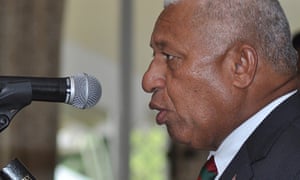
Frank Bainimarama says: ‘The Australian government, in particular, seems intent on putting its own immediate economic interests first’

Frank Bainimarama
Frank Bainimarama said Turnbull should halt new coalmines in Australia and embrace an economy based on clean energy. Photograph: Kunal Keshneel/AFP/Getty Images

The prime minister of Fiji has delivered a blistering broadside at his Australian counterpart, Malcolm Turnbull, over the “climate change deniers” in his government who are helping doom Australia’s “unlucky island neighbours”.
Frank Bainimarama criticised Australia and New Zealand for failing to back Pacific island nations over climate change, claiming that the entire region risked being wiped out by rising sea levels, extreme weather and ruined agriculture.
“The Australian government, in particular, seems intent on putting its own immediate economic interests first,” Bainimarama said in a speech delivered in Nadi, Fiji. “The ‘lucky country’ determined to stay lucky, at least for the short term, at the expense of its unlucky island neighbours.

“To Malcolm Turnbull, the new Australian prime minister, I want to send a special plea. Make good on your previous strong stance in favour of deep and binding cuts in carbon emissions. Do not do deals with those who have enabled you to gain high office and betray your principles and our position.”
Bainimarama said Turnbull should halt new coalmines in Australia and embrace an economy based on clean energy. Such a ban has been proposed by a coalition of Pacific nations in the recent Suva declaration.
The Fijian prime minister said coal was “the dirtiest of energy sources. And there is no place for it in a world that desperately needs cleaner energy to halt the present rate of global warming.
“I urge you, Mr Turnbull, to heed that call. And to side with us in the Pacific against the proponents of coal and the climate change deniers in your own government.”
Turnbull has come under pressure on climate change after 61 prominent Australians signed a letter calling on world leaders to discuss a ban on new coal mines and mine expansions at upcoming UN climate talks in Paris.
However, Turnbull, who lost the leadership of the Liberal party in 2009 over his support for an emissions trading scheme to combat climate change, dismissed the idea of a ban on Tuesday.
“I don’t agree with the idea of a moratorium on exporting coal,” he said. “With great respect to the people who advocated it, it would make not the blindest bit of difference to global emissions.
“If Australia stopped exporting coal, the countries to which we export it would buy it from somewhere else.”
Australia has the highest per-capita carbon emissions of any industrialised country. It is also a leading exporter of coal and recently approved Adani’s $16.5bn Carmichael mine in Queensland, which will extract up to 60m tonnes of coal a year for export to India. The annual emissions from this coal will be higher than the entire carbon output of New Zealand.
Bainimarama, who was speaking at a summit to address the impact of climate change upon health, said he was pessimistic about the Paris talks and lashed out at wealthy nations over actions he said were disastrous for Pacific nations.
“Unless the world acts decisively in the coming weeks to begin addressing the greatest challenge of our age, then the Pacific, as we know it, is doomed,” he said.
“Doomed to suffer the most negative impact of the rising temperatures caused by the carbon emissions that have accompanied the industrial age. Without having contributed to those emissions in any meaningful way at all.

“In fact, we in the Pacific are innocent bystanders in the greatest act of folly of any age. The industrialised nations putting the welfare of the entire planet at risk so that their economic growth is assured and their citizens can continue to enjoy lives of comparative ease. All at the expense of those of us in low-lying areas of the Pacific and the rest of the world.”
Bainimarama said he would be pressing other countries to agree to a limit of 1.5C warming on pre-industrial levels, rather than the current 2C target. He, and other Pacific nations, also want emissions cuts to be legally binding. Reductions already announced by countries would overshoot the 2C limit, according to recent analysis.
“This will happen even though the argument for urgent and decisive action is unassailable,” he said.
“Three of our Pacific neighbours – Kiribati, Tuvalu and the Marshall Islands – are destined to physically sink beneath the waves altogether. Other nations will lose large tracts of arable coastal land.
“And we will all be more vulnerable to the extreme weather events that already come out of nowhere, kill our people and ravage our economies. All because of the inaction and gross irresponsibility of what I have unashamedly called ‘the coalition of the selfish’.”

Tuesday, 27 October 2015

Shorten: Coalition rightwingers forcing Australians to 'pledge loyalty' to coal

Extract from The Guardian

Opposition leader says ‘I don’t understand what happened to the Malcolm Turnbull of 2009’ and says country missing out on renewables opportunities'

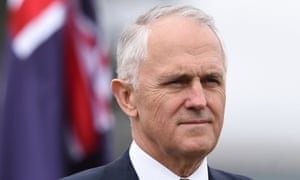
Malcolm Turnbull has rejected the unilateral banning of coal exports, saying prospective buyers would simply look overseas for their energy requirements. Photograph: Dave Hunt/AAP


Tuesday 27 October 2015 16.03 AEDT


The right wing of the Coalition is forcing Australians to “pledge loyalty” to coal and in the process missing out on investment opportunities in renewable energy, the opposition leader, Bill Shorten, said.
Shorten addressed reporters on Tuesday, explaining the constraints that the prime minister, Malcolm Turnbull, was facing from the right of his own party.
“I think the right of Australian politics is taking the debate about our energy future down fairly sort of draconian paths where we’re demanding we’ve got to pledge loyalty to one form of energy hand over heart,” he said.
“I don’t understand what happened to the Malcolm Turnbull of 2009 who was willing to stake all on the principle of lowering carbon emissions, on having policies which were sensible on climate change.”
In an open letter, 61 prominent Australians called on world leaders to discuss halting of new coalmine projects and blocking the expansion of existing ones when they meet for a United Nations climate conference in Paris later this year.
Turnbull on Tuesday morning rejected the unilateral banning of coal exports, saying that prospective buyers would simply look further afield for their energy requirements.
Shorten warned that the ideological commitment to coal was impacting on the economy.
“I’m worried, as we have these left-right arguments about are you for coal or against coal, that we’re missing the investment opportunity,” he said.
But he would not commit to Labor abandoning non-renewables altogether.
“I don’t think it’s up to government to pick the winner and say that coal is bad,” Shorten said. “Labor doesn’t think that.”
Speaking in Canberra, Turnbull said a moratorium on Australian coal exports “would make not the blindest bit of difference to global emissions” because importers would buy it from elsewhere.
Turnbull said coal remained a significant part of the global energy mix and would be “an absolutely critical ingredient” in alleviating hunger and promoting prosperity around the world. This appeared to be an extension of the “moral case” for coal exports advocated by the energy minister, Josh Frydenberg, and by the coal industry in support of increasing supply to developing markets such as India.
But the prime minister undercut that argument by conceding many people in developing countries were not on an electricity grid, and renewable energy sources such as solar could become more cost-effective in those circumstances.
“I don’t agree with the idea of a moratorium on exporting coal. With great respect to the people who advocated it, it would make not the blindest bit of difference to global emissions,” Turnbull said.
“If Australia stopped exporting coal, the countries to which we export it would buy it from somewhere else. So there is absolutely quite a lot of coal around ... so if Australia were to stop all of its coal exports it would not reduce global emissions one iota. In fact, arguably it would increase them because our coal, by and large, is cleaner than the coal in many other countries.
“With great respect to the motivations and the big hearts and the idealism of the people that advocate that, that is actually not a sensible policy from an economic point of view, a jobs point of view or frankly from a global warming or global emissions point of view.”
The Australian Conservation Foundation accused Turnbull of “resorting to the drug dealer’s defence” by arguing that someone else would supply the coal.
“Australia has a moral responsibility to help our developing neighbours leapfrog over dirty coal, straight to clean renewable energy,” said the foundation’s chief executive, Kelly O’Shanassy.
The Australia Institute, which helped organise Tuesday’s open letter, suggested Turnbull had ignored the substance of the proposal by focusing on Australian exports. The open letter called for world leaders to negotiate a moratorium on new coalmines and coalmine expansions, and referred to a similar call by the president of Kiribati, Anote Tong.
“Malcolm Turnbull should take the time to read the letter from President Tong – it is not a call for an export ban, but a considered call for a global moratorium on new coalmines,” said Ben Oquist, the executive director of the Australia Institute.
“This is an entirely sensible move both environmentally and economically. Now is the time to pick up the phone to President Tong to discuss how Australia can be a leader in the climate debate.”
Greens deputy leader Larissa Waters said Turnbull was “using rhetoric to juggle the wishes of the climate dinosaurs in his party against the overwhelming community support for climate action”.
“Australians deserve more than a prime minister who sidesteps questions about our future and that of our children and our Pacific neighbours,” she said. “Coal must not be treated as the elephant in the room at the climate talks.”
Turnbull was addressing the media as he confirmed the appointment of Dr Alan Finkel, the outgoing chancellor of Monash University, as Australia’s next chief scientist. Finkel, an engineer, has previously called for a debate about nuclear electricity generation in Australia as part of efforts to curb carbon dioxide emissions.
The media conference was dominated by questions about Australia’s response to climate change as world leaders prepare to meet in Paris to discuss post-2020 emission reduction targets.
Finkel said his vision was “for a country, society, a world where we don’t use any coal, oil or natural gas because we have zero-emissions electricity in huge abundance and we use that for transport, for heating and for all the things we ordinary use electricity”.
“But you can’t get there overnight, so what we need to do is optimise the technology so that with we can cost-effectively introduce alternatives,” Finkel said.
“The best way to get rid of coal is to introduce alternatives that deliver value at a reasonable price rather than just arbitrarily turning it off.”
Turnbull said coal was likely to remain a very large part of the global energy mix “for a very long time” and he cited “energy poverty” as a major limit on achieving the development goals of alleviating hunger and promoting prosperity around the world.
“Coal is going to play a big part in that,” he said. “Having said that, the pace of technological development in the renewable space has been extraordinary.”
Turnbull singled out the improvement in battery storage for solar power as “a big game-changer” and described the energy field as “very disruptive, very disrupted”.
“Solar panels and batteries in an Australian household context at the moment are probably not in most cases competitive with the price of grid-delivered power,” he said.
“However, if you are in a remote community, or if you are in a community in a developing country where there is no electricity grid, and the alternative is generating power by burning diesel, then solar panels and some batteries, if the efficiency of the panels is improved and the price and efficiency of the batteries has come down could actually be and very often is much more cost-effective.
“So it’s horses for courses. It is important to take the ideology out of this and just approach it in a very clear-eyed, cool-headed rational way.”
Supporters of Adani’s $16bn Carmichael coalmine and rail proposal for central Queensland, which was re-approved by the federal government this month, have argued it would help lift millions of Indians out of energy poverty. But analysts have disputed the claimed benefits on the basis that many remote villages are beyond the reach of the electricity grid.
Finkel, whose appointment begins in January upon the expiry of Professor Ian Chubb’s five-year term, would not give an opinion about the adequacy of the government’s 2030 target of reducing Australia’s greenhouse gas emissions to 26%-28% below 2005 levels. He said he would “need time to engage on that”.
But Finkel vowed to provide the government with evidence-based advice and was “absolutely confident” that he would have a receptive audience.
In broader remarks, Turnbull and the science minister, Christopher Pyne, praised Finkel for his personal experience as an entrepreneur translating research into commercial products, saying he was well-suited to improve collaboration between universities, research centres and business.
Turnbull, who lost the Liberal leadership in 2009 after an internal backlash against his support for an emissions trading scheme, has promised his colleagues that he will stick with the Coalition’s “Direct Action” climate policies, although he has left the door open to considering changes in 2017 when a review of the safeguards mechanism is due. Turnbull is planning to attend the climate talks in Paris in December.

Malcolm Turnbull's rhetorical dance around coal reveals extent of his constraint

Extract from The Guardian

The prime minister is impatient for Australia to be right in the thick of the clean energy race, but the policy he has inherited and the mentality of some of his party force him to trot out tired ‘energy poverty’ lines

Malcolm Turnbull: ‘You have to remember that energy poverty is one of the big limits on global development.’ Photograph: Lukas Coch/AAP

Contact author
Tuesday 27 October 2015 12.02 AEDT

Malcolm Turnbull needs all his rhetorical skill to bridge the gap between what he knows is true and what he has to say to appease his party.
Asked about the future of Australian coal exports on Tuesday, Turnbull started with the familiar “energy poverty” argument. This line has previously starred in Peabody Energy’s global pro-coal campaign, was recited by Turnbull’s resources minister Josh Frydenberg when the government reapproved Adani’s proposed $16bn Carmichael mine and the minister explained there was a “strong moral case” for new mines and was expounded in even more black and white terms by the former prime minister Tony Abbott, who told the nation coal was “good for humanity”.
Turnbull put it this way: “You have to remember that energy poverty is one of the big limits on global development in terms of achieving all of the development goals, alleviating hunger and promoting prosperity right around the world – energy is an absolute critical ingredient. So coal will play a big part in that.”
But within minutes Turnbull was also explaining the facts that undermine that argument – that almost half those in “energy poverty” in India have no access to the electricity grid and that “in a remote community, or ... in a developing country where there is no electricity grid, and the alternative is generating power by burning diesel, then solar panels and some batteries ... often will be more cost-effective”.
As India’s former energy secretary EAS Sarma wrote in the Guardian recently, the expansion of India’s coal-fired generation since 2001 did not expand access to energy, but was taken up by those industries and customers already on the grid.
Asked to explain, Turnbull said India needed both – coal-fired power for its industrialisation and other forms of energy, such as solar, in rural areas. And in the foreseeable future that is probably true, but it isn’t the picture painted by the industry when it argues that only coal can solve “energy poverty” with pictures of poor rural children sitting beside a smoky, dung-fired cookstove.
Similarly, Turnbull had to do a rhetorical dance around the call for a global moratorium on new coalmines, choosing to assert (incorrectly) that the argument was for an Australia-only moratorium and explaining that there were many other producers of coal, including China itself, which was about to become a net coal exporter.
But that is part of the argument used by campaigners, and by Turnbull’s own agriculture minister, Barnaby Joyce, to raise questions about the proposed Chinese-owned $1.2bn Shenhua Watermark mine on the Liverpool plains – that its business case no longer stacks up and its exports are no longer needed.
Turnbull fully understands the massive technological change afoot in the energy sector, he understands climate science, and he is impatient for Australia to be right in the thick of the clean energy race.
But he is constrained by the policy he has inherited and the mentality of some in his party.
And so he sends signals, like saying that no energy source can have a “moral characteristic” and that Australia just has to make rational choices between the various abundant energy sources it has available.

That sounds good. It just remains unclear whether his government can do it.  

Prince Charles knew of idea to dismiss Whitlam before 1975 crisis, book claims

 Extract from The Guardian

Australian governor general Sir John Kerr had regular contact with the palace in the lead-up to sacking, and suggested Charles as future governor general
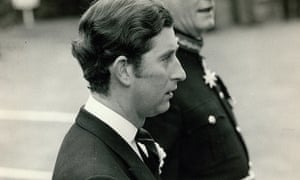
Prince Charles in 1975. A new book adds overturns the view that Kerr acted alone in sacking the elected Labor government of Gough Whitlam.
Prince Charles in 1975. A new book adds overturns the view that Kerr acted alone in sacking the elected Labor government of Gough Whitlam. Photograph: Kenneth Saunders for the Guardian

Sir John Kerr, the Australian governor general who dismissed the former prime minister Gough Whitlam in 1975, first canvassed the possibility with Prince Charles as early as August of that year – two months before the constitutional crisis began, according to a new book.
Kerr was worried that Whitlam was going to replace him as governor general – an act which would require Whitlam to advise the Queen.
When Kerr raised his plans with Prince Charles, the next in line to the throne confirmed his knowledge of Kerr’s plans to dismiss an elected prime minister.
“But surely Sir John, the Queen should not have to accept advice that you should be recalled at the very time should this happen when you were considering having to dismiss the government,” Charles reportedly told Kerr.
In her latest book, The Dismissal Dossier: Everything You Were Never Meant to Know about November 1975, Jenny Hocking says Kerr’s private papers show that the palace knew much more than was originally acknowledged in the years after Whitlam’s sacking.
Hocking also discusses the close relationship between Kerr and the palace, including a claim that he suggested Prince Charles could be Australia’s governor general in the future.
Kerr wrote “regular and extended” letters to the Queen and her private secretary Sir Martin Charteris during the period leading up to the dismissal.
Kerr was assured that every one of his letters were read by Charteris and the Queen “and she herself told me that if I found the need to write to her direct to feel entirely at liberty to do so”.
One week before the dismissal Charteris informed the governor general of the Queen’s intentions if Whitlam moved against Kerr.
“Charteris told him that should this ‘contingency’ occur, the Queen would ‘try to delay things’ for as long as possible although Charteris acknowledged ‘in the end the Queen would have to act on the advice of her prime minister’,” Hocking writes.
Hocking said according to Kerr’s journals and interview records with WA Liberal senator Reg Withers, Kerr had discussed the dismissal with the palace, justice of the high court of Australia Sir Garfield Barwick, high court justice Sir Anthony Mason and the opposition leader Malcolm Fraser.
Withers gave an interview, the transcript of which was only released after his death, confirming that Fraser and Kerr had been in contact in the week before the dismissal over their private telephone lines.
The revelations overturn the view that Kerr acted alone to sack the Labor government on 11 November 1975.
The palace has refused to release the letters between Kerr and the palace, including the Queen and Prince Charles. Their contents remain the “great gap” says Hocking, whose request for the letters was again declined by the palace in the last few months through the office of the governor general.
“At Her Majesty The Queen’s instructions, the files are under strict embargo for fifty years, from the end of the term of office of the then governorgeneral, ie until 2027 in this case,” Stephen Murtagh, deputy official secretary to the governor-general, informed Hocking.
“Thereafter the documents are subject to a further caveat that their release after fifty years is subject to consultation with the sovereign’s private secretary of the day and with the governor general’s official secretary of the day.”
As late as 2011, the Queen’s assistant private secretary at the time of the dismissal, Sir William Heseltine said categorically, “the governor-general gave no clue to any of us at the palace what was in his mind”.
But Hocking suggests not only did the palace know the nature of his plans but the lack of adverse comment constituted “an unqualified royal green light” to Kerr’s dismissal of Whitlam.
“Kerr’s journal, and his direct quotations in it from his correspondence with the Queen and with Charteris, show that the palace was kept informed of his consideration of the dismissal of the Whitlam government months before there was even any ‘political crisis’ to report,” writes Hocking.
She comes to the conclusion that the palace’s “failure to inform” Whitlam “could only have given Kerr tacit comfort and confidence that the dismissal of the prime minister would not meet any royal resistance”.
Hocking also details Kerr’s obsequiousness when it came to Prince Charles as well as a surprising conversation during the prince’s 1974 tour of Australia.
According to the journals, the prince discussed his frustration in waiting to ascend to the throne – “his royal ennui”, as Hocking puts it.
Kerr, who at that stage had only recently been appointed himself, was eager to help and discussed a suggestion that Charles might come to Australia one day as governor general.
“Having failed in his efforts to mediate Prince Charles’s interest in taking up the mantle of governor-general, Kerr later suggested to Whitlam that the Australian government purchase a large rural holding with appropriate homestead, servants, upkeep and furnishings, to encourage the Prince of Wales to make more regular and longer trips to Australia,” Hocking writes.
“An astonished Whitlam declined, suggesting that the purchase of an Australian property for the use of the Prince of Wales was not a priority for national expenditure.” 

World set to use more energy for cooling than heating

Extract from The Guardian 

Rising demand for air conditioning and refrigeration threatens to make planet hotter and undermine pledges to rein in emissions 
How keeping cool is making us hot

The world faces a looming and potentially calamitous “cold crunch”, with demand for air conditioning and refrigeration growing so fast that it threatens to smash pledges and targets for global warming.
Worldwide power consumption for air conditioning alone is forecast to surge 33-fold by 2100 as developing world incomes rise and urbanisation advances. Already, the US uses as much electricity to keep buildings cool as the whole of Africa uses on everything; China and India are fast catching up. By mid-century people will use more energy for cooling than heating.
“Most people tend to think of energy in terms of heat and light and transport,” said Toby Peters, visiting professor of power and the cold economy at the University of Birmingham. “But more and more, it’s going to be about cold. Demand for cold is already huge, it’s growing fast, and we’re meeting it in basically the same way we’ve been doing for a century. Cold is the Cinderella of the energy debate. If we don’t change the way we do it, the consequences are going to be dramatic.”
Artificial cold is a recent phenomenon: the first domestic air-conditioning unit appeared in 1914, the first home fridges in 1930. As late as 1965, only a third of UK homes had one.
But cold has quietly become a part of 21st-century life, certainly in advanced economies: people expect air conditioning to make homes, offices and cars comfortable (and many cities habitable); most food in the developed world is chilled or frozen; medicines, including vaccines, need refrigeration; industries such as steel, chemicals and plastics depend on cooling; deprived of cold, data centres – and the internet – would collapse in minutes.
“Heat we know, and we talk about it no end,” said Nick Winser, a former head of Britain’s National Grid who chairs the Energy Systems Catapult, a new UK technology and innovation centre in the energy field. “Cold has become a hugely significant – yet almost unsung – part of our energy footprint. We know the energy landscape is going to be very different in the near future. We need to see cold’s place in it; start thinking of heat and cold as parts of one integrated system.”
Demand for cold is rising exponentially. Driven by a warming planet and a rapidly expanding middle class in the developing economies – and warmer climes – of south and south-east Asia, air conditioning in particular is surging.
As Stan Cox notes in Losing Our Cool, it took 15 years for the number of air-conditioned homes in the US to grow from 64m to 100m – but 50m new domestic AC units were bought in China in 2010 alone. The proportion of Chinese homes with refrigerators also soared, from 7% in 1995 to 95% in 2007.
But there is a problem. Almost all cold is still produced by what is known as vapour-compression refrigeration, 100-year-old technology that uses refrigerants – fluids, now usually hydrofluorocarbons or HFCs, that absorb and release heat – plus large amounts of electricity.
“It’s a mature industry,” said Graeme Maidment, professor of refrigeration and air conditioning at London South Bank University. “And for years it wasn’t an obvious industry: it hummed along in the background, like an air conditioner, in fact. That’s only changed in the past 15 years or so, because it’s grown so fast and because we’re so much more concerned by energy consumption, carbon emissions, climate change.”
Air conditioning already accounts for about 40% of power use in Mumbai, India. More than half of Saudi Arabia’s peak summer power consumption – generated by burning 1bn barrels of oil a year – also goes on air conditioning. Even in Britain, air conditioning and refrigeration account for almost 20% of total electricity use, Maidment said.
Most projections suggest that figure will rise sharply. Over the next 15 years, according to the EU, the energy used to cool buildings across Europe is likely to increase by 72%, while the energy used for heating them will fall by 30%.
About 87% of US buildings are now air conditioned, and trends in the developing world suggest it is advancing fast down the same route. The Intergovernmental Panel on Climate Change estimates that demand for residential air conditioning alone will rise from 300 terawatt hours a year in 2000 to 4,000 in 2050 and 10,000 by 2100.
New sources of demand are expanding fast, too: according to Computer Weekly, global data centre power consumption quadrupled from 2007 to 2013, and is set to nearly double again over the next 15 years.
Research by the Netherlands Environmental Assessment Agency predicts that by about 2060, the amount of energy used worldwide in cooling will overtake that used in heating.
“In the west,” said Richard Williams of Heriot-Watt University, “we’ve traditionally been more concerned with efficiently capturing and reusing heat. The source for cold has mostly been conventional electricity, or diesel. We’ve just been very slow to realise how important cold has become to our lifestyles.”

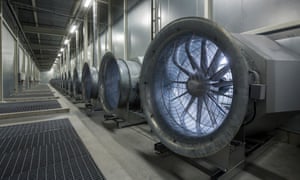
The Facebook data centre in northern Sweden.
The Facebook data centre in northern Sweden. Photograph: David Levene for the Guardian

But air conditioning and refrigeration are doubly polluting: not only are they produced from climate-warming fossil fuels, but the HFCs and other refrigerants cooling systems use produce greenhouse gases that can be up to 4,000 times more potent than carbon dioxide.
If fossil fuel-generated energy still accounts for about 75% of all cooling emissions, these refrigerant leaks could cumulatively increase the warming effect of manmade CO2 emissions by up to 25% by the middle of the century, according to the National Institute for Public Health and the Environment in the Netherlands. Altogether, Maidment said, refrigerant leaks and energy use in cooling account for “around 10% of global CO2 emissions. Already.”
Some refrigeration units are far more harmful. According to a report by the energy consultancy E4tech, the small diesel-powered fridges on food trailers emit nearly 30 times more harmful particulate matter and six times more nitrogen oxides than the engine that powers the trucks.
That matters, because the world needs an awful lot more refrigerated food trailers. With the world’s population forecast to reach 9 billion by 2050, cold’s role in food security will be key. According to the UN Food and Agriculture Organisation, global food demand is set to grow by 50% in that time.
But the FAO also reckons as much as a third of all food is lost or wasted between harvest and home, mostly in the developing world. Halving food waste would feed 800 million of the 1 billion chronically undernourished people in the world, research by the International Institute of Refrigeration suggests.
“What’s remarkable,” said Peters, “is that 95% of agricultural research is about increasing yields.” Reducing waste should be a priority, he said, and “cold really is the key. But cold done smartly. If we just replicate the old technologies, we’re heading for environmental disaster.”
What is cold done properly? For Maidment, who laments the fact that less than 0.2% of UK engineering research is devoted to cold technologies, it is about “reducing the need for cooling by – for example – designing buildings better. It’s increasing the efficiency of the cooling process. And then making sure the energy you do use is as clean as possible.”
Winser sees “real opportunities for British businesses in all this”. Peters, who co-authored a report on the cold economy to be published by the Birmingham University policy commission on 28 October, said we must “completely rethink cold. We need cooling, and we need it globally. Is sucking electricity off the grid really the best way to provide it?”
What if, he suggested, you could use cheap, off-peak renewable energy – wind, say – to make ice at night, and use that for cooling during the day? What about district cooling systems? “Storage,” he said, “will be critical: we store heat, why aren’t we storing cold? And new materials, to move cold around.”
Cold is also wasted. Peters pointed to liquefied natural gas, or LNG. “That’s gas cooled to about –160C to be transported, then ‘unpacked’,” Peters said. “At present, all that cold gets dumped in the sea. And meanwhile, just up the road, someone’s burning diesel to create cold.”
Waste LNG cold could also be used to power clean cold technologies: Dearman, a small UK engineering company with which Peters is involved, is road-testing a zero-emission, cold-producing engine that runs on liquid nitrogen and could replace the diesel refrigeration unit in a food trailer.
“We just need to think about cold differently,” said Peters. “Because solving cold, really doing it smarter, would actually do more to help the world meet its climate-change targets than almost anything else I can think of.”

Prominent Australians ask world leaders to consider ban on new coalmines

Extract from The Guardian

Wallaby David Pocock and author Richard Flanagan among 61 signatories to open letter calling for the future of coal to be on the agenda at Paris climate talks

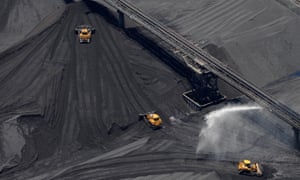
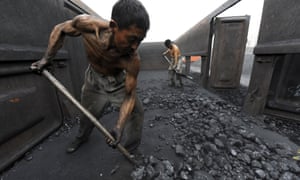
Workers unloading coal at a storage site along a railway station in Hefei, China. <br>
Workers unload coal at a storage site in Hefei, China. An open letter to world leaders signed by 61 prominent Australians asks for the issue of coal exports to be on the agenda at the 2015 Paris COP21 climate summit. Photograph: Jianan Yu/Reuters

Sixty-one prominent Australians, from Wallaby David Pocock to the Anglican bishop of Canberra George Browning, have signed an open letter calling on world leaders to discuss a ban on new coalmines and coalmine expansions at the United Nations climate change meeting in Paris in December.
The signatories are backing a call by the president of Kiribati, Anote Tong, and other leaders of Pacific Island nations in the recent Suva Declaration on climate change from the Pacific Island Development Forum.
The message from the signatories, who also include nobel laureate Professor Peter Doherty, former Australian of the year professor Fiona Stanley, author Richard Flanagan, former chair of the Australian Coal Association Ian Dunlop and former Reserve Bank governor and Climate Change Authority chair Bernie Fraser, runs starkly counter to the Australian government’s endorsement of new coal mega-mines like Adani’s proposed $16bn Carmichael project in Queensland’s Galilee Basin or Shenhua’s $1.2bn Watermark mine on NSW’s Liverpool Plains.

David Pocock
Wallaby David Pocock is one of the high-profile signatories to an open letter calling on world leaders to consider a ban on new coalmines. Photograph: Dave Hunt/AAP
New prime minister Malcolm Turnbull has not repeated his predecessor Tony Abbott’s claim that “coal is good for humanity” and coal use should go “up and up and up in the years and decades to come”.
But when the Turnbull government gave final approval to the Carmichael mine last week, Turnbull’s resources minister Josh Frydenberg used the same reasoning as the former prime minister for the claim that there is a “strong moral case” for coal exports because coal lifts the poor in countries like India out of “energy poverty”. Analysts dispute the rationale given that a large proportion of the poorest Indians are not on the electricity grid and could be provided with solar or other off-grid renewables more cheaply than electric power. And economists say the future of the mines is highly uncertain without any government action because of the falling price of coal.
The Labor leader, Bill Shorten, will tour Pacific Islands, including Kiribati, next week and wants to debate climate change with Turnbull, who is constrained by his promise to conservative Liberals and the National party to stick with Abbott’s Direct Action policy.
Shorten has pledged to reintroduce an emissions trading scheme and has said Labor would back a tougher greenhouse target, but he has shied away from endorsing the idea that coal – Australia’s second-largest export earner – will have to be phased out in the longer term to meet global climate goals.
The Queensland state Labor government strongly backs the Adani mine and has been lobbying the federal government to help with infrastructure subsidies, although it said during last year’s state election campaign it would not provide direct state government funding.
Fraser, who resigned in frustration as Climate Change Authority chair shortly before Turnbull became prime minister, conceded the open letter was unlikely to change the Paris deliberations, which have been negotiated and disputed at preparatory meetings over years.
But he said he hoped the statement would cause leaders in Australia and overseas to think about the future of coal.
“I don’t know how far it will get in terms of the agenda for Paris. I’m sure the French don’t want surprises at this late stage,” Fraser told Guardian Australia.
“But it is worth flagging so that the idea is out there and considered, because the writing is on the wall for coal. Markets are starting to factor this in but governments have been a bit slower to see it,” he said.
“Everything points to the fact that we are already burning too much coal.”
Fraser said he was “sure Malcolm Turnbull ‘gets it’ whereas the previous prime minister didn’t” but said as far as he could see to date “only the atmospherics have changed, rather than any policy”.
“We, the undersigned, urge you to put coal exports on the agenda at the 2015 Paris COP21 climate summit and to help the worlds’ governments negotiate a global moratorium on new coalmines and coalmine expansions, as called for by President Anote Tong of the Republic of Kiribati, and Pacific Island nations,” the open letter reads. It will be published in newspapers on Tuesday.

Kiribati king tide
Pita Meanke of Betio village on Kiribati watches as the king tide crashes through a sea wall and on to his family property on Kiribati. Photograph: jeremy Sutton-Hibbert/Alamy
The letter was published with the support of GetUp!, Greenpeace, Australian Conservation Foundation, Seed, Australian Youth Climate Coalition, 350.org, Doctors for the Environment Australia, Friends of the Earth, Market Forces, and the Wilderness Society.
While the draft declaration to be discussed at the Paris meeting does not directly call for a phase-out of new coalmines, a still-contested passage inserted at the insistence of the United States does call for the eventual “decarbonisation” of the world economy.