Contemporary politics,local and international current affairs, science, music and extracts from the Queensland Newspaper "THE WORKER" documenting the proud history of the Labour Movement.
MAHATMA GANDHI ~ Truth never damages a cause that is just.
Friday, 14 September 2018
Australia on track to miss Paris climate targets as emissions hit record highs
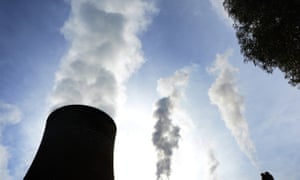
NDEVR Environmental figures for the year up to the end of June 2018 show
Australia’s emissions were the highest on record when unreliable data
from the land use and forestry sectors was excluded.
Photograph: Bloomberg via Getty Images
Australia remains on track to miss its Paris climate targets as carbon emissions continue to soar, according to new data.
The figures
from NDEVR Environmental for the year up to the end of June 2018 show
the country’s emissions were again the highest on record when unreliable
data from the land use and forestry sectors was excluded.
It is the third consecutive year for record-breaking emissions.
NDEVR replicates the federal government’s national greenhouse gas inventory (NGGI) quarterly reports
but releases them months ahead of the official data. Previous NDEVR
figures have been within 1% of the official figures when eventually
released.
The government has yet to publish any emissions data for 2018. Its
last update was for the year to December 2017, which it published in May
and showed Australia’s emissions continue to soar.
NDEVR’s report projects Australia will miss its Paris targets by
about a billion tonnes of carbon dioxide if emissions continue on their
current trajectory.
It projects that emissions, excluding land use, will be 558m tonnes, the highest since records began in 2002.
It finds that transport emissions
were the highest on record in the final quarter of the 2018 financial
year and continue to rise. NDEVR said this was due to the rapid increase
in the use of diesel fuel in both passenger cars and heavy transport.
Emissions from stationary energy and fugitive emissions continue to
trend upwards. The rise in stationary emissions is mostly attributable
to energy industries excluding electricity generation
NDEVR’s report projects a drop in emissions from the electricity
sector for the final quarter of the 2018 financial year because of a
reduction in total electricity generation in the national electricity
market states and an increase in generation from renewables.
But Matt Drum, the managing director of NDEVR Environmental, said Australia was still not on track to meet its Paris targets.
“Tracking the Paris trend line, they’re still heading north and
missing Paris by a long way and our 2050 two-degree target by an even
greater margin,” he said.
“The data’s telling us clearly again that we’re not on a trajectory
to meet our targets, there’s no effective policy to meet our targets,
but we’re still hearing commentary from the government that we’re on
track to meet our targets.”

No comments:
Post a Comment