Contemporary politics,local and international current affairs, science, music and extracts from the Queensland Newspaper "THE WORKER" documenting the proud history of the Labour Movement.
MAHATMA GANDHI ~ Truth never damages a cause that is just.
Thursday, 9 March 2017
Climate change impacts are already hitting us, say Europeans
New polling study also shows support for financial penalties for
nations that refuse to be part of Paris climate deal, as Donald Trump
has threatened
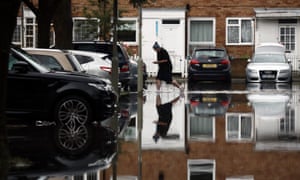
Flooding in Battersea, London, June 2016. The research dispels the idea that global warming is widely seen as a future problem.
Photograph: Carl Court/Getty Images
The citizens of four major European countries think the impacts of
climate change such as severe floods and storms are already affecting
them, according to a major new polling study.
The research dispels the idea that global warming is widely seen as a
future problem, and also shows strong support for action to tackle
global warming, including subsidies for clean energy and big financial
penalties for nations that refuse to be part of the international
climate deal signed in Paris in 2015 – as US president Donald Trump has threatened. There was also strong support for giving financial aid to developing nations to cope with the impacts of climate change.
Renewable energy was viewed very positively in all nations, but
fracking had little support, with just 20% of people seeing it
positively in the UK, 15% in Germany and 9% in France. Nuclear power was
also unpopular: only 23% of those in France, where it supplies the vast
majority of electricity, have a favourable opinion.
Overwhelming majorities of people in the UK, Germany, France and
Norway said climate change was at least partly caused by human
activities, such as burning fossil fuels. But only a third thought the
vast majority of scientists agreed with this, despite about 97% of climate scientists doing so.
“It is encouraging to see that most people in this very large study
recognise that climate change is happening, and that support for the
need to tackle it remains high amongst the people we surveyed,” said
Prof Nick Pidgeon at Cardiff University, who led the international
project.
He said the firm backing of the public could be important in the light of Trump’s opposition to climate action:
“With the recently shifting political mood in some countries, climate
policy is now entering a critical phase. It is therefore even more
important that the public’s clear support for the Paris agreement is
carried through by policymakers across Europe and worldwide.”
Nick Molho, at the Aldersgate Group, a business alliance that lobbies
for a sustainable economy, said: “The UK government should build on the
existing public support for climate policies to put forward in the near
future a clear plan to meet the emissions reduction targets.”
The polling study is the first in-depth climate change research in
multiple European nations and involved interviewing more than 1,000
people in each country, with the results then weighted to be nationally
representative.
The citizens gave near identical answers to the question of when the
impacts of global warming would be felt, with 60% answering that they
were already here. At least two-thirds of them supported their nation
being part of the Paris climate deal and they were at least two to one
in favour of penalising countries that were not, perhaps via the border carbon taxes proposed by some French politicians.
“People see that if there are free riders, that is not a very good thing,” said Pidgeon. Earlier in March, the US state department snubbed the UN’s climate change chief when she requested a meeting.
Subsidising renewable energy with public money was popular, with 70%
support in the UK and Germany, 75% in France, and 87% in Norway.
Increasing taxes on fossil fuels was supported in oil- and gas-rich
Norway, but opposed two to one in France and Germany. In the UK, people
were evenly split over tax hikes for fossil fuels.
Another split was in the trust people had in the European commission
and national and local governments to transform their nation’s energy
system to cleaner forms of energy. Germans were generally positive, but
those in the UK had little trust in any of the institutions. The polling
for the study took place in June 2016, before the Brexit referendum.
The report is available online from noon UK time on Wednesday 8 March.

No comments:
Post a Comment