Contemporary politics,local and international current affairs, science, music and extracts from the Queensland Newspaper "THE WORKER" documenting the proud history of the Labour Movement.
MAHATMA GANDHI ~ Truth never damages a cause that is just.
Wednesday, 12 December 2018
East Antarctica glacial stronghold melting as seas warm
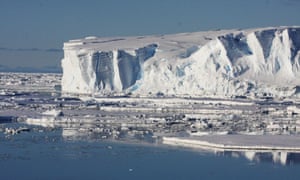
The Totten glacier, East Antarctica.
Photograph: Esmee van Wijk/Australian Antarctic Division
A group of glaciers spanning an eighth of the East Antarctica coastline are being melted by the warming seas, scientists have discovered.
This Antarctic region stores a vast amount of ice, which, if lost,
would in the long-term raise global sea level by tens of metres and
drown coastal settlements around the world.
Freezing temperatures meant the East Antarctica region was until
recently considered largely stable but the research indicates that the
area is being affected by climate change.
The vast Totten glacier was known to be retreating but the new analysis shows that nearby glaciers in the East Antarctica area are also losing ice.
To the east of Totten, in Vincennes Bay, the height of the glaciers
has fallen by about three metres in total since 2008, before which no
loss had been recorded.
To the west of Totten, in Wilkes Land, the rate of height loss has
doubled since 2009, with glaciers losing height by about two and a half
metres to date.
The data comes from detailed maps of ice movement speed and height created by Nasa from satellite information.
Alex Gardner, a glaciologist at Nasa’s jet propulsion laboratory in
Pasadena, California, said: “The change doesn’t seem random, it looks
systematic. That hints at underlying ocean influences that have been
incredibly strong in West Antarctica. Now we might be finding clear
links of the ocean starting to influence East Antarctica.”
Catherine
Walker, at Nasa’s Goddard Space Flight Centre, in Maryland, used ocean
temperature measurements from seals who had been tagged with sensors, as
well as computer modelling, to show that the heat delivered to the
glaciers in Wilkes Land and Vincennes Bay had increased. Changes in
winds and the extent of sea ice are thought to have altered currents.
East Antarctica is extremely remote and relatively little studied.
What happens to the glaciers will depend on how exposed to warmer water
they are, and that depends on the shape of the land beneath them and the
sea bed ahead of them.
“Heightened attention needs to be given to these glaciers,” said
Gardner. “We need to better map the topography and the bathymetry. Only
then can we be more conclusive in determining whether these glaciers
will enter a phase of rapid retreat or stabilise.”
The discovery could mean much higher sea level rises than
anticipated, said Chris Fogwill, a professor at Keele University in
England, who was not part of the Nasa research.
“The finding has very serious repercussions for climate change and
particularly sea-level rise. It has the potential to mean that our
sea-level projections could be [in] an order of magnitude higher than
we’re anticipating.”

No comments:
Post a Comment