A personal view of Australian and International Politics

Contemporary politics,local and international current affairs, science, music and extracts from the Queensland Newspaper "THE WORKER" documenting the proud history of the Labour Movement. MAHATMA GANDHI ~ Truth never damages a cause that is just.

Thursday, 31 January 2019

What happened to our electricity system in the heat? Coal and gas plants failed

Extract from The Guardian

Opinion
Climate change

Nicky Ison
We still have time to avert the worst impacts of climate change, but heatwaves are now an inevitable part of Australia’s future
@nickymison
Thu 31 Jan 2019 08.51 AEDT Last modified on Thu 31 Jan 2019 17.26 AEDT

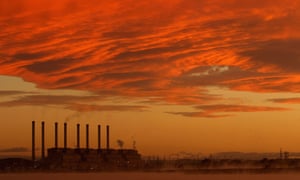
Hazelwood Power Station at sunrise
‘We need to recognise climate change is causing more heatwaves which brings increased risk of localised blackouts and even load shedding.’ Photograph: Hamish Blair/Getty Images

Heatwaves and blackouts have been the talk of the town as temperatures climbed over 40C in all states except Tasmania, and once again the commentariat have gone into a renewable-generated bluster. Chris Uhlmann and Alan Moran blamed the high prices on wind power, Pauline Hanson called for people to use more power and Judith Sloan called demand management a bribe.
There were three notable things that happened with our energy system during what will become the new normal of extreme heat.

1. It was hot

At the end of last week it was hot. Like, record-breaking, fry an egg on the pavement hot. Many parts of South Australian and Victoria faced their hottest days on record.

As Australians tried their best to stay cool, almost everyone who had an air conditioner switched it on and we experienced a “peak demand” event. This is a period where our electricity system is stretched to its limit and wholesale electricity prices reach their peak.

As our planet warms we can expect more days like Thursday and Friday. While we still have time to avert the worst impacts of climate change, some warming is now locked in and that means the heatwaves we have experienced more than once already this summer are now an inevitable part of Australia’s future.
So what should we do about it?

Australia needs to get serious about reducing climate pollution, which continues to rise and do our contribution to stop runaway global warming.

We can improve our houses and building so they better manage the heat. Australian houses are sometimes called leaky tents; they let in the heat in summer and the cold in winter.
It doesn’t have to be this way. Insulation, double-glazing, draft proofing, better building standards, all these things will keep your house passively cool and reduce (though not eliminate) the amount of air conditioning you need. It’s not rocket science, but currently we aren’t doing any of this.
We can also upgrade our air conditioners to be more energy efficient. According to energy analyst Tristan Edis, new air conditioners use half the electricity of the majority of air conditioners that were installed in the early 2000s. On hot days, this would make a significant difference.

2. Coal and gas plants failed

Our coal and gas plants are ageing. As they age, they breakdown and need maintenance more often. Last week was a case in point. In Victoria, Yallourn power station took one of its units offline for maintenance and another had to be taken offline unexpectedly early Friday morning. Also in Victoria, Loy Yang A had a boiler tube leak just before the heatwave hit and was out for the duration. In New South Wales, Liddell and the Tallawarra gas plants were both offline for many days due to unplanned faults.
These six coal and gas units totalling 2,225MWs of capacity were not available for at least some of the period of Australia’s most intensive heatwave on record.
This is at best a sign that our coal plants are getting old and can’t be relied on at peak times and at worst it was price-gouging behaviour by some of Australia’s largest energy companies.
We need to get serious about demand response. Demand response is when households and industry are paid not to use electricity for some nonessential operations for a period of time. While this isn’t a great idea all year round, for a few hours on a few days a year it’s the cheapest and most effective way of maintaining an electricity system. This is standard practice in the US and Europe where they even have markets for demand response. This is urgently needed here, but was resisted by rule-maker, the Australian Electricity Market Commission (AEMC), until late last year.
We also need to continue to build new electricity supply in the form of solar, wind, battery storage, pumped hydro and similar.

3. There were blackouts

At the end of last week we experienced two types of blackouts. First there were localised blackouts affecting about 25,000 households in South Australia on Thursday night. These were due to fuses blowing in our distribution infrastructure. These fuses are designed to blow when infrastructure gets too hot so that it isn’t damaged. This was the electricity system working as it should. It isn’t surprising given the record temperatures.
The second type of blackout experienced was “load shedding”. This is where the market operator temporarily cuts off some energy users from the system to ensure “system integrity” and to ensure it doesn’t fail catastrophically. In Victoria on Friday afternoon, 160,000 customers were blacked-out over a two-to-three-hour period.
Load shedding is the action of last resort and Aemo did everything it could before taking this path. It fired up emergency reserves, asked big energy users to power down and appealed to us to lower our electricity use.
Australia’s electricity system is incredibly reliable, typically exceeding our reliability standard of 99.998%. That basically means that the electricity supply needed is available 99.998% of the time.
Almost all blackouts in Australia (96.6% according to the AEMC) are because of faults in the poles and wires. What happened on Friday was very rare – only 0.2% of blackouts occur because there isn’t enough operational generation in the system.
However, particularly for people suffering health conditions as well as older and younger people, power outages are dangerous and they aren’t good for business either.
So what should we do about it?
We need more on-demand capacity – there is need for storage (batteries and pumped hydro) and dispatchable solutions (concentrating solar thermal and demand response), that can turn on and ramp up quickly.
Renewables (hydro, solar and wind) account for about 20% of generation in the National Electricity Market, higher in South Australia. Over the two-day period in question, renewables averaged higher than 20% generation and on Friday afternoon, when power was needed most, a combination of hydro, wind and solar provided over one-third of Victoria and South Australia’s power.
However, while wind and solar will provide the bulk of our annual electricity need in the future, there is need for on-demand solutions. These solutions will fill the gaps in the two to six hours overnight where there is a lull in the wind, or when forecasts (demand or supply) are wrong.
The good news is that CSIRO and Aemo have found that just such solutions – wind and solar backed by batteries and pumped hydro are also the cheapest new-build options to deliver reliable, clean electricity supply.
We need to recognise climate change is causing more heatwaves which brings increased risk of localised blackouts and even load shedding. We need to start adapting to this new normal. One strategy to do this would be to create community cool zones where people can go to stay cool in extreme heat. These cool zones should have backup power that means they will stay cool even during blackouts.
Finally, we also need to have strategies for giving people, particularly vulnerable people, more notice of potential blackouts. If we get serious about demand management there will be better systems in place to provide this notice to people and even incentives and support for folks to go to the movies or a community cool zone.
While we can never have an electricity system that is 100% reliable, there are straightforward policy and engineering solutions that can increase our electricity system’s resilience to climate change in the future.

  • Nicky Ison is the founding director of the Community Power Agency and research associate at the Institute for Sustainable Futures at the University of Technology Sydney.
Posted by The Worker at 7:48:00 pm
Email ThisBlogThis!Share to XShare to FacebookShare to Pinterest

No comments:

Post a Comment

Newer Post Older Post Home
Subscribe to: Post Comments (Atom)

About Me

My photo
The Worker
I was inspired to start this when I discovered old editions of "The Worker". "The Worker" was first published in March 1890, it was the Journal of the Associated Workers of Queensland. It was a Political Newspaper for the Labour Movement. The first Editor was William "Billy" Lane who strongly supported the iconic Shearers' Strike in 1891. He planted the seed of New Unionism in Queensland with the motto “that men should organise for the good they can do and not the benefits they hope to obtain,” he also started a Socialist colony in Paraguay. Because of the right-wing bias in some sections of the Australian media, I feel compelled to counter their negative and one-sided version of events. The disgraceful conduct of the Murdoch owned Newspapers in the 2013 Federal Election towards the Labor Party shows how unrepresentative some of the Australian media has become.
View my complete profile

Translate

Search This Blog

Popular Posts

  • Trump wants Venezuela's airspace closed — but international law stands in the way.
    Extract from  ABC News By Elissa Steedman with wires  Topic: World Politics 17 hours ago President Donald Trump said Venezuela's airspa...
  • England's Ashes demolition job of Australia in Brisbane's first ever cricket Test match at the Ekka.
     Extract from  ABC News By Simon Smale Topic: Sport 2 hours ago England completed destroyed Australia in the first ever Ashes Test in Brisba...
  • Australia to provide Ukraine with $95m funding boost.
    Extract from  ABC News By defence and national security correspondent Olivia Caisley Topic: War 7 hours ago The additional funding for Ukrai...
  • The first Australian-made car, the Holden 48-215, was introduced to the world on this day.
    Extract from  ABC News By Tim Callanan Today in History Topic: Automotive Industry 1 hours ago One of the surviving Holden 48-215s. (Supplie...
  • Ukraine hits two Russian 'shadow fleet' oil tankers with naval drones in the Black Sea.
    Extract from  ABC News Topic: Unrest, Conflict and War 11 hours ago Naval drones could be seen speeding towards hulking tankers followed by ...
  • Big haul of 170yo Indigenous artefacts unearthed in North West Queensland.
     Extract from  ABC News By Abbey Halter By Maddie Nixon ABC North West Qld Topic: Cultural Artefacts 19m ago 19 minutes ago Yinika Perston i...
  • Lebanese hopeful Pope Leo will bring peace as he visits the country.
    Extract from  ABC News By Middle East correspondent Eric Tlozek and Chérine Yazbeck in Lebanon Topic: Religion 1 hours ago Billboards welc...
  • Where US and Venezuelan alliances lie as tensions escalate in the Caribbean.
    Extract from  ABC News By Luke Cooper with wires Topic: World Politics 14 hours ago Venezuela is facing the threat of a potential conflict ...
  • Domestic violence abusers have 'weaponised' smart cars to terrorise their victims.
    Extract from  ABC News By chief digital political correspondent Clare Armstrong Topic: Domestic Violence 1 hours ago Domestic violence servi...
  • Tasmanian veteran farmer and his family listen to Country Hour most days — here's why.
    Extract from  ABC News By Fiona Breen By Meg Fergusson Topic: Rural and Remote Communities 44 minutes ago For the Radfords, the Country Hour...

Favourite Links

  • Australian Council of Trade Unions
  • Australian Labor Party
  • Queensland Council of Unions
  • ALP Queensland
  • Whitlam Institute
  • Chifley Research Centre
  • John Curtin Prime Ministerial Library
  • The Australia Institute
  • Tim Flannery ~ Australian Climate Council
  • Dr. James E. Hansen explains Climate Change
  • David Suzuki Foundation
  • The Environment Time capsule
  • Solar Citizen
  • Cape Grim Greenhouse Gas Data
  • The Jane Goodall Institute Australia
  • RenewEconomy
  • Basic income Earth Network
  • Skeptical Science
  • Lucinda's Song and Dance

Blog Archive

  • ►  2025 (1074)
    • ►  December (36)
    • ►  November (104)
    • ►  October (111)
    • ►  September (150)
    • ►  August (125)
    • ►  July (106)
    • ►  June (101)
    • ►  May (78)
    • ►  April (66)
    • ►  March (77)
    • ►  February (59)
    • ►  January (61)
  • ►  2024 (921)
    • ►  December (60)
    • ►  November (69)
    • ►  October (79)
    • ►  September (64)
    • ►  August (45)
    • ►  July (74)
    • ►  June (72)
    • ►  May (80)
    • ►  April (68)
    • ►  March (110)
    • ►  February (101)
    • ►  January (99)
  • ►  2023 (877)
    • ►  December (101)
    • ►  November (82)
    • ►  October (70)
    • ►  September (91)
    • ►  August (56)
    • ►  July (90)
    • ►  June (55)
    • ►  May (60)
    • ►  April (55)
    • ►  March (84)
    • ►  February (72)
    • ►  January (61)
  • ►  2022 (1195)
    • ►  December (84)
    • ►  November (107)
    • ►  October (45)
    • ►  September (83)
    • ►  August (129)
    • ►  July (137)
    • ►  June (84)
    • ►  May (82)
    • ►  April (87)
    • ►  March (116)
    • ►  February (135)
    • ►  January (106)
  • ►  2021 (2138)
    • ►  December (101)
    • ►  November (286)
    • ►  October (236)
    • ►  September (150)
    • ►  August (116)
    • ►  July (168)
    • ►  June (171)
    • ►  May (161)
    • ►  April (138)
    • ►  March (220)
    • ►  February (221)
    • ►  January (170)
  • ►  2020 (1868)
    • ►  December (145)
    • ►  November (156)
    • ►  October (98)
    • ►  September (152)
    • ►  August (145)
    • ►  July (164)
    • ►  June (146)
    • ►  May (158)
    • ►  April (99)
    • ►  March (150)
    • ►  February (190)
    • ►  January (265)
  • ▼  2019 (1888)
    • ►  December (207)
    • ►  November (216)
    • ►  October (202)
    • ►  September (193)
    • ►  August (151)
    • ►  July (151)
    • ►  June (87)
    • ►  May (120)
    • ►  April (166)
    • ►  March (156)
    • ►  February (122)
    • ▼  January (117)
      • What happened to our electricity system in the hea...
      • Graziers rejoice as deluge soaks drought-ravaged w...
      • Homeless Australians given financial penalties und...
      • Chris Bowen says Labor sticking to tax policies de...
      • Liberals will run a scare campaign, but their age ...
      • Air traffic controllers defeated Trump. That's wor...
      • Scott Morrison’s hint at a recession under Labor i...
      • Australia’s record on emissions and sustainability...
      • Women are pushing to the front of the queue in 201...
      • The Liberal party has lost the plot - that’s why I...
      • It's time to 'take out' environment ministers who ...
      • Electricity prices could rise under Coalition's 'b...
      • One year on: where is Australia's recycling going ...
      • We need to redefine exclusion
      • The Coalition is clinging to fear and delusion as ...
      • Warming world gets older, wiser, richer activists ...
      • Davos 2019: the yawning gap between rhetoric and r...
      • What would Australia look like powered by 100% ren...
      • Zali Steggall to challenge Tony Abbott's Warringah...
      • Roger Stone: a master of the political dirty trick
      • Roger Stone's indictment shows us Robert Mueller i...
      • Shields and Brooks on shutdown resolution, Roger S...
      • 2019 Doomsday Clock Statement
      • Adani coal mine should be suspended, UN says, unti...
      • Military buildup in Arctic as melting ice reopens ...
      • Coal plants in mix for Coalition's electricity gua...
      • Adelaide now hottest capital city on record as tem...
      • Victoria and SA brace for all-time temperature rec...
      • 'Nothing to fear': Jacinda Ardern urges world lead...
      • Greenland's ice melting faster than scientists pre...
      • Jair Bolsonaro alarms climate activists with pro-b...
      • David Attenborough and Prince William take world l...
      • Former Turnbull staffer Alice Thompson to run in T...
      • Labor promises to 'supercharge' hydrogen industry ...
      • The Guardian view on rising sea levels: a warning ...
      • The scare campaign on negative gearing didn't work...
      • David Attenborough tells Davos: ‘The Garden of Ede...
      • The Guardian view on Trump and arms: can the dooms...
      • World's 26 richest people own as much as poorest 5...
      • Smoko-Ho. September 7, 1895.
      • How to stop the climate crisis: six lessons from t...
      • Whatever happens to Kelly O'Dwyer's seat, the Coal...
      • The shutdown has exposed the disaster that is Trum...
      • Brooks and Marcus on shutdown stagnation, Michael ...
      • Robert Mueller disputes accuracy of claims he foun...
      • How Trump has changed America in two years
      • Australia heatwave: overnight minimum of 35.9C in ...
      • Democrats vow to investigate report Trump directed...
      • Adani contractor won't work on Carmichael project ...
      • Extreme heatwave: all-time temperature records fal...
      • Tony Abbott played us for fools on electricity pri...
      • Antarctica's winners and losers: How climate chang...
      • Homeless shut out from showgrounds, as Hobart hous...
      • Climate change is 'no laughing matter', Fiji's PM ...
      • Adani cleared of wrong doing by Federal Government...
      • A brief history of Nazism in Australia
      • Our oceans broke heat records in 2018 and the cons...
      • Australia weather: record-breaking heatwave enters...
      • Cern draws up plans for collider four times the si...
      • Rob Oakeshott to run against Nationals for NSW sea...
      • Immediate fossil fuel phaseout could arrest climat...
      • Australia extreme heatwave: 'code red' issued as P...
      • General News Summary, August 31, 1895.
      • On a wing and a player: hopes webcam can save enda...
      • Another day, another reason to be elated by congre...
      • Australia could hit 100% renewables sooner than mo...
      • A WALK THROUGH TOWN.
      • 129-year-old Hillston Spectator's future in doubt ...
      • If you see these weird dots or cobwebs in your eye...
      • Letters to Editor August 31 1895.
      • Colliding galaxies and 'Goldilocks' planets: the r...
      • New Victorian windfarm could provide 10% of state'...
      • Trump tweets his fury after bombshell report adds ...
      • Treaty on HFCs aims to curb global warming from gr...
      • Donald Trump reportedly investigated by FBI over f...
      • What is a national emergency – and could Trump use...
      • Warming oceans likely to raise sea levels 30cm by ...
      • Australia had third-warmest year on record in 2018
      • Trump is using the government as a bargaining chip...
      • He’s been president a week – and already Bolsonaro...
      • The Guardian view on Trump and the wall: useful fo...
      • Peta Credlin's preselection could be the spark tha...
      • Budgerigar murmuration captures attention in Queen...
      • Donald Trump isn't partial to facts — and he can't...
      • BOM 2018 Climate Statement: Third-hottest year on ...
      • Canada: 14 arrested at indigenous anti-pipeline pr...
      • When the ice melts: the catastrophe of vanishing g...
      • Labor says Jobactive system is failing job seekers...
      • United States: Democrats add basic income to a cli...
      • United States: Alexandria Ocasio-Cortez mentions b...
      • Global warming of oceans equivalent to an atomic b...
      • Will Adam Schiff pose a bigger threat to Trump tha...
      • Donald Trump is holding firm on his border wall an...
      • Climate change ravages Turner’s majestic glaciers
      • Ex-NYT editor rejects Trump praise and says words ...
      • This is the Nancy Pelosi moment and Donald Trump s...
      • Robert De Niro: ‘Trump is a real racist, a white s...
      • Trump aides may be in legal jeopardy as Democrats ...
      • Senate crossbench gave renewables $23bn boost by t...
      • We have 102 women in Congress. It's not Trump's Wa...
  • ►  2018 (1793)
    • ►  December (207)
    • ►  November (193)
    • ►  October (212)
    • ►  September (195)
    • ►  August (162)
    • ►  July (189)
    • ►  June (175)
    • ►  May (139)
    • ►  April (33)
    • ►  March (126)
    • ►  February (94)
    • ►  January (68)
  • ►  2017 (2094)
    • ►  December (70)
    • ►  November (97)
    • ►  October (109)
    • ►  September (123)
    • ►  August (161)
    • ►  July (217)
    • ►  June (201)
    • ►  May (223)
    • ►  April (170)
    • ►  March (243)
    • ►  February (302)
    • ►  January (178)
  • ►  2016 (1016)
    • ►  December (165)
    • ►  November (163)
    • ►  October (103)
    • ►  September (109)
    • ►  August (66)
    • ►  July (44)
    • ►  June (57)
    • ►  May (68)
    • ►  April (61)
    • ►  March (74)
    • ►  February (50)
    • ►  January (56)
  • ►  2015 (874)
    • ►  December (72)
    • ►  November (69)
    • ►  October (73)
    • ►  September (109)
    • ►  August (71)
    • ►  July (104)
    • ►  June (102)
    • ►  May (80)
    • ►  April (44)
    • ►  March (51)
    • ►  February (32)
    • ►  January (67)
  • ►  2014 (1022)
    • ►  December (65)
    • ►  November (88)
    • ►  October (104)
    • ►  September (90)
    • ►  August (73)
    • ►  July (60)
    • ►  June (87)
    • ►  May (120)
    • ►  April (77)
    • ►  March (128)
    • ►  February (67)
    • ►  January (63)
  • ►  2013 (730)
    • ►  December (50)
    • ►  November (70)
    • ►  October (51)
    • ►  September (48)
    • ►  August (52)
    • ►  July (83)
    • ►  June (116)
    • ►  May (91)
    • ►  April (44)
    • ►  March (36)
    • ►  February (45)
    • ►  January (44)
  • ►  2012 (137)
    • ►  December (20)
    • ►  November (32)
    • ►  October (43)
    • ►  September (24)
    • ►  August (18)
Simple theme. Powered by Blogger.