Extract from The Guardian
Misleading and divisive promotional video an ‘own goal’ for a prime minister trying to restore trust, academic says
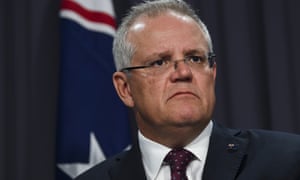
A leading expert says Scott Morrison’s “misleading and deceptive”
bushfire ad raises “serious integrity issues” and must prompt reforms to
Australia’s weak government and political advertising rules.
Morrison has faced a barrage of criticism since releasing a promotional video spruiking his government’s response to the bushfires at the height of the crisis on Saturday.
The video was party political, authorised only by the Liberal party and Scott Morrison personally, rather than the Australian government.
The Griffith University integrity expert Professor AJ Brown, also a board member of Transparency International, said this made the ad both misleading and divisive, making it an “own goal” for a prime minister trying belatedly to restore public trust.
“I interpreted it, and I think thousands of people interpreted it, as
a piece of government advertising, attempting to communicate the
Australian government response,” he said. “And that is later how the
prime minister tried to explain it.Morrison has faced a barrage of criticism since releasing a promotional video spruiking his government’s response to the bushfires at the height of the crisis on Saturday.
The video was party political, authorised only by the Liberal party and Scott Morrison personally, rather than the Australian government.
The Griffith University integrity expert Professor AJ Brown, also a board member of Transparency International, said this made the ad both misleading and divisive, making it an “own goal” for a prime minister trying belatedly to restore public trust.
“But clearly it was not that. It was a party political advertisement, and deceptive, as it became a claim that the Liberal party, not the government and Australia’s own taxpayers were the ones putting ‘boots on the grounds’, sending navy ships and supplying masks.”
“That is atrocious not only because it was factually wrong, but because of its divisiveness.”
Brown, who is currently completing Transparency International’s national integrity system assessment of Australia, said all political parties must give support to fixing the culture and rules allowing political self-promotion.
“Every new prime minister promises the nation they will govern for the whole nation, not just those who vote for them. But in a time of crisis, this rushed attempt to play ‘catch up’ with public trust has created the reverse impression across much of the nation.”
Morrison has defended the ad, saying he chose to publish the ad from his own office because following normal government advertising processes would have meant ‘problems of its own’.
Advertising campaigns by the Australian government generally must comply with a framework of rules and guidelines, which, among other things, prevent the use of public funds for party political advertising.
Before the government advertising framework was introduced in 2008, the Senate Finance and Public Administration References Committee recommended rules were needed to prevent the line between political and government advertising from being blurred.
“The problem with government advertising arises when the distinction between legitimate government advertising for public policy purposes and political advertising for partisan advantage is blurred,” the committee said. “In other words, the problem arises when governments use taxpayer funds to gain political advantage through partisan promotion of their views or themselves, rather than to meet the genuine information needs of citizens.”
Morrison has denied the video was an advertisement, and rejected suggestions it was politically motivated.
“It wasn’t a Liberal party-sponsored ad, it was authorised by me – I’m the leader of the Liberal party – that’s the only authorisation I can post on something that is posted on my page,” he said.
“The same thing that applies to other politicians in Australia … it is simply complying with requirements of Australian law.”
But the University of Queensland politics and law expert Professor Graeme Orr said such material only required political party authorisations if they were deemed “electoral matter”.
Orr said that excluded communications “whose dominant purpose is to educate … on a public policy issue, or to raise awareness of, or encourage debate on, a public policy issue”

No comments:
Post a Comment