A personal view of Australian and International Politics

Contemporary politics,local and international current affairs, science, music and extracts from the Queensland Newspaper "THE WORKER" documenting the proud history of the Labour Movement. MAHATMA GANDHI ~ Truth never damages a cause that is just.

Thursday, 19 March 2020

Keep it clean: The surprising 130-year history of handwashing

Extract from The Guardian

Coronavirus outbreak

Until the mid-1800s, doctors didn’t bother washing their hands – they would go from dissecting a cadaver to delivering a child. Then a Hungarian medic made an essential, much-resisted breakthrough
  • See all our coronavirus coverage
Amy Fleming
Wed 18 Mar 2020 19.00 AEDT Last modified on Wed 18 Mar 2020 21.54 AEDT

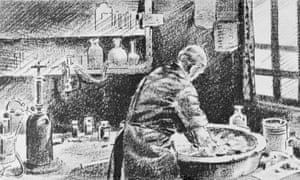
The medical pioneer Ignaz Semmelweis washing his hands in chlorinated lime water before operating.
The medical pioneer Ignaz Semmelweis washing his hands in chlorinated lime water before operating. Photograph: Bettmann/Bettmann Archive

It felt strange when Boris Johnson emerged from the first Covid-19 Cobra meeting on 2 March and told us to wash our hands while singing Happy Birthday. The preppers among us had panic-shopped while awaiting his pronouncements, and others fretted about vulnerable loved ones, travel plans, the nightmare of simultaneous homeworking and home-schooling, and not being able to work at all. And all our leader had was this?
As one of the few things we can do to significantly stop the spread of coronavirus while out in the infectious world, the new rules for this everyday habit have become the meme du jour. The Killers’ frontman, Brandon Flowers, tweeted a video of himself lathering up while crooning his hit Mr Brightside to 4 million followers. Judi Dench and Gyles Brandreth have posted themselves online reciting The Owl and the Pussycat with sudsy hands. A website for generating handwashing infographics to the song lyrics of your choice has gone viral.
To Nancy Tomes, a distinguished professor of history at Stony Brook University, New York, seeing this basic advice headlining the public health agenda has felt even more strange. “Being a historian of this kind of pandemic event and then experiencing this one,” she says, “is kind of like being a passenger on the Titanic and watching it all unfold.” It also feels, she says, like going back to the early 20th century, when infectious diseases such as tuberculosis and smallpox were the No 1 cause of death, and the new science of germs had led to the first mass obsession with hand hygiene.
Religious handwashing rituals have been around for thousands of years in Islamic, Jewish and other cultures, but the notion of disease spreading by hand has been part of the medical belief system for only about 130 years. However, the first recorded discovery of handwashing’s life-saving power came 50 years earlier, in 1848, as a huge, unwelcome shock.
“If there had to be a father of handwashing it would be Ignaz Semmelweis,” says Miryam Wahrman, a professor of biology at William Paterson University in New Jersey and author of The Hand Book: Surviving in a Germ-Filled World. While working at Vienna General hospital, the Hungarian doctor was at the forefront of a more scientific approach to medicine. Faced with a doctor-led maternity ward in which maternal deaths from the dreaded childbed fever were significantly higher than in the midwife-run clinic there, he racked his brain for clues as to why.
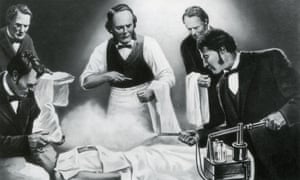
Joseph Lister and his assistants.
Joseph Lister and his assistants. Photograph: Pictorial Press Ltd/Alamy
Germs were yet to be discovered, and it was still believed in the 1840s that disease was spread by miasma – bad smells in the air – emanating from rotting corpses, sewage or vegetation. Victorians kept their windows firmly shut against such malevolent forces. So it didn’t seem a problem that trainee doctors at Vienna General would hang out in the morgue dissecting corpses to figure out what had rendered them dead and then pop up to the maternity ward to deliver a baby without washing their hands.
One of them then accidentally got cut by a scalpel during a dissection and died, seemingly of the same childbed fever the mothers had been getting. Semmelweis hypothesised that cadaverous particles from the morgue were to blame, and that such particles on the hands of doctors were making their way into women’s bodies during childbirth.
To test his theory, he ordered doctors to wash their hands and instruments in a chlorine solution, a substance he hoped would dispatch the deadly smell of cadaverous particles. Before the experiment, says Wahrman, “the mortality rate for new mothers was as high as 18%. After Semmelweis implemented hand hygiene between the morgue and the delivery room, the rate of mortality for new mothers dropped to about 1%.”
Despite his success, his idea faced great resistance, and met a tragic end. He lost his job, and is thought to have had a breakdown. He died in a psychiatric institution, “a very despondent person at the untimely age of 47”, says Wahrman.
Part of the problem, says Tomes, was that people, “didn’t have that conception of themselves as sort of walking petri dishes”. And doctors were offended by the suggestion that they could be causing infections. “The majority of doctors in Vienna at this time were from middle- or upper-class families, and they thought of themselves as very clean people compared with the working-class poor. He was insulting them when he said their hands could be dirty.”
Over the next 40 years, an understanding of germs developed, and attitudes to hygiene gradually shifted. In 1857, while Semmelweis’s mental health declined, Louis Pasteur, of pasteurisation fame, raised awareness of pathogens, and how to kill them with heat. In 1876, the German scientist Robert Koch discovered the anthrax bacillus, kicking off the new research field of medical bacteriology. Cholera, tuberculosis, diphtheria and typhoid bacilli were subsequently identified.
Surgeons started handwashing in earnest. Tomes says: “If you’re cutting open someone’s skin – that protective layer – you need to take extraordinary precautions.” The British surgeon Joseph Lister pioneered antiseptic surgery, which included handwashing, “and by the 1890s and into the early 1900s,” adds Tomes, “handwashing moved from being something doctors did to something everybody had been told to do”.
Florence Nightingale helped. Despite still labouring under miasma theory, she intuitively improved hygiene in military hospitals during the Crimean war in the 1850s and, after returning to the UK, set about revolutionising nursing. “Nightingale influenced a new interest in household cleanliness as a goal that a good wife and mother needs to instil in her family,” says Tomes.

"We thought this hygiene stuff was bourgeois nonsense. Being a hippy involved embracing your microbial self"

The turn of the century saw the first popular public health campaigns being launched around tuberculosis, says Tomes. “Koch had shown that tuberculosis was not something you inherited from your grandmother, but that your grandmother coughed on you, and that’s why you got it.” The anti-tuberculosis movement was aimed at both adults and schoolchildren. “You really were getting little kids taught these rules about being clean and washing your hands.”
Tomes adds: “People got totally phobic about shaking hands or kissing each other when they understood that their mouth, their skin and their hair had all these germs on them.” It’s one reason, she says, why young men started eschewing beards at the turn of the century. And why foods started being sold individually wrapped, because of “this fear of germs and hands touching things”. But this hygiene-centric era was short-lived.
The combination of public health messaging and the development of vaccines and antibiotics in the early 20th century saw death rates from bacterial diseases plummet. “The hyperattention to this kind of cleanliness became less important,” says Tomes. “A laxity crept in, I think, in healthcare and in everyday life after the second world war.”
Tomes herself is a product of the countercultural baby boomer generation, which rebelled against the rules imposed by their parents’ and grandparents’ generations. “We thought all this [hygiene] stuff was bourgeois nonsense,” she says. “Being a hippy involved embracing the wonders of your microbial self.”
Sexually transmitted diseases started increasing again in the 1970s. “People started to realise, well, these things can come back if we get careless,” says Tomes. “But it was really with HIV coming in the 1980s – a novel, deadly, sneaky kind of virus – that everyone started to get hyper again about personal cleanliness.” Even though, of course, HIV is transmitted by blood, semen, vaginal fluids and breast milk, so hand hygiene isn’t a significant factor in prevention, Tomes says we have been operating with a more aware mindset in general since then. Hospital superbugs became a problem, “and now we have these novel viruses coming pretty regularly, but we’re also getting the re-emergence of bacterial diseases because of antibiotic resistance”.
Actual handwashing compliance, pre-coronavirus, was still worryingly low, however, in the public realm and in medical care. In her book, Wahrman cites research undertaken with university students in 2009, published in the American Journal of Infection Control. “After urinating, 69% of women washed their hands, and only 43% of men,” she says. “After defecation, 84% of women and 78% of men washed their hands. And before eating – a critical time to wash your hands – 10% of men and 7% of women washed their hands.”
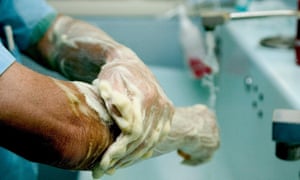
‘At the start of a pandemic, this is pretty much all you’ve got.’
‘At the start of a pandemic, this is pretty much all you’ve got.’ Photograph: EyeEm/Alamy
Wahrman’s mother died from a hospital-acquired infection, so writing the book, she says, “was personal”. A study conducted in a teaching hospital at East Tennessee State University in 2007 found that staff handwashing between attending patients in all intensive care units (ICUs) had an overall compliance rate of just 54%. Staff in the paediatric ICU were much more conscientious, with 90% compliance, compared with just 35% in the adult ICU. After intervention and training, however, the compliance rate in the adult ICU was raised to 81%. We can only hope that the memes of the Covid-19 pandemic will see similar or even better rises among the public.
How effective is handwashing? Petra Klepac, an assistant professor of infectious disease modelling at the London School of Hygiene & Tropical Medicine, looked into this question in 2018 while predicting how a flu pandemic would spread in the UK, for the documentary Contagion! The BBC Four Pandemic.
“We were looking for systematic reviews and meta-analyses, and pooling the results from these studies,” she says. One review, published in 2017, found significant effects from handwashing, compared with nonsignificant effects from face-mask use. When Klepac and colleagues drilled down into the highest quality data, gathered from a clinical setting, with clinical diagnosis and a control group (who didn’t increase hand hygiene) they discovered that if you washed your hands five to 10 times more than usual, “that would reduce your risk by a quarter”.
At the start of a pandemic, this is pretty much all you’ve got. “You don’t have pharmaceutical interventions,” says Klepac. “You don’t have a vaccine. This is why we’re looking at nonpharmaceutical measures that are easily implemented.”
To Wahrman, this knowledge feels empowering. “You can say to people: ‘Here’s one thing you can do to lower your risk.’ It’s simple. It’s right there and doesn’t cost anything. Wash your hands with soap before you touch your mouth, your nose or your eyes. It’s empowering because it really does make a difference.”
Posted by The Worker at 5:34:00 am
Email ThisBlogThis!Share to XShare to FacebookShare to Pinterest

No comments:

Post a Comment

Newer Post Older Post Home
Subscribe to: Post Comments (Atom)

About Me

My photo
The Worker
I was inspired to start this when I discovered old editions of "The Worker". "The Worker" was first published in March 1890, it was the Journal of the Associated Workers of Queensland. It was a Political Newspaper for the Labour Movement. The first Editor was William "Billy" Lane who strongly supported the iconic Shearers' Strike in 1891. He planted the seed of New Unionism in Queensland with the motto “that men should organise for the good they can do and not the benefits they hope to obtain,” he also started a Socialist colony in Paraguay. Because of the right-wing bias in some sections of the Australian media, I feel compelled to counter their negative and one-sided version of events. The disgraceful conduct of the Murdoch owned Newspapers in the 2013 Federal Election towards the Labor Party shows how unrepresentative some of the Australian media has become.
View my complete profile

Translate

Search This Blog

Popular Posts

  • Trump wants Venezuela's airspace closed — but international law stands in the way.
    Extract from  ABC News By Elissa Steedman with wires  Topic: World Politics 17 hours ago President Donald Trump said Venezuela's airspa...
  • England's Ashes demolition job of Australia in Brisbane's first ever cricket Test match at the Ekka.
     Extract from  ABC News By Simon Smale Topic: Sport 2 hours ago England completed destroyed Australia in the first ever Ashes Test in Brisba...
  • Australia to provide Ukraine with $95m funding boost.
    Extract from  ABC News By defence and national security correspondent Olivia Caisley Topic: War 7 hours ago The additional funding for Ukrai...
  • The first Australian-made car, the Holden 48-215, was introduced to the world on this day.
    Extract from  ABC News By Tim Callanan Today in History Topic: Automotive Industry 1 hours ago One of the surviving Holden 48-215s. (Supplie...
  • Ukraine hits two Russian 'shadow fleet' oil tankers with naval drones in the Black Sea.
    Extract from  ABC News Topic: Unrest, Conflict and War 11 hours ago Naval drones could be seen speeding towards hulking tankers followed by ...
  • Big haul of 170yo Indigenous artefacts unearthed in North West Queensland.
     Extract from  ABC News By Abbey Halter By Maddie Nixon ABC North West Qld Topic: Cultural Artefacts 19m ago 19 minutes ago Yinika Perston i...
  • Lebanese hopeful Pope Leo will bring peace as he visits the country.
    Extract from  ABC News By Middle East correspondent Eric Tlozek and Chérine Yazbeck in Lebanon Topic: Religion 1 hours ago Billboards welc...
  • Where US and Venezuelan alliances lie as tensions escalate in the Caribbean.
    Extract from  ABC News By Luke Cooper with wires Topic: World Politics 14 hours ago Venezuela is facing the threat of a potential conflict ...
  • New York Times sues the Pentagon over press access restrictions.
     Extract from  ABC News Topic: World Politics 4 hours ago The New York Times is suing the Pentagon. (AP: Mark Lennihan) In short: The New Y...
  • Domestic violence abusers have 'weaponised' smart cars to terrorise their victims.
    Extract from  ABC News By chief digital political correspondent Clare Armstrong Topic: Domestic Violence 1 hours ago Domestic violence servi...

Favourite Links

  • Australian Council of Trade Unions
  • Australian Labor Party
  • Queensland Council of Unions
  • ALP Queensland
  • Whitlam Institute
  • Chifley Research Centre
  • John Curtin Prime Ministerial Library
  • The Australia Institute
  • Tim Flannery ~ Australian Climate Council
  • Dr. James E. Hansen explains Climate Change
  • David Suzuki Foundation
  • The Environment Time capsule
  • Solar Citizen
  • Cape Grim Greenhouse Gas Data
  • The Jane Goodall Institute Australia
  • RenewEconomy
  • Basic income Earth Network
  • Skeptical Science
  • Lucinda's Song and Dance

Blog Archive

  • ►  2025 (1074)
    • ►  December (36)
    • ►  November (104)
    • ►  October (111)
    • ►  September (150)
    • ►  August (125)
    • ►  July (106)
    • ►  June (101)
    • ►  May (78)
    • ►  April (66)
    • ►  March (77)
    • ►  February (59)
    • ►  January (61)
  • ►  2024 (921)
    • ►  December (60)
    • ►  November (69)
    • ►  October (79)
    • ►  September (64)
    • ►  August (45)
    • ►  July (74)
    • ►  June (72)
    • ►  May (80)
    • ►  April (68)
    • ►  March (110)
    • ►  February (101)
    • ►  January (99)
  • ►  2023 (877)
    • ►  December (101)
    • ►  November (82)
    • ►  October (70)
    • ►  September (91)
    • ►  August (56)
    • ►  July (90)
    • ►  June (55)
    • ►  May (60)
    • ►  April (55)
    • ►  March (84)
    • ►  February (72)
    • ►  January (61)
  • ►  2022 (1195)
    • ►  December (84)
    • ►  November (107)
    • ►  October (45)
    • ►  September (83)
    • ►  August (129)
    • ►  July (137)
    • ►  June (84)
    • ►  May (82)
    • ►  April (87)
    • ►  March (116)
    • ►  February (135)
    • ►  January (106)
  • ►  2021 (2138)
    • ►  December (101)
    • ►  November (286)
    • ►  October (236)
    • ►  September (150)
    • ►  August (116)
    • ►  July (168)
    • ►  June (171)
    • ►  May (161)
    • ►  April (138)
    • ►  March (220)
    • ►  February (221)
    • ►  January (170)
  • ▼  2020 (1868)
    • ►  December (145)
    • ►  November (156)
    • ►  October (98)
    • ►  September (152)
    • ►  August (145)
    • ►  July (164)
    • ►  June (146)
    • ►  May (158)
    • ►  April (99)
    • ▼  March (150)
      • 'Probably the worst year in a century': the enviro...
      • 'The animals aren't pleased': UK zoos under corona...
      • Trump lashes out at critics as Fauci warns New Orl...
      • Coronavirus two-person rule: what we know about th...
      • From tight purse strings to massive fiscal firepow...
      • THE WORKER - News summary week ending September 18...
      • 'If I get corona, I get corona': the Americans who...
      • How does coronavirus compare to Spanish flu? COVID...
      • One day we will tell stories of the virus, a time ...
      • Coronavirus panic-buying no issue for Victorian fa...
      • Coronavirus has shown Australian travellers have t...
      • The battle over how to fight coronavirus has a fau...
      • Jair Bolsonaro claims Brazilians 'never catch anyt...
      • Trump's narcissism has taken a new twist. And now ...
      • Dangerous cures and viral hoaxes: common coronavir...
      • Five practical tips for physical distancing while ...
      • After the coronavirus, Australia and the world can...
      • 'Coronavirus wants to kill you': patient issues pl...
      • Indonesia’s hidden coronavirus cases threaten to o...
      • Australia is scared and confused about coronavirus...
      • How ventilators work and why they are so important...
      • I fled the coronavirus in New York for Sydney. I w...
      • Queensland miners fear Fifo workers could pose a t...
      • Covid-19 is nature's wake-up call to complacent ci...
      • We face a pandemic of mental health disorders. Tho...
      • The Australian welfare system has always been need...
      • It's not working: Scott Morrison's late-night coro...
      • Coronavirus: 'Nature is sending us a message’, say...
      • Great Barrier Reef suffers third mass coral bleach...
      • Can losing your sense of smell be a symptom of cor...
      • Data shows coronavirus can only be controlled if 8...
      • Delay is deadly: what Covid-19 tells us about tack...
      • Stuart Robert’s incompetence on MyGov should accel...
      • Covid-19: how long can it survive outside the body?
      • Coronavirus has made us all learn to work from hom...
      • Regulate your breathing – and four other ways to s...
      • Hope in the time of coronavirus lies in rebuilding...
      • Electric cars produce less CO2 than petrol vehicle...
      • Our politicians scramble for hope as Australia, on...
      • 'I feel expendable': Australian teachers sound ala...
      • The beautiful south: our wild, vulnerable world, s...
      • 'Think about the best-case scenario': how to manag...
      • As Australia goes off the coronavirus cliff, the q...
      • Marx Bros Day at the Racers
      • Abbott and Costello "Who's on first"
      • Funny Pink Panther clips
      • 'The forest is everything': indigenous tribes in I...
      • A tale for our times: laughter is still the best m...
      • The secret of calm: how to de-stress if you have o...
      • Go to ground amid coronavirus: how to grow a livin...
      • What is coronavirus – and what is the mortality rate?
      • Can a face mask protect me from coronavirus? Covid...
      • The coronavirus story is unfathomably large. We mu...
      • Coronavirus: the Guardian's promise to our readers
      • Remember Josh Frydenberg scoffing at a 'wellbeing ...
      • Overload in a time of coronavirus
      • Coalition relaxes job-seeking obligations but refu...
      • Coronavirus: the science of how Covid-19 affects t...
      • Coles and Woolworths urged to expand services to p...
      • Don't panic, Australia. The coronavirus doesn't me...
      • Greenland's melting ice raised global sea level by...
      • Adani executive Lucas Dow talks up bigger coal min...
      • Study: global banks 'failing miserably' on climate...
      • Welfare recipients on cashless debit card will hav...
      • How to survive isolation with your roommates, your...
      • Australia's economic victims of coronavirus, just ...
      • Keep it clean: The surprising 130-year history of ...
      • Scott Morrison had a tough message to deliver – ou...
      • Coronavirus outbreak leads to calls for housing ev...
      • Australian jobseekers fear having payments cut off...
      • Coronavirus is causing panic buying, but what does...
      • Think coronavirus only kills the old? Think again.
      • As coronavirus spreads, what you need to know abou...
      • Coronavirus infection prevention — what is social ...
      • Dr Norman Swan recommends 'severe' shutdowns
      • Think the world is ending? Grab a shovel, not a sh...
      • Zali Steggall launches ad campaign to rally suppor...
      • Patriotism could be the unlikely answer to solving...
      • Soap saves lives: adverts in the Guardian after th...
      • The sick joke of Donald Trump's presidency isn't f...
      • Can coronavirus be the crisis to shake us out of o...
      • Coronavirus has forced politicians out of their id...
      • Leading infection control expert says Australia mu...
      • Covid-19: what happens once someone is infected? S...
      • The science of soap – here’s how it kills the coro...
      • Morrison's coronavirus stimulus package shows sobe...
      • The sports rorts questions Scott Morrison doesn't ...
      • People without secure housing 'particularly vulner...
      • Coronavirus: what happens to people's lungs when t...
      • Polar ice caps melting six times faster than in 1990s
      • Christian Porter doesn’t understand insecure work ...
      • Ecosystems the size of Amazon 'can collapse within...
      • Climate emergency: global action is ‘way off track...
      • Scientists warn of 'critical gaps' in Australia's ...
      • Australian government won't 'jump to a solution' t...
      • Australian government stimulus package promises fi...
      • Coronavirus response ‘a shambles’: Australian doct...
      • Indian Ocean system that drives extreme weather in...
      • Sport Australia defies Senate on questions over sp...
      • Karl Kruszelnicki's 2020s vision: we need a new wa...
    • ►  February (190)
    • ►  January (265)
  • ►  2019 (1888)
    • ►  December (207)
    • ►  November (216)
    • ►  October (202)
    • ►  September (193)
    • ►  August (151)
    • ►  July (151)
    • ►  June (87)
    • ►  May (120)
    • ►  April (166)
    • ►  March (156)
    • ►  February (122)
    • ►  January (117)
  • ►  2018 (1793)
    • ►  December (207)
    • ►  November (193)
    • ►  October (212)
    • ►  September (195)
    • ►  August (162)
    • ►  July (189)
    • ►  June (175)
    • ►  May (139)
    • ►  April (33)
    • ►  March (126)
    • ►  February (94)
    • ►  January (68)
  • ►  2017 (2094)
    • ►  December (70)
    • ►  November (97)
    • ►  October (109)
    • ►  September (123)
    • ►  August (161)
    • ►  July (217)
    • ►  June (201)
    • ►  May (223)
    • ►  April (170)
    • ►  March (243)
    • ►  February (302)
    • ►  January (178)
  • ►  2016 (1016)
    • ►  December (165)
    • ►  November (163)
    • ►  October (103)
    • ►  September (109)
    • ►  August (66)
    • ►  July (44)
    • ►  June (57)
    • ►  May (68)
    • ►  April (61)
    • ►  March (74)
    • ►  February (50)
    • ►  January (56)
  • ►  2015 (874)
    • ►  December (72)
    • ►  November (69)
    • ►  October (73)
    • ►  September (109)
    • ►  August (71)
    • ►  July (104)
    • ►  June (102)
    • ►  May (80)
    • ►  April (44)
    • ►  March (51)
    • ►  February (32)
    • ►  January (67)
  • ►  2014 (1022)
    • ►  December (65)
    • ►  November (88)
    • ►  October (104)
    • ►  September (90)
    • ►  August (73)
    • ►  July (60)
    • ►  June (87)
    • ►  May (120)
    • ►  April (77)
    • ►  March (128)
    • ►  February (67)
    • ►  January (63)
  • ►  2013 (730)
    • ►  December (50)
    • ►  November (70)
    • ►  October (51)
    • ►  September (48)
    • ►  August (52)
    • ►  July (83)
    • ►  June (116)
    • ►  May (91)
    • ►  April (44)
    • ►  March (36)
    • ►  February (45)
    • ►  January (44)
  • ►  2012 (137)
    • ►  December (20)
    • ►  November (32)
    • ►  October (43)
    • ►  September (24)
    • ►  August (18)
Simple theme. Powered by Blogger.