A personal view of Australian and International Politics

Contemporary politics,local and international current affairs, science, music and extracts from the Queensland Newspaper "THE WORKER" documenting the proud history of the Labour Movement. MAHATMA GANDHI ~ Truth never damages a cause that is just.

Saturday, 28 March 2020

After the coronavirus, Australia and the world can never be the same again

Extract from The Guardian

Coronavirus outbreak

Katharine Murphy
In a deeply ingrained reflex, Australians have looked to government in this crisis. Will it prove its worth?
@murpharoo
Sat 28 Mar 2020 06.00 AEDT Last modified on Sat 28 Mar 2020 06.03 AEDT

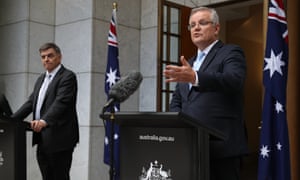
Morrison and Murphy
‘Five minutes ago, chasing a surplus was so important to this government.’
Photograph: Mike Bowers/The Guardian
We are all off balance. From the moment I open my eyes in the morning, I feel the discomfiting sensation of being suspended between the set of propositions that existed before the pandemic and the set of propositions that exist now.
I suspect everybody is encountering this out of kilter sensation frequently in normal life. Thousands and thousands of Australians were employed last week but aren’t today. Businesses have gone bust, or teeter on the brink. Kids are not at school. Socialising is curtailed. Unless you are young and sanguine enough to believe coronavirus is either a beat-up or a “boomer remover” and therefore it’s business as usual, you are either ill or deeply anxious about getting ill and infecting others.
As the great Australian poet Kenneth Slessor put it in Out of Time, time is flowing like one hundred yachts flying behind daylight, foxed with air. Hour by hour, there is more propulsion. But we aren’t yet far enough away from pre-pandemic life to have forgotten what it was like to think of something other than am I standing too close to that person, and when was the last time I washed my hands?
This acceleration of time also suspends the Morrison government between its pre-pandemic identity and the weight of present responsibilities. There are a million ways to chart this. I used one small example last weekend, where the treasurer, Josh Frydenberg, laughed raucously at wellbeing only a few weeks ago and now thinks of nothing else.
Robodebt is another issue that strands the government between old mantras and present realities. Five minutes ago, chasing a surplus was so important to this government that it wrongly issued, as my colleague Luke Henriques-Gomes reported this week, more than 400,000 welfare debts to vulnerable people that it will now have to refund. Five minutes ago, chasing those debts was more important than checking whether the income averaging method it was using was lawful.
Now, the debt ceiling has been lifted, and we are all Keynesians. The very same government has retooled the welfare system and doubled the unemployment benefit for the next six months, because the health crisis demands that large swathes of the economy go into a period of suspended animation. It is a terrible time to be a small government ideologue.
All this shape shifting creates significant questions about what the future looks like. In the moments I can think, which are fleeting right now because of the relentless pace of events, I wonder what Australia and the world will look like five years from now, because only one thing is certain: this crisis will put the world on a different axis.
The global financial crisis, which was the biggest global economic shock since the Depression, triggered a fundamental realignment. Nativism and protectionism resurfaced. Cheap jack populists expressed fatigue with experts. Americans, God help them, chose Donald Trump as their president. The far right resurfaced in parts of Europe. Britain retreated from Europe after a convulsion that paralysed one of the greatest democracies in the world for several years.
Current indications suggest this pandemic will inflict a more substantial economic shock than the GFC, because our capacity to pump prime domestic economies is curtailed. In the Depression, the government could pay people to go out and build roads and bridges. In the GFC, the government could give people money in the certainty that they would hit the shops and spend for Australia. But in this event, stimulatory measures have to be balanced against public health risks, unless you are a leader like Trump who makes a virtue of endangering his own citizens.
The thought exercise I’m embarking on this weekend is necessary, but mildly mind-blowing – what is the post-pandemic outlook for democratic governments?
Driven by the pro-market economic orthodoxy that existed pre-GFC, liberal democracies have spent decades shrinking governments. As governments have ceded power, many societies have also lost faith in the political class – in Australia, particularly over the past decade. The share of the vote going to the major parties has declined. Trust is low. Voters are disillusioned.
Yet it has been striking in this crisis how citizens in this country have looked to government as a deeply ingrained reflex. There is a hardwired collective expectation that government will provide a safety net during the economic shock, and also to tell people in clear terms what they should do to minimise the risks of infection.
So even though we are disillusioned, there appears to be a durable expectation that government will lead, and there is fury if leadership doesn’t materialise.
Also striking over the past 10 days has been the rolling dialogue within the Australian federation. In places like the United Kingdom or New Zealand, national governments just assert that various things will happen, and they happen. In Australia, responsibilities are divided, so the various tiers of government in this countries are forced to engage in an old-fashioned policy deliberation. They are forced to consider, in full public view, the health response and the economic response; as Morrison is fond of putting this exercise, weighing lives and livelihoods.
This is actually a good thing. While I’ve criticised the chaos and incoherence in the public presentation over the past week, I have felt some level of comfort as a citizen watching Victoria and New South Wales force a public debate about whether we should be locking down the country faster, and Morrison making a counter case that every day of fitful economic activity in this country is a day where another form of societal catastrophe, namely double-digit unemployment, is averted.
I’m glad these weighty calculations, the calculations of life and death, sustenance and terrible hardship, are not playing out as an internal, undisclosed monologue in the head of a sleep-deprived national leader who doesn’t have to negotiate with anybody, or explain his or her reasoning.
I’m glad our system forces that dialogue, in the process, forcing the nine governments we elect in this country to knuckle down and do their jobs; to learn what can be agreed and what can’t. In that high stakes deliberative dynamic that is supposed to form the core of representative democracy, everybody has to play their hand, out in the open, and history will judge the quality of their judgment calls.
I also read in some publications now is not the time for Labor to be questioning government decision making, because apparently that’s playing politics. I mean, how bloody ridiculous. We all need to be questioning every decision as constructively as possible rather than lapsing into placid groupthink. The opposition, the media, all citizens.
Now is the time for everybody in this nation to care about one another sufficiently to show up and play our respective roles in a democracy, particularly at a time when parliament is suspended, and civil liberties are being curtailed in the service of of saving lives.
Oppositions and journalists need to engage in good faith and clear heads with the reasoning behind the decisions that are being made, and stress test the various propositions. Governments also need to be transparent about why they are making calls at particular times. For example, neither Morrison nor the Victorian premier, Daniel Andrews, would give a plain English answer to a question on Friday about what the specific trigger points would be for further lockdowns.
While political leaders are acutely conscious at the minute of not pushing deeply anxious people into a full-tilt panic by talking about scenarios of surges of infections as if it were an academic seminar, building confidence in decision making will be assisted by transparency, not by secrecy.
Let’s end our thinking this weekend this way. When I ask the big question – what is the outlook for democratic governments post pandemic – implicitly, there’s a much simpler question in the interim, and it’s this.


Will governments prove their worth by managing this crisis to the best of their ability, or will they fail their citizens? I don’t know the answer, but I know a lot hangs on it; lives, livelihoods, and the future of liberal democracy.
Posted by The Worker at 6:02:00 am
Email ThisBlogThis!Share to XShare to FacebookShare to Pinterest

No comments:

Post a Comment

Newer Post Older Post Home
Subscribe to: Post Comments (Atom)

About Me

My photo
The Worker
I was inspired to start this when I discovered old editions of "The Worker". "The Worker" was first published in March 1890, it was the Journal of the Associated Workers of Queensland. It was a Political Newspaper for the Labour Movement. The first Editor was William "Billy" Lane who strongly supported the iconic Shearers' Strike in 1891. He planted the seed of New Unionism in Queensland with the motto “that men should organise for the good they can do and not the benefits they hope to obtain,” he also started a Socialist colony in Paraguay. Because of the right-wing bias in some sections of the Australian media, I feel compelled to counter their negative and one-sided version of events. The disgraceful conduct of the Murdoch owned Newspapers in the 2013 Federal Election towards the Labor Party shows how unrepresentative some of the Australian media has become.
View my complete profile

Translate

Search This Blog

Popular Posts

  • Rising tree death rates in all types of Australian forest tied to climate change.
     Extract from  ABC News By environment reporter Peter de Kruijff ABC Science Topic: Climate Change 6 hours ago More trees, including in the...
  • European leaders rally behind Greenland amid threats of a Trump take-over.
    Extract from  ABC News Topic: World Politics 1 hours ago Greenland was a Danish colony until 1953, but now has extensive self-governing righ...
  • How Louis Braille’s musical notation system remains relevant 200 years after its invention.
    Extract from  ABC News By Ria Andriani ABC Classic Topic: Music 4 hours ago Louis Braille's raised-dot system includes letters, numbers ...
  • UN chief Antonio Guterres warns of wider instability following US operation in Venezuela.
     Extract from  ABC News Topic: Unrest, Conflict and War 1 hours ago Antonio Guterres delivered his remarks to the UN Security Council throug...
  • Soft plastics recycling is back in Australia. How does it work and where does it go?
    Extract from  ABC News By Emma Siossian and Sarah Forster Stateline Topic: Recycling and Waste Management 2 hours ago Transforming soft pl...
  • Three warnings for the world after Trump’s intervention in Venezuela.
     Extract from  The New Daily Opinion South America US Donald Rothwell Jan 05, 2026, updated Jan 05, 2026 Source: ABC News The January 3 US...
  • Denmark tells Trump to back off over 'threats' against Greenland.
    Extract from  ABC News By Libby Hogan and wires Topic: World Politics 15 hours ago Mr Trump has directed his attention to Greenland after V...
  • The Venezuela strike sets a new low for the world order — even by Donald Trump's standards.
    Extract  from  ABC News Analysis By global affairs editor Laura Tingle Topic: World Politics 18 hours ago The Venezuelan regime was by no me...
  • Collector with 50 pinball machines in his shed hopes to create a playable museum.
    Extract from  ABC News By Samantha Goerling ABC Great Southern Topic: Games 1 hours ago Greg Sharp is a pinball enthusiast and collector.  (...
  • Why does Trump want Greenland and why is it so important?
    Extract from  ABC News By Ahmed Yussuf Topic: Territorial Disputes 15 hours ago Experts say the reason Donald Trump and superpowers such as ...

Favourite Links

  • Australian Council of Trade Unions
  • Australian Labor Party
  • Queensland Council of Unions
  • ALP Queensland
  • Whitlam Institute
  • Chifley Research Centre
  • John Curtin Prime Ministerial Library
  • The Australia Institute
  • Tim Flannery ~ Australian Climate Council
  • Dr. James E. Hansen explains Climate Change
  • David Suzuki Foundation
  • The Environment Time capsule
  • Solar Citizen
  • Cape Grim Greenhouse Gas Data
  • The Jane Goodall Institute Australia
  • RenewEconomy
  • Basic income Earth Network
  • Skeptical Science
  • Lucinda's Song and Dance

Blog Archive

  • ►  2026 (30)
    • ►  January (30)
  • ►  2025 (1158)
    • ►  December (120)
    • ►  November (104)
    • ►  October (111)
    • ►  September (150)
    • ►  August (125)
    • ►  July (106)
    • ►  June (101)
    • ►  May (78)
    • ►  April (66)
    • ►  March (77)
    • ►  February (59)
    • ►  January (61)
  • ►  2024 (921)
    • ►  December (60)
    • ►  November (69)
    • ►  October (79)
    • ►  September (64)
    • ►  August (45)
    • ►  July (74)
    • ►  June (72)
    • ►  May (80)
    • ►  April (68)
    • ►  March (110)
    • ►  February (101)
    • ►  January (99)
  • ►  2023 (877)
    • ►  December (101)
    • ►  November (82)
    • ►  October (70)
    • ►  September (91)
    • ►  August (56)
    • ►  July (90)
    • ►  June (55)
    • ►  May (60)
    • ►  April (55)
    • ►  March (84)
    • ►  February (72)
    • ►  January (61)
  • ►  2022 (1195)
    • ►  December (84)
    • ►  November (107)
    • ►  October (45)
    • ►  September (83)
    • ►  August (129)
    • ►  July (137)
    • ►  June (84)
    • ►  May (82)
    • ►  April (87)
    • ►  March (116)
    • ►  February (135)
    • ►  January (106)
  • ►  2021 (2138)
    • ►  December (101)
    • ►  November (286)
    • ►  October (236)
    • ►  September (150)
    • ►  August (116)
    • ►  July (168)
    • ►  June (171)
    • ►  May (161)
    • ►  April (138)
    • ►  March (220)
    • ►  February (221)
    • ►  January (170)
  • ▼  2020 (1868)
    • ►  December (145)
    • ►  November (156)
    • ►  October (98)
    • ►  September (152)
    • ►  August (145)
    • ►  July (164)
    • ►  June (146)
    • ►  May (158)
    • ►  April (99)
    • ▼  March (150)
      • 'Probably the worst year in a century': the enviro...
      • 'The animals aren't pleased': UK zoos under corona...
      • Trump lashes out at critics as Fauci warns New Orl...
      • Coronavirus two-person rule: what we know about th...
      • From tight purse strings to massive fiscal firepow...
      • THE WORKER - News summary week ending September 18...
      • 'If I get corona, I get corona': the Americans who...
      • How does coronavirus compare to Spanish flu? COVID...
      • One day we will tell stories of the virus, a time ...
      • Coronavirus panic-buying no issue for Victorian fa...
      • Coronavirus has shown Australian travellers have t...
      • The battle over how to fight coronavirus has a fau...
      • Jair Bolsonaro claims Brazilians 'never catch anyt...
      • Trump's narcissism has taken a new twist. And now ...
      • Dangerous cures and viral hoaxes: common coronavir...
      • Five practical tips for physical distancing while ...
      • After the coronavirus, Australia and the world can...
      • 'Coronavirus wants to kill you': patient issues pl...
      • Indonesia’s hidden coronavirus cases threaten to o...
      • Australia is scared and confused about coronavirus...
      • How ventilators work and why they are so important...
      • I fled the coronavirus in New York for Sydney. I w...
      • Queensland miners fear Fifo workers could pose a t...
      • Covid-19 is nature's wake-up call to complacent ci...
      • We face a pandemic of mental health disorders. Tho...
      • The Australian welfare system has always been need...
      • It's not working: Scott Morrison's late-night coro...
      • Coronavirus: 'Nature is sending us a message’, say...
      • Great Barrier Reef suffers third mass coral bleach...
      • Can losing your sense of smell be a symptom of cor...
      • Data shows coronavirus can only be controlled if 8...
      • Delay is deadly: what Covid-19 tells us about tack...
      • Stuart Robert’s incompetence on MyGov should accel...
      • Covid-19: how long can it survive outside the body?
      • Coronavirus has made us all learn to work from hom...
      • Regulate your breathing – and four other ways to s...
      • Hope in the time of coronavirus lies in rebuilding...
      • Electric cars produce less CO2 than petrol vehicle...
      • Our politicians scramble for hope as Australia, on...
      • 'I feel expendable': Australian teachers sound ala...
      • The beautiful south: our wild, vulnerable world, s...
      • 'Think about the best-case scenario': how to manag...
      • As Australia goes off the coronavirus cliff, the q...
      • Marx Bros Day at the Racers
      • Abbott and Costello "Who's on first"
      • Funny Pink Panther clips
      • 'The forest is everything': indigenous tribes in I...
      • A tale for our times: laughter is still the best m...
      • The secret of calm: how to de-stress if you have o...
      • Go to ground amid coronavirus: how to grow a livin...
      • What is coronavirus – and what is the mortality rate?
      • Can a face mask protect me from coronavirus? Covid...
      • The coronavirus story is unfathomably large. We mu...
      • Coronavirus: the Guardian's promise to our readers
      • Remember Josh Frydenberg scoffing at a 'wellbeing ...
      • Overload in a time of coronavirus
      • Coalition relaxes job-seeking obligations but refu...
      • Coronavirus: the science of how Covid-19 affects t...
      • Coles and Woolworths urged to expand services to p...
      • Don't panic, Australia. The coronavirus doesn't me...
      • Greenland's melting ice raised global sea level by...
      • Adani executive Lucas Dow talks up bigger coal min...
      • Study: global banks 'failing miserably' on climate...
      • Welfare recipients on cashless debit card will hav...
      • How to survive isolation with your roommates, your...
      • Australia's economic victims of coronavirus, just ...
      • Keep it clean: The surprising 130-year history of ...
      • Scott Morrison had a tough message to deliver – ou...
      • Coronavirus outbreak leads to calls for housing ev...
      • Australian jobseekers fear having payments cut off...
      • Coronavirus is causing panic buying, but what does...
      • Think coronavirus only kills the old? Think again.
      • As coronavirus spreads, what you need to know abou...
      • Coronavirus infection prevention — what is social ...
      • Dr Norman Swan recommends 'severe' shutdowns
      • Think the world is ending? Grab a shovel, not a sh...
      • Zali Steggall launches ad campaign to rally suppor...
      • Patriotism could be the unlikely answer to solving...
      • Soap saves lives: adverts in the Guardian after th...
      • The sick joke of Donald Trump's presidency isn't f...
      • Can coronavirus be the crisis to shake us out of o...
      • Coronavirus has forced politicians out of their id...
      • Leading infection control expert says Australia mu...
      • Covid-19: what happens once someone is infected? S...
      • The science of soap – here’s how it kills the coro...
      • Morrison's coronavirus stimulus package shows sobe...
      • The sports rorts questions Scott Morrison doesn't ...
      • People without secure housing 'particularly vulner...
      • Coronavirus: what happens to people's lungs when t...
      • Polar ice caps melting six times faster than in 1990s
      • Christian Porter doesn’t understand insecure work ...
      • Ecosystems the size of Amazon 'can collapse within...
      • Climate emergency: global action is ‘way off track...
      • Scientists warn of 'critical gaps' in Australia's ...
      • Australian government won't 'jump to a solution' t...
      • Australian government stimulus package promises fi...
      • Coronavirus response ‘a shambles’: Australian doct...
      • Indian Ocean system that drives extreme weather in...
      • Sport Australia defies Senate on questions over sp...
      • Karl Kruszelnicki's 2020s vision: we need a new wa...
    • ►  February (190)
    • ►  January (265)
  • ►  2019 (1888)
    • ►  December (207)
    • ►  November (216)
    • ►  October (202)
    • ►  September (193)
    • ►  August (151)
    • ►  July (151)
    • ►  June (87)
    • ►  May (120)
    • ►  April (166)
    • ►  March (156)
    • ►  February (122)
    • ►  January (117)
  • ►  2018 (1793)
    • ►  December (207)
    • ►  November (193)
    • ►  October (212)
    • ►  September (195)
    • ►  August (162)
    • ►  July (189)
    • ►  June (175)
    • ►  May (139)
    • ►  April (33)
    • ►  March (126)
    • ►  February (94)
    • ►  January (68)
  • ►  2017 (2094)
    • ►  December (70)
    • ►  November (97)
    • ►  October (109)
    • ►  September (123)
    • ►  August (161)
    • ►  July (217)
    • ►  June (201)
    • ►  May (223)
    • ►  April (170)
    • ►  March (243)
    • ►  February (302)
    • ►  January (178)
  • ►  2016 (1016)
    • ►  December (165)
    • ►  November (163)
    • ►  October (103)
    • ►  September (109)
    • ►  August (66)
    • ►  July (44)
    • ►  June (57)
    • ►  May (68)
    • ►  April (61)
    • ►  March (74)
    • ►  February (50)
    • ►  January (56)
  • ►  2015 (874)
    • ►  December (72)
    • ►  November (69)
    • ►  October (73)
    • ►  September (109)
    • ►  August (71)
    • ►  July (104)
    • ►  June (102)
    • ►  May (80)
    • ►  April (44)
    • ►  March (51)
    • ►  February (32)
    • ►  January (67)
  • ►  2014 (1022)
    • ►  December (65)
    • ►  November (88)
    • ►  October (104)
    • ►  September (90)
    • ►  August (73)
    • ►  July (60)
    • ►  June (87)
    • ►  May (120)
    • ►  April (77)
    • ►  March (128)
    • ►  February (67)
    • ►  January (63)
  • ►  2013 (730)
    • ►  December (50)
    • ►  November (70)
    • ►  October (51)
    • ►  September (48)
    • ►  August (52)
    • ►  July (83)
    • ►  June (116)
    • ►  May (91)
    • ►  April (44)
    • ►  March (36)
    • ►  February (45)
    • ►  January (44)
  • ►  2012 (137)
    • ►  December (20)
    • ►  November (32)
    • ►  October (43)
    • ►  September (24)
    • ►  August (18)
Simple theme. Powered by Blogger.