A personal view of Australian and International Politics

Contemporary politics,local and international current affairs, science, music and extracts from the Queensland Newspaper "THE WORKER" documenting the proud history of the Labour Movement. MAHATMA GANDHI ~ Truth never damages a cause that is just.

Wednesday, 17 June 2020

Plastic superhighway: the awful truth of our hidden ocean waste.

Extract from The Guardian

Seascape: the state of our oceans

Solving the issue of waste in our seas turned out to be more complex than scrounging for bottles off the beach, Laura Trethewey found
Main image: Plastic debris litters the beach on the Soko Islands in Hong Kong. Photograph: Reuters
Seascape: the state of our oceans is supported by
The David and Lucile Packard Foundation About this content
Tue 16 Jun 2020 17.00 AEST Last modified on Wed 17 Jun 2020 03.48 AEST

We called the competition Who Found the Weirdest Thing? So far, the entries that day were a motorcycle helmet, a lithium battery covered with scary stickers asking that we return it to the military, and a toy dinosaur.
The dinosaur was warm from the sun and starting to degrade. The ocean had smoothed and worn down its edges. Rocks and sand had crosshatched its skin. It was missing a hind leg. On one side it was dark grey; the sun had bleached its opposite flank white.
It was the second morning of a trip with Ocean Legacy, a group in Canada that collects and recycles plastic pollution from the ocean. We’d spent the first day trudging along Mquqwin beach in British Columbia, plucking bottles and buoys from the driftwood and branches – and it seemed to me the pollution was not as devastating as expected.
Online, I had seen pictures of remote Polynesian atolls covered in plastic. I assumed I would break down crying at the sight of branches tangled with detergent bottles, like some apocalyptic Christmas tree. But it was not like that; it was more diffuse, more diluted by nature.
More than 50% of what Ocean Legacy collects along the west coast of North and Central America is foam, a puffed plastic made mostly of air and polystyrene – a liquid hydrocarbon that is likely carcinogenic. A lightweight, bulky piece of foam sits top heavy above the waterline and has a greater sail area that the wind can push to shore. Plastic bottles are one of the next most common finds. Made of polyethylene terephthalate (PET), a plastic bottle is denser than seawater and sinks as soon as it’s punctured. In Ocean Legacy’s experience, people are strangely good at screwing caps back on, so more bottles float to land intact than you might expect.
What we were collecting on the beach that morning was the lightweight cream of the crop: single-use items such as straws, plastic bags, cups, bottles. Cities around the world are drafting plastic-bag bans and encouraging reusable cups instead of disposable ones; it is such single-use items that are visibly washing ashore or floating on the ocean’s surface. It made me wonder what else we might ban or regulate if we could see all the heavier plastics and materials that never make it to land.
But the beach was by no means covered in plastic, and by midday the toy dinosaur was still the weirdest find.
It was possible, ChloƩ Dubois of Ocean Legacy told me, that the dinosaur belonged to a victim of the 20 metre-high tsunami that struck Japan in March 2011. The retreating wave sucked 5m metric tons of debris into the water: more than half the annual amount of plastic debris that ends up in the ocean went into the Pacific in a single day.
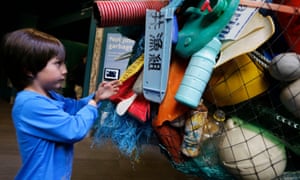
Tsunami debris from Japan on display at Vancouver Aquarium, Vancouver, Canada.
Tsunami debris from Japan on display at Vancouver Aquarium. Photograph: Xinhua/Alamy

A year passed, and that debris started to wash up along the west coast of North America: a football, a volleyball, then a Harley-Davidson motorcycle, still intact inside a styrofoam container. Miraculously, the owner of the motorcycle was found by tracing the rusted licence plate, and the Harley was shipped back to Japan. North American beachcombers have since travelled to Japan to meet other people who had lost everything but these prized possessions; the Japan Love Project posts pictures online of items in an attempt to return them to their owners. I wondered if Japan Love might reunite the dinosaur with its owner.
Ocean Legacy estimates that a third of what it collects is from Japan’s earthquake; a Japanese grant actually funded their expedition to Mquqwin. But to qualify as official tsunami debris, the material has to come with something traceable, such as serial numbers or place names – a tall order for something that has spent months or years at sea. “An almost judicial level of evidence,” as one volunteer put it.
Dubois felt that minimising the amount of “official” tsunami debris in this way also minimised the larger issue of ocean plastic – and fitted a larger narrative that developing countries far away caused plastic pollution. As many as 167,000 plastic fragments swirl in just one sq km of water, and a 2015 landmark study published in the journal Science showed that China, Indonesia and a few other south-east Asian countries are responsible for releasing the vast majority of it. The US, with its long coastline population and high plastic consumption, was the only developed country in the top 20.
Globally, however, our plastic is interconnected. Until recently, developed countries shipped most of their waste to China for recycling. Developing nations are only now starting to reach western levels of plastic demand.
The average person swallows a credit-card-sized amount of plastic each week

The ocean is like a superhighway for plastic debris, and every nation with a shoreline has a sliproad on to it. Regardless of where it comes from, once plastic enters the ocean, it’s everyone’s problem.
Temperature plays the biggest role in breaking down plastic, and in cold underwater trenches the ocean will actually preserve the plastic indefinitely. But when it reaches land, plastic shatters on rocks or shreds across exfoliating sand, breaking into fragments. The sun warms these small pieces, making them more brittle until they break into even smaller chips and chunks. This is when the toxins inside plastic have a higher chance of leaching out into the environment. Studies show that toxins from degraded foam are one to four orders of magnitude higher in the sand than in the surrounding water.
Out at sea, cross currents meet and spin and slowly draw plastic into gyres. Travelling on currents, plastic can work its way from the east coast of the US to the Arctic. Some ocean travellers report coming across great chains of plastic drifting on the surface; others see nothing at all. Ocean plastic can be so minute that it hangs suspended in the water column and is visible only under a microscope. How do we deal with a problem that can seem invisible or changes by the day or the hour? That shifting quality gives the impression that ocean plastic is not such a serious problem after all.
Some also dismiss the severity of the problem because they still think of plastic as chemically inert. We drink out of plastic cups, heat up food in plastic, and we store all kinds of chemicals in plastic. If plastic still retains its shape under heat and doesn’t dissolve when it touches other chemicals, it must not be harmful in the ocean, right? When animals eat small pieces of plastic, won’t they just harmlessly excrete the plastic and continue on their way?
This posits that ocean plastic is mainly a litter issue rather than a threat to the ecosystem.
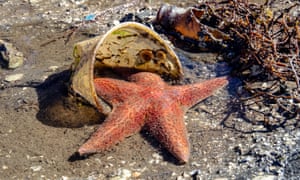
A sea star caught in a plastic cup in Brentwood Bay, Saanich Peninsula, Vancouver Island.
A sea star caught in a plastic cup in Brentwood Bay, Saanich Peninsula, Vancouver Island. Photograph: Bill Gozansky/Alamy

Labs around the world, however, are studying the giant, uncontrolled plastic experiment we’ve unleashed on the ocean. In the environment and over time, plastic starts to weaken, and its chainlike bonds break apart, releasing hazardous additives. Things such as flame retardants, softeners, stabilisers and thousands of other additives that help plastic items fulfill their purpose. On land, plastics and their additives are mostly non-toxic, except when we find out they’re not. One additive, bisphenol A, has become well known to new parents, who now buy baby bottles free of this oestrogen-mimicking industrial chemical. Bisphenol A also has links to cardiovascular diseases and type-2 diabetes.
Pollutants such as PCBs, which have been banned for years, are still out in the water column, where they latch on to ocean plastic. When animals eat the plastic because it’s covered in delicious nutrients, the plastic works its way into the food chain. Eventually, that will come back to humans. One study concluded that humans eat 37 pieces of man-made particles each year from salt, most of them as big as a coarse grain of sand. A 2019 report from the University of Newcastle in Australia calculated that the average person swallowed a credit-card-sized amount of plastic each week, mainly through drinking water.
“Plastic knows no borders,” said Dubois.

By noon, my progress had slowed to a stumble. The sun was relentless, and every patch of exposed skin felt like it had been aged and dry-rubbed like a prime piece of meat. Mackenzie Brunsch, another volunteer for Ocean Legacy, called out to me. “This way.”
I followed her up a towering pile of driftwood, and we dropped down into a quiet, lush swamp bordered by waist-high reeds. The boom and hiss of the surf receded; the dazzling sunshine was gone. There was only the quiet, green shade – and it was absolutely covered in plastic.
Here was the destruction I had imagined finding when I first arrived in Mquqwin. I was standing in nature’s cathedral, beautiful sunlight filtering down through a green canopy, surrounded by ferns and sala berry bushes and trees covered in electric-green moss. Plastic carpeted the ground. Plastic bottles, plastic buoys, styrofoam everywhere, like someone had Photoshopped a rubbish dump on to the forest.
I no longer needed to scrounge for plastic. I squatted, stretched out my hands, and raked plastic into my arms. That was only the first layer. When I moved aside a log, I found yet another layer of plastic and then another, all of it slowly disintegrating into the morass beneath. I pulled out muddy, sodden clumps of styrofoam, slimy bottles and slippery buoys. One teenage volunteer had followed Mackenzie and me into the brush and disappeared into the undergrowth. He returned with five rubbish bags crammed full.

"We can continue to dump plastic for centuries before we’ll run out of space. That’s how good the ocean is at hiding our secrets"

Mackenzie told me this wasn’t even close to the worst she had seen on the trip. A few days before I arrived, she cleaned a beach littered with tiny plastic pieces. Much of the visible plastic pollution that Ocean Legacy collects in Mquqwin washes up in whole chunks that are at least recognisable as a milk jug or a soft-drink bottle. But this beach was covered in pieces no bigger than a fingernail. Ocean Legacy follows the National Oceanic and Atmospheric Administration’s cleanup guidelines and collects anything bigger than the size of a bottle cap, so Mackenzie crouched down and started sieving plastic from sand. Three hours later, she was still in the exact same spot.
I stopped to pull a crumbling piece of foam from the forest floor, only to realise that a sapling had taken root in the foam pellets. One volunteer told me about a thicket he had found full of mushrooms sprouting through plastic mulch. Another emerged from the forest holding aloft a piece of foam covered with deep claw marks – a bear cub’s scratching post, perhaps. Dubois told me about a wolves’ nest she found built from foam, a first-rate insulator. But those were the happy exceptions. So often the interactions between plastic and animals ended badly – for the animals. After watching a now infamous video of a sea turtle with a plastic straw jammed up its nose, she was never able to look at straws the same way again.
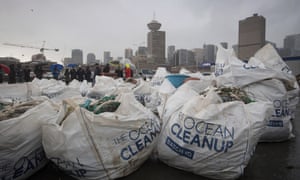
Bags of plastic recovered by Ocean Cleanup on display in Vancouver in December 2019.
Bags of plastic recovered by Ocean Cleanup on display in Vancouver in December 2019. Photograph: Darryl Dyck/AP

Straws are relatively minor compared to the damage done by so-called ghost gear. It’s believed that about 10% of plastic in the ocean is abandoned or lost fishing equipment that, long after any fisherman has finished with it, continues to collect bounty. All types of animals, from birds to sea turtles and invertebrates big and small, are snared in drifting nets or caught and killed in abandoned traps. When that animal dies, it sets off a truly depressing cycle of events, as its carcass lures in more animals looking for an easy meal.
In 2014, World Animal Protection estimated, conservatively, that ghost gear killed 136,000 seals, sea lions, and whales every year.
I hauled out my final bulging rubbish bag, knowing that so much more plastic was spread out across the 40,000 hectares of Mquqwin Peninsula, and that there were many tons of plastic along coastlines and in waterways around the world. I felt deeply tired.

In the age of climate change denial, many scientists and activists often confront a wilful disbelief about the threatened state of the ocean today. Scientists initially doubted the British sailor Charles Moore, who reported his discovery of the Great Pacific Garbage Patch in the mid-1990s. Chris Jordan, a Seattle photographer famous for his images of dissected albatrosses with stomachs full of bottle caps and plastic chunks, has been accused of staging his work, and now he posts start-to-finish videos of the dissections. Environmental damage is often too slow, too scattered, too distant to instill any sense of urgency in the sceptical or disengaged. Even when those impacts are condensed into hard statistics and diagrams or communicated through rigorously documented studies and video evidence, people can simply choose to believe their own particular truth.
In the month after I visited, the Ocean Legacy team would transport more than 25 tonnes of plastic debris back to the mainland. Many cleanup operations put most of what they find in landfill, but Dubois’ team was going to recycle and repurpose the entire haul. The process would take months of planning and coordination, not to mention the six weeks of collecting and the labour of more than two dozen people to untangle plastic from the shoreline. Every day, that same amount of plastic and more was dumped back into the ocean – about 20 dump trucks’ worth. How depressing to realise that your work is being undone before you finish it. Did she ever feel frustrated that all her efforts might not save the ocean?
“I don’t get frustrated by it,” she said, “but the thought is daunting. It becomes more daunting when you think of the scope of the planet. There are probably millions of beaches around the world going through the same thing as Mquqwin Peninsula.”
We can continue to dump plastic for centuries before we’ll run out of space, she pointed out. That’s how good the ocean is at hiding our secrets. Compared to acidification and warming, plastic pollution is one of the more visible problems facing the ocean today because almost everyone, every day, throws away some piece of plastic. This makes it hard to eliminate, but also more visible and accessible. We have a greater chance of confronting this problem – because the plastic is in everyone’s hands.
I slipped the toy dinosaur into my pocket.
Adapted from The Imperilled Ocean by Laura Trethewey, published by Goose Lane Editions
Posted by The Worker at 8:42:00 am
Email ThisBlogThis!Share to XShare to FacebookShare to Pinterest

No comments:

Post a Comment

Newer Post Older Post Home
Subscribe to: Post Comments (Atom)

About Me

My photo
The Worker
I was inspired to start this when I discovered old editions of "The Worker". "The Worker" was first published in March 1890, it was the Journal of the Associated Workers of Queensland. It was a Political Newspaper for the Labour Movement. The first Editor was William "Billy" Lane who strongly supported the iconic Shearers' Strike in 1891. He planted the seed of New Unionism in Queensland with the motto “that men should organise for the good they can do and not the benefits they hope to obtain,” he also started a Socialist colony in Paraguay. Because of the right-wing bias in some sections of the Australian media, I feel compelled to counter their negative and one-sided version of events. The disgraceful conduct of the Murdoch owned Newspapers in the 2013 Federal Election towards the Labor Party shows how unrepresentative some of the Australian media has become.
View my complete profile

Translate

Search This Blog

Popular Posts

  • Trump wants Venezuela's airspace closed — but international law stands in the way.
    Extract from  ABC News By Elissa Steedman with wires  Topic: World Politics 17 hours ago President Donald Trump said Venezuela's airspa...
  • The first Australian-made car, the Holden 48-215, was introduced to the world on this day.
    Extract from  ABC News By Tim Callanan Today in History Topic: Automotive Industry 1 hours ago One of the surviving Holden 48-215s. (Supplie...
  • Australia's emissions have dropped, but we've got our work cut out to reach targets.
    Extract from  ABC News By climate reporter Jo Lauder Topic: Energy Policy 23 hours ago "Net zero" has become a political slogan, b...
  • Australia to provide Ukraine with $95m funding boost.
    Extract from  ABC News By defence and national security correspondent Olivia Caisley Topic: War 7 hours ago The additional funding for Ukrai...
  • England's Ashes demolition job of Australia in Brisbane's first ever cricket Test match at the Ekka.
     Extract from  ABC News By Simon Smale Topic: Sport 2 hours ago England completed destroyed Australia in the first ever Ashes Test in Brisba...
  • Trump says airspace above and surrounding Venezuela to be closed in its entirety.
    Extract from  ABC News Topic: World Politics 5 hours ago Donald Trump said "Airlines, Pilots, Drug Dealers, and Human Traffickers"...
  • Photographer Lyn Alcock captures wild antics of Dryandra's numbat population over 20 years.
    Extract from  ABC News By Asha Couch and Andrew Collins ABC Great Southern Topic: Animals 17 hours ago Lyn Alcock has recorded photographs ...
  • Ukraine hits two Russian 'shadow fleet' oil tankers with naval drones in the Black Sea.
    Extract from  ABC News Topic: Unrest, Conflict and War 11 hours ago Naval drones could be seen speeding towards hulking tankers followed by ...
  • Big haul of 170yo Indigenous artefacts unearthed in North West Queensland.
     Extract from  ABC News By Abbey Halter By Maddie Nixon ABC North West Qld Topic: Cultural Artefacts 19m ago 19 minutes ago Yinika Perston i...
  • Lebanese hopeful Pope Leo will bring peace as he visits the country.
    Extract from  ABC News By Middle East correspondent Eric Tlozek and ChĆ©rine Yazbeck in Lebanon Topic: Religion 1 hours ago Billboards welc...

Favourite Links

  • Australian Council of Trade Unions
  • Australian Labor Party
  • Queensland Council of Unions
  • ALP Queensland
  • Whitlam Institute
  • Chifley Research Centre
  • John Curtin Prime Ministerial Library
  • The Australia Institute
  • Tim Flannery ~ Australian Climate Council
  • Dr. James E. Hansen explains Climate Change
  • David Suzuki Foundation
  • The Environment Time capsule
  • Solar Citizen
  • Cape Grim Greenhouse Gas Data
  • The Jane Goodall Institute Australia
  • RenewEconomy
  • Basic income Earth Network
  • Skeptical Science
  • Lucinda's Song and Dance

Blog Archive

  • ►  2025 (1074)
    • ►  December (36)
    • ►  November (104)
    • ►  October (111)
    • ►  September (150)
    • ►  August (125)
    • ►  July (106)
    • ►  June (101)
    • ►  May (78)
    • ►  April (66)
    • ►  March (77)
    • ►  February (59)
    • ►  January (61)
  • ►  2024 (921)
    • ►  December (60)
    • ►  November (69)
    • ►  October (79)
    • ►  September (64)
    • ►  August (45)
    • ►  July (74)
    • ►  June (72)
    • ►  May (80)
    • ►  April (68)
    • ►  March (110)
    • ►  February (101)
    • ►  January (99)
  • ►  2023 (877)
    • ►  December (101)
    • ►  November (82)
    • ►  October (70)
    • ►  September (91)
    • ►  August (56)
    • ►  July (90)
    • ►  June (55)
    • ►  May (60)
    • ►  April (55)
    • ►  March (84)
    • ►  February (72)
    • ►  January (61)
  • ►  2022 (1195)
    • ►  December (84)
    • ►  November (107)
    • ►  October (45)
    • ►  September (83)
    • ►  August (129)
    • ►  July (137)
    • ►  June (84)
    • ►  May (82)
    • ►  April (87)
    • ►  March (116)
    • ►  February (135)
    • ►  January (106)
  • ►  2021 (2138)
    • ►  December (101)
    • ►  November (286)
    • ►  October (236)
    • ►  September (150)
    • ►  August (116)
    • ►  July (168)
    • ►  June (171)
    • ►  May (161)
    • ►  April (138)
    • ►  March (220)
    • ►  February (221)
    • ►  January (170)
  • ▼  2020 (1868)
    • ►  December (145)
    • ►  November (156)
    • ►  October (98)
    • ►  September (152)
    • ►  August (145)
    • ►  July (164)
    • ▼  June (146)
      • Eden-Monaro Liberal candidate says reducing fuel i...
      • AAP sale finalised, saving 'vital' 85-year-old new...
      • Government's $50m fund to mitigate bushfires, natu...
      • We need to go beyond empty gestures if we're going...
      • Green steel industry could secure jobs future for ...
      • Australia could create hundreds of thousands of jo...
      • Ita Buttrose rejects Scott Morrison's claims the A...
      • Beyond Google: my afternoon trawling Trove for the...
      • Toxic mix of violence and virus sweeps poorest cou...
      • It's time our political leaders face reality and a...
      • NASA releases time-lapse video showing 10 years of...
      • How community transmission is very different to lo...
      • Ita Buttrose rebukes Scott Morrison's claims the A...
      • Australia needs a clear plan to address inadequate...
      • If press conferences are anything to go by, the br...
      • James Hansen - Sophie’s Planet #13: Coming Down to...
      • Felling statues raises deeper questions.
      • Saving lives means saving culture.
      • James Hansen - A Little Story About Dr. Robert Jas...
      • ABC to cut national head of emergency broadcasting...
      • Morrison government has failed in its duty to prot...
      • Ita Buttrose lashes government over handling of AB...
      • ‘Over to you, Ita’: The ABC’s five-year plan is sp...
      • Reserve Bank warns of 25% GDP loss by 2100 unless ...
      • Coalition spends $2m on prosecution of Bernard Col...
      • John Bolton says US alliances may not survive a se...
      • Some in Melbourne's COVID-19 hotspots dismiss the ...
      • ABC to cut 250 jobs, dump 7.45am radio news bullet...
      • Stephen Colbert interviews John Bolton: 'How could...
      • Labor's climate wars truce is cause for hope, as l...
      • My degree taught me to spot the flaws of the unive...
      • The arts and recreation sector stimulus was long p...
      • Up to 11,000 renewable energy jobs could be lost u...
      • Mareeba rock-wallabies bounce back after bushfire ...
      • Up to 250 ABC jobs to go, ABC Life brand scrapped,...
      • Woolworths warehouse automation set to eliminate 7...
      • The road ahead is hard. Now is not the time to kil...
      • Information can save lives. Help Guardian Australi...
      • Australia's powerful new supercomputer Gadi given ...
      • Nick Xenophon attacks Government over Afghan Files...
      • Labor to call for Robodebt royal commission to exa...
      • Chief scientist joins calls for Australia to drama...
      • Jobkeeper has failed, and it’s hitting women and y...
      • University fee changes announced by Dan Tehan comb...
      • Government's university reform has one big differe...
      • Higher fees for humanities? Data undercuts argumen...
      • 'Incredibly frustrating': Australian year 12 stude...
      • Key crossbencher says university fee changes are '...
      • Count the stars in the Southern Cross during winte...
      • Australian arts support package expected after tal...
      • World has six months to avert climate crisis, says...
      • Claims major projects are being delayed by environ...
      • University fees to be overhauled, some course cost...
      • James Hansen - Sophie’s Planet #12: Eunice Foote, ...
      • James Hansen - Sophie’s Planet #11: Chapters 17 & ...
      • Judge says Peter Dutton could be found in contempt...
      • Blundstone celebrates 150 years of making boots af...
      • Plastic superhighway: the awful truth of our hidde...
      • Australia had more supersized bushfires creating t...
      • ‘Tick-a-box approach’: fears Australia’s efforts t...
      • Australia has a problem with climate change denial...
      • Pauline Hanson charged taxpayers for three-day Per...
      • 'Anger has the hour': How long must Indigenous Aus...
      • COVIDSafe app tests revealed iPhone performance is...
      • Late Night Live - Australian content on screen.
      • Covid-19 pandemic is 'fire drill' for effects of c...
      • Scientists fear Coalition's push to deregulate env...
      • Was there slavery in Australia? Yes. It shouldn’t ...
      • Pat Dodson on Indigenous deaths in custody – Austr...
      • 'The country is adrift': echoes of Spanish flu as ...
      • Journalists at the Age express alarm over increasi...
      • James Hansen - Well, the race is on, and here comes…
      • Gas ‘completely dominated’ discussion about Covid-...
      • Climate worst-case scenarios may not go far enough...
      • China seems intent on using its economic heft to i...
      • For Scott Morrison, one protester's free expressio...
      • Scott Morrison says slavery comments were about Ne...
      • James Hansen - Sophie’s Planet #10: Chapters 15 & ...
      • The right to be an agitator.
      • Dreaming of a better future for First Nations peop...
      • Scott Morrison apologises for 'hurt or harm' cause...
      • Was there slavery in Australia? Yes. It shouldn’t ...
      • Company behind Collinsville power plant fears it w...
      • Adani mine: three major insurers to have no furthe...
      • Homelessness: can the Covid-19 crisis help end rou...
      • Robodebt: total value of unlawful debts issued und...
      • The Coalition dishes out jobs for the boys while w...
      • A journey into Antarctica: the unavoidable signs o...
      • Unesco urged to declare Great Barrier Reef 'in dan...
      • ABC to cut 250 jobs to meet $41m budget shortfall ...
      • Free childcare doesn’t suit the Coalition’s ideolo...
      • Homebuilder was a blunder - spend the money retrof...
      • Are they gone for good? The Trump supporters who r...
      • Tina Arena, Jimmy Barnes among 1,000 others callin...
      • Homebuilder misses a chance to make Australian hom...
      • Black Lives Matter protesters referred to our coun...
      • Three-quarters of Australians biased against Indig...
      • 'Duty-bound to keep it going': the Australian man ...
      • Renewable energy stimulus can create three times a...
      • The government does not need to import divisive le...
    • ►  May (158)
    • ►  April (99)
    • ►  March (150)
    • ►  February (190)
    • ►  January (265)
  • ►  2019 (1888)
    • ►  December (207)
    • ►  November (216)
    • ►  October (202)
    • ►  September (193)
    • ►  August (151)
    • ►  July (151)
    • ►  June (87)
    • ►  May (120)
    • ►  April (166)
    • ►  March (156)
    • ►  February (122)
    • ►  January (117)
  • ►  2018 (1793)
    • ►  December (207)
    • ►  November (193)
    • ►  October (212)
    • ►  September (195)
    • ►  August (162)
    • ►  July (189)
    • ►  June (175)
    • ►  May (139)
    • ►  April (33)
    • ►  March (126)
    • ►  February (94)
    • ►  January (68)
  • ►  2017 (2094)
    • ►  December (70)
    • ►  November (97)
    • ►  October (109)
    • ►  September (123)
    • ►  August (161)
    • ►  July (217)
    • ►  June (201)
    • ►  May (223)
    • ►  April (170)
    • ►  March (243)
    • ►  February (302)
    • ►  January (178)
  • ►  2016 (1016)
    • ►  December (165)
    • ►  November (163)
    • ►  October (103)
    • ►  September (109)
    • ►  August (66)
    • ►  July (44)
    • ►  June (57)
    • ►  May (68)
    • ►  April (61)
    • ►  March (74)
    • ►  February (50)
    • ►  January (56)
  • ►  2015 (874)
    • ►  December (72)
    • ►  November (69)
    • ►  October (73)
    • ►  September (109)
    • ►  August (71)
    • ►  July (104)
    • ►  June (102)
    • ►  May (80)
    • ►  April (44)
    • ►  March (51)
    • ►  February (32)
    • ►  January (67)
  • ►  2014 (1022)
    • ►  December (65)
    • ►  November (88)
    • ►  October (104)
    • ►  September (90)
    • ►  August (73)
    • ►  July (60)
    • ►  June (87)
    • ►  May (120)
    • ►  April (77)
    • ►  March (128)
    • ►  February (67)
    • ►  January (63)
  • ►  2013 (730)
    • ►  December (50)
    • ►  November (70)
    • ►  October (51)
    • ►  September (48)
    • ►  August (52)
    • ►  July (83)
    • ►  June (116)
    • ►  May (91)
    • ►  April (44)
    • ►  March (36)
    • ►  February (45)
    • ►  January (44)
  • ►  2012 (137)
    • ►  December (20)
    • ►  November (32)
    • ►  October (43)
    • ►  September (24)
    • ►  August (18)
Simple theme. Powered by Blogger.